
Pangolins are genuinely the world’s most heavily trafficked mammal, and while Uganda’s population remains elusive and rarely sighted even by experienced guides, the country’s forests and savannah woodlands hold two distinct species whose unique scale-covered anatomy and rolling defensive behaviour make any sighting a genuinely remarkable, once-in-many-safaris encounter.
Uganda’s Two Pangolin Species
Uganda is genuinely home to both the ground pangolin, found across savannah and woodland habitat, and the considerably more arboreal white-bellied pangolin, found in forested areas including parts of the Albertine Rift, meaning the country’s varied habitat types support two ecologically distinct pangolin lifestyles rather than a single uniform population, one primarily terrestrial and burrowing, the other primarily tree-dwelling and prehensile-tailed.
The Genuinely Unique Scale Armour That Defines the Species
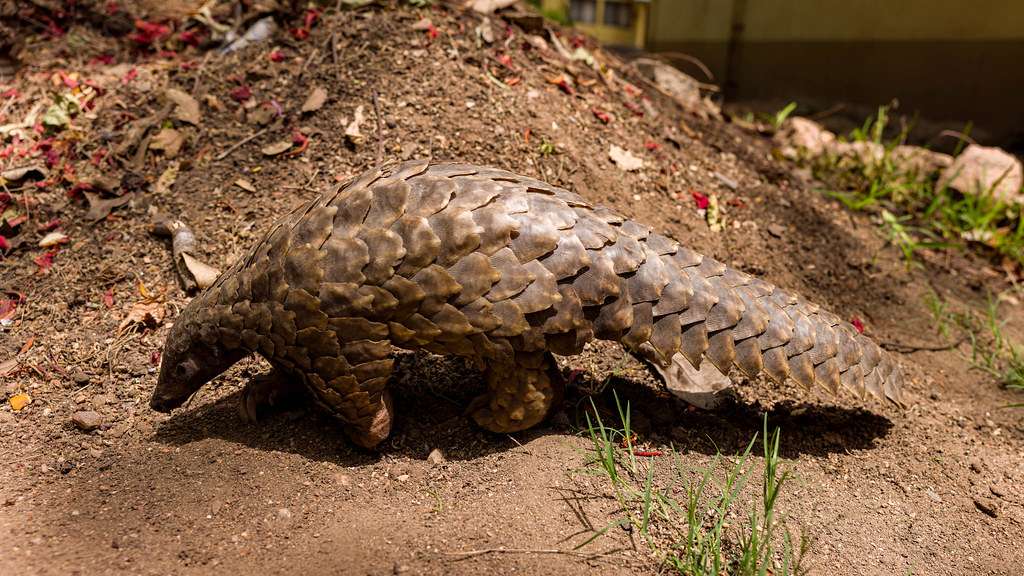
Pangolins are the only mammal on Earth covered almost entirely in overlapping keratin scales, the same protein that forms human fingernails and rhino horn, and when threatened, a pangolin genuinely curls into a tight, near-impenetrable ball, scales locking together to protect its vulnerable underside, a defence effective enough against most natural predators including lion and leopard that few animals other than a determined human can successfully breach it.
Why This Same Defence Makes Pangolins Tragically Easy to Poach
The same rolling defence that protects a pangolin from lion or leopard genuinely makes it defenceless against a person, since curling into a ball does nothing to prevent a poacher from simply picking the animal up, a grim mismatch between an evolved defence built for a different set of threats and the actual primary danger the species faces today, driven by demand for scales in traditional medicine markets and pangolin meat considered a delicacy in parts of Asia.
Why Pangolins Are So Genuinely Difficult to Spot on Safari
Pangolins are almost entirely nocturnal, solitary, and naturally shy, spending daylight hours in burrows or tree hollows and emerging only after dark to forage, a combination of traits that makes them genuinely one of the least commonly sighted mammals on any standard game drive, considerably rarer in practice than even notoriously elusive species like leopard, meaning most guides who have worked in Uganda for years still count a pangolin sighting among their career highlights.
What Pangolins Actually Eat
Pangolins feed almost exclusively on ants and termites, using an extraordinarily long, sticky tongue, in some species genuinely longer than the animal’s entire body when fully extended, to probe into nests and extract insects, a specialised diet that makes the species a genuinely important natural pest-control agent within the ecosystems it inhabits, with a single individual capable of consuming tens of thousands of insects in one night.
How Pangolins Dig and Move
Ground pangolins use genuinely powerful front claws to break into termite mounds and dig burrows for shelter, moving with a distinctive rolling, almost waddling gait on their hind legs while keeping front claws tucked close to the body, a locomotion style that looks considerably more awkward than it is efficient, since the same claws provide real digging power when the animal needs to excavate quickly.
Why Pangolin Conservation Status Is Genuinely Critical
All eight pangolin species worldwide are currently listed as threatened, with several classified as critically endangered, and Uganda’s populations, while not as intensively studied as the species’ status in parts of Asia and West Africa, are genuinely believed to be under real pressure from both habitat loss and the same illegal trafficking networks driving the species’ global decline, making any confirmed sighting or population data point genuinely valuable to conservation researchers.
Where Pangolins Have Been Documented in Uganda
Confirmed pangolin sightings and camera trap records exist from several Ugandan protected areas including Murchison Falls National Park and forested areas around Kibale Forest, though sightings genuinely remain rare and largely unpredictable events rather than a reliable, plannable safari activity.
Best Time of Year and Time of Day for a Chance Sighting
Given the species’ nocturnal habits, guided night walks genuinely offer the only realistic chance of a pangolin encounter, and even then success depends heavily on luck rather than a predictable seasonal pattern. See our Uganda best-time guide for how the country’s broader seasons shape wider trip planning.
Photographing a Pangolin Encounter
Given how rare and typically brief a pangolin sighting is, having a camera genuinely ready at all times during a night walk matters considerably more than for more predictable daytime sightings. See our camera gear guide for broader equipment recommendations.
What to Pack for Guided Night Walks
Standard forest trekking gear – sturdy shoes, rain protection, and neutral clothing – covers most of what a guided night walk requires, and a good torch is genuinely essential. If your wider itinerary includes gorilla trekking, our gorilla trekking packing list covers similar essentials.
Why the Pangolin’s Tail Plays a Genuinely Important Structural Role
Beyond simple balance, a pangolin’s tail, especially in the more arboreal white-bellied species, genuinely functions as a fully prehensile gripping tool capable of supporting the animal’s weight while climbing, and even ground-dwelling species use the tail as a stabilising counterbalance while digging or standing upright to investigate a scent, meaning the tail carries genuine functional importance well beyond what its relatively modest visual profile might suggest.
How Pangolin Reproduction and Parenting Genuinely Work
Female pangolins typically give birth to a single offspring after a gestation period of several months, and a newborn pangolin’s scales, initially soft, genuinely harden within just a few days, after which the mother carries her offspring riding on the base of her tail for several months while it gradually learns to forage independently, a genuinely close, extended maternal care period unusual among solitary mammal species.
Why International Anti-Trafficking Efforts Genuinely Matter for Uganda
Uganda has genuinely become a documented transit point for pangolin scale trafficking moving toward international markets, meaning conservation efforts within the country increasingly involve not just protecting resident populations but also intercepting trafficked scales originating from populations considerably further afield, a genuinely complex enforcement challenge given how easily scales can be concealed and transported compared to a live or whole animal.
Why Guides Treat a Pangolin Sighting as a Genuinely Special Moment
Given how rare confirmed sightings genuinely are, experienced guides who do encounter a pangolin, whether during a night walk or an unusually lucky daytime sighting, typically treat the moment with genuine excitement rather than routine acknowledgement, and many will pause a planned itinerary entirely to give visitors extended time with such an uncommon, conservation-significant species.
Combining a Pangolin-Focused Night Walk With Wider Forest Activities
A guided night walk hoping for pangolin activity often turns up other genuinely interesting nocturnal wildlife too, adding a worthwhile secondary activity alongside standard daytime chimpanzee trekking or colobus monkey viewing within the same Kibale or Murchison Falls itinerary.
How Pangolin Scales Compare to Rhino Horn as a Trafficked Commodity
Both pangolin scales and rhino horn are composed of keratin, the same structural protein, meaning neither substance carries the medicinal properties traditional markets attribute to them, a scientific reality that hasn’t slowed demand in either case, and international enforcement agencies increasingly treat pangolin scale seizures with the same seriousness long applied to rhino horn interdiction given the comparable scale of the illegal trade.
Why Camera Traps Have Become Genuinely Essential Research Tools
Given how rarely researchers or guides encounter a pangolin directly, camera trap networks placed across Uganda’s protected forests have become a genuinely essential tool for confirming continued presence and roughly estimating population trends, since motion-triggered cameras can monitor considerably more ground over considerably longer periods than any human observer patrolling on foot, capturing nocturnal activity that would otherwise go completely undocumented. Several Ugandan conservation organisations have genuinely begun cross-referencing camera trap footage from different park sectors to build a clearer picture of pangolin distribution and movement patterns, data that was essentially impossible to gather reliably before this technology became genuinely widely affordable and reliably deployable across remote, often difficult-to-access forest terrain.
Frequently Asked Questions
How many pangolin species live in Uganda?
Two – the terrestrial ground pangolin found in savannah and woodland habitat, and the more arboreal white-bellied pangolin found in forested areas.
Why are pangolins so hard to see on safari?
They’re almost entirely nocturnal, solitary, and shy, spending daylight hidden in burrows or tree hollows and emerging only after dark to forage.
Why is the pangolin considered the world’s most trafficked mammal?
Demand for their scales in traditional medicine markets and for pangolin meat has driven intense illegal trafficking across their entire global range.
What do pangolins actually eat?
Almost exclusively ants and termites, extracted using an extraordinarily long, sticky tongue that can exceed the animal’s own body length.
Where in Uganda have pangolins been documented?
Murchison Falls National Park and forested areas around Kibale Forest, though confirmed sightings remain genuinely rare and unpredictable.
Ready to Plan Your Uganda Safari?
Whether a guided night walk, chimpanzee trekking, or a full Uganda itinerary is your priority, our team can build a trip matched to your interests. Get in touch with our team below today and let’s start planning your complete Uganda safari itinerary together.


No comment