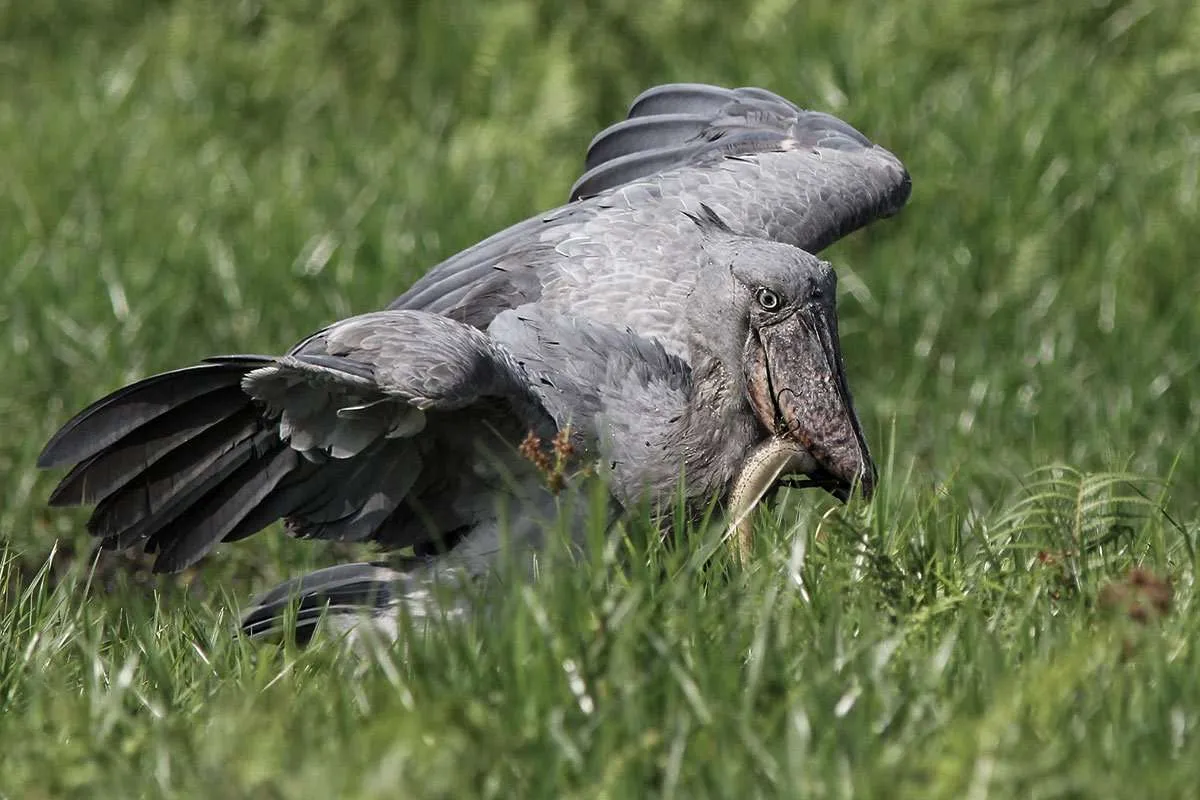
How Shoebill Storks Communicate in the Wild
The shoebill stork is one of Africa’s most mysterious birds. Known for its enormous shoe-shaped bill, towering height, and prehistoric appearance, the shoebill attracts birdwatchers and wildlife enthusiasts from around the world. While many people are fascinated by its hunting skills, fewer realize that the shoebill has a unique and fascinating way of communicating.
Unlike many bird species that rely heavily on songs and calls, shoebills communicate through a combination of bill clattering, body language, vocal sounds, and behavioral displays. These methods help them interact with mates, chicks, and other shoebills while living in the vast wetlands they call home.
The Famous Bill Clattering Display
The most recognizable form of shoebill communication is bill clattering. This behavior involves rapidly opening and closing the massive bill to create a loud rattling sound that resembles the burst of a machine gun.
Bill clattering serves several important purposes. Adult shoebills use it to greet each other during breeding periods and when approaching the nest. It helps strengthen bonds between mating pairs and signals friendly intentions.
Visitors lucky enough to witness this display in the wild often describe it as one of the most memorable moments of a shoebill encounter. The sound can travel across the swamp and immediately captures attention because it is unlike anything produced by most other birds.
Communication Between Parents and Chicks
Communication becomes especially important during nesting and chick rearing.
Young shoebills depend entirely on their parents for food and protection during the first months of life. Chicks use soft calls and begging sounds to attract attention when they are hungry. These vocalizations help parents identify their needs and respond accordingly.
Adult shoebills often answer through body movements, gentle vocal sounds, and feeding behavior. The interaction between parents and chicks creates a strong bond that is essential for the survival of the young birds.
Body Language Plays a Major Role
Shoebills also communicate through posture and movement.
A relaxed shoebill standing quietly with its feathers lying flat is displaying calm behavior. During courtship or territorial situations, body posture may change significantly. Birds may stretch their necks, lower their heads, or adjust their wings to send visual signals.
These movements allow shoebills to communicate without making much noise, which is useful in the dense wetlands where visibility can sometimes be limited.
Courtship Communication
During the breeding season, communication becomes more frequent and elaborate.
Male and female shoebills perform a series of displays that include bill clattering, bowing movements, and nest-related activities. These behaviors help establish pair bonds and prepare both birds for nesting.
Courtship communication ensures that the pair works together effectively during incubation and chick rearing. Since shoebills typically raise very few young, successful communication between parents is extremely important.
Vocal Sounds Beyond Bill Clattering
Although shoebills are generally quiet birds, they do produce vocal sounds.
Adults may make low grunts, hisses, or soft calls during interactions at the nest. Chicks tend to be more vocal than adults, especially when requesting food.
These sounds are usually less noticeable than bill clattering but remain important components of shoebill communication. They help coordinate activities between parents and offspring and reinforce social connections.
Communication Through Nest Building
Nest building itself can be considered a form of communication.
When a pair begins constructing or maintaining a nest, both birds participate in gathering vegetation and arranging nesting materials. This cooperative behavior strengthens their bond and signals readiness for breeding.
The nest becomes the center of communication between the pair throughout the breeding cycle.
Why Shoebill Communication Is Unique
Many birds rely heavily on songs to communicate. Shoebills are different because they depend more on visual displays, bill clattering, and subtle vocalizations.
Their wetland habitat may have influenced the development of these communication methods. Dense papyrus vegetation can limit visibility and affect how sound travels, making a combination of visual and mechanical signals particularly effective.
The shoebill’s enormous bill, famous for catching fish, also serves as a powerful communication tool. Few birds in the world use their bills to produce such distinctive sounds.
Observing Shoebill Communication in Uganda
Uganda is one of the best places in the world to observe shoebills in their natural habitat. Wetlands such as Mabamba Swamp provide excellent opportunities to watch these remarkable birds up close.
Birdwatchers who spend time observing shoebills often notice subtle interactions that reveal their complex communication methods. From the dramatic bill-clattering display to the gentle exchanges between parents and chicks, every behavior offers insight into the life of one of Africa’s most extraordinary birds.
The Importance of Protecting Shoebill Habitats
Protecting wetlands is essential for preserving shoebill populations and their unique behaviors.
Habitat loss, wetland degradation, and human disturbance can affect breeding success and reduce opportunities for these birds to communicate naturally. Conservation efforts help ensure that future generations can continue to witness the remarkable communication methods of the shoebill stork.
The shoebill is much more than a rare bird with a giant bill. It is a fascinating species with a communication system that combines sound, movement, and behavior in ways rarely seen elsewhere in the bird world. Watching a shoebill interact with its environment offers a deeper appreciation for one of Africa’s most iconic wetland species.
Why the Machine-Gun-Like Clatter Genuinely Serves as the Shoebill’s Most Efficient Long-Distance Signal
Since dense papyrus vegetation genuinely blocks visual signals over distance, this loud mechanical sound genuinely travels farther across the swamp than any call or posture could, making it the shoebill’s most reliable way to communicate with a distant mate or rival. All in Africa Safaris can arrange a guided visit timed to increase your chances of witnessing this display.
How Chick Begging Calls Genuinely Differ in Urgency Depending on How Long Since the Last Feeding
Since hungrier chicks genuinely intensify their vocal begging compared to recently fed siblings, parents genuinely use these subtle differences in urgency to prioritize which chick needs attention first during feeding rounds.
Why Observing Body Posture Genuinely Requires Patience That Most Casual Wildlife Viewing Doesn’t Demand
Since shoebills genuinely communicate through slow, deliberate movements rather than sudden dramatic action, birdwatchers genuinely need to sit quietly and observe for extended periods to catch the subtle neck stretches and head lowering that carry real meaning. All in Africa Safaris can pair you with a patient, experienced guide for shoebill observation.
How Courtship Bill Clattering Genuinely Differs in Rhythm From the Greeting Version Between Established Pairs
Since courting shoebills genuinely perform more elaborate, sustained clattering sequences compared to the shorter greetings exchanged between already-bonded pairs, careful observers genuinely can distinguish where a pair stands in their relationship simply by listening.
Why the Rarity of Shoebill Vocal Sounds Genuinely Makes Each Recorded Grunt or Hiss Scientifically Valuable
Since these quieter vocalizations genuinely occur far less often than bill clattering and are harder to document, researchers genuinely treat each recorded instance as a valuable data point for understanding the full range of shoebill communication. All in Africa Safaris can connect birding enthusiasts with conservation-minded guides in shoebill territory.
How Cooperative Nest Building Genuinely Reveals the Depth of Partnership Between a Shoebill Breeding Pair
Since both birds genuinely contribute equally to gathering and arranging nesting material, this shared labor genuinely functions as an ongoing communication ritual that reinforces the pair bond well before any eggs are laid.
Why Mabamba Swamp Genuinely Ranks Among the Best Places Worldwide to Witness Shoebill Communication Firsthand
Since this wetland genuinely offers unusually reliable shoebill sightings compared to more remote habitats elsewhere in Africa, visitors genuinely have a realistic chance of observing multiple communication behaviors in a single outing rather than a single fleeting glimpse. All in Africa Safaris can arrange a dedicated shoebill-watching excursion to Mabamba Swamp.
How the Shoebill’s Bill-as-Instrument Function Genuinely Sets It Apart From Nearly Every Other Bird Family
Since most birds genuinely rely on their syrinx to produce distinctive calls, the shoebill’s use of its bill as a mechanical sound-producing tool genuinely places it among a small handful of species worldwide with such an unusual communication method.
Why Wetland Conservation Genuinely Protects Not Just Shoebill Numbers but Their Entire Communication System
Since breeding success genuinely depends on undisturbed nesting sites where pairs can complete their full courtship and rearing communication cycle, habitat loss genuinely threatens not just population numbers but the very behaviors that make shoebills so fascinating to observe. All in Africa Safaris supports responsible, conservation-minded shoebill tourism in Uganda’s wetlands.
How Early Morning Visits Genuinely Increase the Odds of Witnessing Active Shoebill Communication
Since shoebills genuinely tend toward greater activity during cooler early hours before the day’s heat sets in, birdwatchers who schedule dawn excursions genuinely improve their chances of catching feeding exchanges, bill clattering, or courtship displays in action.
Why Bringing a Zoom Lens or Spotting Scope Genuinely Improves Your Ability to Read Subtle Behavioral Cues
Since a shoebill’s posture and head movements genuinely happen at some distance across open water or dense reeds, magnification gear genuinely lets birdwatchers catch the fine details of body language that would otherwise go unnoticed from a boat or platform. All in Africa Safaris can advise on gear best suited to shoebill photography and observation.
Planning Your Shoebill Watching Adventure
From bill clattering to subtle body language, genuinely the shoebill’s communication system rewards patient, attentive observation. All in Africa Safaris can turn this overview into a fully confirmed itinerary tailored to your travel dates.