
Black-and-White Colobus of Kibale Forest
Black-and-white colobus move through Kibale Forest’s canopy in genuinely striking troops, their flowing white cape-like fur and long, plumed tail making them one of Uganda’s most visually distinctive primates, often spotted during the same visit as Kibale’s famous chimpanzee trekking.
A Genuinely Distinctive Forest Primate
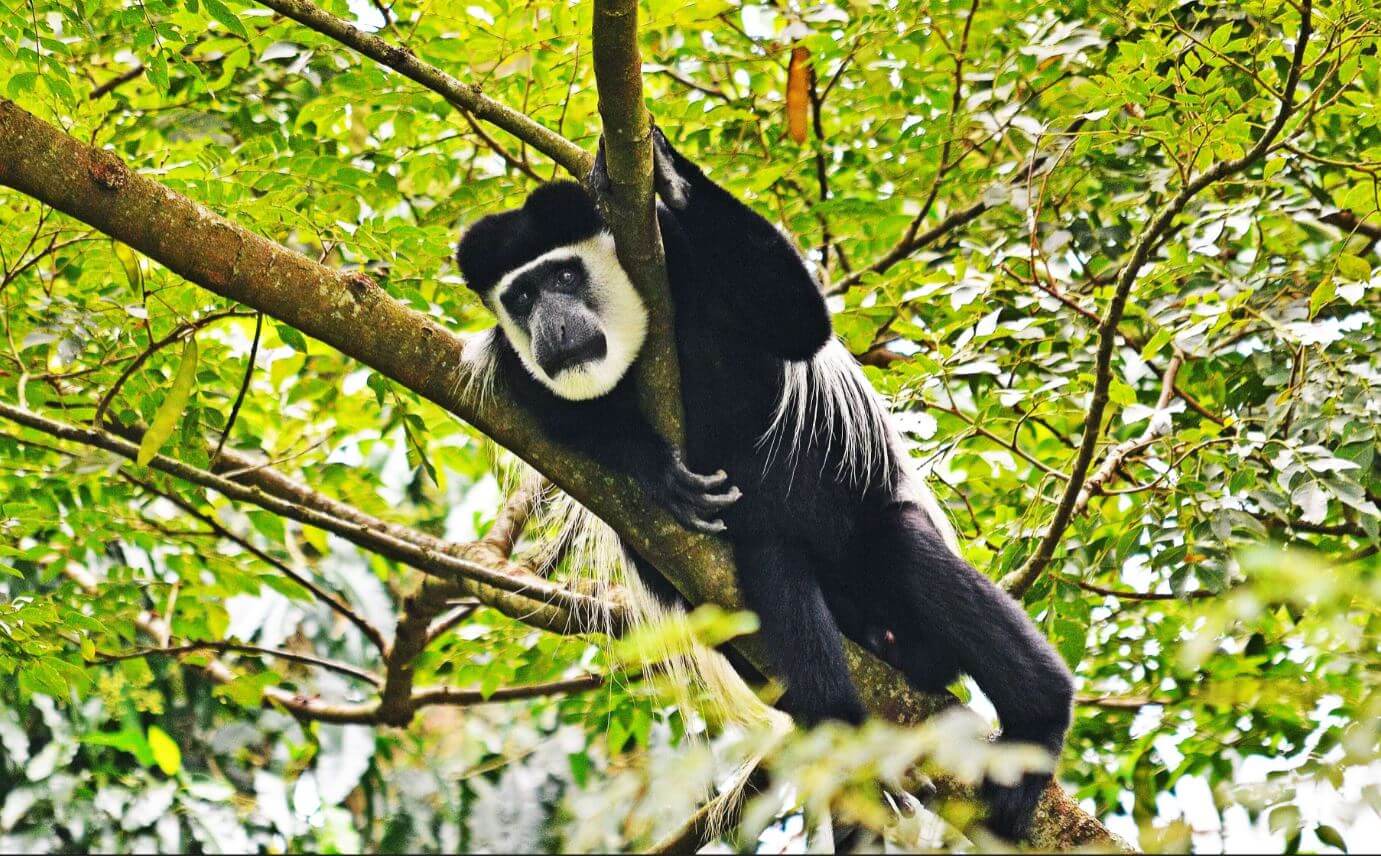
Black-and-white colobus carry a genuinely unmistakable appearance, with a jet-black body offset by long white fur draping from the shoulders and a strikingly plumed white tail that trails behind as they move through the canopy. This dramatic colouring, combined with their acrobatic leaping between tree branches, makes colobus one of the more visually rewarding primate sightings available in Kibale Forest.
Where to Find Colobus in Kibale Forest
Colobus troops range throughout Kibale’s dense forest canopy, often encountered along the same trail networks used for chimpanzee trekking, giving travelers genuine opportunities to combine both species within a single forest walk. Their preference for the upper canopy means sightings typically involve looking upward through dense foliage rather than at ground level.
Why Colobus Lack Thumbs
Black-and-white colobus possess genuinely reduced or entirely absent thumbs, an evolutionary adaptation that actually improves their efficiency swinging rapidly through branches, since a full thumb would slow their characteristic leaping, branch-to-branch movement style. Their name itself derives from the Greek word for “mutilated,” referencing this distinctive physical trait.
Colobus Diet and Digestive Adaptation
Colobus monkeys are genuinely specialised leaf-eaters, possessing a multi-chambered stomach similar in function to a ruminant’s digestive system, allowing them to break down the tough, fibrous leaves that make up the vast majority of their diet. This dietary specialisation means colobus rarely compete directly with Kibale’s other primate species for food resources.
Colobus Social Structure and Troop Dynamics
Colobus troops typically consist of a single dominant male alongside multiple females and their offspring, moving together through a shared territory within the forest canopy. Troops periodically produce a genuinely distinctive roaring call, particularly at dawn, used to communicate territorial boundaries to neighbouring groups across the forest.
Colobus and Kibale’s Wider Primate Diversity
Beyond colobus, Kibale holds Uganda’s highest primate diversity, including chimpanzees and numerous other monkey species, making the forest one of East Africa’s most genuinely rewarding single destinations for primate-focused travelers.
Best Time of Year for Colobus Sightings
Colobus are visible in Kibale Forest year-round given their resident status, making seasonal timing genuinely less critical than for many other Uganda wildlife sightings. See our Uganda best-time guide for how the country’s broader dry and wet seasons still affect wider trip planning.
Self-Drive vs Guided Forest Walks
Colobus viewing in Kibale is only available through guided forest walks, given the dense vegetation and specialised tracking knowledge required to locate active troops within the canopy. Most visitors combine colobus viewing with standard chimpanzee trekking permits on the same forest walk.
Photographing Kibale’s Colobus
A colobus troop silhouetted against dappled canopy light, particularly mid-leap between branches, offers a genuinely striking photographic opportunity distinct from ground-level wildlife photography. A telephoto lens with a reasonably fast shutter speed helps freeze their characteristic rapid movement, similar to the gear recommended in our camera gear guide.
What to Pack for a Kibale Forest Safari
Standard forest trekking gear – sturdy shoes, rain protection, and neutral clothing – covers most of what Kibale requires. If your wider itinerary includes gorilla trekking, our gorilla trekking packing list covers similar essentials applicable to Kibale as well.
Colobus Vocalisations and the Dawn Chorus
Kibale’s forest mornings are frequently punctuated by colobus troops’ distinctive roaring calls, a sound experienced guides can help identify and distinguish from the forest’s other primate and bird vocalisations, adding genuine auditory depth to an early morning forest walk.
Combining Colobus Viewing With Chimpanzee Trekking
Most Kibale itineraries combine standard chimpanzee trekking permits with broader forest walks that frequently encounter colobus and other primate species, giving travelers genuine value across a single, well-organised forest excursion within a wider Uganda itinerary.
Getting to Kibale Forest National Park
Kibale sits within Uganda’s western tourism circuit, commonly combined with Queen Elizabeth National Park and Bwindi gorilla trekking on a longer itinerary, making it a natural inclusion for travelers already planning a broader southwestern Uganda safari.
Colobus Leaping Ability
Colobus are genuinely remarkable acrobats, capable of leaping considerable distances between tree branches using their long limbs and distinctive plumed tail for balance mid-air, a movement style that makes watching a troop travel through the canopy one of Kibale’s more visually captivating primate behaviours. This leaping ability, combined with their striking colouring, often draws attention even from travelers focused primarily on chimpanzee trekking.
Infant Colobus Development
Colobus infants are born with genuinely all-white fur, a striking contrast to their parents’ black-and-white pattern, gradually developing adult colouring over their first several months of life. This distinctive infant appearance makes spotting a young colobus within a troop a genuinely notable, easily identifiable sighting for attentive visitors.
Colobus and Kibale’s Broader Conservation Significance
Kibale’s protected forest status has allowed colobus populations to remain genuinely healthy compared to more fragmented forest habitat elsewhere in Uganda, reinforcing the park’s significance as one of the country’s most important primate conservation areas beyond its famous chimpanzee population.
Comparing Kibale’s Colobus to Nyungwe’s Population
Rwanda’s Nyungwe Forest holds genuinely massive colobus troops, some of the largest documented anywhere in Africa, offering an interesting comparison for travelers building a wider East Africa primate itinerary spanning both countries.
Guided Forest Walk Logistics
Colobus and wider primate walks in Kibale typically depart early morning alongside standard chimpanzee trekking groups, with rangers leading small groups along established forest trails while maintaining respectful distance from active troops to minimise disturbance to natural behaviour.
Why Guides Enjoy Highlighting Colobus Alongside Chimps
Experienced Kibale guides frequently note that colobus sightings genuinely complement chimpanzee trekking well, offering a visually striking contrast between the chimps’ ground-and-canopy movement and colobus’s more purely arboreal, acrobatic lifestyle within the same forest ecosystem.
Colobus Predators Within Kibale
Colobus face genuine predation risk from Kibale’s resident crowned eagle population, one of Africa’s most powerful forest raptors, capable of taking young or unwary colobus individuals directly from the canopy. This predation pressure, considerably different from the ground-based threats facing savannah primates, has shaped colobus vigilance behaviour and their preference for staying within denser, more protective canopy cover.
Colobus Territorial Roaring and Its Function
The distinctive roaring calls colobus troops produce, particularly around dawn, serve a genuinely important territorial function, signalling a troop’s presence and boundaries to neighbouring groups without requiring direct physical confrontation. This vocal territoriality helps minimise energy-costly conflict between troops sharing overlapping sections of Kibale’s dense forest habitat.
Best Lodges for Colobus and Primate-Focused Visits
Properties positioned near Kibale’s main trailheads genuinely simplify logistics for travelers specifically prioritising colobus and wider primate viewing, cutting down on transfer time before guided forest walks. Discussing current troop activity directly with your operator, alongside wider Uganda primate options, is genuinely worth doing before finalising your complete Kibale itinerary.
Why First-Time Visitors Are Often Surprised by Colobus
Many travelers arrive at Kibale focused entirely on chimpanzee trekking and are genuinely surprised by how visually striking and behaviourally engaging colobus sightings turn out to be, often becoming an unexpected highlight of the same forest walk rather than a secondary afterthought.
Getting to Kibale From Other Uganda Destinations
Kibale sits within a comfortable connecting drive of Queen Elizabeth National Park and its famous Kazinga Channel, making it a natural inclusion on longer itineraries covering both savannah wildlife and forest primates within a single well-planned western Uganda circuit.
What to Expect From a Combined Primate Walk
A single Kibale forest walk often produces sightings of colobus alongside several other monkey species, giving travelers a genuinely efficient, considerably rewarding overview of the park’s remarkable overall primate diversity within just a few hours of guided forest walking time.
What to Pack Specifically for a Primate Walk
Beyond standard forest gear, binoculars genuinely improve canopy-level colobus viewing given how much time is spent looking upward through dense foliage rather than at eye level, making them a genuinely worthwhile addition even on a short guided walk.
Frequently Asked Questions
Why are they called black-and-white colobus?
Their name derives from the Greek word for “mutilated,” referencing their reduced or absent thumbs, an adaptation for rapid canopy movement.
Can I see colobus during chimpanzee trekking?
Yes, genuinely often – colobus troops frequent the same trail networks used for chimp trekking within Kibale Forest.
What do colobus monkeys eat?
Primarily leaves, digested through a specialised multi-chambered stomach adapted to process tough, fibrous plant material.
What’s the best time of year to see colobus in Kibale?
Year-round given their resident status, making seasonal timing genuinely less critical than for other Uganda wildlife.
Is Kibale good for primates beyond chimpanzees?
Genuinely yes – it holds Uganda’s highest primate diversity, including colobus and numerous other monkey species.
Ready to Plan Your Kibale Forest Safari?
Whether the forest’s striking colobus troops, chimpanzee trekking, or a full Uganda itinerary is your priority, our team can build a trip matched to your interests. Get in touch with our team below today and let’s start planning your complete Uganda safari itinerary together.

No comment