
Lions genuinely hunt cooperatively as a pride primarily because coordinated group hunting allows them to bring down prey considerably larger and more dangerous than any single lioness could safely tackle alone, a strategy built around assigned positioning roles, patient stalking, and a division of labour that research has shown noticeably improves overall hunting success compared to solitary attempts.
Why Group Hunting Genuinely Outperforms Solitary Attempts
Researchers studying lion hunting success rates have found that solitary lions succeed in only a small fraction of attempts, often cited around fifteen to twenty percent, while coordinated pride hunts involving several lionesses working together can push success rates considerably higher, sometimes exceeding thirty percent depending on prey type and terrain, a meaningful statistical difference that explains why lionesses, who do the overwhelming majority of a pride’s hunting, so consistently favour group coordination over individual pursuit whenever pride numbers allow it.
The Genuine “Wing” and “Centre” Positioning System
Lionesses hunting together frequently adopt distinct positional roles researchers describe as wings and centre, with faster, typically leaner lionesses circling wide to flank a target herd from the sides while others hold a more central position directly ahead, waiting for the flanking lionesses to drive prey toward them. This isn’t random positioning but a genuinely consistent pattern documented across multiple pride studies, with individual lionesses tending to specialise in one role repeatedly over time rather than rotating unpredictably between hunts.
Why Certain Lionesses Genuinely Specialise in the Same Role Repeatedly
Long-term pride studies have found that individual lionesses genuinely tend to occupy the same positional role, wing or centre, across many separate hunts throughout their lives, likely reflecting each individual’s particular body build, speed, and confidence level, with leaner, faster lionesses consistently taking the more physically demanding flanking wing position while heavier, more powerfully built individuals hold the ambush-focused centre role, a division of labour that plays to each lioness’s genuine physical strengths rather than assigning roles arbitrarily.
How Terrain and Vegetation Genuinely Shape Hunting Strategy
Prides hunting in dense bush or tall grass genuinely rely more heavily on close-range ambush, using cover to approach within a few metres of prey before the final rush, while prides hunting across more open terrain must depend considerably more on coordinated flanking and driving prey toward waiting lionesses, since a close, undetected approach is simply much harder to achieve without adequate cover, meaning the exact hunting strategy a pride uses genuinely adapts to the specific landscape they’re operating within rather than following one fixed universal template.
Why Nighttime Hunting Genuinely Improves the Odds Further
Lions possess considerably better low-light vision than most of their prey species, an advantage that becomes genuinely decisive after dark, when a pride’s approach is harder for prey to detect visually even at relatively close range, explaining why the large majority of successful pride hunts genuinely occur at night or during the low-light hours around dawn and dusk rather than in full daylight.
The Genuine Risk Involved in Tackling Large, Dangerous Prey
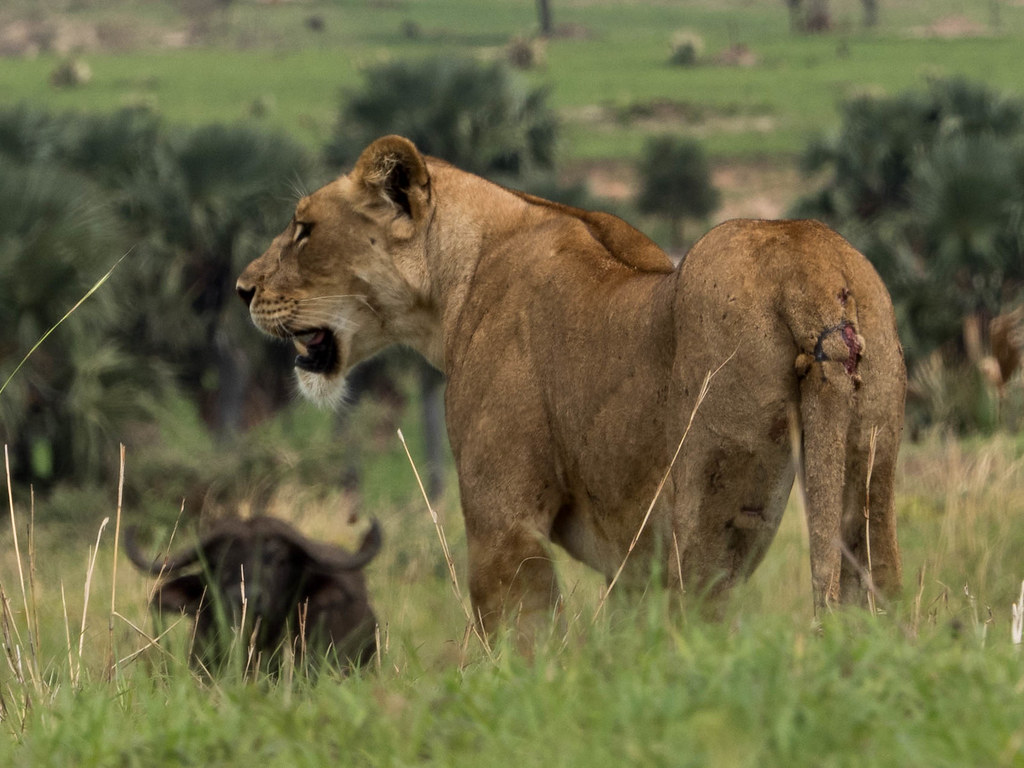
Because pride hunting makes considerably larger prey like buffalo and even young giraffe viable targets, lionesses face genuine physical risk during these hunts, with buffalo in particular capable of causing serious or fatal injury through their horns and sheer weight, meaning coordinated numbers serve a defensive purpose during the hunt itself, not just an offensive one, spreading physical risk across several individuals rather than concentrating it on one exposed lioness.
How Male Lions Fit Into the Hunting Picture
While lionesses handle the substantial majority of a pride’s actual hunting, resident males genuinely do participate in certain circumstances, particularly hunts targeting exceptionally large or dangerous prey like buffalo, where their considerably greater size and strength provide a genuine tactical advantage, though males more typically arrive after a kill to assert feeding priority rather than contributing directly to the hunt itself.
Where to Observe Pride Hunting Behaviour in East Africa
Coordinated pride hunts are genuinely reliable to observe across the Serengeti-Mara ecosystem during migration season when large, vulnerable herds concentrate prey density, alongside Queen Elizabeth National Park’s resident pride population.
Best Time of Year for Lion Hunting Behaviour
Lions are visible year-round given resident pride territories, though migration season concentrates prey and correspondingly increases visible hunting activity. See our regional best-time guide for how seasonal patterns generally affect wider game viewing.
Photographing Lion Hunting Behaviour
Capturing the coordinated flanking approach, or the final rush itself, offers genuinely dramatic photographic opportunities though it requires considerable patience given how much time a stalk can take before any actual action unfolds. See our camera gear guide for broader equipment recommendations.
What to Pack for Extended Game Drive Sessions
Standard game drive gear – neutral clothing, sun protection, and binoculars – covers most of what patient predator observation requires, and a light layer is worth having for early morning or evening sessions when hunting activity is most likely. If your wider itinerary includes gorilla trekking, our gorilla trekking packing list covers that portion separately.
How Pride Size Genuinely Affects Hunting Strategy
Larger prides with more available lionesses can genuinely field a fuller wing-and-centre formation and tackle more ambitious prey, while smaller prides or those temporarily missing key hunting members must scale back to considerably more conservative targets or rely on opportunistic single-lioness ambush rather than full coordinated pursuit, meaning pride demographics directly shape what prey is realistically viable on any given night.
Why Communication During a Hunt Stays Genuinely Minimal
Unlike African wild dogs, which use frequent vocal contact throughout a coordinated hunt, lionesses genuinely rely on visual cues, body posture, and positioning learned through repeated shared hunting experience rather than vocalising during the stalk itself, since any sound risks alerting prey well before the pride is in position, meaning successful coordination depends heavily on lionesses who have hunted together enough times to anticipate each other’s movement without direct communication.
How Young Lionesses Genuinely Learn the Hunting System
Subadult lionesses learn pride hunting technique primarily through direct observation and gradual participation, initially trailing behind established hunters and only slowly taking on a genuine active role as they build the physical strength, patience, and positional judgement required, a multi-year learning process that means a pride’s overall hunting effectiveness genuinely depends on retaining experienced, skilled lionesses rather than simply having sufficient total numbers.
Why Guides Value Explaining This Coordination to Visitors
Given how much of a genuine hunt’s coordination happens through subtle, easily missed positioning rather than obvious dramatic action, experienced guides genuinely value pointing out the wing-and-centre formation forming before visitors might otherwise recognise a hunt is even underway, adding real behavioural depth to what might otherwise look like lionesses simply walking through grass.
Combining Predator Behaviour Viewing With a Wider Migration Circuit
Pride hunting behaviour pairs naturally with a broader Serengeti-Mara migration itinerary, giving travelers the chance to witness the full predator-prey dynamic that defines the region’s ecosystem within the same overall trip.
How Pride Hunting Strategy Differs From a Cheetah’s Solo Approach
Unlike lions, which favour patient, coordinated stalking with multiple individuals sharing the physical risk, cheetahs hunt almost entirely alone and rely on raw acceleration rather than numbers, a fundamentally different strategy shaped by the cheetah’s comparatively lighter, more injury-prone build, which genuinely couldn’t withstand the kind of close-contact struggle a buffalo or zebra can inflict during a prolonged group takedown the way a heavier lion can.
Why Failed Hunts Still Provide Genuine Information to the Pride
Even an unsuccessful hunt attempt genuinely isn’t wasted effort from the pride’s perspective, since lionesses use each attempt to assess a specific herd’s alertness level, individual weak or vulnerable members, and how terrain features affect approach distance, information that measurably improves the odds of the pride’s next attempt on the same or a similar herd shortly afterward, meaning hunting success across an evening often builds cumulatively, attempt by attempt, rather than each individual attempt genuinely starting from a completely blank informational slate.
Frequently Asked Questions
Why do lions hunt in groups rather than alone?
Coordinated group hunting achieves considerably higher success rates and allows prides to safely tackle larger, more dangerous prey than a solitary lioness could manage.
What are the “wing” and “centre” hunting roles?
Faster lionesses flank prey from the sides as wings, driving it toward other lionesses holding a central ambush position ahead.
Do male lions participate in hunting?
Occasionally, particularly for very large or dangerous prey like buffalo, though lionesses handle the substantial majority of pride hunting.
Why do most lion hunts happen at night?
Lions have considerably better low-light vision than most prey species, making an undetected approach genuinely easier after dark.
Where can I see pride hunting behaviour on safari?
The Serengeti-Mara ecosystem during migration season and Queen Elizabeth National Park’s resident pride population both offer strong opportunities.
Ready to Plan Your East Africa Safari?
Whether observing pride hunting behaviour firsthand, the wildebeest migration, or a full East Africa itinerary is your priority, our team can build a trip matched to your interests. Get in touch with our team below today and let’s start planning your complete safari itinerary together.

No comment