

Lions of Tsavo: The Man-Eaters of Tsavo Explained
Tsavo’s lions carry one of the most infamous reputations of any wild population in Africa, rooted in a real 1898 incident in which two adult males killed a documented number of railway workers building the Kenya-Uganda railway, an event that later inspired books and films and still shapes how visitors think about the region’s lions today. This guide separates the documented history from the exaggeration, and covers where and how to see Tsavo’s lions on safari now.
What Actually Happened in 1898
During construction of a railway bridge over the Tsavo River, two male lions killed a number of construction workers over roughly nine months before being hunted down and killed by the project’s chief engineer, Lieutenant Colonel John Henry Patterson, whose own account of the episode became the basis for later dramatized retellings. Our roundup of essential lion facts for safari-goers covers more background on lion behavior generally, useful context for understanding how unusual this specific episode really was compared to typical lion behavior.
Why Tsavo’s Lions Developed This Behavior
Researchers have proposed several contributing factors rather than one single cause: dental disease and injury that made the two males less capable of hunting their usual wild prey, a period of prey scarcity in the region at the time, and the unusual concentration of vulnerable, exposed workers along the rail line, factors that together likely combined rather than any one alone fully explaining the episode.
Are Tsavo’s Lions Still Considered Unusually Dangerous?
No credible evidence suggests Tsavo’s current lion population behaves any differently from lions elsewhere in East Africa, and the 1898 incident is understood by researchers as an unusual, specific set of circumstances rather than evidence of an ongoing regional trait. Our guide on whether lions are dangerous to safari vehicles covers standard safety information that applies equally well to Tsavo as to any other major lion park.
The Distinctive Maneless Males of Tsavo
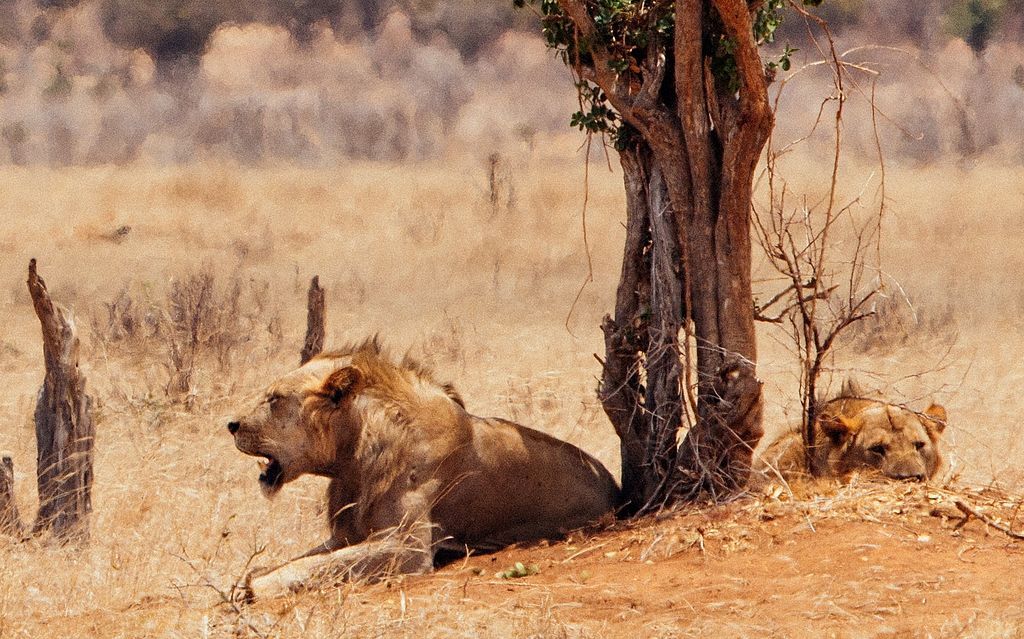
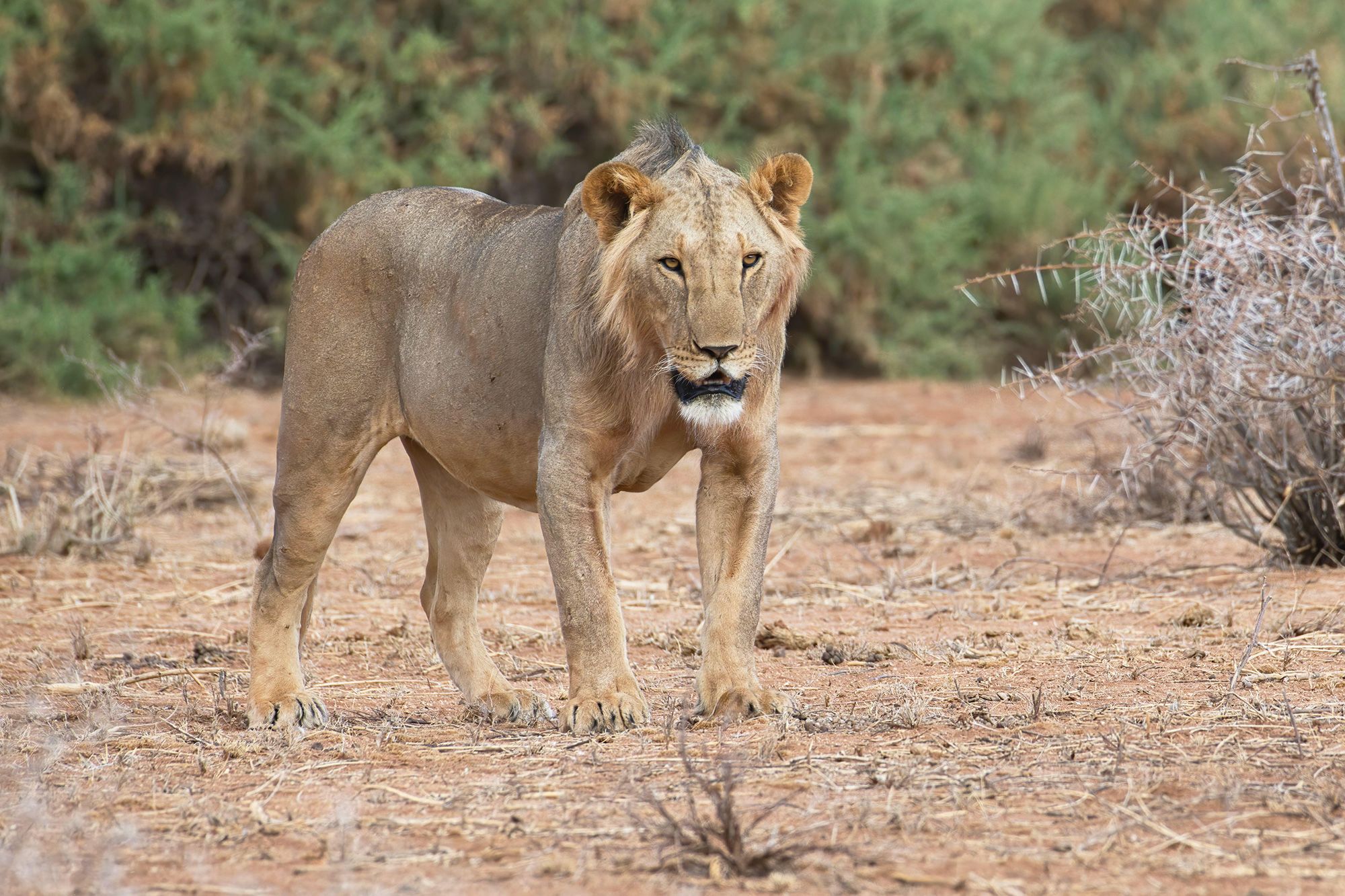
Beyond the historical story, Tsavo’s lions are notably distinctive for another reason: many resident males grow little to no mane, a trait researchers link to the region’s hot climate and dense thornbush habitat rather than any connection to the historical man-eating incident. Our guide on male versus female lion differences covers the broader biology behind mane growth and what else sets the sexes apart on safari.
Where to See Lions in Tsavo Today
Tsavo East and Tsavo West together form one of Kenya’s largest protected areas, with resident prides spread across a landscape of red-soil plains, lava flows, and dense scrub considerably different in character from the open grassland typical of the Mara or Serengeti. Our guide on the best national parks to see lions in East Africa covers how Tsavo compares to Kenya’s other major lion destinations.
Tsavo’s Red Elephants and Wider Big Five Appeal
Tsavo is equally famous for its “red elephants,” a coloring caused by the park’s distinctive red dust rather than genetics, meaning a Tsavo lion safari typically comes paired with strong elephant viewing too, giving the park a considerably broader Big Five draw beyond just its lion history.
Best Time of Year to Visit Tsavo for Lions
Dry season months concentrate wildlife more predictably around Tsavo’s limited permanent water sources, generally improving sighting odds across the park’s dense, harder-to-search terrain. Our guide on lion sightings in dry season versus wet season covers this same seasonal pattern in more depth across East Africa’s parks broadly.
How Tsavo’s Terrain Affects Sightings
Tsavo’s denser bush and thornscrub habitat, compared to the Mara or Serengeti’s open plains, means lions here can be considerably harder to spot even when present in good numbers, rewarding guides with strong local tracking experience and a bit more patience than a wide-open savanna sighting typically requires.
Combining Tsavo With the Rest of a Kenya Itinerary
Tsavo’s location between Nairobi and the Kenyan coast makes it a natural stop on a route connecting a classic safari with a beach extension in Diani or Watamu, giving travelers a practical way to combine wildlife and coastal relaxation within a single overall trip. Our guide on a 7-day Kenya lion safari itinerary covers a full route structure that adapts reasonably well to this kind of combined wildlife-and-coast trip.
How Guides Address the Man-Eater History With Visitors
Most Tsavo guides are happy to discuss the 1898 story directly, since it’s a genuine piece of the park’s documented history and a frequent visitor question, but experienced guides are also careful to frame it accurately as a specific historical incident rather than something reflecting the current, well-monitored population’s typical behavior.
Photographing Tsavo’s Distinctive Lions
The combination of maneless males, red-dust-coated coats, and the park’s dramatic lava-rock and baobab scenery gives Tsavo lion photography a markedly different visual character than shots taken in the Mara or Serengeti, worth keeping in mind when planning camera settings and composition for this specific landscape. Our guide on photographing lions on safari covers general technique that still applies well here.
How Patterson’s Account Shaped Popular Culture
Patterson’s own 1907 book on the episode, and the later Hollywood film it inspired, dramatized several details well beyond what the historical record actually supports, including the exact number of victims, a figure that has been debated and revised by researchers examining museum specimens and railway records more closely in the decades since. Understanding this gap between the popular legend and the documented history is useful context before visiting, since guides and exhibits in the region often address both versions directly.
Where the Original Lions Are Now
The taxidermied remains of the two original Tsavo lions are held at the Field Museum in Chicago, where researchers have continued studying their skulls, teeth, and bone chemistry using modern techniques unavailable at the time of the killings, adding real scientific detail to a story that for decades relied mainly on Patterson’s own written account.
Tsavo’s Broader Wildlife Beyond Lions and Elephants
Beyond its famous lions and red elephants, Tsavo supports healthy populations of buffalo, giraffe, and a wide range of antelope species across its combined East and West sectors, giving visitors a considerably fuller Big Five and general game-viewing experience rather than a park worth visiting for its lion history alone. Our guide on lion versus hyena competition covers another predator dynamic well worth watching for closely during a Tsavo game drive.
Practical Tips for a Tsavo Safari
Given the park’s size and dense terrain, allowing at least two to three nights gives a guide realistic time to cover enough ground for strong sightings, and choosing a lodge or camp with an experienced local team matters considerably more here than in smaller, easier-to-search parks where any competent guide can reliably deliver a sighting within a shorter visit.
Why Tsavo Rarely Tops First-Time Visitors’ Lists
Despite its remarkable history and strong wildlife credentials, Tsavo is often overshadowed on first-time itineraries by the Mara’s higher lion density and easier logistics, meaning the park tends to draw a mix of repeat Kenya visitors and travelers specifically interested in its history rather than the broad first-time safari crowd, a pattern that arguably keeps Tsavo’s sightings feeling considerably less crowded than they might otherwise be, given how much history and wildlife the park actually has to offer visitors willing to look a little further afield.
Researching the Story Before You Go
Visitors with a strong interest in the historical episode often read Patterson’s original account or one of the more recent, better-researched retellings before traveling, since having the background in hand makes a guide’s on-the-ground narration considerably more engaging than hearing the whole story cold for the first time while already out on a game drive, with only a fraction of the context a bit of advance reading would have provided.
Frequently Asked Questions
A few quick answers to the questions travelers ask most often about Tsavo’s lions.
Are Tsavo’s lions still dangerous today?
No more than any other East African population – the 1898 incident is understood as a specific historical event, not an ongoing regional trait.
Why do some Tsavo lions have little or no mane?
Researchers link it to the region’s hot climate and dense thornbush habitat, not to any connection with the man-eating history.
What is the best time of year to visit Tsavo for lion sightings?
Dry season months generally offer the most reliable sightings, since wildlife concentrates more predictably around limited water sources.
Can I combine Tsavo with a beach holiday?
Yes – Tsavo’s location between Nairobi and the Kenyan coast makes it a natural stop on a route toward Diani or Watamu.
Is Tsavo good for more than just lions?
Yes – Tsavo is equally known for its “red elephants” and offers strong overall Big Five viewing beyond its lion history.
Ready to Plan Your African Safari?
Whether Tsavo’s history first drew your interest or you’re planning a wider Kenya itinerary that includes this remarkable park, our team can build a trip matched to your priorities. Get in touch with our team below today and let’s start planning your complete African safari itinerary together.

No comment