


Are Lions Dangerous to Safari Vehicles?
Lions pose very little danger to visitors inside a proper safari vehicle, a safety record built on decades of consistent guiding practice and the specific way lions perceive a vehicle with people inside it, though this safety depends entirely on following a few well-established rules rather than being an automatic guarantee regardless of behaviour.
This guide covers exactly how and why that safety record holds up so consistently, what changes the risk calculation, and how it compares to the real risks posed by other Big Five species on a typical game drive.
Why Lions Perceive a Vehicle as a Single Large Object
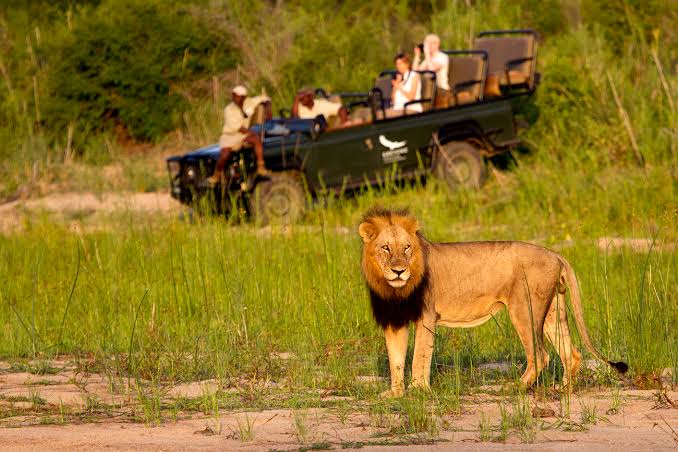
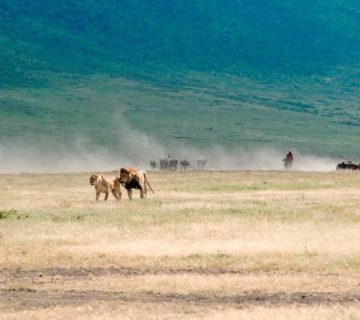
Lions don’t recognise the individual human occupants of a safari vehicle as separate from the vehicle itself, instead perceiving the whole thing, engine, metal body, and passengers together, as one large, unfamiliar object that simply isn’t part of their normal prey recognition pattern. This explains why lions habituated to vehicle presence will rest calmly within just a few metres of an idling safari vehicle, behaviour that would be unthinkable if a person stepped out and stood in the open on foot instead. Our guide on what lions eat and how they hunt covers more about the specific prey-recognition patterns lions rely on when identifying a genuine hunting target.
Why Staying Inside the Vehicle Matters So Much
The moment a person exits the vehicle, that same lion reclassifies what it’s seeing, now recognising an individual human silhouette rather than a single large unfamiliar shape, a significant shift that removes the protective effect vehicle presence otherwise provides. This is precisely why guides enforce strict no-exit policies in open lion territory, since the danger isn’t really about the vehicle itself but about breaking the specific visual pattern lions have learned to treat as non-threatening.

How Decades of Habituation Built This Safety Pattern
This tolerance didn’t happen overnight; it developed gradually over decades of consistent, predictable vehicle presence following established road networks that avoid disrupting hunting or denning areas, with each generation of cubs growing up already accustomed to vehicles as a normal, unthreatening part of their environment. Newer, less-visited ecosystems with limited tourist vehicle history show considerably more cautious, sometimes visibly wary lion behaviour around vehicles by comparison.
Well-established ecosystems like the Serengeti, with decades of continuous, high-volume tourist vehicle traffic, show some of the most consistently relaxed lion behaviour around vehicles found anywhere on the continent, a direct product of this long habituation history rather than any difference in the underlying species’ temperament.
Why Sudden Movement and Noise Matter More Than Proximity Alone
Sudden, unexpected movement or loud noise from within a vehicle carries more risk of triggering a defensive or startled reaction than simple physical proximity does, since lions have learned to associate a quiet, slow-moving vehicle with safety, while sudden change breaks that learned expectation. This is why experienced guides ask passengers to stay seated, keep noise to a reasonable level, and avoid sudden arm or camera movements when close to a resting pride.
Camera shutter sound and flash photography warrant specific mention here too, since a loud continuous burst mode or an unexpected flash can startle a resting animal considerably more than a single quiet shutter click, which is why most guides ask visitors to disable flash entirely during close sightings and use burst mode sparingly rather than continuously.
Standing Through a Vehicle’s Roof Hatch: Where the Real Risk Line Sits
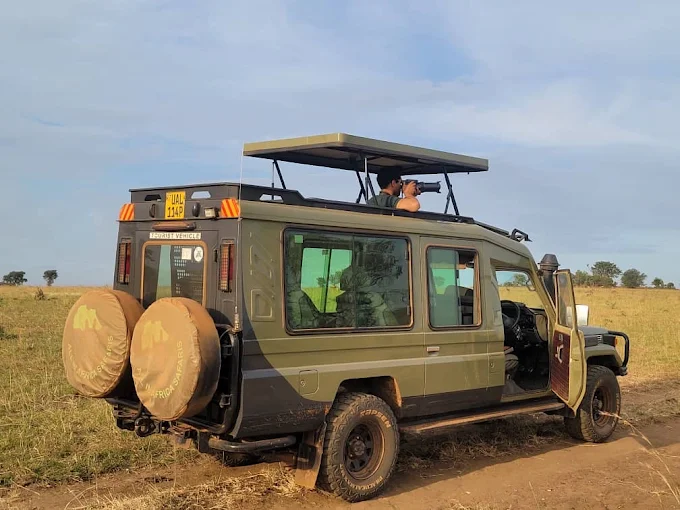
Many safari vehicles feature a pop-up roof hatch allowing passengers to stand for better photography and viewing angles, and this remains safe specifically because the standing person’s silhouette still reads as part of the vehicle’s overall shape from a resting lion’s perspective, unlike a person standing fully outside on the ground. Guides still ask passengers to lower back into the vehicle before any close approach to a pride showing signs of agitation, since even this partial exposure carries somewhat more risk than remaining fully seated. See our camera gear guide for equipment recommendations suited to this kind of roof-hatch wildlife photography.
How Guides Read Warning Signs Before Getting Too Close
Experienced guides watch for specific behavioural cues, flattened ears, a twitching tail tip, or a low, fixed stare, before deciding whether to approach a pride more closely or hold back at a greater distance, a real-time risk assessment that matters far more to visitor safety than any fixed distance rule alone could provide. Our guide on how lion prides are structured covers more about typical resting and social behaviour that helps guides distinguish calm from agitated states, while our guide on how long lions sleep each day covers the body-language differences between a deeply resting lion and a lighter, more alert resting state worth watching for.
Why Buffalo and Elephant Encounters Carry More Real Risk
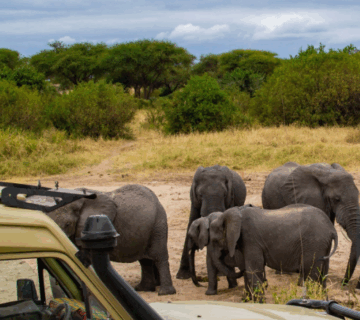
Statistically, lion encounters rank among the lower-risk Big Five sightings from inside a vehicle, since buffalo and elephants are considerably more prone to charging a vehicle that gets too close or startles them unexpectedly. Our guide on why buffalo herds form defensive circles covers a species responsible for more vehicle-related incidents across the region than lions typically are, and our guide on male versus female lion differences covers which sex tends to display more territorial vigilance around a vehicle in the rarer cases where caution is warranted.
Night Drives and Walking Safaris: Where the Rules Change
The vehicle-based safety pattern described throughout this guide doesn’t extend to walking safaris, where an armed ranger’s guidance and strict distance protocols become the primary safety mechanism instead, a considerably different risk calculation than the vehicle-based game drives most visitors experience for the majority of their trip.
Night drives, where permitted, introduce their own distinct consideration: spotlights used to locate nocturnal activity must be handled carefully, since a sudden bright light directly in a lion’s eyes can startle even a well-habituated individual, which is why experienced guides typically use red-filtered lights and sweep beams gradually rather than illuminating an animal directly and abruptly.
How Camp and Lodge Proximity to Lion Territory Gets Managed
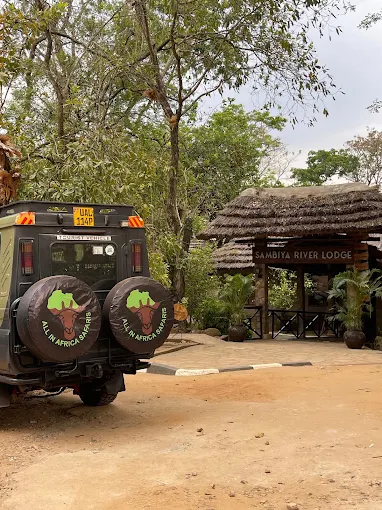
Many safari lodges and camps sit within or directly adjacent to lion territory, and while lions show little interest in the camp itself, staff typically escort guests between tents or rooms after dark specifically as a precaution, since walking unaccompanied at night removes the same protective vehicle-silhouette effect described earlier in this guide. This is a routine, well-established practice rather than an indication of any unusual danger, and guests shouldn’t feel alarmed by an escort request, simply following standard practice most reputable camps consistently maintain.
What Responsible Operators Do to Maintain This Safety Record
Reputable safari operators train guides extensively in reading lion behaviour and maintaining appropriate approach distances, and this training, combined with strict passenger conduct rules, explains why serious lion-related incidents involving properly conducted vehicle-based game drives remain extremely rare across the region’s major parks.
Vehicle maintenance factors into this safety record too, since a stalled engine near a pride removes the low, predictable engine hum lions have learned to associate with a non-threatening vehicle, which is precisely why reputable operators maintain their game-drive fleet to a considerably higher standard than a typical road vehicle might require, minimising the chance of an unexpected breakdown in a risky location.
How First-Time Visitors Should Approach Lion Sightings
First-time safari-goers sometimes arrive more anxious about lion proximity than the actual statistics warrant, and guides spend real time explaining the vehicle-habituation pattern described throughout this guide precisely to help nervous first-timers relax and enjoy a close sighting rather than feeling unnecessarily on edge. Our broader roundup of essential lion facts for safari-goers covers several more practical basics worth knowing before your first game drive.
Frequently Asked Questions
Is it safe to be close to lions in a safari vehicle?
Yes – lions perceive a vehicle with occupants as one large unfamiliar object rather than recognising individual people inside it.
Why can’t visitors exit the vehicle near lions?
Exiting breaks the vehicle’s protective silhouette, allowing a lion to recognise an individual human shape instead.
Is standing through a roof hatch safe near lions?
Generally yes, since the silhouette still reads as part of the vehicle, though guides may ask passengers to sit during closer approaches.
Are lions more dangerous than buffalo or elephants on a game drive?
No – buffalo and elephants are statistically more prone to charging a vehicle than lions typically are.
Does sudden noise or movement increase risk near lions?
Yes – sudden movement or loud noise can break the learned, non-threatening pattern lions associate with a quiet vehicle.
Ready to Plan Your African Safari?
Whether you’re hoping for close, safe lion sightings or a wider Big Five itinerary guided by experienced local guides, our team can build a trip matched to your interests. Get in touch with our team below today and let’s start planning your complete African safari itinerary together.


No comment