





African Lion Facts Every Safari-Goer Should Know
Lions are one of the most extensively studied large carnivores on Earth, yet many visitors arrive on safari knowing surprisingly little beyond the basics, so this guide covers the specific facts worth knowing before your first game drive, from social structure to hunting behaviour to the surprising physical traits that set lions apart from every other big cat.
Lions Are the Only Social Big Cat
Unlike leopards, tigers, or cheetahs, which all live largely solitary lives outside of mating and raising young, lions live in cooperative social groups called prides, typically numbering anywhere from around 4 to 15 related females, their cubs, and a coalition of one to several resident males. This social structure evolved specifically to support cooperative hunting and collective territory defence, a strategy that works particularly well on the open savanna where prey can be spotted and pursued across considerable distances.
Female Lions Do the Majority of the Hunting
Despite the male lion’s iconic reputation, lionesses conduct roughly 85 to 90 percent of a pride’s hunts, working cooperatively in coordinated groups that encircle and ambush prey using tactics considerably more sophisticated than solitary stalking alone could achieve. Males typically join hunts involving particularly large or dangerous prey, such as buffalo, where their considerably greater size and strength become a decisive advantage.

A Lion’s Roar Can Be Heard From Roughly 8 Kilometres Away
Lions possess a unique adaptation among big cats: a flexible ligament called the epihyoid, replacing the fully ossified hyoid bone found in non-roaring cats, that allows the extended, resonant roar lions are famous for. This roar serves to announce territory boundaries and coordinate scattered pride members, and under the right still-air night-time conditions, it can carry roughly 8 kilometres across open terrain.
Male Lions’ Manes Signal Health and Fighting Ability to Rivals
A male lion’s mane functions as an honest signal of his condition, with darker, fuller manes generally correlating with higher testosterone levels and better overall physical condition, information both rival males and potential mates use when assessing a lion from a distance. Mane colour and size vary considerably by region and individual, with cooler climates and specific genetic lineages producing noticeably darker manes than others.
Cubs Are Born With Spotted Coats That Fade With Age
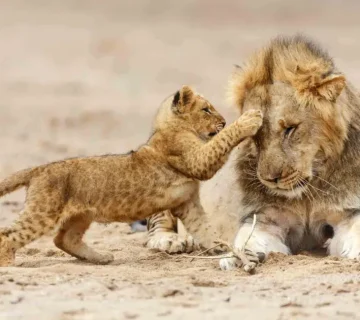
Newborn lion cubs display faint rosette-like spotting across their coat, a trait inherited from a shared ancestry with spotted big cats, and this patterning fades gradually as cubs mature into adulthood, though faint traces sometimes remain visible on the legs and underside of some adult lions even after the rest of the coat has cleared.
Lions Sleep or Rest for Up to 20 Hours a Day
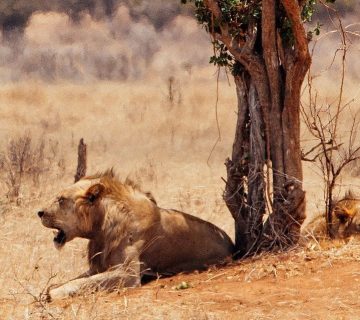
Lions rank among the most rest-heavy of all large mammals, typically sleeping or resting for 16 to 20 hours across a given day, a pattern driven by the considerable energy cost of hunting and the advantage of conserving strength for the comparatively brief, intense bursts of activity a successful hunt actually requires. This is precisely why most guided game drives schedule around dawn and dusk, the hours lions are most reliably active.
A Lion’s Bite Force Ranks Among the Strongest of Any Land Predator
Lions generate a bite force considerably stronger than most other land predators, an adaptation that allows them to bring down and hold onto prey many times their own body weight, including full-grown buffalo and, occasionally, young elephants when hunting in a coordinated group. This same bite strength factors into how lions defend kills against scavengers like hyenas, a frequent and tense standoff on the savanna.
Male Lions Leave Their Birth Pride Around Age Two to Three
Young males are pushed out of their natal pride by the resident dominant male once they approach sexual maturity, typically between two and three years old, beginning a nomadic period that can last several years before a male, often in coalition with a brother or unrelated ally, successfully challenges for control of a new pride. Our guide on why male lions leave their pride covers this transition in considerably more depth.
Lion Population Numbers Have Declined by Roughly 90 Percent Over the Past Century
Fewer than 25,000 wild lions remain across the entire African continent today, a dramatic decline from the far larger populations that ranged across most of sub-Saharan Africa a century ago. Our detailed guide on how many lions remain in Africa covers the specific drivers behind this decline and where conservation efforts have shown measurable success.
Tree-Climbing Is Rare, Documented Reliably in Only a Few Populations
Most lions spend the large majority of their time at ground level, making the tree-climbing behaviour documented in Uganda’s Ishasha sector and Tanzania’s Lake Manyara National Park a unusual regional trait rather than typical species-wide behaviour.
Lions Recognise Their Own Cubs by Scent and Sound
Within a pride, lionesses identify their own cubs through a combination of individual scent and distinct vocalisations, an ability that matters considerably given that pride females often nurse and care for cubs communally, meaning reliable individual recognition helps maintain social bonds and appropriate maternal investment across a shared pride nursery. Our guide on how lions recognise their own cubs covers the specific mechanisms behind this ability in considerably more depth.
Lions Yawn More Often Than Almost Any Other Big Cat
Given how much of a lion’s day is spent resting, yawning becomes one of the most commonly observed behaviours on a typical game drive, and researchers believe it serves several genuine functions beyond simple tiredness, including regulating brain temperature, oxygenating the blood before a burst of activity, and reinforcing social bonds within a resting pride group. Our guide on why lions yawn so often covers the science behind this surprisingly frequent behaviour.
Lion Cubs Face a High Mortality Rate in Their First Year
Despite a pride’s collective protection, lion cubs face a mortality rate estimated at roughly 60 to 70 percent within their first year, driven by predation from hyenas and rival males, starvation during lean hunting periods, and the genuine risk of infanticide when a new male coalition takes over a pride and kills existing cubs to bring females back into reproductive readiness sooner. This high mortality explains why lionesses typically give birth to litters of two to four cubs rather than investing in just one at a time.
A Lion’s Whiskers Form a Unique Identifying Pattern
Much like a human fingerprint, the specific arrangement of spots at the base of a lion’s whiskers is unique to each individual, a trait researchers have long used for reliable photographic identification of specific lions across long-term population studies, including the multi-decade tracking work underpinning much of what’s known about pride dynamics in well-studied ecosystems like the Serengeti.
Best Parks in East Africa to See These Behaviours Firsthand
Seeing lion social structure, hunting cooperation, and territorial behaviour firsthand rewards choosing a park with a dense, well-studied resident population. Our guide on the best parks to see lions in East Africa covers exactly which destinations offer the strongest odds of observing these behaviours across a typical multi-day safari itinerary, and our Serengeti lion safari guide covers one of the single best-studied populations anywhere on the continent in considerably more depth.
Lions Are the Only Cat to Show Noticeable Sexual Dimorphism at This Scale
The size and appearance difference between male and female lions is more pronounced than in almost any other cat species, with males typically weighing considerably more than females and carrying the mane that females entirely lack. This dimorphism reflects the different roles each sex plays within a pride, males prioritising size and strength for territorial defence, females prioritising the speed and agility cooperative hunting demands.
Frequently Asked Questions
Do female lions really do most of the hunting?
Yes – lionesses conduct roughly 85 to 90 percent of a pride’s hunts, with males typically joining only for large, dangerous prey.
How far can a lion’s roar be heard?
Under still night-time conditions, a lion’s roar can carry roughly 8 kilometres across open terrain.
Why do male lions have manes?
A mane signals health and fighting ability to rivals and potential mates, with darker, fuller manes generally indicating better condition.
How much do lions sleep each day?
Lions typically rest for 16 to 20 hours a day, conserving energy for brief, intense hunting bursts.
At what age do male lions leave their pride?
Young males are pushed out around two to three years old, beginning a nomadic period before challenging for a new pride.
Ready to Plan Your African Safari?
Whether you’re hoping to witness cooperative hunting, hear a roar carry across the plains at dusk, or simply see a resting pride up close, our team can build a trip matched to your interests. Get in touch with our team below today and let’s start planning your complete African safari itinerary together.


No comment