
Lion Sightings: Dry Season vs Wet Season
Dry season lion sightings tend to run considerably more predictable than wet season sightings, since shrinking water sources concentrate both prey and resident prides together into smaller, more easily covered areas, though wet season visits offer their own distinct, worthwhile advantages worth weighing carefully against this dry season reliability.
This guide covers exactly how and why sighting odds shift between seasons, the practical trade-offs each season brings beyond wildlife viewing alone, and how to choose the right timing based on your own specific travel priorities, schedule, and budget.
Why the Dry Season Concentrates Wildlife Around Remaining Water
As temporary water sources dry up across the landscape, prey species concentrate more heavily around the smaller number of permanent rivers, channels, and waterholes that remain, and resident lion prides position themselves accordingly, making dry season game drives more likely to cover less ground while still encountering strong wildlife density. Our guide on what lions eat and how they hunt covers how this same water-driven prey concentration directly improves hunting success during drier months.
How Sparse Vegetation Improves Dry Season Visibility
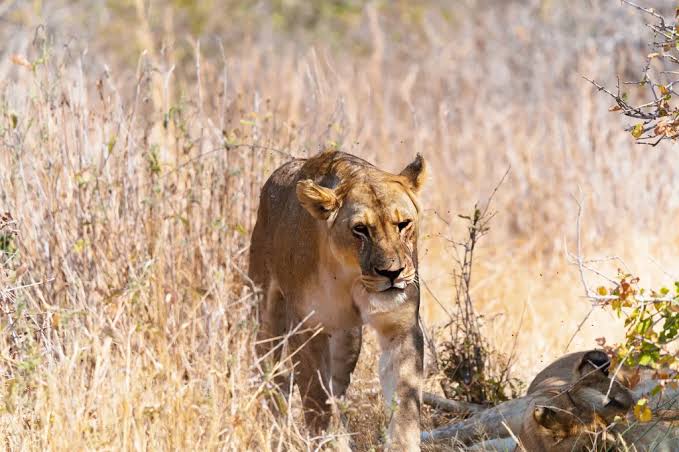
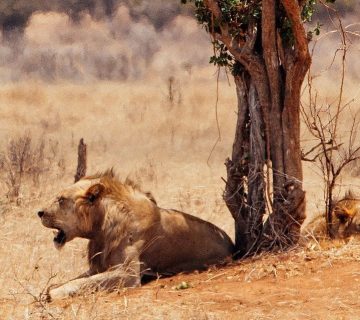
Dry season grass and bush cover thins out considerably compared to the lush, dense vegetation of the wet months, meaning lions resting or moving through the landscape become easier to spot from a greater distance, a practical visibility advantage that compounds the water-driven concentration effect described above. Wet season’s taller grass, by contrast, can hide a resting pride entirely from just a short distance away, adding a further layer of unpredictability beyond simple location alone.
Why Wet Season Sightings Aren’t Simply Worse, Just Different
Wet season lions don’t disappear or become fundamentally harder to find, they simply spread more widely across a landscape offering abundant water and prey nearly everywhere, meaning sightings require somewhat more driving and local guide knowledge to locate specific prides, without necessarily reducing the underlying odds of a strong sighting for a multi-day stay. Experienced guides adapt their search strategy accordingly, relying more heavily on known territorial patterns than on simply following visible water sources the way dry season tracking typically allows.
How Newborn Cubs Tie Loosely to Wet Season Timing in Some Ecosystems
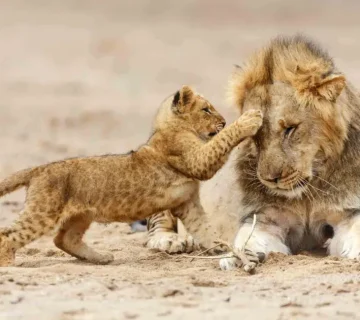
Given lions’ year-round breeding pattern, cub births aren’t strictly tied to season the way some other species’ calving is, though lionesses in some ecosystems show a loose tendency to time births around periods of higher prey availability, which can correlate somewhat with wetter months when migratory herds are present. Our guide on the best time to see lion cubs covers this pattern in considerably more depth, including why ecosystem choice matters more than calendar timing for cub sightings specifically.
Why Migration-Linked Ecosystems Add an Extra Seasonal Layer
In ecosystems tied to the Great Migration, seasonal lion sightings also depend on where the migratory herds currently sit, adding an extra planning layer beyond the simple dry-versus-wet distinction. Our guide on Serengeti lion safaris covers exactly how migration timing interacts with the broader seasonal pattern covered throughout this guide, since resident prides here adjust their hunting positioning based on herd location rather than season alone.
How Photography Conditions Differ Between Seasons
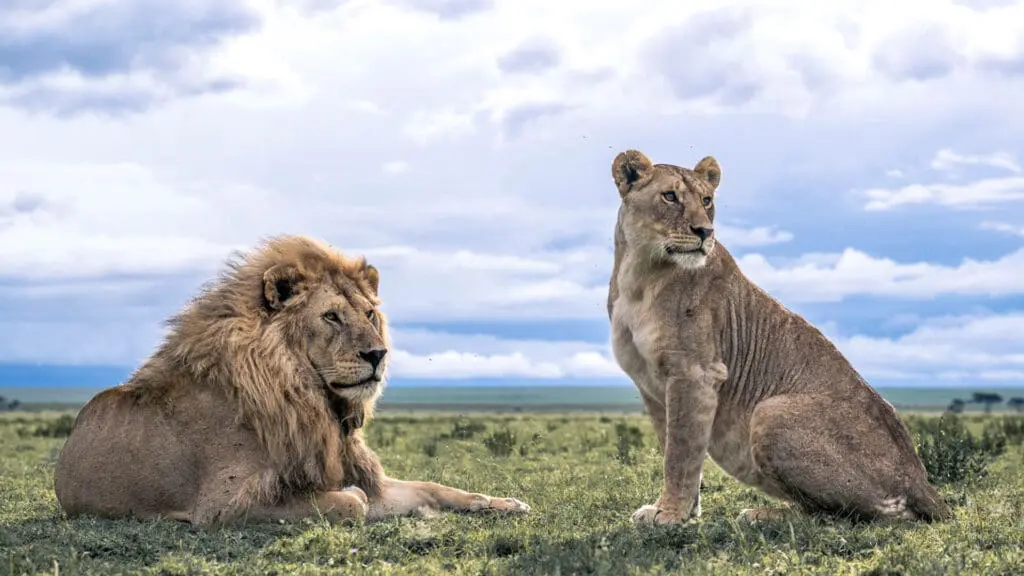
Dry season’s clearer skies and sparser vegetation produce cleaner, less obstructed compositions, while wet season’s lush green backdrop and dramatic cloud formations offer a considerably more vivid, colourful alternative for photographers willing to trade some sighting predictability for stronger visual conditions. Our guide on photographing lions on safari covers broader technique that applies well across both seasons, though the wet season’s more dramatic skies reward photographers willing to embrace a moodier, more atmospheric aesthetic than dry season’s typically brighter, harsher light.
Why Wet Season Travel Offers Practical Advantages Beyond Wildlife
Beyond wildlife-viewing considerations, wet season travel tends to bring considerably fewer other visitors and often more favourable accommodation rates, a genuine trade-off worth weighing for travelers with flexible dates and less rigid expectations around guaranteed sighting predictability. Fewer vehicles at any given sighting also means a calmer, less crowded experience once a pride is found, even if locating that pride took somewhat longer than a dry season equivalent search typically would.
How Non-Migratory, Resident Lion Populations Reduce Seasonal Risk
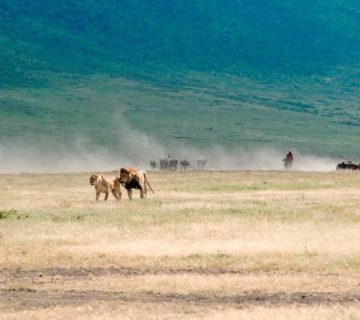
Ecosystems with dense, non-migratory resident lion populations, such as Ngorongoro Crater, offer more consistent year-round sighting odds regardless of season, since the crater’s contained ecosystem and permanent water sources mean prides don’t disperse as widely during wetter months the way prides in more open, seasonal ecosystems do. Our guide on Ngorongoro’s resident lion prides covers this year-round reliability in more depth, and our guide on Queen Elizabeth’s lion population covers a comparable Ugandan example of relatively stable year-round viewing.
Why Shoulder Seasons Offer a Practical Middle Ground
Travelers wanting to balance strong sighting odds against lower visitor volume and more favourable pricing find the transitional shoulder months, bridging peak dry season and the wettest months, offer a reasonable practical compromise, though exact timing varies by specific ecosystem and should be confirmed with a knowledgeable local operator. These shoulder windows often capture much of dry season’s improved visibility before vegetation has fully thickened, while still benefiting from wet season’s comparatively lower visitor numbers.
How to Choose Based on Your Specific Priorities
Travelers prioritising maximum sighting predictability within a shorter trip should lean toward dry season timing, while those with flexible dates, a preference for fewer crowds, or a specific interest in lush, dramatic photography conditions have good reason to consider wet season travel instead, without meaningfully compromising their overall odds of a memorable lion sighting. Our roundup of essential lion facts for safari-goers covers several more foundational details worth knowing regardless of which season you ultimately choose.
How Road Conditions Affect Wet Season Game Drives
Heavy rainfall turns some park roads considerably muddier and occasionally impassable during the wettest weeks, meaning wet season game drives sometimes require route adjustments or a vehicle better suited to challenging conditions, a practical planning consideration beyond wildlife-viewing odds alone that experienced operators factor into wet season itinerary planning, choosing routes and vehicles accordingly well before a trip actually begins.
Why Temperature Differences Between Seasons Matter for Comfort
Dry season heat builds considerably through the middle of the day across most ecosystems, while wet season temperatures run somewhat milder given the regular rainfall and increased cloud cover, a comfort consideration worth weighing alongside the wildlife-viewing trade-offs already covered, particularly for travelers sensitive to sustained heat during long game drives across open, shade-free terrain.
How This Seasonal Pattern Compares Across Uganda’s and Kenya’s Ecosystems
Uganda’s Queen Elizabeth National Park and Kenya’s Masai Mara each show their own version of this dry-wet seasonal pattern, though the specific timing and intensity vary by region’s distinct rainfall calendar. Our guide on the best time to see lions in the Masai Mara covers this specific ecosystem’s seasonal pattern, including how it interacts with migration timing there, a more complex planning picture than the simpler dry-versus-wet framework alone.
Why Booking Flexibility Helps Navigate Unpredictable Rainfall Timing
Rainfall onset and duration vary somewhat year to year, meaning even careful seasonal planning can’t fully guarantee exact conditions on any specific set of travel dates, a genuine reason booking with some date flexibility, where a traveler’s schedule allows it, helps hedge against this natural year-to-year variability rather than locking in a single narrow window based purely on long-term seasonal averages. Consulting a local operator close to your actual travel dates, rather than relying purely on generic seasonal charts alone, gives the most accurate, current, reliable picture available overall.
Frequently Asked Questions
A few quick answers to the questions travelers ask most often about seasonal lion sighting odds.
Is the dry season the best time to see lions?
It generally offers the most predictable sightings, since prey and resident prides concentrate around shrinking water sources.
Are wet season lion sightings worse?
Not necessarily worse, just more spread out, requiring somewhat more driving and local guide knowledge to reliably locate resident prides.
Does season affect lion cub sightings?
Only loosely – Lions breed year-round, though births show a mild, loose tendency to cluster around periods of higher prey availability.
Do all lion ecosystems follow the same seasonal pattern?
No – Non-migratory, resident populations like Ngorongoro’s offer more consistent, reliable year-round sighting odds regardless of season or rainfall timing.
Is wet season travel worth considering?
Yes – Fewer crowds, often better accommodation rates, and lush scenery make it a worthwhile option for flexible travelers.
Ready to Plan Your African Safari?
Whether you’re prioritising dry season predictability or wet season’s lush scenery, dramatic skies, and lower crowds, our team can build a trip matched to your interests. Get in touch with our team below today and let’s start planning your complete African safari itinerary together.


No comment