
What Are the Big Five? A Complete Guide for First-Time Safari-Goers
If you’re planning your first African safari, you’ve almost certainly come across the term “Big Five” – but the name is more confusing than it sounds, and knowing what it actually means will change how you plan your trip. This guide explains where the term came from, which five animals it covers, where to reliably find them across Uganda, Kenya, Tanzania, and Rwanda, and how to build a realistic itinerary around seeing all five.
What Does “Big Five” Actually Mean?
The Big Five refers to the lion, African elephant, Cape buffalo, leopard, and rhinoceros (black or white). The term has nothing to do with size, popularity, or how easy the animals are to see on safari – in fact, it originally comes from big-game hunting in the 19th and early 20th centuries, when these were considered the five most dangerous animals to hunt on foot. Trophy hunters ranked them by the difficulty and danger of tracking and killing them, not by how impressive they looked.
Today, the phrase has been repurposed almost entirely for photographic safaris, where it functions more as a wildlife checklist than anything related to hunting. Tour operators, lodges, and travelers use it as shorthand for a successful, comprehensive safari – if you’ve seen all five, you’ve had a complete East African wildlife experience.
The Big Five, One by One
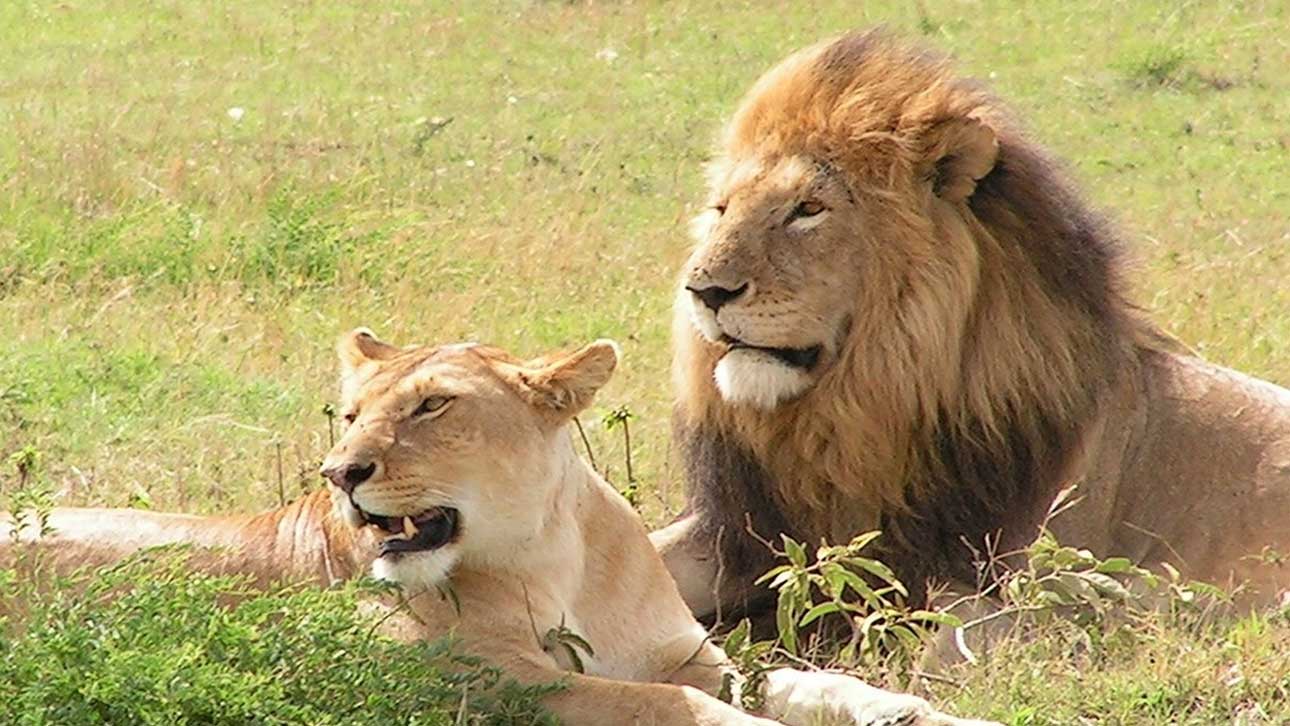
Lion
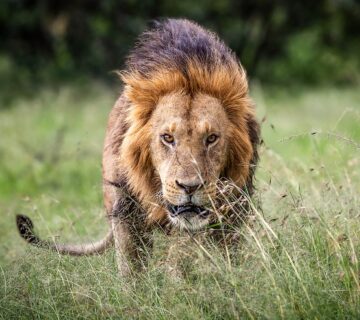
The most requested of the five, lions are found in prides across nearly every savanna national park in East Africa. Some populations have developed unusual behavior worth specifically seeking out – the tree-climbing lions of Ishasha in Queen Elizabeth National Park are one of only two known tree-climbing lion populations in Africa.
African Elephant
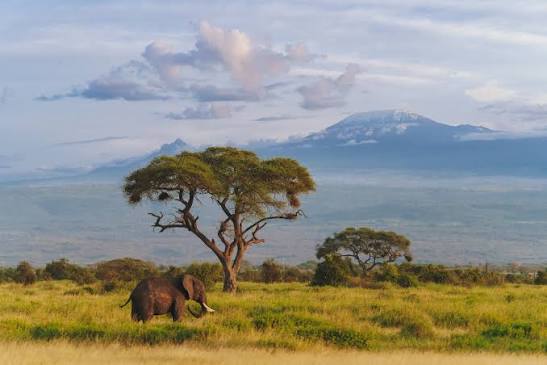
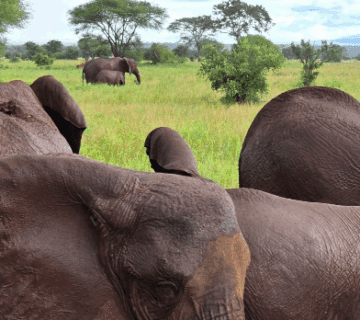
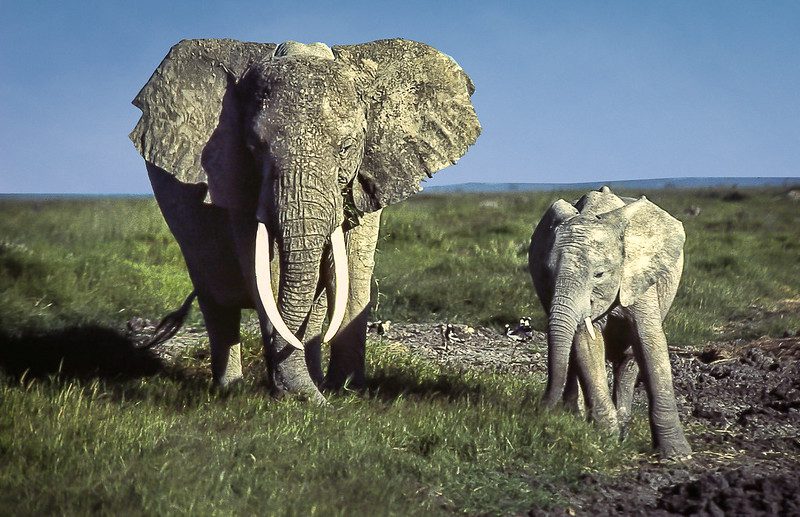
The largest land animal on earth, and usually the easiest of the five to find, since elephant herds are large, move in the open, and need to drink daily. Uganda’s Murchison Falls and Kenya’s Amboseli are both known for consistently large herds.
Cape Buffalo
Often underestimated by first-time visitors, buffalo are statistically responsible for more safari-related injuries than lions, particularly old solitary bulls that have been pushed out of the herd. They travel in large herds that can number in the hundreds.
Leopard
The hardest of the five to spot reliably. Leopards are solitary, mostly nocturnal, and spend much of the day resting in trees, which makes them genuinely elusive even in parks with healthy populations. Seeing one well is usually a matter of luck and a sharp-eyed guide.
Rhinoceros
The rarest and most conservation-sensitive of the five. Poaching devastated rhino populations across the region through the late 20th century, and today they’re only reliably found in a small number of heavily protected sanctuaries, such as Ziwa Rhino Sanctuary in Uganda, Kenya’s Lake Nakuru and Ol Pejeta, and Rwanda’s Akagera National Park.
Where to See All Five in East Africa
Not every national park holds all five animals, so picking the right park matters more than picking the right country. In Uganda’s Big Five parks, Queen Elizabeth National Park holds lion, elephant, buffalo, and leopard reliably, but rhino requires a side trip to Ziwa since Uganda’s savanna parks lost their rhino population to poaching decades ago and reintroduced them only at Ziwa. Murchison Falls National Park has the same four resident, plus occasional rhino day-trip combinations from nearby Ziwa.
Kenya’s Masai Mara, Amboseli, and Tsavo all hold genuine Big Five populations, including rhino, making a single-park Kenya safari a realistic way to tick off all five in a shorter trip than Uganda typically requires. Tanzania’s Ngorongoro Crater is often considered the single best place in Africa to see all five in one day, thanks to its unusually dense, contained wildlife population. Rwanda’s Akagera National Park has quietly rebuilt a full Big Five population since 2015, after lions and rhinos were both locally extinct for decades – making it one of the more remarkable conservation comeback stories in the region.
How Many Days Do You Need?
Realistically, seeing all five requires at least five to seven days on safari, split across two or three parks, since no single park guarantees all five on a short visit and leopard sightings in particular require patience. A longer Uganda itinerary that combines multiple parks with a Ziwa rhino stop gives you the best odds, while in Kenya a well-planned Masai Mara safari can sometimes deliver all five in three to four days if you’re fortunate with leopard sightings.
Big Five vs Great Migration: Different Goals, Different Timing
First-time travelers sometimes assume the Big Five and the wildebeest Great Migration are the same thing – they aren’t. The migration is a seasonal river-crossing event specific to the Serengeti-Mara ecosystem, timed to roughly July through October for the famous Mara River crossings, while Big Five sightings are possible year-round in the parks that hold resident populations. If your primary goal is the migration, seasonal timing matters far more than it does for a straightforward Big Five safari.
Combining a Big Five Safari With Gorilla Trekking
Uganda and Rwanda offer something no other Big Five destination can: the chance to combine Big Five game drives with mountain gorilla trekking on the same trip. It’s worth noting that gorillas are not part of the Big Five – the list was fixed by hunters long before gorilla tourism existed – but pairing the two is one of the most popular itinerary combinations we build, since gorilla trekking and Big Five game drives happen in different parks within the same country, a few hours’ drive apart.
What to Pack and How to Prepare
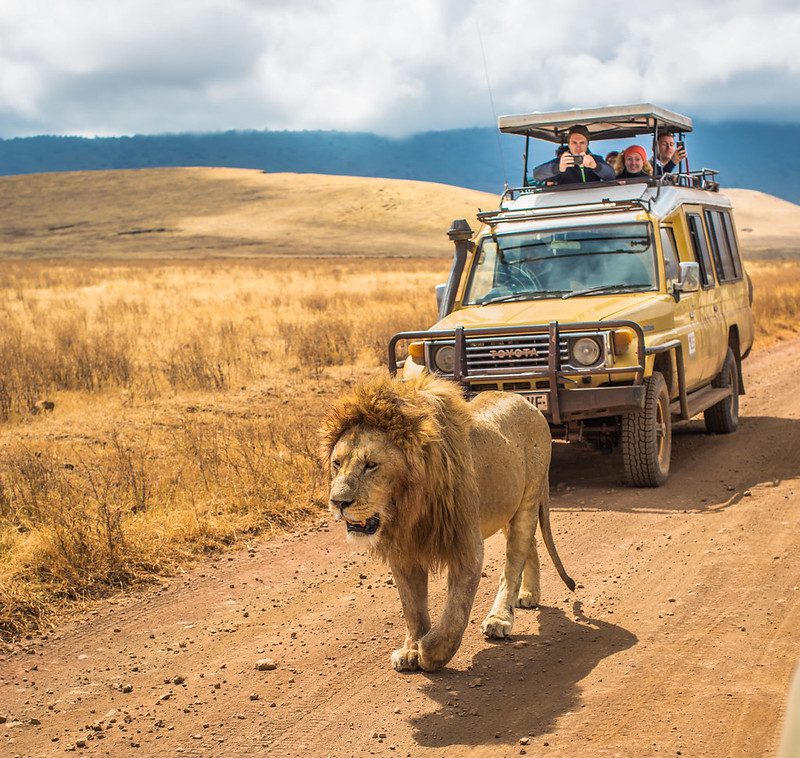
Big Five game drives require far less specialized gear than gorilla trekking – you’ll spend most of your time in an open vehicle rather than hiking – but neutral clothing colours, a good pair of binoculars, sun protection, and a camera with reasonable zoom will make a noticeable difference to your experience. If your itinerary also includes gorilla trekking, our gorilla trekking packing list covers the additional forest-specific gear you’ll need for that portion of the trip.
Self-Drive vs Guided: Which Gives You Better Big Five Odds?
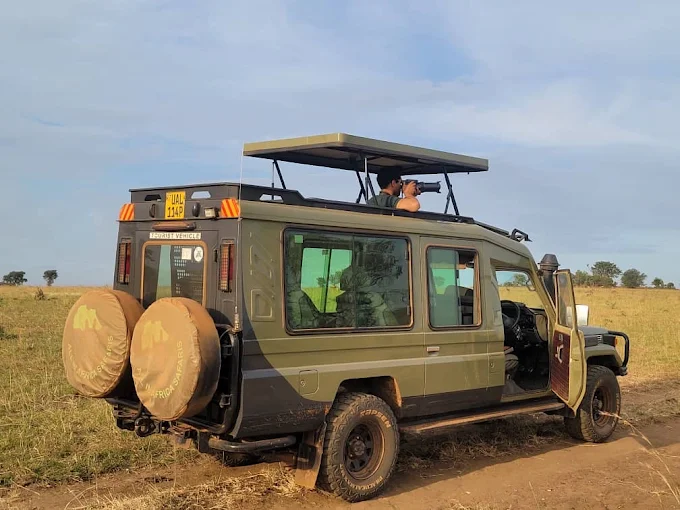
Self-driving is possible in some parks and can work well for confident, experienced travelers on a budget, but a guided safari consistently produces better Big Five sightings, especially for leopard. Professional guides communicate by radio with other vehicles in the park, know which trees a resident leopard has been using that week, and can read fresh tracks and alarm calls from other animals in ways most visitors simply can’t. For a first Big Five trip, the guide fee is one of the best-value additions you can make to a safari budget, since it directly affects how much you actually see.
Best Time of Year for a Big Five Safari
Unlike gorilla trekking or the wildebeest migration, Big Five sightings aren’t tightly seasonal – lions, elephants, buffalo, leopards, and rhinos are resident year-round in the parks that hold them. That said, the dry seasons (roughly December to February and June to September across most of the region) make for easier viewing, since thinner vegetation improves visibility and animals concentrate more predictably around remaining water sources. The wet season brings lower prices, fewer vehicles at each sighting, and dramatic green scenery, at the cost of slightly harder spotting conditions and occasionally impassable roads in the more remote parks like Kidepo Valley.
Photographing the Big Five
Each of the five presents a different photography challenge. Elephants and buffalo are large, slow-moving, and generally easy to frame well even with a modest zoom. Lions reward patience – the best shots usually come from waiting near a pride during the cooler, more active hours around dawn and dusk rather than midday when they’re typically resting in shade. Leopards demand fast shutter speeds and a longer lens, since sightings are often brief, partially obscured by foliage, and at greater distance than other game. Rhino tracking at Ziwa is done on foot, which actually makes for some of the most intimate Big Five photography available anywhere in East Africa, since you can approach on the same level as the animal rather than shooting down from a vehicle.
Common Questions About the Big Five
Is the Big Five the same as the Big Nine or Small Five?
No. Some lodges and operators use expanded lists like the “Big Nine” (adding cheetah, giraffe, hippo, and zebra) or the tongue-in-cheek “Small Five” (elephant shrew, buffalo weaver, leopard tortoise, ant lion, and rhinoceros beetle) as marketing variations, but the original Big Five remains lion, elephant, buffalo, leopard, and rhino.
Can you see the Big Five outside a vehicle?
Yes, in a limited but memorable way – rhino tracking at Ziwa Sanctuary and gorilla-adjacent walking safaris in several parks allow on-foot encounters, always with an armed ranger for safety. Lion, elephant, and buffalo walking encounters are rarer and only offered in specific parks under strict guide supervision.
Which country has the highest chance of seeing all five in one trip?
Kenya and Tanzania generally offer the best single-country odds because several of their major parks – the Masai Mara, Amboseli, Tsavo, Serengeti, and Ngorongoro Crater – hold genuine resident rhino populations alongside the other four. Uganda’s savanna parks are excellent for four of the five, but require a dedicated Ziwa Rhino Sanctuary visit to complete the set.
Ready to Start Planning Your Big Five Safari?
Whether you want a focused Kenya Big Five safari, a longer Uganda itinerary that adds gorilla trekking, or a Rwanda trip built around Akagera’s conservation comeback story, our team can put together an itinerary matched to your timeframe and budget. Get in touch below and let’s start planning.


No comment