
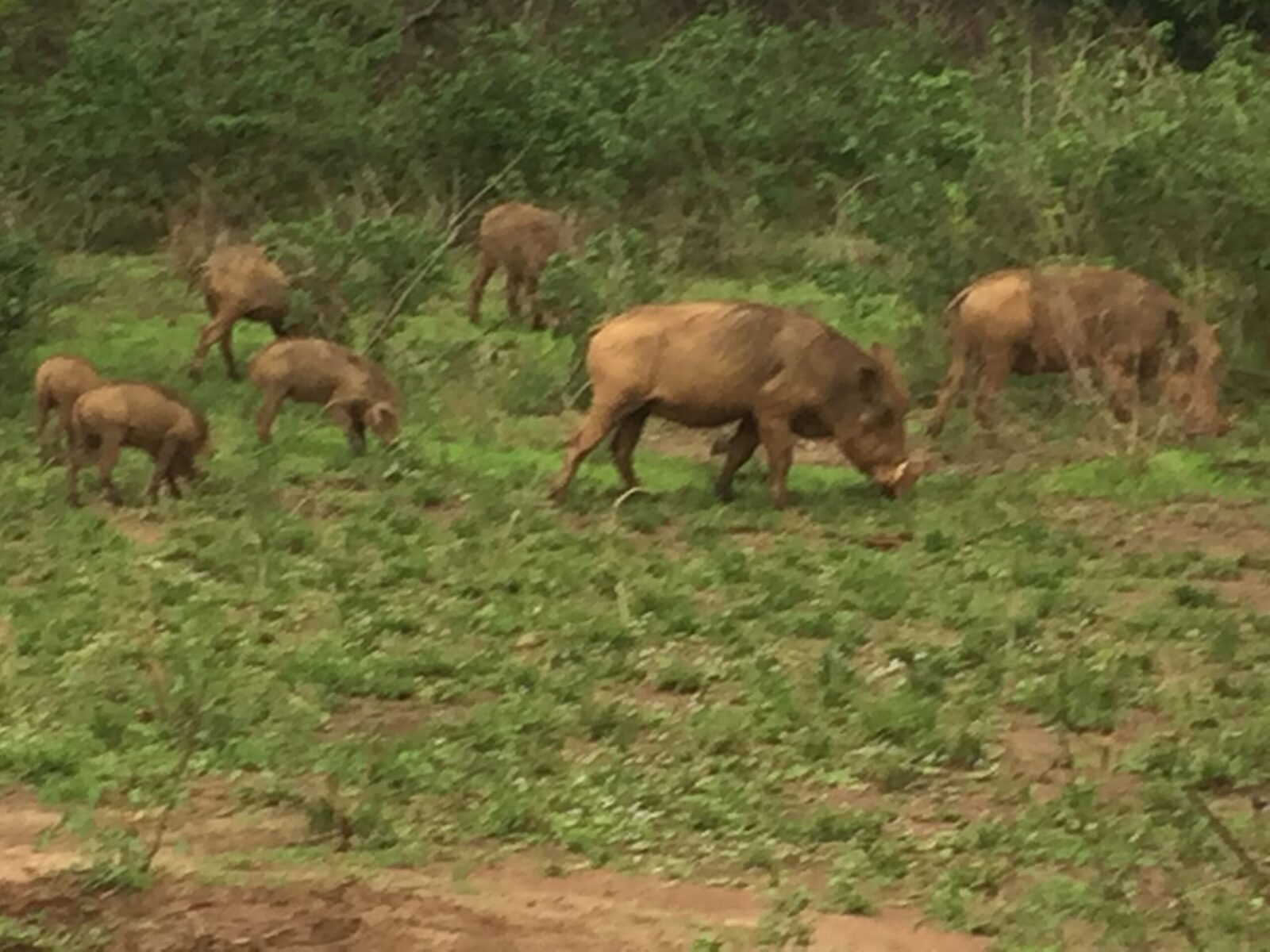
Warthogs trot across the Masai Mara’s open grassland in small, genuinely endearing family groups, tails held stiffly upright as they move, a distinctive running posture that makes them one of the reserve’s most instantly recognisable, if sometimes underrated, resident mammals.
The Distinctive Tail-Up Running Posture
Warthogs are genuinely famous for running with their thin, tufted tails held straight up in the air, a distinctive posture that guides often point out as one of the Mara’s more amusing, easily recognisable sights from a considerable distance. This upright tail is thought to function as a visual signal helping family members maintain contact while moving quickly through tall grass where direct sightlines are otherwise limited.
Where to Find Warthogs in the Masai Mara
Warthogs range across the Mara’s open grassland and woodland edges, favouring areas with soft ground suitable for their characteristic kneeling, root-digging feeding behaviour. They’re frequently seen in small family groups called sounders, typically a female with her current litter, moving purposefully between feeding and resting sites throughout the day.
Warthog Feeding Behaviour
Warthogs feed by kneeling on their front knees, using their broad snout to root through soil for bulbs, roots, and tubers, a genuinely distinctive feeding posture supported by tough, callused pads specifically adapted for this kneeling position. This ground-level foraging style, combined with their willingness to also graze grass when available, gives warthogs a genuinely flexible diet that sustains them across the Mara’s varied seasonal conditions.
Why Warthogs Use Abandoned Burrows
Warthogs shelter in abandoned aardvark burrows rather than digging their own, backing into the burrow entrance to keep their formidable tusks facing outward toward any potential threat, a genuinely clever defensive strategy that maximises protection while minimising the energy cost of excavation. This burrow-sharing relationship with aardvark is one of the more interesting, often overlooked ecological connections within the Mara ecosystem.
Warthog Family Structure
Female warthogs, called sows, typically raise litters cooperatively within small family groups, sometimes combining litters from related females into a single sounder for shared vigilance and protection against predators. Male warthogs, called boars, generally live more solitary lives outside the breeding season, occasionally joining a sounder temporarily during mating periods.
Warthogs and the Mara’s Predators
Warthogs form a genuine, if secondary, prey species for the Mara’s lion, leopard, and hyena populations, and their preference for burrow shelter and rapid, tail-up flight response reflects a survival strategy built around avoidance and escape rather than direct confrontation, despite their surprisingly sharp tusks offering genuine defensive capability when cornered.
Best Time of Year for Warthog Sightings
Warthogs are visible in the Masai Mara year-round given their resident status, making seasonal timing genuinely less critical here than for species tied to the wildebeest migration’s grass-driven movement. See our regional best-time guide for how East Africa’s broader seasonal patterns still affect wider trip planning.
Self-Drive vs Guided Safaris for Warthog Viewing
Warthogs are among the more straightforward Mara species to locate independently given their frequent presence in open grassland and distinctive running behaviour, though a guided safari still adds real value in coordinating sightings alongside the reserve’s other headline wildlife. Most visitors combine Masai Mara with a wider guided Kenya itinerary.
Photographing Masai Mara Warthogs
Warthogs kneeling to feed, or captured mid-trot with tails held upright, offer genuinely charming, easily recognisable photographic subjects distinct from the reserve’s larger, more imposing wildlife. A mid-range zoom covers most sightings comfortably, similar to the gear recommended in our camera gear guide.
What to Pack for a Masai Mara Safari
Standard game drive gear – neutral clothing, sun protection, and binoculars – covers most of what the reserve requires. If your wider itinerary includes gorilla trekking, our gorilla trekking packing list covers that portion separately.
Warthogs’ Role in the Wider Ecosystem
Warthog rooting behaviour genuinely contributes to aerating and turning over soil across the Mara’s grassland, a minor but real ecological function that benefits plant growth patterns over time. Their reliance on abandoned aardvark burrows also highlights the wider ecological interdependence running through the Mara’s less obviously connected species relationships.
Combining Warthog Viewing With the Full Mara Big Five
Warthog sightings complement the Mara’s buffalo and elephant populations, along with its resident giraffe herds and cheetahs, rounding out one of East Africa’s most complete single-ecosystem wildlife checklists within a single reserve.
Getting to the Masai Mara
Most itineraries reach the Mara via road from Nairobi, roughly five to six hours, or by scheduled light aircraft directly into one of the reserve’s several airstrips, with the choice generally depending on how much driving time a traveler wants to include in a wider Kenya circuit.
Warthog Tusks and Their Function
Both male and female warthogs grow tusks, modified canine teeth that continue growing throughout life, though males typically develop noticeably larger, more prominent tusks used both for digging and for genuine physical contests with rival males during the breeding season. These tusks, curving upward and outward from the jaw, serve a genuinely important defensive function against predators as well, particularly when a warthog is cornered outside the relative safety of its burrow.
Piglet Development and Vulnerability
Warthog piglets are born in the relative safety of a burrow and remain there for their first few weeks before beginning to accompany the sounder on daily foraging trips, a cautious early-life strategy that genuinely improves survival odds given how vulnerable young piglets are to predation from the Mara’s lion, leopard, and hyena populations. Mothers are notably protective during this vulnerable period, and litters can be surprisingly large, sometimes numbering up to four or more piglets.
Speed and Escape Behaviour
Despite their somewhat ungainly appearance, warthogs are genuinely capable sprinters over short distances, reaching speeds that can outpace many pursuing predators when making a dash for the nearest burrow entrance. This speed, combined with their tendency to freeze briefly before bolting, gives warthogs a real fighting chance against sudden predator encounters despite lacking the size or strength to defend themselves through direct confrontation alone.
Warthogs and Symbiotic Bird Relationships
Warthogs are frequently seen accompanied by oxpecker birds, which perch on their backs picking off ticks and other parasites, a genuinely mutually beneficial relationship that keeps warthogs cleaner while providing the birds a reliable food source. This symbiotic partnership, visible across much of the Mara’s larger mammal population, adds an interesting additional behavioural layer to an already engaging warthog sighting.
Why Guides Enjoy Pointing Out Warthogs
Despite lacking the star appeal of the Mara’s big cats or elephant herds, experienced guides often genuinely enjoy highlighting warthog behaviour to visitors, given how consistently entertaining their kneeling feeding posture and tail-up running style are, particularly for younger travelers or those on their first African safari encountering the species for the first time.
Comparing Mara Warthogs to Amboseli’s Population
Kenya’s Amboseli also holds a genuinely healthy warthog population, though the Mara’s denser grassland and wider distribution generally make sightings here somewhat more frequent across a standard game drive circuit.
Best Lodges for Warthog and General Grassland Viewing
Properties positioned along the Mara’s open plains genuinely simplify logistics for travelers specifically prioritising warthog and wider grassland wildlife viewing, cutting down on drive time before and after game drives. Discussing lodge location directly with your operator, alongside current information on recent sounder activity, is genuinely worth doing before finalising your complete Masai Mara itinerary.
Warthog Wallowing Behaviour
Warthogs frequently wallow in mud, particularly during the hottest parts of the day, a behaviour that helps regulate body temperature given their genuinely sparse hair coat and limited natural insulation compared to more heavily furred mammals. This mud coating also offers some protection against biting insects and sun exposure, making a muddy wallow a genuinely important, regular part of daily warthog routine beyond simple temperature cooling alone.
Getting to the Masai Mara for Warthog Viewing
Regardless of which specific route a traveler takes into the Mara, whether by scheduled flight or a longer road transfer from Nairobi, warthog sightings begin almost as soon as the reserve’s open grassland comes into view, making them one of the earliest wildlife encounters of a typical Masai Mara visit.
Frequently Asked Questions
Why do warthogs run with their tails up?
Their upright tail is thought to help family members maintain visual contact while moving quickly through tall grass with limited sightlines.
Why do warthogs kneel to feed?
They use their broad snout to root through soil for bulbs and tubers, supported by tough, callused knee pads adapted specifically for this posture.
Do warthogs dig their own burrows?
No, they shelter in abandoned aardvark burrows, backing in to keep their tusks facing outward toward potential threats.
What’s the best time of year to see warthogs in the Masai Mara?
Year-round given their resident status, making seasonal timing genuinely less critical than for migration-dependent species.
Are warthogs dangerous to encounter?
Generally not from within a vehicle, though their sharp tusks offer genuine defensive capability if cornered on foot.
Ready to Plan Your Masai Mara Safari?
Whether the Mara’s charming warthogs, its famous big cats, or a full Kenya itinerary is your priority, our team can build a trip matched to your time and interests. Get in touch with our team below today and let’s start planning your complete Kenya safari itinerary together.

No comment