
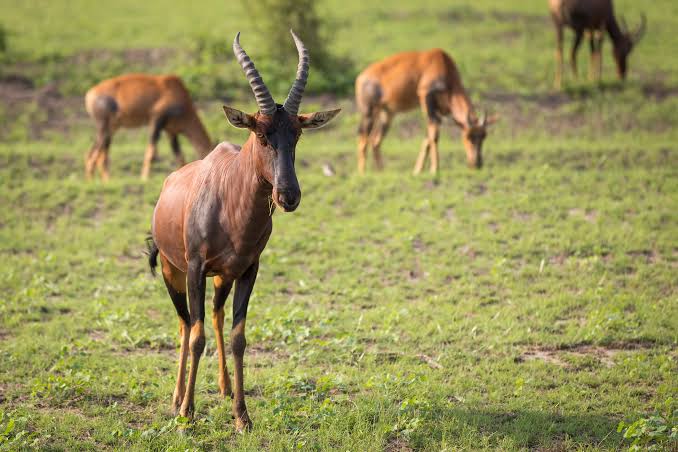

Topi stand sentinel atop termite mounds across the Masai Mara’s open plains in a genuinely distinctive, instantly recognisable pose, their glossy reddish-brown coat and characteristic dark patches on the face and upper legs making them one of the reserve’s more visually striking, if often overlooked, antelope species.
The Termite Mound Sentinel Behaviour
Topi are famous for standing atop termite mounds and other elevated ground, using the vantage point to scan for approaching predators across the Mara’s open terrain, a behaviour genuinely distinctive enough that guides often point out a lone topi silhouetted on a mound as one of the reserve’s classic photographic sights. This habit reflects the species’ genuinely strong reliance on early visual detection over speed alone as a primary predator-avoidance strategy.
Where to Find Topi in the Masai Mara
Topi range across the Mara’s open grassland, favouring areas with good visibility and scattered termite mounds that provide their preferred elevated vantage points. They’re frequently seen grazing alongside zebra and wildebeest, benefiting from the same collective predator vigilance that makes mixed-species grazing groups so common across the reserve’s plains.
Topi Speed and Athletic Ability
Topi are among the faster antelope species found in the Mara, capable of sustained running speed that helps them outpace most pursuing predators over open ground, a genuine athletic advantage that complements their early-warning mound-watching behaviour. This combination of speed and vigilance makes topi a genuinely resilient species despite facing consistent predation pressure from the ecosystem’s lion, cheetah, and hyena populations.
Topi Social Structure and Territorial Behaviour
Male topi establish and defend territories during the breeding season, often the same prominent mounds used for predator watching doubling as territorial display points where males compete for female attention through visible posturing and occasional physical contests with rival males. Females and young typically move in loose herds between male territories, a social pattern genuinely distinct from the more rigid harem structure seen in species like impala.
Topi and the Wildebeest Migration
Topi share much of the same grassland habitat used by the migrating wildebeest and zebra herds, though topi themselves are largely resident rather than making the same extensive seasonal movement, meaning they remain genuinely visible in the Mara throughout the year regardless of the migration’s current position.
Best Time of Year for Topi Sightings
Topi are visible in the Masai Mara year-round given their resident, non-migratory status, making seasonal timing genuinely less critical here than for species tied to the wildebeest migration’s grass-driven movement. See our regional best-time guide for how East Africa’s broader seasonal patterns still affect wider trip planning.
Self-Drive vs Guided Safaris for Topi Viewing
Topi are among the more straightforward Mara species to locate independently given their distinctive mound-standing behaviour and reasonably large herd size, though a guided safari still adds real value in coordinating sightings alongside the reserve’s other headline wildlife. Most visitors combine Masai Mara with a wider guided Kenya itinerary.
Photographing Masai Mara Topi
A topi silhouetted atop a termite mound against the Mara’s open horizon, particularly at sunrise or sunset, offers one of the reserve’s genuinely classic photographic compositions, distinctive enough to be instantly recognisable even to travelers less familiar with the species itself. A mid-range zoom covers most sightings comfortably, similar to the gear recommended in our camera gear guide.
What to Pack for a Masai Mara Safari
Standard game drive gear – neutral clothing, sun protection, and binoculars – covers most of what the reserve requires. If your wider itinerary includes gorilla trekking, our gorilla trekking packing list covers that portion separately.
Topi’s Role in the Wider Ecosystem
As one of the Mara’s more numerous resident grazers, topi play a genuinely significant role in shaping grassland structure alongside zebra and wildebeest, while also serving as an important prey species supporting the ecosystem’s lion, cheetah, and hyena populations. This dual role, grazer and prey, makes topi a genuinely central, if often underappreciated, part of the Mara’s overall food web.
Combining Topi Viewing With the Full Mara Big Five
Topi sightings complement the Mara’s buffalo and elephant populations, along with its resident giraffe herds and cheetahs, rounding out one of East Africa’s most complete single-ecosystem wildlife checklists within a single reserve.
Getting to the Masai Mara
Most itineraries reach the Mara via road from Nairobi, roughly five to six hours, or by scheduled light aircraft directly into one of the reserve’s several airstrips, with the choice generally depending on how much driving time a traveler wants to include in a wider Kenya circuit.
Topi’s Distinctive Coat and Markings
The topi’s glossy reddish-brown coat, marked by darker purplish patches on the face, upper legs, and flanks, gives the species a genuinely striking two-tone appearance under strong sunlight, distinctive enough that experienced guides can identify a topi at considerable distance purely from coat colouring alone. This coat pattern, combined with ridged, lyre-shaped horns present on both sexes, sets topi visually apart from the Mara’s other similarly-sized grazing antelope.
Calving and Early Life
Topi calves are born well-developed and able to stand within a short time of birth, though they remain genuinely vulnerable during their first weeks, hidden by mothers in taller grass away from the main herd rather than kept in close, visible proximity. This hiding strategy, different from the tightly clustered calving groups some other Mara antelope species favour, reflects topi’s particular approach to balancing calf concealment against the benefits of herd protection.
Why Topi Are Often Overlooked by Visitors
Despite their genuinely distinctive appearance and behaviour, topi frequently receive less attention from visitors focused primarily on the Mara’s big cats and the wildebeest migration, an oversight experienced guides consistently push back against given how visually striking and behaviourally interesting the species actually is up close. Taking a little extra time to watch a territorial male topi patrol its termite-mound lookout often reveals considerably more behavioural nuance than the fleeting glance most itineraries allow.
Topi Compared to the Mara’s Other Grazing Antelope
Topi occupy a genuinely distinct ecological niche compared to the Mara’s other common antelope, favouring slightly taller grass than the shorter growth zebra and wildebeest prefer, a dietary difference that reduces direct feeding competition even while all three species frequently graze within sight of one another across the same open plains.
Predator Pressure and Topi Survival Strategy
Topi face consistent predation pressure from the Mara’s lion, cheetah, and hyena populations, and their combined strategy of elevated vigilance and genuine running speed represents a considered evolutionary trade-off between early detection and pure athletic escape. This dual-pronged approach has proven genuinely effective, helping topi maintain stable population numbers despite sustained predator attention across the ecosystem.
Best Lodges for Topi-Focused Visits
Properties positioned near the Mara’s open plains genuinely simplify logistics for travelers specifically prioritising topi and wider antelope viewing, cutting down on drive time before and after game drives. Discussing lodge location directly with your operator, alongside current information on recent territorial male activity, is genuinely worth doing before finalising your complete Masai Mara itinerary.
Topi Herd Dynamics During the Dry Season
As the dry season progresses and grazing becomes scarcer across parts of the Mara, topi herds often shift toward areas of remaining green growth, sometimes moving in closer proximity to the migrating wildebeest and zebra herds passing through the same shrinking pool of available grassland. This seasonal clustering can produce genuinely dense, mixed-species gatherings that offer some of the reserve’s more visually impressive dry-season game drive scenes.
Comparing Mara Topi to the Serengeti’s Population
Tanzania’s Serengeti shares the same broader ecosystem and hosts a genuinely comparable topi population, meaning travelers combining both destinations on a wider Northern Circuit itinerary can genuinely expect consistent, reliable topi sightings regardless of which particular side of the shared international border their trip currently happens to cover.
Getting the Most Out of a Topi Sighting
Guides who take a moment to point out topi behaviour beyond the initial spotting, watching how a territorial male reacts to a passing rival or how a herd repositions in response to a distant predator alarm call, generally leave visitors with a genuinely deeper appreciation for a species too often reduced to a brief mention on a longer species checklist.
Frequently Asked Questions
Why do topi stand on termite mounds?
They use the elevated vantage point to scan for approaching predators across the Mara’s open terrain, a genuinely distinctive early-warning behaviour.
Are topi fast runners?
Yes, genuinely so – they’re among the faster antelope species in the Mara, capable of outpacing most pursuing predators over open ground.
What’s the best time of year to see topi in the Masai Mara?
Year-round given their resident, non-migratory status, making seasonal timing genuinely less critical than for migration-dependent species.
Do topi travel with the wildebeest migration?
No, topi are largely resident rather than migratory, though they share much of the same grassland habitat the migration passes through.
Are topi easy to photograph?
Yes, their mound-standing behaviour makes for one of the Mara’s genuinely classic, instantly recognisable photographic compositions.
Ready to Plan Your Masai Mara Safari?
Whether the Mara’s distinctive topi, its famous big cats, or a full Kenya itinerary is your priority, our team can build a trip matched to your time and interests. Get in touch with our team below today and let’s start planning your complete Kenya safari itinerary together.

No comment