
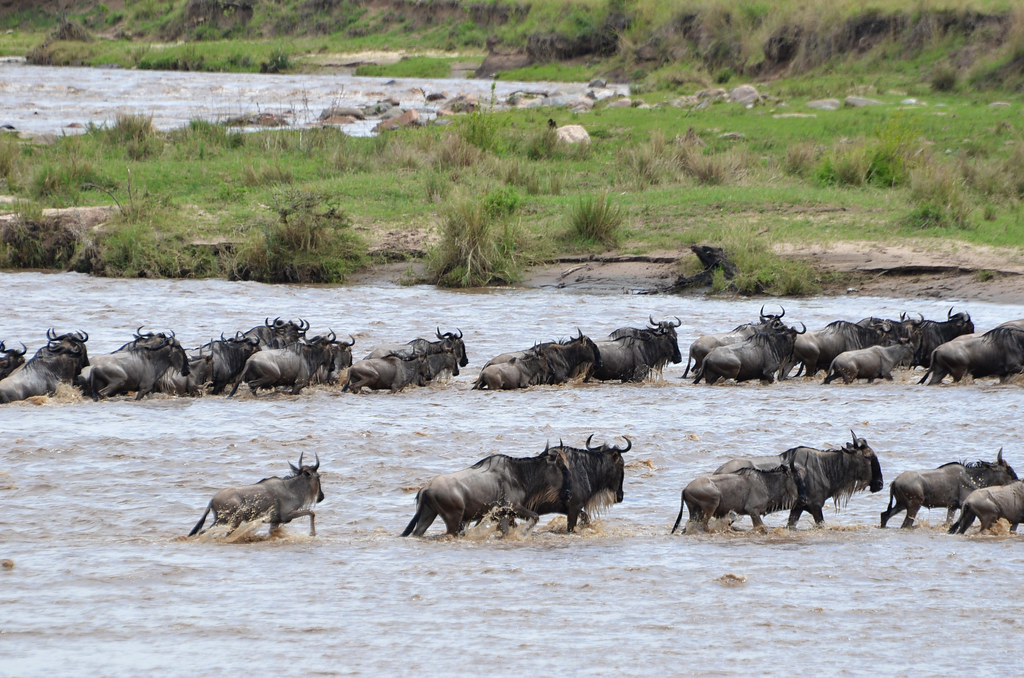
The wildebeest migration is East Africa’s single largest wildlife spectacle – roughly two million wildebeest, alongside significant numbers of zebra and gazelle, moving in a continuous, roughly circular route between Tanzania’s Serengeti and Kenya’s Masai Mara in pursuit of fresh grazing, an event so genuinely large it’s visible from space.
The Basic Migration Route
The migration follows a broadly circular, year-round route through the Serengeti-Mara ecosystem, driven entirely by rainfall patterns and the fresh grazing that follows them, rather than any fixed calendar. Herds spend the wet season, roughly December to March, calving on the Serengeti’s southern plains before moving north and west as the dry season sets in, eventually crossing into Kenya’s Masai Mara before the entire cycle begins again the following year.
The Calving Season: December to March
Between December and March, the migration concentrates on the Serengeti’s southern plains near Ndutu, where nutrient-rich volcanic soil supports the short grass wildebeest favour for calving. An estimated 500,000 calves are born within a few concentrated weeks each year, drawing predators from across the ecosystem and creating some of the most dramatic predator-prey activity of the entire migration cycle.
The Northward Movement: April to June
As the southern plains dry out, the migration begins moving north and west through the central and western Serengeti, passing through areas like the Grumeti River region where crocodile-infested waters create the migration’s first major river crossing challenge of the year. This period offers genuinely excellent game viewing as herds spread across the central Serengeti’s varied terrain.
The Mara River Crossings: July to October
The migration’s most famous spectacle, the Mara River crossings, typically occurs from July through October as herds push north into Kenya, facing crocodile-filled waters and steep, chaotic riverbanks. These crossings are genuinely unpredictable in timing, sometimes happening multiple times a day during peak crossing weeks, and sometimes not at all for days if herds hesitate at the water’s edge.
The Return South: November
By November, shifting rains typically draw the migration back south into the Serengeti, completing the annual cycle before calving season begins again on the southern plains. This return journey is generally less dramatic than the northward crossings but still offers strong game viewing as herds move through the eastern and central Serengeti.
Why the Migration’s Timing Isn’t Fixed
Because the migration follows rainfall rather than a calendar, exact timing shifts somewhat year to year, and no operator can guarantee a river crossing on a specific date regardless of how carefully a trip is planned. This unpredictability is part of why experienced guides emphasise flexibility and realistic expectations over rigid, date-specific promises when planning a migration-focused safari.
Best Time to See the Mara River Crossings
July through October generally offers the strongest odds of witnessing a river crossing, though even within this window, timing your visit around the middle of this range, roughly August and September, typically maximises the chances of a genuine crossing during your stay. See our Serengeti guide and Masai Mara guide for more on wider wildlife viewing during these peak months.
Predators and the Migration
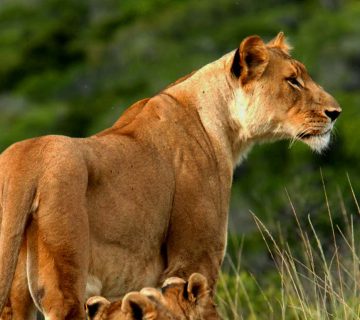
The migration’s vast herds sustain the Serengeti-Mara ecosystem’s exceptional predator density, with lion, leopard, cheetah, and hyena all timing hunting patterns around the herds’ movement through their respective territories. Watching predator activity intensify as the migration passes through a specific area offers genuine insight into how deeply this single event shapes the entire wider ecosystem’s food web and structure.
Choosing Where to Base Yourself
Given the migration’s constantly shifting location, choosing accommodation based on where the herds are expected during your specific travel dates matters considerably more than choosing a single “best” camp, and experienced operators track current herd position closely when recommending where to stay. Mobile camps, which relocate seasonally to follow the migration, offer one solution to this planning challenge.
Self-Drive vs Guided Safaris for Migration Viewing
Given how much migration viewing depends on current, accurate knowledge of herd location, a guided safari makes a genuinely significant difference here, since local operators maintain daily contact networks tracking herd movement across the vast ecosystem. Most visitors book migration-focused trips well in advance through operators with genuine on-the-ground migration tracking capability.
Photographing the Migration
River crossings offer some of the most dramatic wildlife photography opportunities in Africa, though patience is genuinely essential given how unpredictable crossing timing can be, sometimes requiring hours of waiting at a likely crossing point. A telephoto zoom in the 100-400mm range covers most crossing action well, and a faster shutter speed helps freeze the chaotic motion of a crossing in progress.
What to Pack for a Migration Safari
Standard game drive gear – neutral clothing, sun protection, and binoculars – covers most of what a migration safari requires, along with a warm layer for cool early morning drives positioning for a potential crossing. If your wider East Africa itinerary includes gorilla trekking, our gorilla trekking packing list covers that portion separately.
Combining the Migration With Ngorongoro Crater
Most Tanzania-based migration itineraries pair Serengeti time with Ngorongoro Crater, given the two parks’ proximity, adding a genuinely different, more concentrated Big Five experience alongside the open-plains migration spectacle. This combination remains one of the most popular ways to build a complete Northern Circuit itinerary.
Why Wildebeest Cross Such Dangerous Rivers
Crocodile-infested rivers like the Mara and Grumeti pose genuine, sometimes fatal risk to individual wildebeest, yet the herds cross anyway, driven by an instinctive pull toward fresh grazing on the opposite bank that outweighs the immediate danger. This apparent contradiction, sometimes described as a collective gamble rather than individual decision-making, is part of what makes crossing behaviour such a compelling and much-studied aspect of the migration.
The Role of Zebra in the Migration
Zebra typically travel slightly ahead of the main wildebeest herds, and their different grazing preferences, favouring taller grass that wildebeest then follow to graze the shorter regrowth, create a genuinely complementary relationship between the two species. Zebra’s sharper eyesight and different alarm behaviour also benefit wildebeest by providing an early warning system for approaching predators along the shared migration route.
Climate Change and the Migration’s Future
Shifting rainfall patterns linked to broader climate change represent a genuine long-term concern for the migration’s traditional timing and route, since the entire cycle depends so completely on predictable seasonal rains. Researchers continue monitoring how the migration adapts as these patterns shift, with some evidence suggesting herds are already adjusting movement timing in response to changing conditions.
Conservation Challenges Along the Migration Route
The migration crosses both protected park land and, at points, areas facing genuine development and land-use pressure, making the maintenance of open migration corridors a significant ongoing conservation priority for both Tanzania and Kenya. International conservation organisations work closely with both countries’ wildlife authorities to protect the connectivity this migration genuinely depends on for its long-term survival.
Hot Air Balloon Safaris Over the Migration
Hot air balloon safaris, launched at dawn from camps in both the Serengeti and Masai Mara, offer a genuinely unmatched perspective on the migration’s sheer scale, with herds sometimes stretching to the horizon in every direction when viewed from above. This aerial view is widely rated among visitors as one of the single most memorable experiences of an entire migration-focused safari.
Combining the Migration With Other East Africa Wildlife
Travelers building a longer trip often combine migration viewing with Tarangire’s elephant herds or Uganda’s gorilla trekking, given how genuinely different these experiences are from the open-plains migration spectacle itself. See our Big Five guide for how operators typically sequence these combined itineraries.
Frequently Asked Questions
When exactly does the Mara River crossing happen?
Typically July through October, though exact timing varies year to year based on rainfall, and no operator can guarantee a crossing on a specific date.
Should I visit the Serengeti or the Masai Mara for the migration?
It depends on timing – the Serengeti hosts calving season and much of the year-round herd movement, while the Mara specifically hosts the famous July-to-October crossings.
How many wildebeest are in the migration?
Roughly two million, alongside significant numbers of zebra and gazelle, making it the largest single overland wildlife migration on the planet.
Is the migration visible year-round?
The herds themselves are always somewhere in the ecosystem, but the famous river crossings are seasonal, concentrated in the July-to-October window specifically.
Do I need to book far in advance for a migration safari?
Yes, particularly for July through October, given how popular this window is and how limited camp availability becomes during peak crossing season.
Can I combine the migration with the Serengeti’s other wildlife?
Yes, see our Serengeti leopard guide and buffalo guide for more on the park’s resident wildlife beyond the migration itself.
Ready to Plan Your Migration Safari?
Whether the Serengeti’s calving season, the dramatic Mara River crossings, or a full Northern Circuit itinerary is your priority, our team can build a trip matched to your timing and interests. Get in touch with our team below today and let’s start planning your complete migration safari together.

No comment