
The Serengeti holds resident lions year-round, so there’s no single month that rules out a sighting entirely, but timing still meaningfully shifts your odds and the kind of sighting you’re likely to get. This guide breaks down how dry season, wet season, and the Great Migration’s movement through the ecosystem each affect lion viewing, so you can time a Serengeti trip around what matters most to you.
Why the Serengeti’s Lions Don’t Follow the Migration
Unlike wildebeest and zebra, the Serengeti’s lion prides hold fixed territory year-round rather than migrating with the herds, meaning resident prides stay put through both dry and wet seasons, and sightings depend more on knowing where a specific pride’s territory sits than on chasing the migration’s current location. Our guide on how lion prides are structured explains this territorial behavior in more depth.
Dry Season: June Through October
Dry season months concentrate both prey and predators more tightly around remaining water sources and the vegetation still supporting grazing herds, generally making lions somewhat easier to locate since their movement is more constrained and predictable during this period. Our guide on lion sightings in dry season versus wet season covers this same pattern across East Africa’s major parks more broadly.
Wet Season: November Through May
During the wetter months, prey disperses more widely across the Serengeti’s grasslands, and lions follow accordingly, meaning sightings can take a bit more searching but still remain reliable within a resident pride’s known territory, especially with a guide who tracks specific prides’ movement patterns closely throughout the year.
How the Great Migration Affects Lion Hunting Opportunities
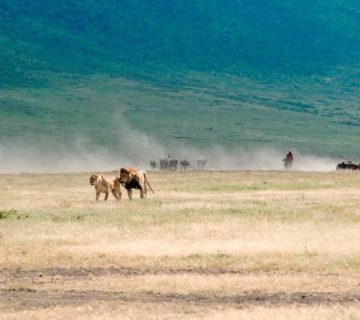
When the migration’s enormous wildebeest and zebra herds pass through a specific pride’s territory, typically the southern plains around December through March and the western corridor around May and June, resident lions get a temporary abundance of prey that can make for dramatic hunting behavior sightings well beyond what’s typical the rest of the year.
Best Months for Serengeti Lion Cub Sightings
Lion births in the Serengeti aren’t tied to one narrow season the way some other species’ calving is, but cubs are often easier to spot once they’re a few months old and beginning to join the pride on the move, so a longer stay generally improves the odds of a cub sighting regardless of the specific month you travel. Our guide on the best time to see lion cubs on safari covers broader regional cub-sighting timing.
Comparing the Serengeti’s Different Sectors by Season
The Serengeti’s vast size means timing advice can vary meaningfully by sector, with the southern Ndutu area especially strong during calving season’s predator activity around January through March, and the northern Mara River region drawing more attention during the migration’s river-crossing months around July through September. Our guide on lion safaris in the Serengeti covers the park’s overall layout and how sector choice shapes an itinerary.
Weather Considerations Beyond Just Lion Sightings
Dry season’s clearer skies and firmer roads also make for more comfortable overall travel and easier off-road tracking when a pride is resting away from the main circuit, while the wetter months bring lush, greener scenery and noticeably thinner crowds, a real tradeoff worth weighing against lion-sighting odds alone when finalizing your exact travel dates.
How Crowds Vary by Season
Peak dry season months coincide with the Serengeti’s busiest visitor period, particularly around the river-crossing months, meaning a strong lion sighting during this window may come with more vehicles present than a similar sighting during the quieter wet season shoulder months.
Combining Serengeti Timing With Ngorongoro Crater
Many itineraries pair a Serengeti stay with nearby Ngorongoro Crater, which holds one of Africa’s highest lion densities year-round regardless of season, giving travelers a reliable lion-viewing anchor point even if their specific Serengeti travel dates happen to fall during a comparatively slower stretch of the year. Our guide on lions of Ngorongoro Crater covers this consistently strong nearby destination in more depth.
Why a Longer Stay Beats Chasing a Perfect Month
Given that resident prides hold fixed territory year-round, a longer stay in one well-chosen area of the Serengeti generally delivers more reliable lion sightings than a short visit timed to a supposedly ideal month, since more time simply gives a guide more chances to relocate a specific pride regardless of season. Our guide on the best national parks to see lions in East Africa covers how the Serengeti compares to other parks for this kind of planning.
What Guides Recommend for First-Time Visitors
Most experienced guides suggest prioritizing overall trip logistics, budget, and combining destinations like Ngorongoro or the Mara over chasing one specific “best” lion month, since the Serengeti’s year-round resident lion population means a well-planned trip at almost any time of year still delivers solid, reliable sightings with the right guide and itinerary in place.
How Guides Use Radio Networks to Find Prides Quickly
Regardless of season, the Serengeti’s dense network of guides sharing sighting information by radio means a located pride is often reachable by multiple vehicles within a short window, a real advantage over parks with less developed guide communication networks, and one that helps offset whatever seasonal difficulty a particular month’s conditions might otherwise present to a searching vehicle. Our guide on night game drives as your best chance to see lions hunting covers an additional way to extend your search window beyond standard daytime hours in parks that permit it.
How Temperature Affects Lion Activity Throughout the Year
The Serengeti’s equatorial location keeps temperatures relatively stable year-round compared to more temperate destinations, meaning lion activity patterns, most active at dawn and dusk, least active at midday, hold fairly consistent regardless of which month you visit, unlike some other safari destinations further from the equator where seasonal temperature swings meaningfully shift animal behavior and activity patterns throughout the year.
Planning Around Flight Availability and Lodge Rates
Peak season lodge rates and flight demand climb considerably during the busiest migration months, so travelers with flexible dates can sometimes secure a strong lion-viewing trip at meaningfully lower overall cost by targeting shoulder-season weeks just before or after the most crowded stretch, without sacrificing much in terms of actual sighting quality or guide experience. Our guide on male versus female lion differences is useful background reading regardless of which season you ultimately choose to travel.
How Rainfall Timing Varies Year to Year
The Serengeti’s rainfall patterns don’t follow an entirely fixed calendar, and the short and long rains can shift earlier or later by several weeks from one year to the next, meaning rigid month-by-month planning sometimes needs adjusting closer to travel dates based on how the current season is actually unfolding. A good local operator tracks these shifts closely throughout the season and can adjust an itinerary’s exact routing and sector focus to match real, current conditions on the ground rather than relying on a fixed seasonal template alone.
Why Some Travelers Deliberately Choose the Quieter Months
Beyond cost savings, some travelers deliberately target the quieter shoulder months specifically for a more solitary, uncrowded safari experience, accepting a slightly higher chance of a rain delay or a somewhat greener, less classically “golden savanna” backdrop in exchange for having sightings largely to themselves rather than sharing them with a dozen other vehicles crowded around the same pride during peak season months.
What a Repeat Visitor’s Itinerary Often Looks Like
Travelers returning to the Serengeti for a second or third trip often deliberately choose an off-peak month specifically because they’ve already experienced the classic migration-season highlights, using a quieter visit to focus more on resident pride behavior and specific sector exploration rather than chasing the same dramatic river-crossing scenes a first-time visitor typically prioritizes on an initial trip to the ecosystem.
Frequently Asked Questions
A few quick answers to the questions travelers ask most often about the best time to see lions in the Serengeti.
Is there a single best month to see lions in the Serengeti?
Not really – resident prides hold territory year-round, so sightings stay reliable across most months with the right guide.
Do lions follow the wildebeest migration?
No – unlike wildebeest and zebra, Serengeti lions hold fixed territory and don’t migrate with the herds.
When is the best time for dramatic hunting sightings?
When migration herds pass through a resident pride’s territory, typically December through March in the south and May through June in the west.
Should I combine the Serengeti with Ngorongoro Crater for lions?
Yes – the Crater holds very high lion density year-round, making it a reliable anchor alongside any Serengeti travel dates.
Does dry season really improve sighting odds?
Somewhat – dry season concentrates prey and predators more tightly, generally making prides a bit easier to locate.
Ready to Plan Your African Safari?
Whether you’re chasing a specific migration-season sighting or simply want a reliable Serengeti lion safari on your own schedule, our team can build a trip matched to your travel dates. Get in touch with our team below today and let’s start planning your complete African safari itinerary together.
No comment