
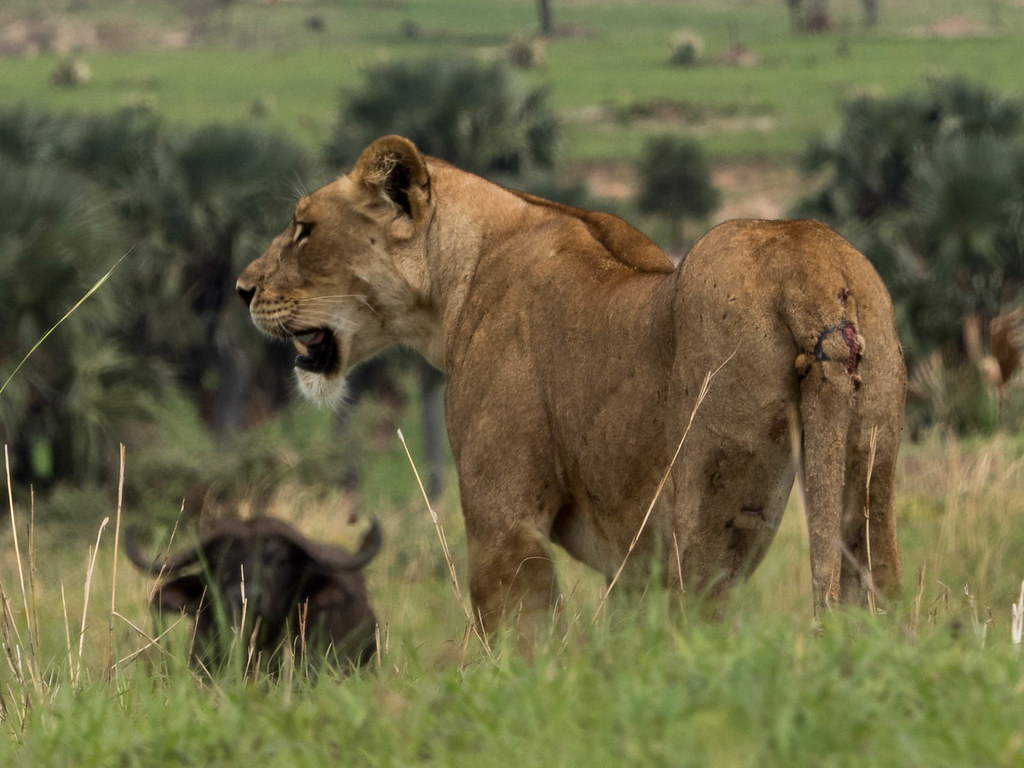
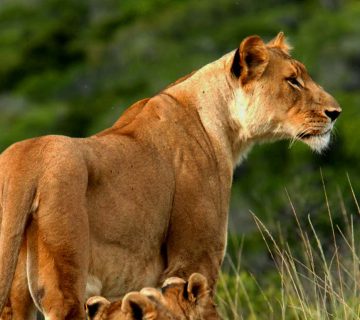
Lions in Tarangire National Park hunt across a genuinely distinctive landscape of ancient baobab trees and dry-season elephant concentrations along the Tarangire River, a setting that gives this park’s prides a genuinely different, memorable visual character from Tanzania’s more famous Serengeti and Ngorongoro lion populations.
Where to Find Lions in Tarangire
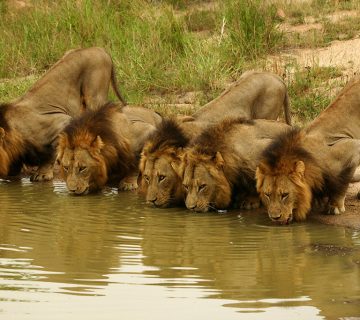
Tarangire’s lion prides range across the park’s varied terrain, though areas near the Tarangire River and the open grassland studded with baobab trees consistently produce the strongest sightings, particularly during the dry season when both predators and prey concentrate around the park’s single reliable water source. Rocky outcrops and shaded baobab groves also provide prides with genuinely useful resting spots during the heat of the day.
Lions and Tarangire’s Elephant Concentration
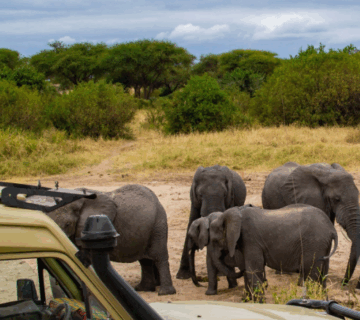
Tarangire is genuinely famous for one of Africa’s highest dry-season elephant densities, and while adult elephants pose little predation risk to lions, the park’s overall prey base, including buffalo, zebra, and antelope species drawn to the same river corridor, sustains a healthy resident lion population alongside the elephant spectacle. See our Tarangire elephant guide for more on this seasonal concentration.
Best Time of Day for Lion Sightings
Lions are most active around dawn, dusk, and after dark, making early morning and late afternoon game drives the strongest windows for a sighting in Tarangire, much as in any other lion destination. Guides who work the park regularly know to check specific riverine and baobab areas during these low-light windows when prides are most genuinely likely to be active or resting visibly.
Tarangire’s Full Big Five Picture
Lion is present in Tarangire alongside the park’s famous elephant herds, healthy buffalo populations, and leopard, though rhino requires a separate visit to Ngorongoro Crater to complete a full Tanzania Big Five checklist.
Pride Behaviour Around Tarangire’s Baobabs
Tarangire’s lions occasionally use the wide, low branches of the park’s ancient baobab trees for shade and vantage, though this behaviour is considerably less pronounced than the deliberate tree-climbing seen in Uganda’s Queen Elizabeth National Park. Still, the sight of a pride resting beneath or occasionally within a genuinely massive baobab adds a distinctive visual element to Tarangire lion sightings.
Best Time of Year for Lion Sightings
Tarangire’s lions are visible year-round given their resident status, though the dry season, roughly June to October, concentrates both predators and prey most predictably around the Tarangire River as surrounding water sources dry up. This same dry-season window also produces the park’s famous elephant concentration, making it the most popular time to visit for travelers wanting both experiences.
How Tarangire Compares to the Serengeti for Lions
The Serengeti offers considerably higher lion density and larger prides given its far greater overall size and the added drama of the wildebeest migration, while Tarangire’s smaller, more contained ecosystem concentrates sightings within a genuinely more compact, efficiently covered area.
Self-Drive vs Guided Safaris for Lion Viewing
Given Tarangire’s varied terrain and the value of local knowledge in coordinating sightings around current pride movement, a guided safari makes a genuine difference to how efficiently you locate lions within a limited visit. Most visitors combine Tarangire with a wider guided Northern Circuit itinerary rather than visiting independently on their own.
Photographing Tarangire’s Lions
Lions resting beneath or near the park’s ancient baobab trees offer a genuinely distinctive photographic subject unmatched by lion sightings elsewhere in Tanzania, and a telephoto zoom in the 100-400mm range covers most sightings comfortably. Early morning and late afternoon light, when prides are most active, also happens to offer the most flattering conditions for photographing the baobab landscape itself.
What to Pack for a Tarangire Safari
Standard game drive gear – neutral clothing, sun protection, and binoculars – covers most of what the park requires, and given the dry season’s dusty conditions along the riverbed, a scarf or buff for covering your nose and mouth is a genuinely useful addition. If your wider itinerary includes gorilla trekking, our gorilla trekking packing list covers that portion separately.
Lion Conservation in Tarangire
Like much of Tanzania, Tarangire’s lion population benefited from the country’s ivory trade ban and intensified anti-poaching efforts implemented following the poaching crisis of the 1970s and 80s, part of a broader Tanzanian conservation recovery story shared across the country’s protected areas. Today’s healthy resident prides reflect decades of consistent conservation management within the wider ecosystem.
Pride Structure and Territory in Tarangire
Tarangire’s prides maintain territories shaped by the park’s river-dependent ecosystem, often centred on stretches of the Tarangire River during the driest months when water becomes the defining resource for the entire food web. This concentration around a single geographic feature makes lion sightings here genuinely more predictable than in wider, more dispersed ecosystems, provided you know which sections of river a given pride currently favours.
Lion Hunting Behaviour in Tarangire’s Varied Terrain
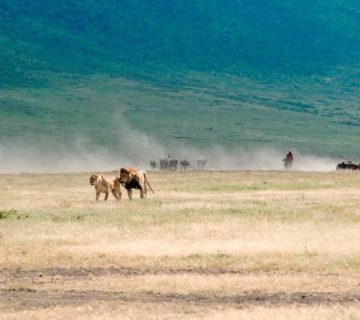
Tarangire’s lions hunt across a genuinely varied landscape, from open grassland studded with baobabs to denser riverine woodland, adapting their approach depending on which prey species and terrain type a given hunt involves. This variety gives Tarangire’s prides a somewhat more diverse hunting repertoire than lions confined to a single, more uniform habitat type elsewhere in Tanzania, and it makes each sighting feel genuinely distinct depending on where within the park it occurs.
Territorial Conflicts and Pride Takeovers
Male coalitions competing for control of a pride’s territory represent one of the more dramatic aspects of lion behaviour anywhere, and Tarangire’s prides experience the same periodic takeovers documented across East Africa’s better-studied lion populations. Experienced guides who work the park regularly can often explain the current political situation within a specific pride’s territory, adding genuine real depth to any single sighting.
Best Lodges for Lion Viewing in Tarangire
Properties positioned along the Tarangire River or within reach of the park’s densest baobab groves generally offer the most convenient access to the park’s strongest lion territory, cutting down on drive time before and after game drives. Discussing lodge location specifically with your operator is worth doing if lion viewing is a genuine priority for your Tarangire stay.
Night Game Drives and Lion Activity
Where available through park-affiliated concessions bordering Tarangire, night game drives offer a genuinely different perspective on lion activity, since prides become considerably more active after dark, often coordinating hunts under cover of darkness. This activity isn’t permitted within the core national park itself, so checking with your operator about which specific concessions offer it is genuinely worth doing well in advance of your visit.
Combining Lion Viewing With Lake Manyara
Many Northern Circuit itineraries pair Tarangire with nearby Lake Manyara National Park, known for its own tree-climbing lion population and dense birdlife along the lake’s shoreline, given the short drive between the two parks. This combination adds genuine variety to a Northern Circuit trip, pairing Tarangire’s baobab-and-river landscape with Lake Manyara’s distinctly different lakeside ecosystem.
Combining Lion Viewing With a Wider Northern Circuit
Tarangire is commonly included as either the first or last stop on a longer Northern Circuit itinerary spanning the Serengeti and Ngorongoro Crater, given its convenient position near Arusha and the genuine contrast its baobab-and-elephant landscape offers against those two parks’ more famous draws. See our Big Five guide for how operators typically sequence these itineraries.
Getting to Tarangire National Park
Tarangire sits within a two to three hour drive of Arusha, making it one of the more accessible parks on a standard Northern Circuit itinerary and a natural first or last stop given its proximity to Kilimanjaro International Airport. This convenient positioning is part of why so many longer Tanzania itineraries include a Tarangire stop along the way, regardless of overall route.
Frequently Asked Questions
Are lions common in Tarangire?
Yes, resident prides are genuinely reliable, particularly around the Tarangire River and areas with strong prey concentration during the dry season.
Do Tarangire’s lions climb trees like Uganda’s do?
Occasionally use baobabs for shade, but this behaviour is considerably less pronounced than the deliberate tree-climbing seen in Queen Elizabeth National Park.
Is Tarangire or the Serengeti better for lion sightings?
The Serengeti offers higher density and larger prides, while Tarangire’s smaller ecosystem concentrates sightings within a more compact, efficiently covered area.
What’s the best time of year to see lions in Tarangire?
The dry season, roughly June to October, when both predators and prey concentrate most predictably around the Tarangire River.
How does Tarangire fit into a standard Northern Circuit itinerary?
It’s commonly the first or last stop, given its proximity to Arusha, offering a genuinely rewarding bookend to a Serengeti and Ngorongoro-focused trip.
How does Tarangire’s lion population compare to Uganda’s parks?
See our tree-climbing lions guide and Murchison Falls lion guide for how Uganda’s savannah prides compare to Tarangire’s river-dependent population.
Ready to Plan Your Tarangire Safari?
Whether Tarangire’s lions among the baobabs, its famous elephant herds, or a full Northern Circuit itinerary is your priority, our team can build a Tanzania trip matched to your time and interests. Get in touch with our team below today and let’s start planning your complete Tanzania safari itinerary together.

No comment