


Cape buffalo herds genuinely make collective movement decisions through a distinctive process where experienced adult females indicate a preferred direction by standing and gazing pointedly toward it, with the herd’s actual movement genuinely determined by which direction attracts the most individual “votes” of this kind rather than any single dominant leader dictating where the group goes.
Why Buffalo Movement Decisions Genuinely Function Through a Voting-Like System
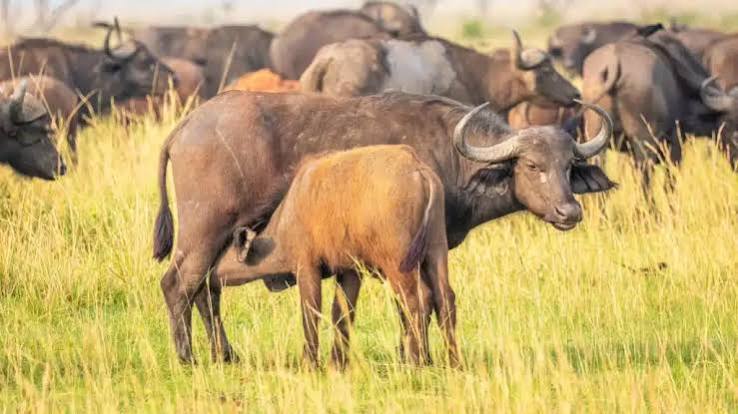
Researchers studying buffalo herd movement have genuinely documented a distinctive behaviour where individual adult females, particularly those in good body condition, stand facing a specific direction for an extended period as a way of indicating their preferred travel direction, and the herd’s eventual movement genuinely correlates with whichever direction attracts the greatest number of these directional postures, a genuinely democratic-style decision process rather than one dominant individual simply dictating group movement.
How This Differs Genuinely From a Strict Dominance-Based Leadership Model
Unlike species where a single alpha individual genuinely dictates group movement through dominance alone, buffalo herd direction genuinely emerges from this aggregated individual signalling process, meaning even a herd’s most socially dominant members don’t automatically override the collective preference simply through rank, a genuinely more distributed decision-making system than researchers initially expected to find in a species with otherwise clear internal social hierarchy.
Why Body Condition Genuinely Influences Whose Directional Preference Carries More Weight
Research has genuinely found that females in better physical condition, generally reflecting more successful recent foraging, tend to have their directional signals genuinely carry somewhat more influence over the herd’s eventual movement decision, a pattern that makes ecological sense since an individual in strong condition has likely made more successful recent foraging choices worth the wider herd genuinely following.
How Researchers Actually Documented This Behaviour Through Careful Field Study
The distinctive standing-and-gazing behaviour genuinely required considerable patient field observation to document clearly, since researchers needed to track individual buffalo posture and direction alongside the herd’s eventual actual movement across numerous separate occasions before the correlation between individual signalling and collective outcome became genuinely statistically clear, a research approach that revealed collective decision-making operating beneath what might otherwise look like simple, unstructured herd movement.
Why This Collective System Genuinely Makes Sense Given Buffalo Herd Size
Given how genuinely large buffalo herds can grow, sometimes numbering in the hundreds, a distributed, aggregated decision-making system genuinely scales more practically than relying on a single leader whose decisions every other herd member would need to somehow directly observe and follow, meaning the voting-like mechanism genuinely provides a workable solution for coordinating movement across a herd too large for simple direct-following leadership to function efficiently.
How This Research Genuinely Connects to Broader Collective Animal Decision-Making Studies
The buffalo directional-voting discovery genuinely joins other documented examples of quorum-based or aggregated collective decision-making across social species, including the sneeze-based quorum documented in African wild dog pre-hunt rallies, meaning researchers increasingly recognise this kind of distributed, aggregated decision process as considerably more widespread across social mammal species than earlier assumed.
Where to Observe Buffalo Herd Movement Behaviour in East Africa
Large buffalo herds displaying observable collective movement behaviour are genuinely reliable to see across the Serengeti-Mara ecosystem and Queen Elizabeth National Park.
Best Time of Year for Buffalo Herd Viewing
Buffalo are visible year-round given resident herd territories. See our regional best-time guide for how seasonal patterns generally affect wider game viewing.
Photographing Buffalo Herd Movement Behaviour
Capturing the distinctive standing-and-gazing posture individual females use to signal direction offers genuinely subtle but scientifically meaningful behavioural photography beyond a standard grazing herd portrait. See our camera gear guide for broader equipment recommendations.
What to Pack for Buffalo-Focused Game Drives
Standard game drive gear – neutral clothing, sun protection, and binoculars – covers most of what buffalo viewing requires. If your wider itinerary includes gorilla trekking, our gorilla trekking packing list covers that portion separately.
Why This Decision-Making System Genuinely Differs From How Buffalo Handle Predator Defence
While movement direction genuinely emerges through this distributed voting-like process, defensive response to an active predator attack genuinely operates through a considerably more immediate, reactive coordination triggered by distress calls rather than the same deliberate directional-signalling process, meaning buffalo herds genuinely rely on different coordination mechanisms depending on whether the situation calls for considered route planning or urgent defensive reaction.
How Male Buffalo Genuinely Participate Differently in This Collective Process
Research has genuinely found male buffalo participate somewhat less consistently in the directional-signalling behaviour than females, particularly outside breeding season, meaning the collective movement decision-making system genuinely appears to rely disproportionately on female herd members, a pattern that may reflect females’ generally stronger investment in locating consistently reliable grazing given their role in calf-rearing.
Why Older, More Experienced Females Genuinely May Carry Additional Influence
Beyond body condition alone, researchers believe accumulated experience likely also factors into which individuals’ directional signals genuinely carry more practical influence, a pattern broadly comparable to how elephant matriarchs earn leadership authority through accumulated experience, though buffalo achieve a functionally similar outcome through this considerably more distributed, less formally structured collective process rather than concentrated single-individual leadership.
Comparing Buffalo Collective Decision-Making to Elephant Matriarch Leadership
Where elephant herds genuinely rely on one experienced matriarch directing family movement decisions, buffalo herds achieve a functionally comparable navigational outcome through this considerably more democratic, aggregated signalling system, illustrating two genuinely distinct evolutionary solutions to the same basic challenge of coordinating group movement decisions across a socially complex herd.
Why Guides Value Explaining This Behaviour to Visitors
Given how easy it is to view buffalo herd movement as simply following whichever direction looks most convenient, experienced guides genuinely value explaining the considerable collective decision-making process underlying what might otherwise appear to be random or purely opportunistic herd movement.
Combining Buffalo Behaviour Viewing With a Wider Big Five Circuit
Buffalo collective decision-making observation pairs naturally with a broader Big Five itinerary, giving travelers genuine behavioural depth alongside the standard sighting.
Why This System Genuinely Reduces the Risk of Poor Collective Decisions
By genuinely aggregating multiple individual preferences rather than relying on a single decision-maker, buffalo herds benefit from what researchers call the “wisdom of crowds” effect, where averaging several independent assessments genuinely tends to produce more reliable outcomes than any single individual’s judgement alone, meaning the voting-like system genuinely provides a real practical advantage in avoiding costly navigational mistakes that could waste the herd’s collective time and energy.
How Researchers Distinguish Genuine Directional Signalling From Incidental Body Positioning
To confirm this behaviour genuinely represents deliberate signalling rather than incidental body orientation, researchers carefully tracked how long individuals maintained a specific directional stance and whether that stance genuinely correlated with subsequent herd movement, methodological rigour that helped establish the behaviour as a genuinely meaningful communicative signal rather than simply describing where individual buffalo happened to be facing at any given moment.
Why This Discovery Genuinely Challenged Earlier Assumptions About Buffalo Social Structure
Prior to this research, buffalo social organisation was genuinely assumed to follow a more straightforwardly hierarchical pattern reflecting the species’ otherwise clear rank-based social interactions during feeding and confrontation, meaning the discovery of this considerably more egalitarian, distributed movement-decision system genuinely surprised researchers and prompted renewed interest in re-examining collective decision-making across other seemingly hierarchical herding species that hadn’t previously received this same considerable level of detailed behavioural scrutiny from dedicated field researchers.
Why This Detail Genuinely Adds Depth to a Commonly Photographed but Little-Understood Sighting
Given how genuinely frequently visitors photograph resting or grazing buffalo herds without any real awareness of the considerable, ongoing collective decision-making happening quietly beneath the surface, understanding this voting-like system genuinely transforms an otherwise routine sighting into an opportunity to watch a real, ongoing group negotiation process unfold, particularly when several individuals can genuinely be seen holding a distinct directional stance simultaneously before the whole herd eventually begins moving together as a single coordinated group.
Frequently Asked Questions
How do buffalo herds decide which direction to move?
Individual females indicate a preferred direction by standing and gazing toward it, with the herd following whichever direction attracts the most such signals.
Does a dominant buffalo simply decide where the herd goes?
No, genuinely not – the process functions more like a distributed vote than strict top-down dominance-based leadership.
Do all herd members participate equally in this signalling?
Not quite – females in better body condition tend to have their directional preferences carry somewhat more influence.
Is this the same system buffalo use to coordinate predator defence?
No – defensive coordination during an attack relies on a more immediate, reactive response triggered by distress calls instead.
Where can I see buffalo herd movement behaviour on safari?
The Serengeti-Mara ecosystem and Queen Elizabeth National Park both offer strong opportunities to observe large, socially complex herds.
Ready to Plan Your East Africa Safari?
Whether observing buffalo behaviour firsthand, wider Big Five viewing, or a full East Africa itinerary is your priority, our team can build a trip matched to your interests. Get in touch with our team below today and let’s start planning your complete safari itinerary together.




No comment