
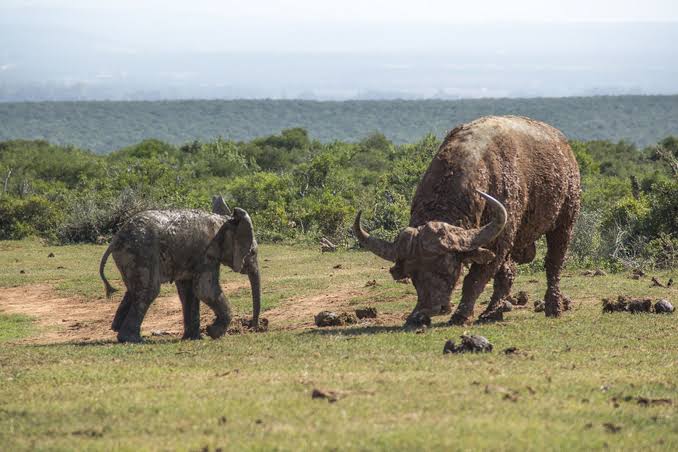
An elephant’s trunk genuinely contains tens of thousands of individual muscle units and no internal bone structure whatsoever, a genuinely unique anatomical arrangement that provides both the raw strength to uproot a small tree and the fine motor precision to pick up a single blade of grass, making it one of the most functionally versatile appendages found anywhere in the animal kingdom.
Why the Trunk’s Complete Lack of Bone Genuinely Enables Its Remarkable Flexibility
Unlike a human arm or most other animal limbs, an elephant’s trunk genuinely contains no bone at all, relying entirely on a dense arrangement of muscle and connective tissue to provide both structure and movement, an anatomical arrangement researchers describe as a muscular hydrostat, similar in basic principle to an octopus tentacle or a human tongue, that genuinely allows the trunk to bend, twist, and curl in ways a bone-supported limb simply couldn’t replicate.
How Tens of Thousands of Individual Muscles Genuinely Provide Such Precise Control
Researchers studying elephant trunk anatomy have genuinely documented tens of thousands of distinct muscle units packed throughout the appendage, organised into longitudinal, radial, and transverse muscle groups that work together to genuinely enable movement in essentially any direction with considerable precision, meaning the trunk’s remarkable dexterity comes directly from this sheer density of independently controllable muscle tissue rather than any single simple mechanism.
Why the Trunk Tip Genuinely Functions Like a Precision Gripping Tool
African elephants genuinely possess two finger-like projections at the trunk tip, while Asian elephants have just one, and these projections genuinely allow remarkably fine manipulation, letting the animal pick up something as small and delicate as a single seed or coin-sized object with real precision, meaning the trunk tip genuinely functions as a specialised gripping tool considerably more dexterous than the rest of the appendage’s broader movement capability might suggest.
How the Trunk Genuinely Combines the Nose and Upper Lip Into One Multi-Purpose Organ
An elephant’s trunk genuinely represents a fused, elongated combination of the nose and upper lip, meaning the appendage serves simultaneously as the animal’s primary breathing and smelling organ and as its main tool for feeding, drinking, and manipulation, a genuinely efficient multi-purpose evolutionary solution that consolidates several distinct biological functions into one considerably versatile structure.
Why Elephant Trunk Strength Genuinely Allows Lifting Considerable Weight
Despite its remarkable fine-motor precision, the trunk genuinely also provides considerable raw lifting strength, capable of hoisting weights reaching several hundred kilograms when necessary, meaning the same appendage genuinely spans an extraordinary functional range from delicately plucking a single leaf to uprooting small trees or moving substantial fallen branches during feeding and path-clearing activity.
How Trunk Sensitivity Genuinely Supports Both Feeding and Social Communication
Beyond physical manipulation, the trunk genuinely carries a considerable concentration of touch-sensitive nerve endings, making it genuinely sensitive enough to detect subtle textures and temperature differences, and elephants genuinely use trunk touch extensively during social interaction, including greeting, reassurance, and the close physical contact documented in elephant mourning behaviour, meaning the trunk genuinely serves as a critical tactile communication tool alongside its more obvious feeding function.
Where to Observe Elephant Trunk Dexterity in East Africa
Elephants displaying considerable trunk dexterity during feeding and social interaction are genuinely reliable to observe across Murchison Falls National Park and Amboseli National Park.
Best Time of Year for Elephant Viewing
Elephants are visible year-round given resident family territories. See our regional best-time guide for how seasonal patterns generally affect wider game viewing.
Photographing Elephant Trunk Behaviour
Capturing the trunk tip’s fine manipulation during feeding, or the appendage curled protectively during social interaction, offers genuinely rich behavioural photography beyond a standard grazing portrait. See our camera gear guide for broader equipment recommendations.
What to Pack for Elephant-Focused Game Drives
Standard game drive gear – neutral clothing, sun protection, and binoculars – covers most of what elephant viewing requires. If your wider itinerary includes gorilla trekking, our gorilla trekking packing list covers that portion separately.
Why the Trunk Genuinely Holds Considerable Water for Drinking
An elephant’s trunk genuinely can hold several litres of water at once, drawn up through suction and then transferred to the mouth rather than the animal drinking directly through the trunk itself, meaning the appendage genuinely functions as a temporary storage and transfer tool during drinking rather than water passing directly into the elephant’s respiratory system, a common visitor misconception guides regularly clarify.
How Trunk Development Genuinely Takes Considerable Time and Practice for Young Calves
Newborn elephant calves genuinely lack full control over their trunk initially, often stepping on it or struggling with basic coordination during their first months, and researchers have found young elephants genuinely require an extended practice period, sometimes over a year, to develop the fine motor control and coordination adult trunk use requires, meaning trunk dexterity genuinely develops gradually through practice rather than functioning fully from birth.
Why Trunk Use Genuinely Reveals Something About Elephant Cognitive Sophistication
Given how much precise, deliberate coordination effective trunk use genuinely requires, researchers studying elephant cognition view sophisticated trunk manipulation as one measurable indicator of the species’ broader cognitive complexity, connecting this physical dexterity directly to the same intelligence documented in elephant social structure and problem-solving behaviour, including the considered decision-making involved in well-digging during drought.
Comparing Elephant Trunk Dexterity to Primate Hand Manipulation
While primates genuinely rely on opposable thumbs and hand-based fine motor control for precise manipulation, elephants achieve genuinely comparable manipulative precision through an entirely different anatomical solution, illustrating how considerably different evolutionary paths can arrive at broadly similar levels of functional dexterity through genuinely distinct underlying structures.
Why Guides Value Explaining Trunk Anatomy to Visitors
Given how often visitors assume the trunk simply functions like an oversized nose, experienced guides genuinely value explaining the considerable muscular complexity and dual sensory-manipulative function behind the appendage, adding real appreciation for one of the animal kingdom’s most functionally remarkable body parts.
Combining Elephant Trunk Observation With a Wider Wildlife Circuit
Elephant trunk behaviour observation pairs naturally with a broader wildlife-focused itinerary, giving travelers genuine anatomical depth alongside standard elephant sightings.
Why Trunk-Based Tool Use Genuinely Demonstrates Real Problem-Solving Ability
Researchers studying elephant behaviour have genuinely documented individuals using the trunk to wield sticks for scratching hard-to-reach body areas or to strategically place objects, a form of genuine tool use that reflects the same underlying cognitive flexibility researchers have documented in other contexts, including matriarch-led decision-making, suggesting trunk dexterity and broader elephant intelligence genuinely developed together as complementary evolutionary traits rather than in isolation from each other.
How Trunk Coordination Genuinely Enables Elephants to Snorkel While Swimming
Elephants are genuinely capable swimmers, and the trunk’s flexibility allows the animal to hold it upright above the water’s surface like a snorkel while the rest of the body remains submerged, a genuinely useful adaptation that lets elephants cross deep water or rivers considerably more easily than most other similarly large land mammals could manage without this specific trunk-based breathing solution.
Why Trunk Injury Genuinely Represents a Serious Survival Threat
Given how completely elephants genuinely depend on the trunk for feeding, drinking, and social interaction, an injury significantly impairing trunk function represents a genuinely serious survival threat, and researchers have documented individuals with damaged trunks, sometimes from snare injuries, struggling considerably to feed effectively, meaning trunk health genuinely carries survival stakes well beyond what a comparable injury to almost any other, less functionally central body part would ever represent.
Why Some Elephants Genuinely Develop a Preference for a Specific Trunk-Curling Direction
Beyond tusk-side preference, researchers have genuinely found individual elephants also tend toward a consistent preferred direction when curling the trunk to grasp food or objects, a lateralised behaviour pattern that adds further evidence to the broader picture of elephant physical and possibly neurological asymmetry researchers continue actively documenting across multiple different aspects of the species’ considerable behavioural repertoire.
Frequently Asked Questions
How many muscles does an elephant trunk actually contain?
Tens of thousands of individual muscle units, organised into groups that together enable remarkably precise movement in any direction.
Why doesn’t the trunk have any bones?
It’s a muscular hydrostat, similar in principle to an octopus tentacle, relying entirely on muscle and connective tissue for structure and movement.
How much weight can an elephant trunk lift?
Several hundred kilograms when necessary, while the same appendage can also pick up something as small as a single seed.
Do elephants drink directly through their trunk?
No – the trunk holds water through suction, which is then transferred to the mouth rather than passing directly into the respiratory system.
Where can I see elephant trunk dexterity on safari?
Murchison Falls National Park and Amboseli National Park both offer genuine opportunities to observe elephant feeding and social behaviour closely.
Ready to Plan Your Uganda Safari?
Whether observing elephant behaviour firsthand, wider wildlife viewing, or a full Uganda itinerary is your priority, our team can build a trip matched to your interests. Get in touch with our team below today and let’s start planning your complete Uganda safari itinerary together.




No comment