
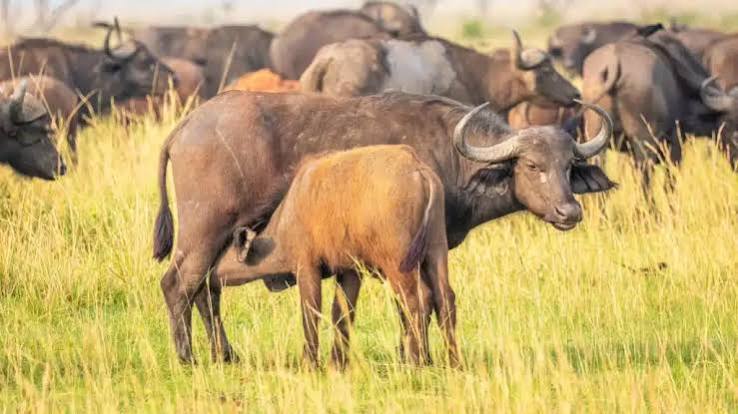




Cape buffalo genuinely wallow in mud primarily to regulate body temperature and protect against biting insects and sun damage, coating their skin in a drying layer that both cools the animal through evaporation and forms a genuine physical barrier against parasites, a behaviour considerably more functional than the casual, playful appearance it often presents to first-time observers.
Why Mud Genuinely Provides More Effective Cooling Than Water Alone
Unlike simply standing in water, mud genuinely dries into a coating that continues providing evaporative cooling for considerably longer after a buffalo leaves the wallow, meaning the behaviour’s cooling benefit genuinely extends well beyond the actual time spent physically wallowing, a practical advantage over plain water immersion that helps explain why buffalo genuinely favour muddy wallows over clean water sources when both are available nearby.
How the Dried Mud Layer Genuinely Protects Against Biting Insects
Once dried, the mud coating genuinely forms a physical barrier that makes it considerably harder for biting flies, ticks, and other parasitic insects to reach the buffalo’s skin directly, meaning wallowing genuinely serves a real pest-control function alongside its temperature-regulation benefit, particularly important given how much blood loss and irritation persistent insect biting can genuinely cause across an exposed hide during peak insect season.
Why Sun Protection Genuinely Adds a Third Practical Benefit
Beyond cooling and pest deterrence, the dried mud layer genuinely provides some protection against direct sun exposure and potential skin damage, a benefit particularly relevant for buffalo given their relatively sparse hair coat compared to some other African herbivores, meaning wallowing genuinely functions as a multi-purpose skin protection strategy rather than serving any single isolated benefit alone.
How Wallowing Frequency Genuinely Increases During the Hottest, Driest Periods
Buffalo genuinely wallow considerably more frequently during the hottest dry season months, when both temperature regulation needs and insect activity typically peak simultaneously, meaning wallow-site visitation directly tracks seasonal environmental pressure rather than occurring at a constant, unvarying rate throughout the year regardless of actual conditions.
Why Wallowing Also Genuinely Serves a Social and Communication Function
Beyond its practical physical benefits, wallowing genuinely provides buffalo with an opportunity for scent transfer between individuals sharing the same wallow site, since mud picks up and retains scent information that gets spread across multiple animals using the same location, meaning shared wallows genuinely function as a passive social communication hub in addition to their primary temperature and pest-control purpose.
How Wallow Site Selection Genuinely Reflects Herd Movement Patterns
Buffalo herds genuinely return repeatedly to the same established wallow sites across a given territory, locations that become genuinely well-known fixtures within the herd’s regular movement pattern, meaning experienced trackers and guides can often predict likely buffalo activity by checking known wallow locations, particularly during the hottest parts of the day when wallowing behaviour peaks.
Where to Observe Buffalo Wallowing Behaviour in East Africa
Buffalo wallowing is genuinely reliable to observe across the Serengeti-Mara ecosystem and Queen Elizabeth National Park, both hosting substantial resident buffalo herds and accessible wallow sites.
Best Time of Year for Buffalo Wallow Viewing
Dry season, when both heat and insect pressure typically peak, genuinely offers the most reliable wallowing activity. See our regional best-time guide for how seasonal patterns generally affect wider game viewing.
Photographing Buffalo Wallowing Behaviour
Capturing a buffalo mid-wallow, mud coating visibly caked across its hide, offers genuinely engaging behavioural photography beyond a standard resting portrait. See our camera gear guide for broader equipment recommendations.
What to Pack for Buffalo-Focused Game Drives
Standard game drive gear – neutral clothing, sun protection, and binoculars – covers most of what buffalo viewing requires. If your wider itinerary includes gorilla trekking, our gorilla trekking packing list covers that portion separately.
Why Oxpecker Birds Genuinely Complement Wallowing as a Second Pest-Control Layer
Buffalo genuinely tolerate, and actively benefit from, oxpecker birds that pick ticks and parasites directly off their hide, a symbiotic relationship that genuinely works alongside wallowing as a second, complementary pest-management layer, since the dried mud coating deters some parasites before they attach while oxpeckers remove others that manage to reach the skin despite the mud barrier already in place.
How Calves Genuinely Learn Wallowing Behaviour From the Wider Herd
Young buffalo genuinely observe and gradually adopt wallowing behaviour by following adult herd members to established wallow sites, a learned rather than purely instinctive behaviour that reflects how much of a buffalo’s practical survival knowledge, including where reliable wallow sites exist within the herd’s territory, genuinely gets transmitted through direct observation across generations.
Why Wallow Sites Sometimes Genuinely Attract Other Species Too
Established buffalo wallows sometimes genuinely attract other species seeking the same cooling and pest-control benefit, including warthog and various antelope species, meaning a productive wallow site can function as a genuinely shared multi-species resource rather than remaining exclusively used by the buffalo herd that originally established it.
Comparing Buffalo Wallowing to Elephant Dust-Bathing Behaviour
Much like elephants, which use dust-bathing for broadly similar temperature and pest-control benefits, buffalo wallowing represents a genuinely comparable behavioural solution to the same underlying environmental challenges, though using wet mud rather than dry dust, a meaningful distinction that reflects each species’ somewhat different typical habitat and water access.
Why Guides Value Explaining Wallowing Behaviour to Visitors
Given how often wallowing is dismissed as simply buffalo enjoying mud, experienced guides genuinely value explaining the considerable practical function behind the behaviour, adding real appreciation for a genuinely multi-purpose survival strategy easily mistaken for simple animal leisure.
Combining Buffalo Wallow Viewing With a Wider Big Five Circuit
Buffalo wallowing observation pairs naturally with a broader Big Five itinerary, giving travelers genuine behavioural depth alongside the standard sighting.
Why Wallow Mineral Content Genuinely Adds a Nutritional Dimension
Beyond temperature and pest control, some buffalo wallows genuinely form in mineral-rich soil, meaning the mud coating itself can provide a small but genuine nutritional supplement absorbed through the skin or ingested incidentally during grooming, an additional benefit researchers believe adds further practical value to wallow-site selection beyond purely mechanical cooling and pest-deterrent function.
How Wallowing Genuinely Differs Between Solitary Bulls and Herd Members
Solitary older bulls, sometimes called “dagga boys,” genuinely wallow with somewhat different frequency and site preference than herd-embedded buffalo, often favouring more secluded wallow locations away from the main herd’s regular movement pattern, a behavioural difference that reflects the same broader social separation documented in how solitary bulls lack the collective defensive backup herd-embedded buffalo benefit from.
Why Wallowing Genuinely Peaks During Specific Times of Day
Buffalo genuinely time most wallowing activity to the hottest midday hours, when temperature regulation needs are most acute, a scheduling pattern broadly similar to how hippos concentrate water-based activity during the same peak-heat period, reflecting a shared underlying pressure across multiple large African herbivore species to actively manage body temperature during the day’s most physiologically demanding hours.
Why Wallow Water Sources Genuinely Shape Herd Territory Selection Over Time
Given how consistently important wallowing genuinely is to buffalo comfort and health, herds genuinely factor reliable wallow availability into broader territory and seasonal movement decisions, meaning a stretch of land lacking suitable mud sources may genuinely see reduced buffalo presence even if grazing quality itself remains otherwise perfectly adequate, illustrating how thoroughly this single behaviour influences the species’ overall landscape use.
How Wallow Maintenance Genuinely Requires Ongoing Herd Activity
Established wallow sites genuinely require continued use to remain functional, since the genuine churning action of repeated buffalo visits keeps the mud pit soft and workable rather than allowing it to dry out completely and harden into unusable, cracked ground, meaning a wallow’s ongoing viability genuinely depends on consistent herd traffic rather than being a permanently self-sustaining feature of the surrounding landscape once initially formed and established.
Why This Behaviour Genuinely Deserves More Attention Than It Typically Receives
Given how thoroughly wallowing shapes buffalo comfort, health, territory selection, and even social communication simultaneously, the behaviour genuinely deserves considerably more attention than the passing “buffalo enjoying mud” impression most visitors form during a brief roadside sighting, representing instead one of the more functionally important daily routines within the species’ broader survival strategy.
Frequently Asked Questions
Why do buffalo wallow in mud instead of clean water?
Mud dries into a coating that continues providing evaporative cooling and insect protection considerably longer than plain water alone.
Does wallowing actually protect against insects?
Yes, genuinely so – the dried mud layer forms a physical barrier that makes it considerably harder for biting flies and ticks to reach the skin.
When is buffalo wallowing most common?
During the hottest dry season months, when both temperature regulation needs and insect activity typically peak simultaneously.
Do buffalo return to the same wallow sites repeatedly?
Yes – herds genuinely return to established, well-known wallow locations that become fixtures within their regular movement pattern.
Where can I see buffalo wallowing on safari?
The Serengeti-Mara ecosystem and Queen Elizabeth National Park both host substantial resident buffalo herds and accessible wallow sites.
Ready to Plan Your East Africa Safari?
Whether observing buffalo behaviour firsthand, the wider Big Five, or a full East Africa itinerary is your priority, our team can build a trip matched to your interests. Get in touch with our team below today and let’s start planning your complete safari itinerary together.


No comment