






How Elephants Communicate Across Long Distances
Elephants communicate across genuinely vast distances using low-frequency rumbles too deep for human ears to detect without specialised equipment, a remarkable ability that allows separated herds to coordinate movement, warn of danger, and maintain social bonds across landscapes spanning many kilometres.
Infrasound: Elephant Communication Below Human Hearing
Elephants produce genuinely low-frequency vocalisations, known as infrasound, that fall below the typical range of human hearing, meaning much of their vocal communication happens entirely undetected by visitors on a standard game drive despite occurring constantly around them. Researchers using specialised recording equipment have documented these calls travelling considerable distances across open savannah terrain.
How Far Elephant Calls Can Actually Travel
Under favourable atmospheric conditions, particularly during cooler early morning or evening hours when sound travels more efficiently through denser air, elephant infrasound calls have been documented travelling several kilometres, allowing separated family groups or even entire herds to coordinate movement and maintain contact across genuinely significant distances without direct visual contact.
What Elephants Actually Communicate
Elephant vocalisations convey genuinely complex information, including reproductive status, individual identity, emotional state, and warnings about approaching danger, with researchers identifying distinct call types associated with different specific messages. This vocal complexity reflects elephants’ broader reputation for genuine social and cognitive sophistication among African wildlife.
Seismic Communication Through the Ground
Beyond airborne infrasound, elephants also produce vibrations that travel through the ground itself, detected by other elephants through sensitive nerve endings in their feet and trunk, a genuinely remarkable secondary communication channel operating alongside their vocal calls. This seismic sensing ability may allow elephants to detect approaching herds or danger even when specific vocal calls aren’t clearly audible.
Why This Communication System Evolved
Elephants’ genuinely complex social structure, involving matriarchal family groups that periodically separate and reunite across large home ranges, likely drove the evolution of long-distance communication capable of maintaining social cohesion despite considerable physical separation. This system allows elephant society to function as a genuinely connected network even when individual family groups spend extended periods apart.
Where to Observe Elephant Behaviour Suggesting Communication
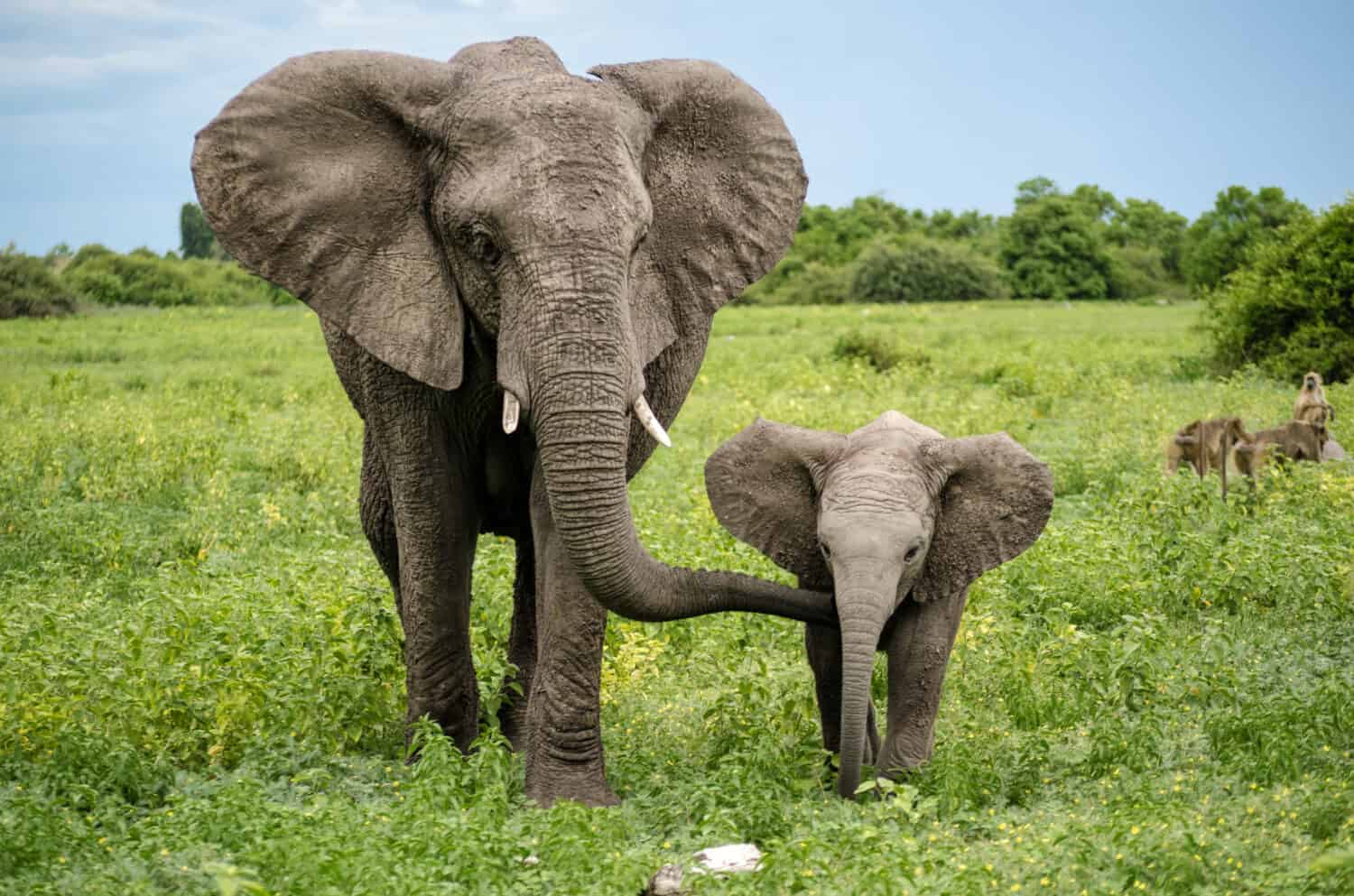
While the infrasound itself remains inaudible, attentive observers can sometimes notice elephants pausing with ears spread and trunk raised, a posture associated with receiving or processing a distant call, during game drives in destinations like Amboseli or the Serengeti, both known for genuinely large, well-studied elephant populations.
Best Time of Year for Elephant Behavioural Observation
Elephants are visible across East Africa’s major parks year-round given resident populations in most destinations. See our regional best-time guide for how East Africa’s seasonal patterns generally affect game viewing and elephant concentration around water sources.
How Researchers Study Elephant Infrasound
Scientists studying elephant communication use specialised low-frequency recording equipment and playback experiments, broadcasting recorded calls to test how distant elephants respond, genuinely advancing our understanding of exactly what information different call types convey within elephant society.
Photographing Elephant Communication Behaviour
Capturing the distinctive ear-spread, trunk-raised listening posture associated with receiving a distant call offers a genuinely interesting behavioural photography opportunity beyond standard elephant portraits. A mid-range zoom covers most sightings comfortably, similar to the gear recommended in our camera gear guide.
What to Pack for an Elephant-Focused Safari
Standard game drive gear – neutral clothing, sun protection, and binoculars – covers most of what elephant viewing requires. If your wider itinerary includes gorilla trekking, our gorilla trekking packing list covers that portion separately.
Elephant Communication and Matriarch Leadership
A herd’s matriarch, typically the oldest and most experienced female, plays a genuinely central role in interpreting and responding to distant calls, drawing on decades of accumulated knowledge about the landscape and other elephant groups to guide her family’s movement decisions based partly on information received through long-distance communication.
Why This Ability Matters for Conservation
Understanding elephant communication has genuine practical conservation applications, including research into how infrastructure like roads and fences might disrupt long-distance calling and herd coordination, informing habitat corridor planning across increasingly fragmented elephant range throughout East Africa.
The Physical Mechanism Behind Elephant Infrasound
Elephants produce their genuinely deep infrasound calls using specialised laryngeal structures capable of vibrating at frequencies far below typical mammalian vocalisation, a physical adaptation that reflects the species’ considerable body size and the evolutionary pressure toward long-distance communication across open savannah landscapes. This vocal mechanism, while sharing basic principles with human speech production, operates at a scale and frequency range genuinely unique among land mammals.
How Elephants Detect Incoming Calls
Beyond producing infrasound, elephants possess genuinely specialised hearing adaptations, including a particularly sensitive inner ear structure capable of detecting the low frequencies involved, allowing them to receive and interpret distant calls that would be entirely inaudible to most other species sharing the same habitat. Some researchers believe elephants may also detect seismic vibrations through their feet as a complementary channel to airborne sound reception.
Family Reunion Behaviour and Vocal Recognition
When separated family members reunite after a period apart, elephants display genuinely elaborate greeting behaviour involving specific vocalisations, physical touching, and temporal gland secretion, suggesting individual elephants can recognise specific family members’ voices even after receiving only a distant, low-frequency call beforehand. This recognition capability reflects the same social sophistication underlying their broader communication system.
Comparing Elephant Communication to Other Long-Distance Animal Signals
Elephant infrasound communication shares conceptual similarities with whale song, another example of large mammals using low-frequency sound for long-distance communication across otherwise difficult-to-traverse landscapes, though elephants achieve this across open land rather than through water, a genuinely different physical medium with its own transmission challenges.
Elephant Communication During Musth
Male elephants entering musth, a periodic state of heightened hormonal activity, produce genuinely distinctive vocalisations that signal their reproductive status to females and warn other males of their potentially heightened aggression, adding another specific, situational layer to the species’ overall vocal repertoire beyond standard herd coordination calls.
What Guides Can Tell You About Elephant Behaviour
Experienced guides at destinations like Lake Manyara or Kidepo Valley can often point out subtle behavioural cues, including the ear-spread listening posture, that suggest elephants nearby are actively receiving or responding to distant communication, adding genuine depth to a standard game drive.
Ongoing Research Into Elephant Vocabulary
Some researchers have proposed that individual elephant calls may function similarly to names, with specific vocalisations used consistently to address particular individuals within a family group, a genuinely provocative hypothesis that, if further confirmed, would represent one of the more sophisticated documented communication systems anywhere in the animal kingdom beyond humans themselves.
Why This Research Changes How Travelers Watch Elephants
Understanding that a seemingly quiet, motionless elephant might actually be actively receiving or processing a distant call genuinely transforms how travelers interpret standard elephant sightings during a Big Five game drive, adding a layer of invisible complexity to behaviour that might otherwise appear purely passive.
Elephant Communication Across Fragmented Habitat
As human development increasingly fragments elephant range across East Africa, researchers have grown genuinely concerned about how roads, fences, and settlements might interrupt the open-terrain sound transmission elephants depend on, adding a specific communication dimension to broader habitat corridor conservation planning.
Elephant Alarm Calls and Herd Coordination
Beyond routine social communication, elephants produce distinct alarm calls when detecting predators or other threats, triggering coordinated defensive behaviour across the herd, including forming a protective circle around vulnerable calves, a genuinely rapid, well-organised response demonstrating how effectively their communication system translates into practical group survival strategy.
Why Guides Value Explaining This Invisible Behaviour
Experienced guides genuinely enjoy explaining elephant infrasound to curious travelers, given how effectively it reframes a standard elephant sighting into something considerably more scientifically compelling, particularly for repeat visitors who’ve already seen elephants on a previous trip and appreciate this deeper behavioural context.
A Question Worth Asking on Your Next Elephant Sighting
Next time you pause beside a resting elephant herd, consider that a considerable amount of genuinely complex communication may be happening entirely beyond human perception, adding genuine invisible depth to what might otherwise seem like a purely still, quiet moment.
Frequently Asked Questions
Can humans hear elephant communication calls?
Not without specialised equipment – much of elephant vocal communication occurs as infrasound below the typical range of human hearing.
How far can elephant calls travel?
Under favourable conditions, documented calls have travelled several kilometres, allowing separated herds to coordinate across significant distances.
Do elephants communicate through the ground as well as sound?
Yes, genuinely so – they detect vibrations through sensitive nerve endings in their feet and trunk, a secondary seismic communication channel.
What do elephant calls actually communicate?
Reproductive status, individual identity, emotional state, and danger warnings, among other genuinely complex information types.
Where can I see elephants known for this behaviour?
Amboseli and the Serengeti both host large, well-studied elephant populations offering genuine opportunities to observe related behaviour.
Ready to Plan Your East Africa Safari?
Whether observing elephant behaviour firsthand, the Big Five, or a full East Africa itinerary is your priority, our team can build a trip matched to your interests. Get in touch with our team below today and let’s start planning your complete safari itinerary together.







No comment