
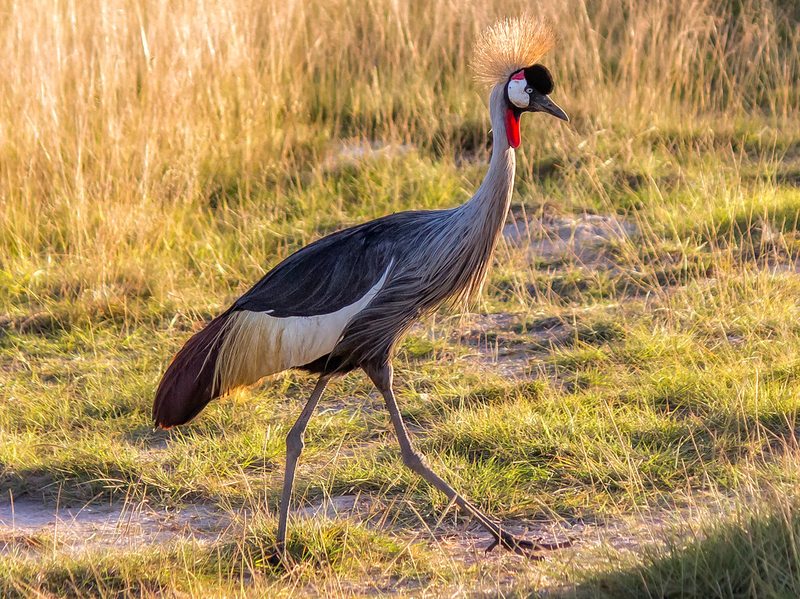
The grey crowned crane, Uganda’s national bird and centrepiece of the country’s flag, moves through wetland margins and grassland across the country in genuinely striking pairs, its golden crest and elegant courtship dance making it one of East Africa’s most instantly recognisable, culturally significant bird species.
Why the Crowned Crane Is Uganda’s National Bird
The grey crowned crane appears on Uganda’s national flag and coat of arms, chosen specifically for its grace, dignity, and the way it’s traditionally seen standing on one leg, considered a fitting emblem for the young nation at independence. This cultural significance gives crowned crane sightings a genuinely deeper resonance for travelers interested in Uganda’s national identity beyond the bird’s striking physical appearance alone.
Identifying the Crowned Crane
Crowned crane carry a genuinely distinctive golden-yellow crest of stiff feathers atop the head, contrasting against a grey body, white wings, and a patch of bare red and white skin on the cheek. This unmistakable combination makes crowned crane straightforward to identify even for visitors with limited prior birding experience, unlike many of Uganda’s less visually distinctive wetland species.
Where to Find Crowned Cranes in Uganda
Crowned crane favour wetland margins, grassland, and cultivated farmland across Uganda, with particularly strong populations around Queen Elizabeth National Park’s Kazinga Channel wetlands and the grassland fringes of Murchison Falls National Park. Their preference for open, visible terrain makes sightings genuinely reliable across much of the country’s savannah parks.
The Crowned Crane’s Courtship Dance
Crowned crane perform a genuinely elaborate courtship dance involving bowing, jumping, wing-flapping, and calling, a display used both to strengthen pair bonds between established mates and to attract new partners during the breeding season. Witnessing this dance is one of East Africa’s more captivating bird behavioural sightings, combining visual spectacle with genuine ecological significance.
Crowned Crane Social Structure
Crowned crane typically form monogamous pairs that remain together across multiple breeding seasons, occasionally gathering in larger flocks outside the breeding period when foraging conditions favour greater social concentration. This pairing behaviour, combined with their genuinely loud, trumpeting call, makes crowned crane pairs a consistently recognisable presence across Uganda’s wetland and grassland habitat.
Conservation Status and Genuine Concern
Despite their cultural significance, crowned crane populations across East Africa have faced genuine decline in recent decades due to wetland habitat loss and illegal capture for the pet trade, leading to their classification as endangered by international conservation bodies. This makes sightings within Uganda’s protected parks genuinely more significant, representing some of the more secure remaining populations for a species under real pressure elsewhere.
Best Time of Year for Crowned Crane Sightings
Crowned crane are visible across Uganda’s parks year-round given their resident status, making seasonal timing genuinely less critical than for many other wildlife sightings. See our Uganda best-time guide for how the country’s broader dry and wet seasons still affect wider trip planning.
Self-Drive vs Guided Safaris for Crowned Crane Viewing
Crowned crane are among the more straightforward Ugandan bird species to locate independently given their preference for open, visible terrain and reasonably large size, though a guided safari or dedicated birding guide adds real value in interpreting behaviour and locating active breeding pairs. Most visitors combine crowned crane sightings with a wider guided Uganda itinerary.
Photographing Uganda’s Crowned Cranes
Crowned crane against Uganda’s wetland or grassland backdrop, particularly during a courtship display, offer genuinely striking photographic opportunities distinct from the country’s mammal-focused wildlife photography. A mid-range zoom covers most sightings comfortably, similar to the gear recommended in our camera gear guide.
What to Pack for a Uganda Birding Safari
Standard game drive gear – neutral clothing, sun protection, and binoculars – covers most of what a birding-focused visit requires. If your wider itinerary includes gorilla trekking, our gorilla trekking packing list covers that portion separately.
Combining Crowned Crane Viewing With a Wider Uganda Circuit
Crowned crane sightings pair naturally with a wider Uganda birding itinerary covering Murchison Falls’ shoebill storks and Queen Elizabeth’s wetland species, giving dedicated birders genuine variety across the country’s protected wetland habitats within a single well-planned trip.
Getting to Uganda’s Best Crowned Crane Viewing Areas
Queen Elizabeth and Murchison Falls National Parks, both reachable within a comfortable drive of Uganda’s main tourism circuit, offer the country’s most reliable crowned crane viewing, commonly combined with gorilla trekking further southwest on a longer itinerary.
Crowned Crane Nesting and Breeding Behaviour
Crowned crane build nests directly within wetland vegetation, typically a shallow platform of reeds and grass constructed close to water, where both parents share incubation and chick-rearing duties across the breeding season. Chicks are able to leave the nest and forage alongside parents within days of hatching, though they remain genuinely dependent on parental protection and guidance for several months before becoming fully independent.
Why Wetland Habitat Loss Threatens the Species
Crowned crane depend genuinely heavily on wetland habitat for both nesting and feeding, making them particularly vulnerable to the wetland drainage and conversion to agricultural land that has accelerated across much of East Africa in recent decades. This habitat dependency is a major driver behind the species’ declining population trend, making protected wetland areas within national parks genuinely critical to the crane’s long-term survival prospects.
Crowned Crane Diet and Feeding Behaviour
Crowned crane are genuinely versatile feeders, consuming seeds, insects, small reptiles, and grain from cultivated fields, a dietary flexibility that has allowed them to persist in some agricultural landscapes even as natural wetland habitat has declined. This adaptability, while helping the species survive in modified landscapes, doesn’t fully offset the population pressure created by outright wetland loss within their core range.
Cultural Significance Beyond the National Flag
Beyond its place on Uganda’s national flag, the crowned crane holds genuine cultural significance across several Ugandan communities, traditionally associated with longevity, wisdom, and good fortune in various local folklore traditions. This cultural resonance adds a genuinely meaningful layer to a crowned crane sighting for travelers interested in Uganda’s broader cultural heritage alongside its wildlife.
Comparing Uganda’s Crowned Crane Population to Neighbouring Countries
While crowned crane occur across several East African countries, Uganda’s population, supported by protected wetland habitat within its national parks, remains genuinely significant regionally, making the country a particularly strong destination for travelers specifically prioritising crowned crane sightings within a wider East Africa birding itinerary.
Crowned Cranes Alongside Uganda’s Wider Wildlife
Crowned crane sightings frequently occur alongside hippo and other wetland-associated species during a Kazinga Channel boat cruise, adding genuine birding value to an activity primarily known for its mammal sightings.
Best Lodges for Crowned Crane and Wetland Birding
Properties positioned near Queen Elizabeth’s Kazinga Channel or Murchison Falls’ grassland wetland margins genuinely simplify logistics for travelers specifically prioritising crowned crane and wider wetland bird viewing, cutting down on drive time before and after game drives.
What Sets Crowned Crane Apart From Other Crane Species
Unlike many crane species found elsewhere in the world, which often undertake extensive seasonal migrations, Uganda’s crowned crane are largely resident, remaining within a relatively consistent home range year-round rather than making long-distance seasonal movement, a trait that genuinely simplifies planning a sighting compared to more migratory bird species.
Why Guides Enjoy Highlighting Crowned Crane Sightings
Experienced Uganda guides frequently note that crowned crane sightings genuinely resonate with travelers once the bird’s national significance and courtship dance are explained, transforming what might otherwise be a passing wetland bird sighting into a genuinely meaningful highlight of the wider trip.
Crowned Crane and Community Conservation Efforts
Community-based conservation programmes across parts of Uganda increasingly incorporate crowned crane protection into wetland management initiatives, recognising both the species’ genuine ecological role and its deep cultural significance as a national symbol worth actively protecting for future generations of Ugandans and visiting travelers alike.
Getting to Uganda’s Best Crane-Viewing Parks
Both Queen Elizabeth and Murchison Falls sit within a comfortable drive of Uganda’s main tourism circuit, allowing travelers to combine crowned crane sightings naturally with a broader itinerary covering the country’s other headline wildlife and gorilla trekking opportunities further southwest.
Frequently Asked Questions
Why is the crowned crane Uganda’s national bird?
It was chosen for its grace and dignity, appearing on Uganda’s flag and coat of arms since the country’s independence.
Where can I reliably see crowned cranes in Uganda?
Queen Elizabeth National Park’s Kazinga Channel wetlands and Murchison Falls’ grassland fringes offer particularly strong, reliable populations.
Are crowned cranes endangered?
Yes, genuinely so – wetland habitat loss and illegal capture for the pet trade have led to their classification as endangered.
What does the crowned crane’s courtship dance involve?
Bowing, jumping, wing-flapping, and calling, a genuinely elaborate display used to strengthen pair bonds or attract new mates.
What’s the best time of year to see crowned cranes in Uganda?
Year-round given their resident status, making seasonal timing genuinely less critical than for many other wildlife sightings.
Ready to Plan Your Uganda Birding Safari?
Whether Uganda’s national bird, the shoebill stork, or a full Uganda itinerary combining gorilla trekking is your priority, our team can build a trip matched to your interests. Get in touch with our team below today and let’s start planning your complete Uganda safari itinerary together.

No comment