





Why Lions Roar: What the Sound Actually Means
A lion’s roar carries genuinely remarkable distances across the African night, audible up to eight kilometres away under favourable conditions, a sound so distinctive and powerful that it’s become one of the continent’s most recognisable, evocative wildlife experiences for travelers on safari.
The Physical Mechanism Behind a Lion’s Roar
Lions possess a genuinely specialised voice box structure, including an unusually flat, square-shaped larynx and a flexible pad of fatty tissue that allows their vocal folds to vibrate at a lower frequency and with considerably less air pressure than most other cats require, producing the roar’s characteristic depth and volume. This anatomical adaptation, unique among big cats, is central to why lions can roar so powerfully while smaller cats can only purr or make more limited vocalisations.
Why Lions Roar at Night
Lions roar most frequently after dark, when cooler, denser air allows sound to travel considerably further than during the day, maximising the roar’s reach across their territory. This nocturnal pattern means travelers on safari are genuinely more likely to hear roaring during evening game drives or from camp after dark than during standard daytime activities.
What a Roar Actually Communicates
Roaring serves several genuinely distinct communication functions, including territorial marking to warn rival prides and nomadic males away from claimed ground, reuniting separated pride members across considerable distances, and reinforcing social bonds within the pride itself. Different roaring contexts, from a dominant male’s territorial announcement to a coordinated pride chorus, carry genuinely different social meanings.

Pride Roaring as Coordinated Behaviour
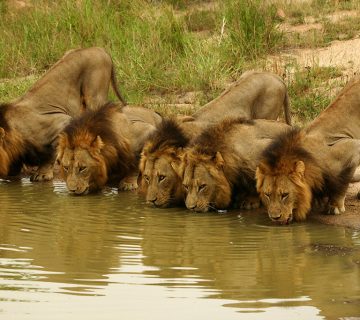
Lion prides frequently roar together in a genuinely coordinated chorus, a behaviour that research suggests helps synchronise pride members’ location and reinforces group cohesion, particularly useful given how far individual pride members can range during hunting or patrolling activity across a shared territory.
How Far Can a Lion’s Roar Actually Travel?
Under favourable atmospheric conditions, a lion’s roar has been documented travelling up to eight kilometres, an genuinely impressive distance that allows territorial communication across an area considerably larger than the pride’s immediate visible surroundings. This range explains why roaring heard from camp at night doesn’t necessarily indicate lions are nearby.
Male vs Female Roaring Differences
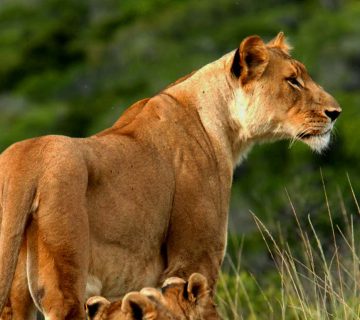
Both male and female lions roar, though males’ roars are typically genuinely deeper and more powerful, reflecting their larger vocal apparatus and primary role in territorial defence against rival males. Females roar more frequently in coordinated group contexts, particularly when reinforcing pride bonds or communicating with cubs.
Where to Experience Lion Roaring on Safari
Lion roaring can genuinely be experienced across most major East African parks with resident populations, including the Serengeti, Tarangire, and Queen Elizabeth National Park, with camps positioned within established territories offering genuinely reliable odds of hearing roaring after dark.
Best Time of Year to Hear Lions Roar
Lion roaring occurs year-round given resident pride territories across East Africa’s major parks, though roaring may increase during territorial disputes or mating periods. See our regional best-time guide for how East Africa’s seasonal patterns generally affect wider game viewing.
Experiencing Roaring During a Night Game Drive
Where available, guided night game drives offer genuinely heightened odds of experiencing lion roaring firsthand, since nocturnal activity and vocalisation increase considerably after dark compared to daytime hours when lions are more often resting quietly.
What to Pack for Lion-Focused Game Drives
Standard game drive gear – neutral clothing, sun protection, and binoculars – covers most of what lion viewing requires. If your wider itinerary includes gorilla trekking, our gorilla trekking packing list covers that portion separately.
Why Roaring Fascinates Researchers
Scientists studying lion roaring use audio recording and playback experiments to understand exactly how prides distinguish between familiar pride members’ roars and unfamiliar, potentially threatening rival calls, genuinely advancing understanding of lion social cognition and territorial behaviour across research sites throughout Africa.
The Roaring Sequence: What a Full Roar Actually Sounds Like
A complete lion roar follows a genuinely distinctive pattern, typically beginning with a series of deep, moaning grunts that build in intensity before erupting into the full, powerful roar itself, then tapering off into a series of shorter, softer grunts. This structured sequence, rather than a single continuous sound, is part of why experienced guides can often identify roaring lions’ approximate distance and direction from the pattern’s acoustic characteristics.
Cub Development and Learning to Roar
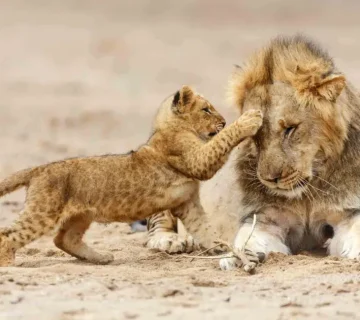
Lion cubs don’t roar effectively until reaching physical maturity, typically around one to two years of age, as their vocal apparatus gradually develops the anatomical structures required for a full adult roar. Young lions produce genuinely higher-pitched, less powerful vocalisations during this developmental period, distinct from the deep roar adult pride members produce.
Roaring and Territorial Boundary Disputes
When rival prides or nomadic males roar within contested territory, the resulting vocal exchange can escalate into genuinely tense standoffs, with each side assessing the other’s strength and numbers partly through the acoustic qualities of the opposing roars before deciding whether to retreat or press a physical confrontation. This vocal assessment likely helps prides avoid costly physical fights when the outcome seems genuinely predictable from roaring alone.
How Roaring Differs From Other Lion Vocalisations
Beyond roaring, lions produce a genuinely wide range of other vocalisations, including grunts, growls, and a distinctive “moaning” contact call used at closer range between pride members, each serving different specific communication purposes distinct from the roar’s long-distance territorial and reunion functions.
Why Roaring Fascinates First-Time Safari Travelers
For many travelers, hearing a lion roar for the first time from camp after dark becomes one of the genuinely most memorable, visceral moments of an entire safari trip, a sound that television and film simply cannot fully replicate in terms of raw physical impact and atmosphere.
Comparing Lion Roars to Other Big Cat Vocalisations
Unlike lions, cheetah cannot roar at all, instead producing a distinctive chirping call, while leopard produce a genuinely different rasping, sawing sound rather than a true roar, reflecting the significant anatomical differences between big cat species despite their superficial similarities.
Roaring Research and Conservation Applications
Researchers studying lion roaring increasingly use acoustic monitoring technology to track pride presence and territorial boundaries across large protected areas without requiring direct visual sighting, a genuinely valuable, non-invasive conservation research tool given how difficult physically locating and counting lions across vast landscapes can otherwise be.
Best Camps for Hearing Lions Roar
Properties positioned within established pride territories in destinations like Tarangire genuinely improve the odds of hearing roaring after dark, given how much this experience depends on camp proximity to a currently active pride’s core territory rather than pure chance.
Why Roaring at Camp Feels Different From a Recording
Experiencing a lion’s roar in person, with the sound’s full low-frequency vibration genuinely felt as much as heard, differs considerably from any recorded version, given how much of the experience depends on physical proximity and the surrounding night silence typical of remote safari camp settings.
Why Guides Genuinely Value Explaining Roaring Context
Experienced guides who take time to interpret a distant roar’s likely meaning, whether territorial warning, pride reunion, or coordinated chorus, genuinely deepen a traveler’s appreciation for what might otherwise register as simply an impressive but unexplained sound heard from camp during the night.
Roaring and the Broader Predator-Prey Landscape
A lion’s roar doesn’t only communicate with other lions, since nearby prey species and even competing predators like hyena genuinely register and respond to roaring, adjusting their own movement and vigilance accordingly, making the sound a genuinely significant ecological signal reaching well beyond the pride itself.
A Sound Worth Actively Listening For
Travelers who deliberately pause conversation at camp after dark, rather than treating background night sounds as mere ambience, often genuinely report a considerably more memorable, immersive roaring experience overall compared to those who only notice it briefly, in passing, while distracted.
Getting to East Africa’s Best Lion-Roaring Destinations
Most itineraries reach Tanzania’s Northern Circuit via road or scheduled flight from Arusha, with camps positioned specifically within known pride territories offering genuinely the strongest, most reliable odds of a memorable nighttime roaring experience.
Frequently Asked Questions
How far can a lion’s roar actually travel?
Under favourable conditions, up to eight kilometres, an genuinely impressive distance that allows territorial communication across a wide area.
Why do lions roar mostly at night?
Cooler, denser night air allows sound to travel considerably further than during the day, maximising the roar’s territorial reach.
Do both male and female lions roar?
Yes, though males’ roars are typically deeper and more powerful, reflecting their primary role in territorial defence against rivals.
What does a lion’s roar actually communicate?
Territorial warnings, reunion signals for separated pride members, and social bonding reinforcement, among other genuinely distinct functions.
Where can I hear lions roar on safari?
Most major East African parks with resident prides, including the Serengeti, Tarangire, and Queen Elizabeth National Park.
Ready to Plan Your East Africa Safari?
Whether experiencing lion roaring firsthand, the Big Five, or a full East Africa itinerary is your priority, our team can build a trip matched to your interests. Get in touch with our team below today and let’s start planning your complete safari itinerary together.

No comment