
Tanzania’s Lake Natron carries water genuinely caustic enough to strip skin and calcify the bodies of animals that die along its shores, a chemistry so extreme that almost nothing survives contact with it, yet the same lake hosts the single most important lesser flamingo breeding site anywhere in East Africa.
What Actually Makes Lake Natron’s Water So Extreme
Lake Natron sits in a volcanic basin fed largely by mineral-rich springs and runoff from the Rift Valley’s surrounding volcanic rock, and with no outlet, evaporation over thousands of years has concentrated dissolved sodium carbonate and other alkaline salts to genuinely extreme levels, giving the water a pH that can reach 10.5, comparable to ammonia. Surface temperatures can also climb to around 60 degrees Celsius in the shallows during the dry season, meaning the lake combines causticity and heat in a way few other bodies of water on Earth genuinely replicate.
Why the “Calcified Animal” Photographs Are Genuinely Real
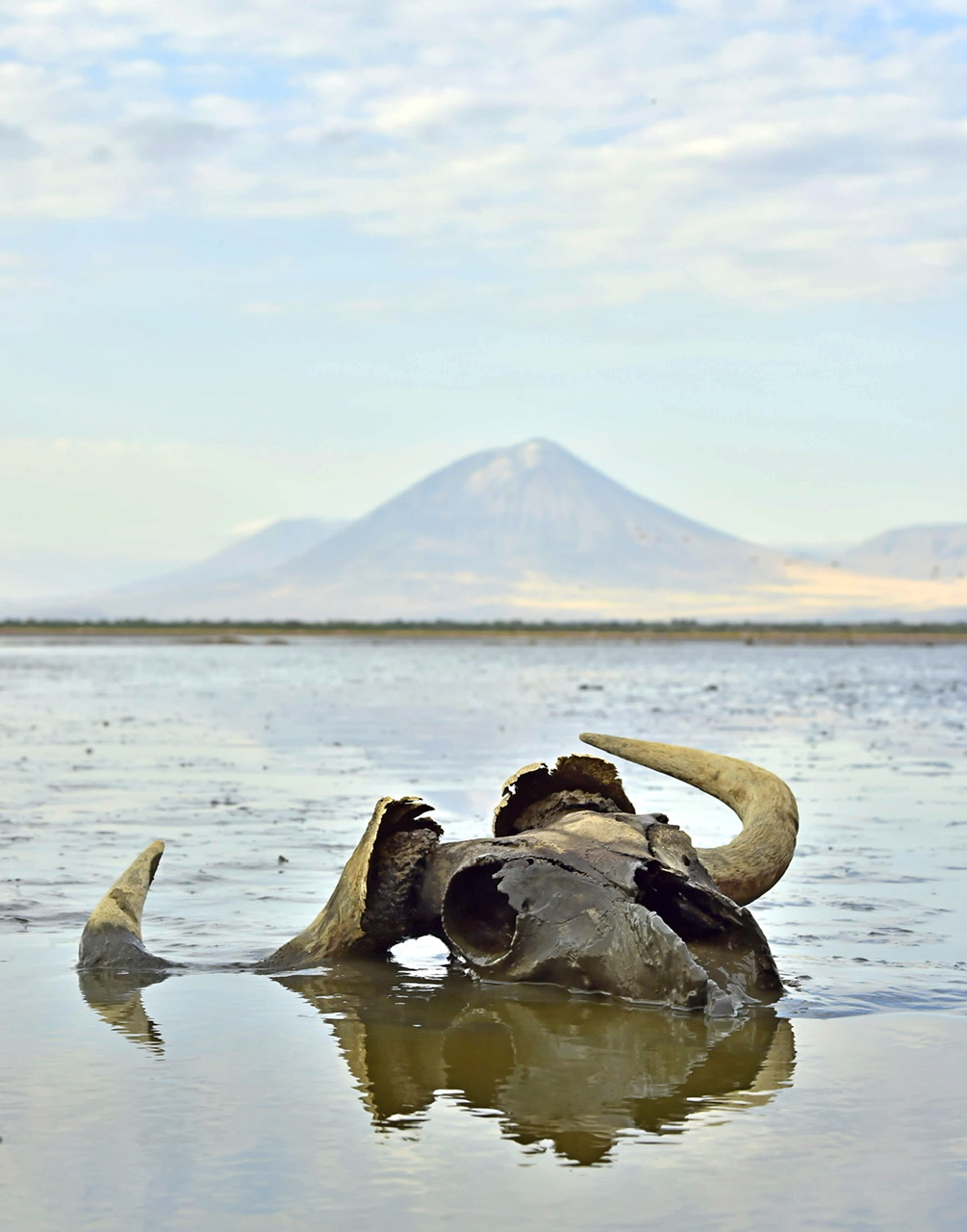
Photographs of birds and bats found perfectly preserved, seemingly turned to stone, along Lake Natron’s shoreline circulated widely after photographer Nick Brandt documented them, and the phenomenon is genuinely real: the lake’s high pH and mineral concentration cause the bodies of animals that die in or near the water to calcify rapidly, coating them in a hardened mineral crust that preserves their exact final posture rather than allowing normal decomposition. The animals didn’t die specifically because of this calcification process; most likely became disoriented, exhausted, or misjudged the shoreline while flying low over the reflective surface, then succumbed to the caustic water itself.
Why Almost Nothing Else Can Survive in the Lake
The combination of extreme alkalinity and high salt concentration genuinely excludes the vast majority of aquatic life that would normally colonise a Rift Valley lake, since standard fish, invertebrates, and most algae species simply cannot regulate their internal chemistry against water this caustic. What does survive is a genuinely specialised community: certain cyanobacteria and a single fish species, Alcolapia alcalica, a small cichlid found nowhere else, that has evolved specific physiological adaptations to tolerate the lake’s harsh margins where slightly cooler freshwater springs dilute the worst of the causticity.
Why Flamingos Thrive Where Almost Nothing Else Can
Lesser flamingo depend on exactly the cyanobacteria that flourishes in Lake Natron’s extreme conditions, and the lake’s remoteness and inhospitable shoreline genuinely protect nesting colonies from the ground predators, including jackal and hyena, that would otherwise raid eggs and chicks at a more accessible breeding site. This combination makes Lake Natron the single most significant lesser flamingo breeding ground in East Africa, with the majority of the region’s entire lesser flamingo population hatching here in most years despite the species being far more visibly abundant at destinations like Lake Nakuru.
How Flamingo Legs and Skin Actually Cope With the Water
Flamingo legs are covered in genuinely thick, scaled skin that resists the caustic water’s effects far better than bare skin would, and the birds further limit direct exposure by nesting on raised mud mounds above the waterline during the breeding season rather than standing in the most concentrated water for extended periods, a behavioural adaptation working alongside their physical tolerance.
Why Lake Natron Remains Genuinely Difficult to Visit
Lake Natron sits in a remote, semi-arid stretch of northern Tanzania near the Kenyan border, considerably off the standard Northern Circuit route most travelers follow between Arusha, the Serengeti, and Ngorongoro Crater, meaning a visit genuinely requires dedicated extra time and a specific detour rather than fitting naturally into a typical itinerary built around the crater and the Serengeti’s Big Five wildlife.
Best Time of Year to Visit Lake Natron
The dry season, roughly June to October, offers the most reliable access given how quickly the surrounding tracks can become impassable during heavy rain, and it also coincides with peak flamingo breeding activity, making it genuinely the best window for travelers specifically prioritising this detour. See our regional best-time guide for how East Africa’s broader seasonal patterns affect wider trip planning.
Self-Drive vs Guided Visits
Given the genuinely remote, poorly signed roads and the lake’s harsh terrain, a guided visit with a driver experienced in the specific route is strongly advisable rather than a self-drive attempt, particularly since flamingo breeding colonies themselves sit far out on the lake’s mudflats and are only properly viewed from a genuinely knowledgeable local vantage point.
Photographing Lake Natron
The lake’s striking red-tinted water, caused by the same salt-tolerant algae supporting the flamingo population, combined with distant views of Ol Doinyo Lengai volcano, offers genuinely dramatic wide-angle landscape photography distinct from typical safari wildlife shots. See our camera gear guide for broader equipment recommendations.
What to Pack for a Lake Natron Visit
Given the extreme heat and glare off the lake’s reflective surface, sun protection is genuinely more critical here than at most other East African destinations, alongside standard neutral clothing and sturdy footwear suited to the surrounding volcanic terrain.
Ol Doinyo Lengai: The Volcano That Feeds the Lake’s Chemistry
Lake Natron sits at the base of Ol Doinyo Lengai, the only active volcano on Earth known to erupt natrocarbonatite lava, a genuinely unusual lava type rich in sodium and carbonate minerals rather than the silica-rich lava typical of most volcanoes, and considerably cooler when erupted, around 500 to 600 degrees Celsius compared to over 1,000 for typical basaltic lava. Runoff and ash from this specific volcanic chemistry, accumulated over millennia, is the direct source of the sodium carbonate that gives Lake Natron its extreme alkalinity, making the lake and volcano genuinely inseparable in explaining why this particular basin became so chemically extreme compared to other Rift Valley lakes fed by more conventional volcanic geology.
How the Cichlid Fish Actually Survives the Margins
Alcolapia alcalica, the single fish species tolerating Lake Natron’s edges, survives specifically in the narrow zone where freshwater springs enter the lake and locally dilute the worst of the alkalinity and heat, rather than anywhere across the open lake itself. Researchers studying the species have found it can tolerate water temperatures and pH levels that would kill most other fish outright, through genuinely specialised gill and kidney adaptations that manage ammonia excretion differently than freshwater fish typically do, an adaptation that’s made the species a genuine subject of interest for researchers studying extreme environment physiology well beyond East Africa.
Why the Lake’s Colour Shifts So Dramatically by Season
Lake Natron’s water shifts from a deep red-brown during the dry season, when evaporation concentrates salt and the specific salt-tolerant algae and bacteria bloom most densely, to a considerably paler, more diluted colour after heavy rains temporarily lower the concentration, a visible seasonal cycle that photographers specifically time visits around for the most dramatic red colouring, generally strongest toward the end of the dry season.
Flamingo Breeding Timing and Why It’s So Precisely Tuned
Lesser flamingo nesting at Lake Natron time breeding specifically to periods when water levels are low enough to expose the mud-flat nesting islands but the surrounding moat of caustic water remains deep enough to genuinely deter ground predators from crossing, a narrow window that shifts from year to year depending on rainfall, meaning the colony doesn’t breed successfully every single year and researchers monitor conditions closely to track breeding success across seasons.
Combining Lake Natron With a Wider Northern Circuit
Given the genuine detour involved, most operators pair a Lake Natron visit with the Ngorongoro Crater or an extended Serengeti stay covering the Northern Circuit’s Big Five wildlife, using Natron as a genuinely distinctive landscape and birding addition alongside the Serengeti’s wider plains wildlife, rather than a standalone trip most travelers would plan around alone, and often combined with a full Big Five checklist earlier in the same itinerary.
Frequently Asked Questions
Is it true animals calcify when they touch Lake Natron?
Yes, genuinely so – the lake’s extreme alkalinity and mineral concentration rapidly calcify the bodies of animals that die in or near the water.
Why do flamingos thrive in water almost nothing else can survive?
They feed on the cyanobacteria that flourishes in the lake’s extreme conditions, and the harsh shoreline protects nesting colonies from ground predators.
What is the lake’s pH level?
It can reach around 10.5, comparable to ammonia, making it one of the most caustic natural lakes on Earth.
Does anything else live in Lake Natron besides flamingos?
A single specialised fish species, Alcolapia alcalica, survives in the cooler freshwater margins where springs dilute the worst of the causticity.
Is Lake Natron easy to add to a standard Tanzania itinerary?
Not really – it sits well off the standard Northern Circuit route and genuinely requires a dedicated detour and extra travel time.
Ready to Plan Your Tanzania Safari?
Whether adding Lake Natron’s dramatic landscape and flamingo colonies, the Serengeti’s wildebeest migration, or a full Northern Circuit itinerary is your priority, our team can build a trip matched to your interests. Get in touch with our team below today and let’s start planning your complete Tanzania safari itinerary together.


No comment