

Topi of Queen Elizabeth National Park
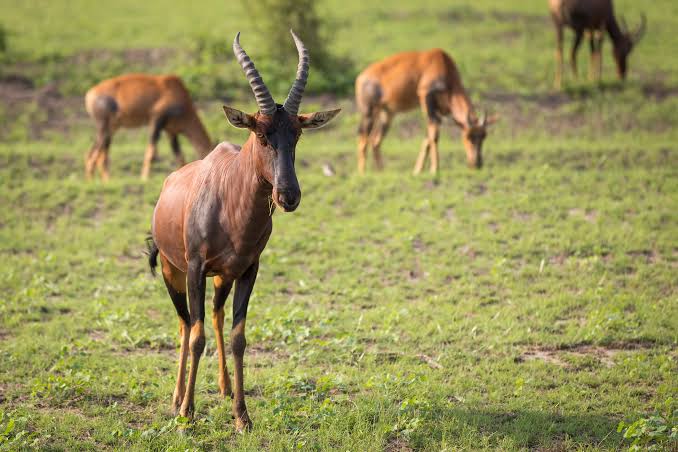
Topi stand sentinel atop termite mounds across Queen Elizabeth National Park’s open crater grassland, their glossy reddish-brown coat and dark thigh patches giving them a genuinely distinctive silhouette that guides often use as one of the park’s classic photographic sights, distinct from the tree-climbing lions the park is more widely known for.
The Termite Mound Sentinel Behaviour Explained
Topi are famous for standing on termite mounds and other slightly raised ground, using the added few feet of elevation to scan the surrounding plains for approaching predators well before the herd itself would otherwise notice, a behaviour that genuinely reflects the species’ particular reliance on early visual detection rather than pure speed as its primary survival strategy. A single sentinel typically holds the position for several minutes at a time before another herd member takes over the watch, a rotation that spreads the vigilance workload rather than leaving one individual permanently exposed on the mound.
Where to Find Topi in Queen Elizabeth
Topi range across the park’s open crater grassland and the plains bordering the Kasenyi sector, favouring the same short-grass terrain preferred by Uganda kob and zebra, and their preference for genuinely open ground with scattered termite mounds makes them among the more straightforward species to locate during a standard game drive through these sectors.
Topi Speed and Why It Complements the Sentinel Strategy
Topi are among the faster antelope species found in Queen Elizabeth, capable of sustained running speed that lets them outdistance most pursuing predators over open ground once a threat has actually been detected, meaning the mound-watching behaviour and raw speed work as two stages of the same survival strategy: spot the danger early from height, then outrun it once confirmed, rather than relying on either detection or speed alone.
Distinctive Markings and How to Identify Topi Quickly
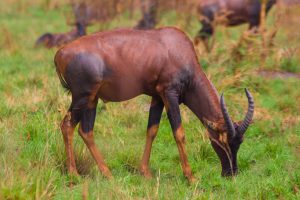
Topi carry genuinely dark, almost purplish patches on the upper legs and face that contrast sharply against an otherwise glossy reddish-brown coat, a two-tone pattern visible even at a distance and distinct from any other antelope sharing the same grassland. Both sexes carry ridged, lyre-shaped horns, though males typically develop noticeably heavier horns used in territorial contests during the breeding season.
Topi Territorial Behaviour and Male Contests
Male topi establish and defend territories during the breeding season, often centred on the same prominent termite mounds used for predator watching, which double as territorial display points where males compete for female attention through visible posturing and, when a dispute escalates, genuine physical contests with rival males. Because the same mound serves both a defensive and a reproductive function, a territorial male genuinely has strong incentive to hold and defend a specific, elevated piece of ground rather than simply patrolling a broader open range.
Topi and Queen Elizabeth’s Predators
Topi form a genuine prey species for the park’s resident lion prides and hyena clans, and their combined strategy of elevated vigilance and genuine running speed has proven consistently effective, helping topi maintain stable population numbers across the park despite sustained predator attention.
Best Time of Year for Topi Sightings
Topi are visible in Queen Elizabeth year-round given their resident, largely non-migratory status, making seasonal timing genuinely less critical than for many other Uganda wildlife sightings. See our Uganda best-time guide for how the country’s broader dry and wet seasons still shape wider trip planning.
Self-Drive vs Guided Safaris
Topi are among the more straightforward Queen Elizabeth species to locate independently given their distinctive mound-standing behaviour and preference for open terrain, though a guided safari still adds real value in interpreting territorial dynamics alongside the park’s other headline wildlife.
Photographing Queen Elizabeth’s Topi
A topi silhouetted atop a termite mound against the open crater grassland, particularly at sunrise or sunset, offers one of the park’s genuinely classic photographic compositions. See our camera gear guide for broader equipment recommendations.
What to Pack for a Queen Elizabeth Safari
Standard game drive gear – neutral clothing, sun protection, and binoculars – covers most of what the park requires, and a light layer is worth having for the Kazinga Channel boat cruise given the breeze across open water. If your wider itinerary includes gorilla trekking, our gorilla trekking packing list covers that portion separately.
Combining Topi Viewing With the Full Queen Elizabeth Big Five
Topi sightings complement the park’s buffalo and elephant populations, rounding out a genuinely varied Queen Elizabeth game drive spanning both the park’s headline predators and its wider open-plains antelope diversity.
Getting to Queen Elizabeth National Park
Queen Elizabeth sits within a comfortable drive of western Uganda’s main tourism circuit, commonly reached en route between Kibale Forest and Bwindi Impenetrable National Park, making it a natural inclusion on longer itineraries combining multiple parks and primate destinations.
Herd Structure and How Sentinel Duty Actually Rotates
Topi herds are typically organised around a small number of adult females and their young moving through a territorial male’s ground, and sentinel duty on the mound rotates informally between whichever herd members happen to be nearest at a given moment rather than falling to a single dedicated watcher, meaning the mound is rarely left completely unoccupied for long even as the specific individual standing on it changes repeatedly through the day.
Why Topi Graze Differently Than the Kob Sharing Their Terrain
Topi favour slightly taller, coarser grass than the shorter growth Uganda kob prefer, a dietary distinction that reduces direct feeding competition between the two species even though they’re frequently seen grazing within sight of each other across the same open plains, and it’s part of why topi and kob herds can coexist at genuinely high density within the same grassland without depleting a shared, identical food source.
Calving and Early Life on Open Ground
Topi calves are born well-developed and able to stand within a short time of birth, and unlike some antelope species that hide young calves in dense cover for the first weeks, topi calves generally stay close to the open-plains herd from early on, a strategy that trades individual concealment for the collective vigilance and mound-sentinel system the wider herd provides, genuinely reflecting how central that early-warning behaviour is to the species’ whole approach to calf protection.
Why Topi Are Often Overlooked Despite Being Genuinely Common
Given how consistently visible topi are across Queen Elizabeth’s open sectors, they’re frequently treated by visitors as background scenery en route to the park’s tree-climbing lions or Kazinga Channel hippo, an oversight experienced guides regularly push back against, since a closer look at an active territorial contest between rival mound-holding males rewards considerably more attention than the passing glance most itineraries allow.
Comparing Queen Elizabeth’s Topi to the Mara-Serengeti Population
Kenya’s Masai Mara and Tanzania’s Serengeti both hold genuinely large topi populations sharing the same broader ecosystem, and while the species and its mound-sentinel behaviour are identical across all three destinations, Queen Elizabeth’s crater grassland setting gives sightings here a visually distinct backdrop compared to the Mara-Serengeti’s flatter, more expansive open plains.
What a Genuinely Serious Territorial Contest Looks Like
When a challenging male approaches an established mound, the two topi typically begin with parallel walking and posturing, horns lowered, before escalating into direct head-to-head clashes if neither backs down, contests that can run for several minutes and occasionally leave visible scarring on the losing male’s face and horns, genuine physical evidence of how seriously the mound territory is contested during peak breeding season.
Getting the Most Out of a Topi Sighting
Watching a single mound for several minutes rather than moving straight past genuinely improves the odds of catching a sentinel handover or an approaching rival male, moments that reveal considerably more of the species’ actual social and territorial behaviour than a brief, hurried drive-by glance ever genuinely could.
Getting to Queen Elizabeth From Other Uganda Destinations
Travelers arriving from Kibale Forest’s chimp trekking or heading onward toward Bwindi’s gorilla trekking can genuinely combine topi viewing with either leg of a longer Uganda journey, given the park’s convenient central position.
Frequently Asked Questions
Why do topi stand on termite mounds?
The elevated vantage point lets them spot approaching predators earlier than they otherwise would from ground level, working alongside their genuine running speed as a two-stage survival strategy.
How can I identify a topi?
Look for a glossy reddish-brown coat with distinctive dark patches on the face and upper legs, a two-tone pattern unlike any other antelope in the park.
Are topi fast runners?
Yes, genuinely so – they’re among the faster antelope species in Queen Elizabeth, capable of outpacing most pursuing predators once a threat is confirmed.
What’s the best time of year to see topi?
Year-round given their resident, non-migratory status, making seasonal timing genuinely less critical than for migration-dependent species.
Do male topi fight over territory?
Yes, often centred on the same prominent mounds used for predator watching, which double as territorial display and contest sites during the breeding season.
Ready to Plan Your Queen Elizabeth Safari?
Whether the park’s distinctive topi, its famous tree-climbing lions, or a full Uganda itinerary is your priority, our team can build a trip matched to your interests. Get in touch with our team below today and let’s start planning your complete Uganda safari itinerary together.


No comment