

How Do Vultures Find Carcasses So Fast?
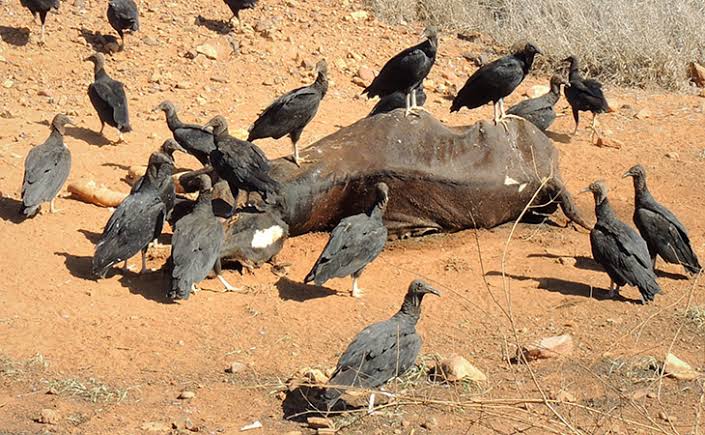
Vultures can genuinely locate a fresh kill within twenty to thirty minutes of an animal dying, appearing from what looks like empty sky through a combination of exceptional eyesight, high-altitude soaring, and a genuinely efficient social information network that turns one bird’s discovery into a signal the entire local population can read from kilometres away.
Eyesight That Genuinely Outperforms Almost Every Other Animal
Vultures possess visual acuity researchers estimate at several times sharper than human eyesight, with a genuinely dense concentration of light-sensitive cells in the retina and a visual field adapted specifically for detecting movement and colour contrast against open ground from considerable altitude. Soaring at heights that can exceed several thousand metres on a clear day, a vulture with this level of eyesight can genuinely pick out a carcass, or more specifically the early gathering of other scavengers around one, across a search area spanning many square kilometres in a single sweeping glide.
Why Height Matters More Than Speed
Rather than actively patrolling low over the ground, vultures gain altitude using rising thermal air currents, the same columns of warm air glider pilots exploit, and then glide for extended periods scanning the landscape below with minimal energy expenditure. This altitude genuinely extends how far a single bird can see in every direction simultaneously, meaning a vulture searching from height covers vastly more ground per hour of flight than a low-altitude search ever could, all while burning a fraction of the energy active flapping flight would require.
The Social Network That Turns One Discovery Into a Mass Arrival
Individual vultures maintain considerable spacing while soaring, but critically, each bird can genuinely see several other vultures in adjacent airspace even when those birds are too distant from each other to see the ground carcass directly. When one vulture spots a kill and begins descending, nearby birds notice this change in flight behaviour and begin descending toward the same point themselves, and birds further out notice that movement in turn, creating a rapidly expanding cascade that can draw vultures from many kilometres away within the same twenty to thirty minute window even though most of those birds never directly spotted the original carcass.
Why Some Vulture Species Find Carcasses Before Others
Different vulture species genuinely specialise in different search strategies: white-backed vulture typically soar highest and cover the widest search area, often the first species to spot a fresh kill from considerable distance, while species like the hooded vulture forage lower and more locally, frequently arriving at a carcass only after the higher-soaring species’ descent has already signalled the discovery. This layered search strategy across species means the combined vulture population searches an area more thoroughly and at more altitude bands than any single species managing the task alone could achieve.
Do Vultures Use Smell at All?
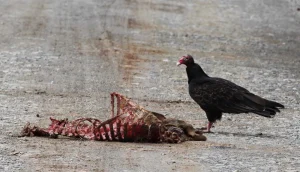
Unlike New World vultures such as the turkey vulture, which genuinely rely heavily on smell to locate carrion hidden under forest canopy, Africa’s vulture species rely almost entirely on eyesight rather than scent, reflecting the more open savannah habitat where visual detection of a carcass, or of other scavengers and predators gathering around one, is genuinely more reliable than trying to track scent across open, wind-swept terrain.
Vultures as an Early-Warning System for Guides
Experienced guides genuinely watch distant circling or rapidly descending vulture activity as one of the most practical tools for locating a recent kill elsewhere in the park, often adjusting a game drive’s route specifically based on this visual cue well before any radio report comes through, since the vultures themselves typically detect a fresh carcass faster than any human observer on the ground possibly could.
Where to Observe This Behaviour in East Africa
Vulture search and gathering behaviour is genuinely reliable to observe across East Africa’s major predator destinations, including the Serengeti, Tarangire, and Queen Elizabeth National Park, particularly during the wildebeest migration’s calving season when predator kill frequency, and by extension vulture activity, increases considerably.
Best Time of Year for Observing Vulture Behaviour
Vulture activity occurs year-round given resident populations, though the migration’s calving season offers particularly concentrated activity in the Serengeti-Mara ecosystem. See our regional best-time guide for how East Africa’s seasonal patterns generally affect wider game viewing.
Photographing Vulture Search Behaviour
Capturing multiple vultures spiralling down toward a single point offers a genuinely compelling photographic sequence distinct from a static bird portrait. See our camera gear guide for broader equipment recommendations.
What to Pack for Predator-Focused Game Drives
Standard game drive gear – neutral clothing, sun protection, and binoculars – covers most of what tracking vulture activity to locate wildlife requires. If your wider itinerary includes gorilla trekking, our gorilla trekking packing list covers that portion separately.
Why the Species’ Poisoning Crisis Threatens This Entire System
Poachers deliberately poisoning carcasses specifically to kill vultures, preventing circling birds from alerting rangers to illegal kills, has devastated vulture populations across much of Africa in recent decades, and because the species’ entire search-and-signal system depends on having enough birds in the air simultaneously to form the discovery cascade described above, population decline genuinely degrades the whole network’s effectiveness, not just individual bird numbers.
How Researchers Actually Tracked This Cascade
GPS-tagging studies fitting individual vultures with tracking devices have let researchers reconstruct, bird by bird, exactly how a discovery cascade spreads across a landscape, confirming that vultures descending toward a carcass genuinely do trigger a chain reaction among birds that were themselves too far from the ground to have spotted it directly, and that this chain can pull in dozens of individuals from a search radius spanning tens of kilometres within the same short window.
Why Feeding Order Matters as Much as Arrival Speed
Arriving first doesn’t guarantee first access, since a genuine pecking order exists among vulture species at a shared carcass, with larger, more powerful species like lappet-faced vulture generally controlling the choicest access and feeding first regardless of arrival order, while smaller species that may have found the kill earlier often wait at the margins until the dominant birds have taken their share. This hierarchy, combined with each species’ differently shaped bill suited to different feeding tasks, from tearing tough hide to picking scraps from bone crevices, means a single carcass typically supports a genuinely layered sequence of different vulture species feeding in turn rather than a chaotic free-for-all.
Why Vulture Stomach Acid Matters to the Speed Story Too
Part of why rapid discovery matters so much is that vultures possess genuinely powerful stomach acid capable of neutralising dangerous bacteria and toxins that would sicken most other scavengers, meaning the value of arriving early isn’t just about food quantity but about consuming a carcass before decomposition and bacterial growth make it genuinely hazardous for less acid-tolerant scavengers to safely eat later.
How Guides Distinguish a Genuine Kill Signal From Ordinary Soaring
Vultures soar constantly while searching, so guides watch specifically for a change in behaviour, a bird tightening its circling pattern and beginning to lose altitude in a controlled spiral rather than continuing a wide, level glide, as the genuine tell that a kill has actually been spotted rather than the bird simply riding a thermal for altitude. Recognising this distinction, rather than reacting to every visible vulture, is what lets an experienced guide use the birds as a genuinely reliable navigation tool rather than chasing false leads across the park.
Comparing Vulture Search Efficiency to Ground-Based Scavengers
Ground-based scavengers like hyena and jackal locate carcasses considerably more slowly than vultures, relying on scent carried by wind over a genuinely limited range compared to a vulture’s aerial, wide-area visual search, which is a major reason ground scavengers, and even alert prey herds watching the sky, frequently take their cue from circling vultures toward a kill rather than the reverse.
Frequently Asked Questions
How quickly can vultures find a fresh carcass?
Genuinely within twenty to thirty minutes in many documented cases, thanks to exceptional eyesight and a rapid social discovery cascade.
Do vultures use smell to find carcasses?
No, African vulture species rely almost entirely on eyesight, unlike some New World vulture species that depend heavily on scent.
Why do multiple vultures arrive at once even though only one spotted the kill?
Nearby birds notice a descending vulture’s changed flight path and follow, creating a rapidly expanding cascade across a wide area.
Can vultures help me spot other wildlife on safari?
Yes, genuinely so – guides often use circling or descending vulture activity as a practical indicator of a recent kill nearby.
Why is vulture population decline such a serious problem?
Poisoning by poachers has devastated numbers, and since the species’ search system depends on having enough birds airborne, decline degrades the whole network.
Ready to Plan Your East Africa Safari?
Whether observing vulture and predator behaviour firsthand, the wildebeest migration, or a full East Africa itinerary is your priority, our team can build a trip matched to your interests. Get in touch with our team below today and let’s start planning your complete safari itinerary together.

No comment