
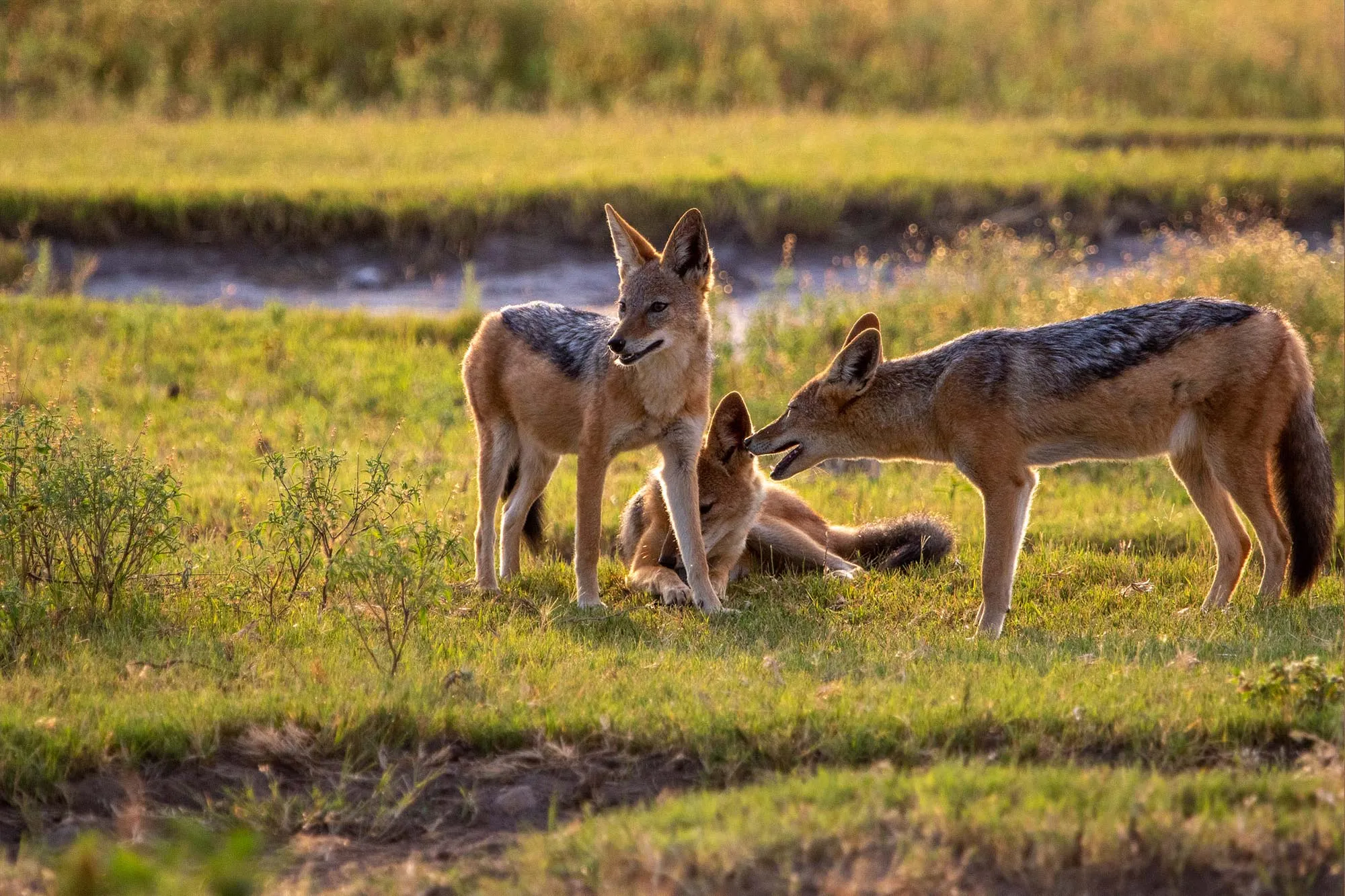
Black-backed jackal trot across the Serengeti’s plains in genuinely resourceful, monogamous pairs, their intelligence and remarkable adaptability making them one of the ecosystem’s more consistently visible small predators, despite receiving far less attention than the park’s famous lion and leopard populations.
Meet the Serengeti’s Jackal Species
The Serengeti hosts both black-backed and side-striped jackal, though black-backed jackal are considerably more commonly encountered given their preference for the park’s open grassland over the side-striped species’ denser woodland habitat. Black-backed jackal carry a genuinely distinctive dark saddle marking across the back, contrasting against a reddish-tan body, making identification straightforward even at a moderate distance.
Where to Find Jackal in the Serengeti
Jackal range widely across the Serengeti’s open plains, often seen trotting purposefully between feeding sites or resting near a den during daylight hours. Their genuinely opportunistic nature means sightings frequently occur near recent kill sites, where jackal wait patiently at a respectful distance for scavenging opportunities once larger predators finish feeding.
Jackal Monogamy and Family Cooperation
Black-backed jackal form genuinely long-term monogamous pairs, a mating system relatively unusual among African carnivores, with both parents cooperating closely in raising pups and defending territory. Older offspring from previous litters frequently remain with the family group temporarily, helping raise younger siblings in a cooperative arrangement that genuinely improves overall pup survival rates.
Jackal Diet and Opportunistic Feeding
Jackal are genuinely versatile omnivores, hunting small mammals, birds, and insects while also scavenging from larger predator kills and consuming fruit and other plant material when available. This dietary flexibility is a major reason jackal populations remain consistently stable across the Serengeti regardless of seasonal fluctuations that more specialised feeders struggle to weather.
Jackal and the Serengeti’s Larger Predators
Jackal maintain a genuinely careful, calculated relationship with the Serengeti’s larger predators, including lion and hyena, generally avoiding direct confrontation while capitalising on scavenging opportunities their scrappy speed and alertness allow them to exploit before larger competitors arrive.
Jackal Vocalisations and Communication
Jackal communicate through a genuinely distinctive range of yips, howls, and barks used to maintain contact between mates and warn off intruding rival pairs from established territory, sounds frequently heard around dawn and dusk across the Serengeti’s plains even when the animals themselves remain out of sight.
Best Time of Year for Jackal Sightings
Jackal are visible in the Serengeti year-round given their resident status, though numbers of visible activity can increase during the migration’s calving season, when abundant vulnerable prey and afterbirth scavenging opportunities draw increased jackal presence to the southern plains. See our regional best-time guide for how East Africa’s seasonal patterns generally affect game viewing.
Self-Drive vs Guided Safaris for Jackal Viewing
Jackal are genuinely straightforward to spot given their bold, confident movement across open ground, though a guided safari still adds real value in locating active den sites and interpreting behaviour alongside the park’s other headline wildlife. Most visitors combine Serengeti with a wider guided Northern Circuit itinerary.
Photographing Serengeti Jackal
Jackal pairs trotting together across open plains, or a den site with visible pups, offer genuinely compelling, often overlooked photographic opportunities distinct from the more commonly photographed big cats. A mid-range zoom covers most sightings well, similar to the gear recommended in our camera gear guide.
What to Pack for a Serengeti Safari
Standard game drive gear – neutral clothing, sun protection, and binoculars – covers most of what the park requires. If your wider itinerary includes gorilla trekking, our gorilla trekking packing list covers that portion separately.
Jackal’s Ecological Role
Beyond their own hunting success, jackal play a genuinely useful ecological role as scavengers, helping clear smaller carcasses and carrion that would otherwise linger across the plains, a cleanup function that contributes meaningfully to limiting disease spread across the wider ecosystem. This role, combined with their own predation on rodents and small mammals, makes jackal genuinely important to the Serengeti’s overall ecological balance.
Combining Jackal Viewing With a Wider Northern Circuit
The Serengeti is commonly paired with Ngorongoro Crater on a standard Northern Circuit itinerary, and the crater’s own resident jackal population offers genuine additional viewing opportunities within a single well-planned Tanzania trip.
Jackal Territory and Boundary Defence
Established jackal pairs defend genuinely well-marked territories through scent marking and vocal communication, actively chasing off intruding rival jackal that stray into claimed ground, a territorial defence that remains consistent throughout the year rather than being limited to a specific breeding season. This territorial behaviour helps explain why jackal sightings often occur in roughly predictable locations across repeated visits to the same area of the park.
Pup Development and Den Life
Jackal pups are born in an underground den, often an adapted burrow taken over from another species, and remain there for their first several weeks before beginning to venture out under close parental supervision. Both parents, along with any older helper offspring remaining with the family group, actively provision the den with food during this vulnerable early period, a cooperative arrangement that genuinely improves pup survival odds compared to species raising young without similar family support.
How Jackal Intelligence Shapes Their Success
Jackal are widely regarded by researchers and guides alike as among the more genuinely intelligent mid-sized predators found across the Serengeti, displaying problem-solving behaviour and adaptive hunting strategies that allow them to exploit opportunities other species might miss entirely. This intelligence, combined with their opportunistic dietary flexibility, is a major reason jackal have thrived across such a genuinely wide range of African habitats beyond just open savannah.
Jackal and the Wildebeest Migration’s Afterbirth
During the migration’s calving season, jackal take genuine advantage of the abundant afterbirth and occasional vulnerable newborn calves scattered across the southern plains, a seasonal feeding opportunity that draws increased jackal activity and visibility during this specific window each year.
Comparing Serengeti Jackal to the Masai Mara’s Population
Kenya’s Masai Mara shares the same broader ecosystem and hosts a genuinely comparable black-backed jackal population, meaning travelers combining both destinations on a wider itinerary can expect consistent sightings regardless of which side of the shared border their trip currently covers.
Why Guides Value Jackal Sightings Beyond Their Rarity
Despite lacking the star appeal of the Serengeti’s big cats, experienced guides often genuinely enjoy highlighting jackal behaviour to visitors, given how consistently intelligent and strategically opportunistic their movement around a kill site or den area actually is up close. A patient observer watching a jackal pair coordinate a scavenging approach, waiting for the precise moment larger predators lose interest, often comes away with a genuinely deeper appreciation for the species’ understated cunning.
Side-Striped Jackal: The Serengeti’s Less-Seen Species
The Serengeti’s side-striped jackal population, considerably less commonly encountered than their black-backed relatives, favours denser woodland and riverine habitat over open plains, making sightings genuinely rarer and often more a matter of luck than deliberate searching. Identifying features include a pale stripe along the flank and a white-tipped tail, distinct from the black-backed species’ dark saddle marking.
Getting to the Serengeti for Jackal and Wider Wildlife Viewing
Most itineraries reach the Serengeti via road from Arusha through Ngorongoro Crater, or by scheduled light aircraft directly into one of the park’s several airstrips, with the choice generally depending on how much of the Northern Circuit’s driving time a traveler wants to include.
Conservation Status of Serengeti Jackal
Unlike many of the Serengeti’s larger predator species, jackal populations remain genuinely stable and relatively unthreatened across the wider ecosystem, reflecting the species’ adaptability and broad diet compared to the more specialised feeding and habitat requirements of larger carnivores. This genuine ecological stability means jackal sightings should remain consistently reliable and predictable for travelers visiting the Serengeti well into the future, regardless of broader conservation pressures affecting other species.
What to Expect From a Typical Jackal Encounter
Most jackal sightings involve a brief but memorable glimpse, a pair trotting purposefully across open ground or pausing at a respectful distance near a kill site, rather than an extended, prolonged viewing session typical of larger, more habituated predator species.
Frequently Asked Questions
What jackal species live in the Serengeti?
Both black-backed and side-striped jackal, though black-backed jackal are considerably more commonly encountered given their preference for open grassland.
Do jackal hunt or just scavenge?
Both – they’re genuinely versatile omnivores, hunting small mammals and insects while also opportunistically scavenging from larger predator kills.
Are jackal monogamous?
Yes, genuinely so – black-backed jackal form long-term monogamous pairs, a mating system relatively unusual among African carnivores.
What’s the best time of year to see jackal in the Serengeti?
Year-round given their resident status, though sightings can increase during the migration’s calving season, when scavenging opportunities rise.
Are jackal dangerous to humans?
No, genuinely not – they pose no real threat to visitors and generally avoid direct human contact, maintaining a naturally cautious distance.
Ready to Plan Your Serengeti Safari?
Whether the Serengeti’s resourceful jackal, the wildebeest migration, or a full Northern Circuit itinerary is your priority, our team can build a Tanzania trip matched to your time and interests. Get in touch with our team below today and let’s start planning your complete Tanzania safari itinerary together.

No comment