
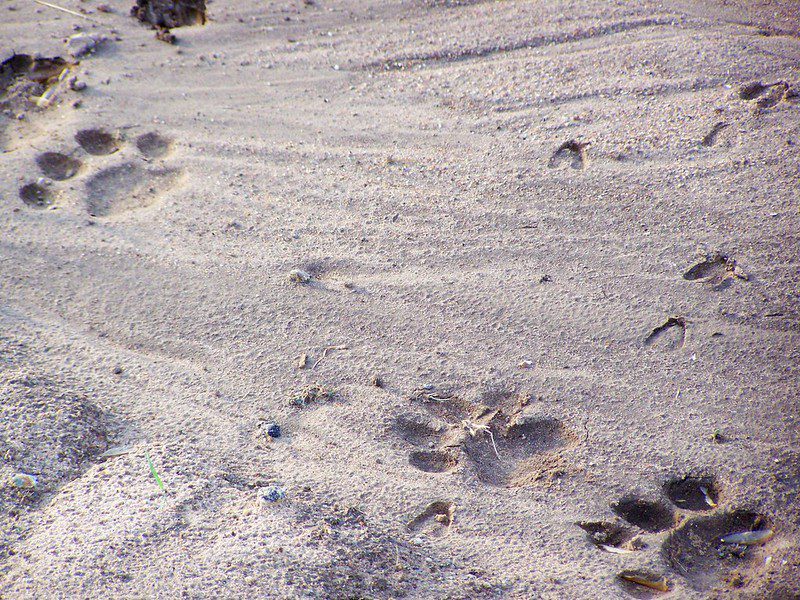
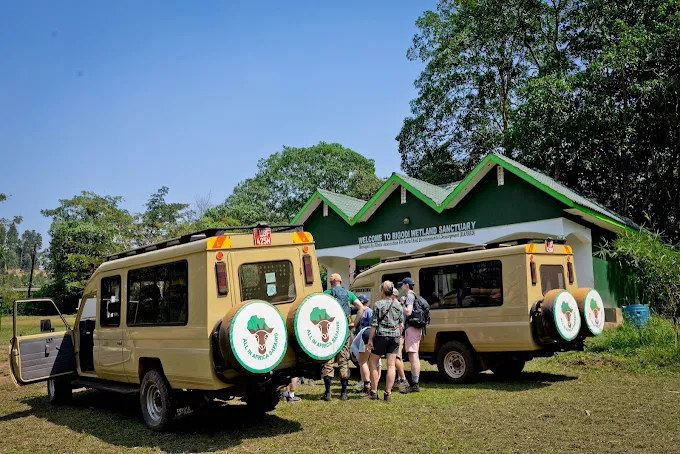
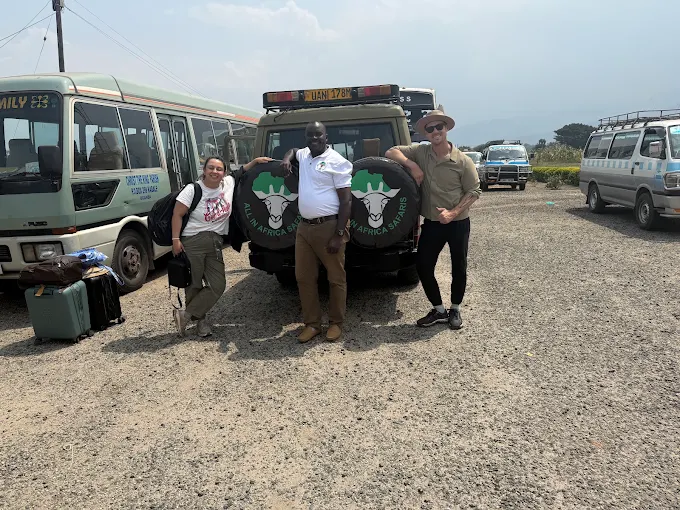
Lion tracking in Queen Elizabeth National Park is a hands-on activity built around a long-running research program, where visitors join a researcher or ranger using radio telemetry to locate a specific collared pride, then observe from a vehicle as the team records data on location, behavior, and health. This guide covers exactly what to expect on a lion tracking excursion, how it differs from a normal game drive, and how to add it to your Uganda itinerary.
How Lion Tracking Actually Works
A tracking session starts at a research station where a guide checks the last known signal from a collared lion’s radio transmitter, then drives toward the general area, switching to a handheld antenna once closer to pinpoint the pride’s exact location by signal strength. Our guide on experiential lion tracking in Uganda covers the full program in more depth, including how visitors can get involved in the actual data collection.
Why Queen Elizabeth National Park Uses Radio Collars
Queen Elizabeth’s lion population has faced real pressure from human-wildlife conflict and habitat changes over the years, and radio collaring lets researchers monitor pride movements, territory boundaries, and survival rates far more precisely than periodic ground surveys alone could achieve. Our guide on GPS collaring and lion research in Uganda covers the broader research infrastructure behind this specific tracking program.
What a Typical Tracking Session Looks Like
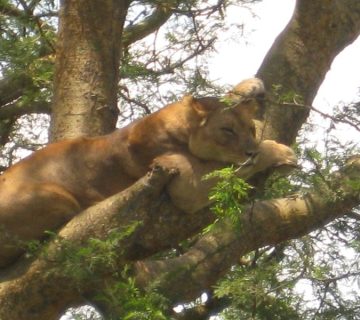
Sessions typically run two to three hours, starting early morning when lions are most active and signal conditions are clearest, and usually end with a genuine sighting, either resting lions or, less predictably, a pride on the move or engaged in a hunt. Our guide on lion population in Queen Elizabeth National Park covers how many collared and uncollared lions researchers currently track across the park.
How Tracking Differs From a Standard Game Drive
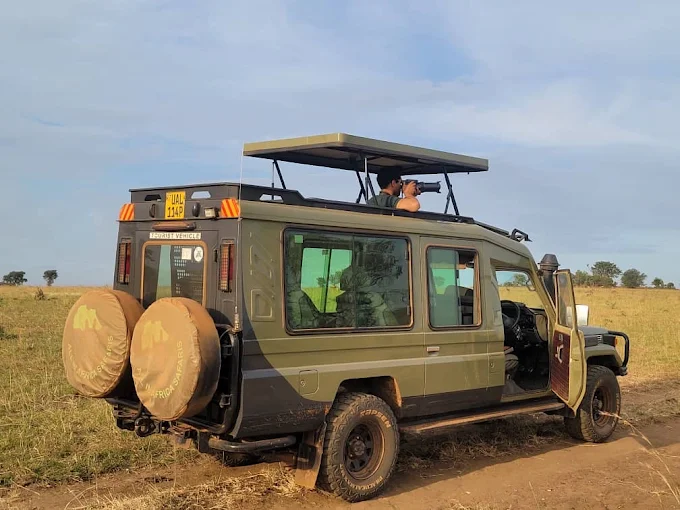
Unlike a standard game drive, where a sighting depends on the guide’s field experience and radio reports from other vehicles, tracking uses actual telemetry data, giving a considerably higher likelihood of locating a specific pride even when it’s ranging deep within thick cover or far from the main road network. Our guide on whether lions are dangerous to safari vehicles covers safety considerations that apply to both tracking sessions and standard drives alike.
What You Learn From the Research Team
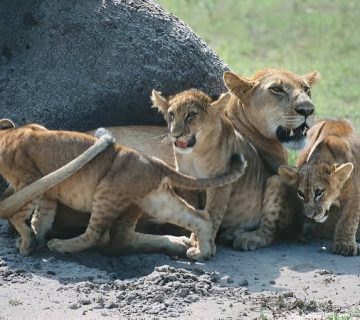
Beyond the sighting itself, most tracking sessions include a real briefing from the research team on the specific pride’s recent history, territory disputes, cub survival, coalition changes, giving visitors a level of individual-pride detail a standard drive rarely offers. Our guide on how lion prides are structured is useful background reading before a session, since guides often reference pride hierarchy directly while narrating a sighting.
Who Runs the Tracking Program
Sessions are typically run in partnership between the Uganda Wildlife Authority and an affiliated research organization, with a trained researcher or ranger leading each excursion rather than a standard safari guide alone, meaning the person narrating your sighting is often the same person who has been monitoring that specific pride for months or years.
Best Time of Year for Lion Tracking
Tracking runs year-round, but dry season months generally offer easier vehicle access to the more remote areas a pride might be ranging in, while wet season tracking can involve rougher, slower driving to reach a signal location. Our guide on lion sightings in dry season versus wet season covers how this same seasonal pattern affects sightings more broadly across the park.
Booking a Lion Tracking Session
Tracking sessions run as an add-on activity alongside a standard Queen Elizabeth National Park stay, usually booked a day in advance through your lodge or safari operator, since availability depends on both researcher schedules and current collared-lion locations. Our guide on the best time to see lions in Queen Elizabeth National Park covers general timing that applies well to a tracking-focused visit too.
What to Bring on a Tracking Excursion
A tracking session runs longer than a typical game drive and often starts earlier, so warm layers for the early morning cold, sun protection for once the day heats up, water, and binoculars all matter considerably, alongside a camera with reasonable zoom range for photographing a pride that may still be at some distance when first located by signal.
Is Lion Tracking Suitable for Children?
Most operators welcome families on tracking sessions, though the longer duration and occasional stretch of rough driving to reach a remote signal location suit older children better than very young ones. Our guide on a family guide to spotting lions safely on safari covers broader family safety considerations that apply directly to a tracking excursion too.
How Tracking Data Supports Conservation
Every tracking session doubles as a genuine data point for the research program, since researchers log each located pride’s condition, location, and any notable behavior observed, meaning visitor-accompanied sessions contribute directly to the same dataset used to guide the park’s broader lion conservation strategy over time.
Combining Tracking With the Rest of Your Uganda Itinerary
Lion tracking pairs naturally with a wider Queen Elizabeth National Park stay that also includes a Kazinga Channel boat cruise and standard game drives, and the park’s central location makes it easy to combine with both Uganda’s other savanna parks and a Bwindi gorilla trekking extension. Our guide on lion safari versus gorilla trekking, which to choose first covers how to sequence a combined trip well. A two- or three-night stay in the park is generally enough to fit a tracking session in alongside these other activities without feeling rushed, leaving room for a boat cruise the same day if timing allows.
Why Repeat Visitors Often Book a Second Tracking Session
Because each session follows a different pride depending on which collar is transmitting the clearest signal that day, repeat visitors staying multiple nights sometimes book a second tracking excursion specifically to follow a different pride than the one located on their first attempt, treating it less like a one-off activity and more like an ongoing, evolving story about the park’s resident lion population that’s well worth returning to see unfold further on a future trip.
What Happens When a Pride Can’t Be Located
Occasionally a collared pride ranges into terrain too dense or too far from accessible tracks to reach within a normal session window, and when this happens most operators either extend the search using a second collared pride’s last known signal or convert the outing into a standard game drive, so the morning still delivers genuine wildlife viewing even without the specific tracking payoff. This backup plan is worth confirming directly with your operator before booking, since it varies slightly between different lodges and research partners currently operating within the park.
How Tracking Fits Into the Park’s Zoning
Radio-collared prides tend to range across specific zones within the park that researchers have mapped over years of monitoring, meaning a tracking session often stays within a more predictable subsection of Queen Elizabeth National Park than a general game drive, which can range more widely in search of any available sighting. This zoning knowledge is part of what gives the research team such a strong sense of where to start a search even before checking the day’s actual telemetry signal.
The Cost of a Lion Tracking Add-On
Tracking sessions carry an additional fee on top of standard park entry and game drive costs, since the activity supports the ongoing research program directly, and this fee is typically built into a broader itinerary quote rather than something visitors arrange separately once already in the park. Booking through an established operator familiar with the program generally makes this logistics step considerably smoother than trying to arrange it independently on short notice.
Frequently Asked Questions
A few quick answers to the questions travelers ask most often about lion tracking in Queen Elizabeth National Park.
Is a sighting guaranteed on a lion tracking excursion?
Not guaranteed, but the odds run considerably higher than a standard game drive, since the team is working from an actual radio signal rather than guesswork.
How long does a typical session last?
Most sessions run two to three hours, usually starting early morning when signal conditions and lion activity are both at their best.
Do I need to book in advance?
Yes – sessions are typically booked a day ahead through your lodge or operator, since availability depends on researcher schedules.
Is this different from a normal game drive?
Yes – tracking uses real telemetry data from collared lions, rather than relying on guide experience and radio reports from other vehicles alone.
Can children join a tracking session?
Most operators welcome families, though the longer duration and occasional rough driving suit older children better than very young ones.
Ready to Plan Your African Safari?
Whether lion tracking becomes the centerpiece of your Uganda stay or one memorable add-on to a wider itinerary, our team can build a trip matched to your interests. Get in touch with our team below today and let’s start planning your complete African safari itinerary together.

No comment