
How Lion Prides Are Structured
A lion pride is built around a core group of related females who typically remain together for life, joined by a coalition of resident males who hold territorial control for a limited period before eventually being displaced, a structure considerably more complex than the simple “family group” label often suggests.
The Female Core: A Pride’s Stable Foundation
A pride’s lionesses are almost always related, typically a multi-generational group of mothers, daughters, sisters, and aunts who remain within the same territory their entire lives, a stability that stands in sharp contrast to the male coalition’s comparatively temporary tenure. This female continuity means a pride’s identity, its territory, hunting knowledge, and social bonds, persists across generations even as the resident males change multiple times over a typical pride’s history.
Male Coalitions: Why Holding Territory Requires Numbers
Resident males typically arrive as a coalition of two to four individuals, often brothers from the same litter or unrelated males who’ve formed a lasting alliance, since a larger coalition holds pride territory for a considerably longer average tenure than a lone male or pair can typically defend against rival challengers. Our guide on male versus female lion differences covers how this territorial role shapes the physical and behavioural differences between the sexes in more depth.

Pride Size: How Numbers Vary by Ecosystem
Total pride size varies considerably depending on prey density and territory quality, ranging from as few as four or five individuals in leaner habitats up to fifteen or more in prey-rich ecosystems capable of sustaining a larger group. Ngorongoro Crater’s exceptional prey density, for example, supports some of the region’s larger, more tightly packed prides, as our guide on Ngorongoro’s resident lions covers in more detail.
Some exceptionally large prides documented in particularly prey-rich pockets of certain ecosystems have exceeded twenty individuals at peak size, though such large groups tend to be temporary, often eventually splitting into smaller, more manageable sub-groups once the collective becomes too large to coordinate hunting and feeding efficiently across the full membership.
Hierarchy Among Females: A Looser Structure Than Often Assumed
Unlike the strict, linear dominance hierarchies documented in some other social carnivores, hierarchy among a pride’s lionesses is more fluid, generally organised around age and tenure rather than constant active competition, with cooperative hunting and communal cub-rearing mattering more to daily pride function than any strict rank order. Conflict between resident females does happen, particularly over food access during lean periods, but remains considerably less structured than the coalition-based competition among males.
Feeding order at a kill offers one of the clearest visible windows into this looser hierarchy: older, more experienced lionesses generally feed first, followed by other adult females, with cubs and younger subordinate individuals typically waiting until the initial feeding frenzy subsides, though nothing about this order is fixed or absolute the way a strict dominance hierarchy elsewhere in the animal kingdom might operate.
Cub-Rearing: A Communal Responsibility Across the Pride
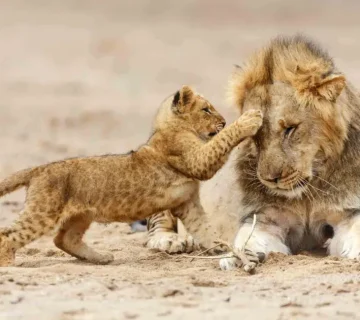
Cubs are raised communally, with related lionesses frequently nursing cubs that aren’t their own biological offspring, a cooperative arrangement that improves overall survival odds by spreading nutritional and protective responsibility across multiple mothers rather than leaving any individual female to manage alone. This communal structure also means cubs grow up socialising primarily with same-age littermates and cousins, building the cooperative bonds that will matter considerably once they reach adulthood.
Mothers within a pride often synchronise their reproductive timing where possible, giving birth within a similar window of several weeks of one another, a pattern that maximises the benefits of communal nursing and joint cub protection during the vulnerable first months when young cubs remain hidden away from the rest of the pride before being gradually introduced to the wider group.
Territory: How a Pride Defends Its Home Range
A pride’s territory size depends heavily on prey density and water availability, with resident males patrolling and scent-marking boundaries while females handle the bulk of day-to-day hunting within that defended space. Territorial disputes with neighbouring prides do happen, though less often than the more visible male-coalition takeover conflicts that tend to dominate popular accounts of lion social structure.
Scent-marking plays a considerably larger role in territorial maintenance than most visitors realise, with resident males regularly marking trees, rocks, and boundary vegetation with urine and claw marks that signal an occupied, actively defended territory to any wandering nomadic male considering a challenge, a passive deterrent that likely prevents considerably more direct confrontations than it ever actually triggers.
How Takeovers Trigger a Pride-Wide Reset
When a rival coalition successfully displaces the resident males, typically after the incumbents have held territory for a few years and begin to show physical decline, the new males often kill existing cubs to bring females back into reproductive readiness sooner, a brutal but well-documented pattern that effectively resets the pride’s reproductive cycle around the new coalition’s genetic line. Our guide on why male lions leave their pride covers this same transition from the departing males’ perspective.
Nomadic Males: Life Outside the Pride Structure
Not every adult male lion belongs to a pride at any given time. Displaced males and young males who’ve recently left their natal pride spend a considerable period as nomads, moving across the landscape, sometimes alone and sometimes in loose bachelor coalitions, while building the size and strength eventually needed to challenge for territory of their own, a precarious life stage with considerably higher mortality risk than the relative security of an established pride.
This nomadic period serves an important functional purpose beyond simply waiting to mature: young males travelling considerable distances during this phase help introduce fresh genetic material into distant prides once they eventually succeed in a takeover, a natural gene-flow mechanism that keeps genetic diversity healthier across a wider regional population than any single isolated pride could maintain on its own.
How Pride Structure Compares Across Different Ecosystems
Pride structure and typical size vary somewhat by region, shaped by local prey density and habitat type. Our guide on Serengeti lion safaris covers one of the best-documented examples of this variation, where decades of continuous research have tracked multiple prides’ structure and territorial dynamics across one of Africa’s largest lion populations. Smaller, more contained ecosystems like Queen Elizabeth National Park in Uganda show a somewhat different pattern, with prides adapted to a considerably more compact home range than the vast, open Serengeti plains allow.
Where to Observe Pride Dynamics Firsthand
Observing genuine pride structure in action, cooperative hunting, communal cub care, and coalition territorial behaviour, rewards choosing a park with a dense, well-studied resident population. Our guide on the best parks to see lions in East Africa covers exactly which destinations offer the strongest odds of witnessing these dynamics across a typical multi-day safari, and our broader roundup of essential lion facts covers several more behavioural traits worth knowing before you go.
Why Pride Structure Matters for Long-Term Conservation
Understanding pride structure matters beyond simple curiosity: researchers use detailed knowledge of coalition tenure, female relatedness, and cub survival rates to assess a given population’s long-term genetic health and resilience. Populations confined to smaller, more isolated protected areas face a distinct structural risk here, since limited space restricts how many separate coalitions and prides an ecosystem can support, a pattern our guide on Africa’s declining lion population covers in the context of the species’ broader conservation challenges.
How Guides Track Individual Prides Over Time
Experienced safari guides in well-studied ecosystems come to recognise individual prides by territory, mane pattern, and even specific scarring, allowing them to narrate a given pride’s recent history, a recent takeover, a new litter of cubs, an ongoing territorial dispute, in real time during a game drive. This kind of detailed, personal knowledge transforms a sighting from simply “a group of lions” into a much richer window onto the specific social dynamics covered throughout this guide.
Frequently Asked Questions
How many lions typically live in a pride?
Pride size ranges from around four or five individuals up to fifteen or more, depending on local prey density and territory quality.
Are lion prides built around related females?
Yes – a pride’s core lionesses are typically closely related and remain together for life, while males rotate through periodically.
Why do male lions form coalitions?
Larger coalitions hold pride territory for longer than a lone male can typically defend against rival challengers.
Do lionesses have a strict hierarchy?
No – hierarchy among females is looser and less rigid than the coalition-based competition documented among males.
What happens to cubs when a new coalition takes over a pride?
New males often kill existing cubs, a well-documented pattern that resets the pride’s reproductive cycle around their own lineage.
Ready to Plan Your African Safari?
Whether you’re hoping to observe a pride’s cooperative hunting, communal cub-rearing, or the tension of a coalition defending territory, our team can build a trip matched to your interests. Get in touch with our team below today and let’s start planning your complete African safari itinerary together.


No comment