
Lion Population in Queen Elizabeth National Park
Queen Elizabeth National Park holds one of Uganda’s most significant lion populations, with researchers commonly citing roughly 200 individuals across the park’s Kasenyi and Ishasha sectors combined, though the exact figure fluctuates given ongoing pressures from snaring, disease, and habitat encroachment that make consistent, long-term monitoring essential for tracking real trends over time.
Why Population Estimates Vary Between Sources and Survey Years
Given how difficult accurately counting a wide-ranging, partly nocturnal predator across a large park actually is, published population figures for Queen Elizabeth’s lions vary somewhat between different research surveys and years, meaning any single cited number should be treated as a snapshot estimate rather than a precise, permanently fixed, unchanging census figure.
Researchers use a combination of methods to arrive at these estimates, including individual identification through whisker-spot patterns and scarring, call-in surveys using recorded distress sounds, and camera trap data, each method carrying its own inherent margin of error that compounds further when combined into one single park-wide figure.
How the Ishasha and Kasenyi Sectors Support Distinct Lion Populations
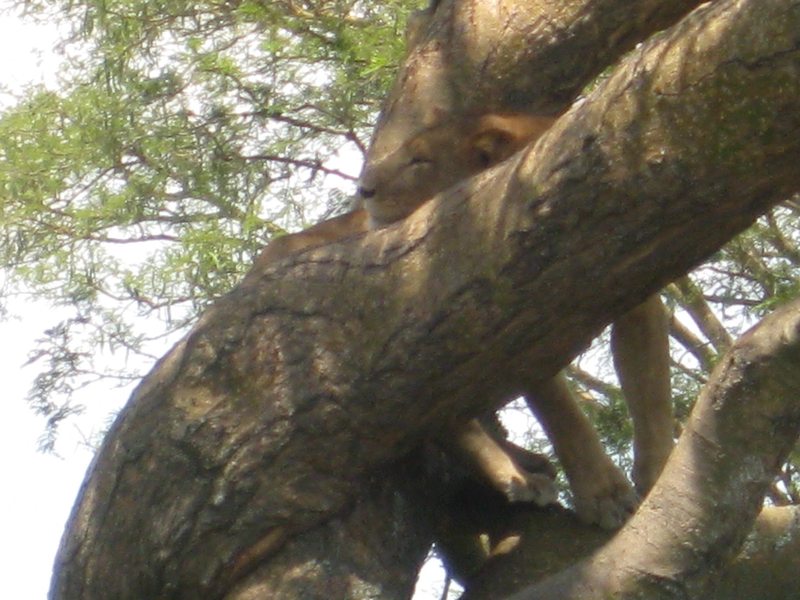
Queen Elizabeth’s lions split into two loosely distinct populations, the tree-climbing prides of the southern Ishasha sector and the more traditionally behaved prides of the northern Kasenyi plains, and researchers track both populations somewhat separately given their distinct territories and, in Ishasha’s case, distinctive tree-climbing behaviour.
The two sectors sit a considerable driving distance apart within the wider park boundary, meaning most itineraries choose to focus primarily on one sector or the other rather than attempting both within a single short visit, a practical planning consideration worth factoring in carefully alongside the population figures discussed throughout this guide.

Why Snaring Represents the Population’s Single Biggest Threat
Wire snares set by poachers targeting other species injure and kill a significant number of Queen Elizabeth’s lions each year as unintended bycatch, and this threat accounts for a considerable share of the population’s ongoing pressure, prompting dedicated ranger patrols specifically focused on snare removal across known lion territories.
Snares designed for smaller antelope species can still injure or kill a lion that wanders into one, often causing a slow, debilitating injury rather than immediate death, meaning affected individuals sometimes survive for weeks or months before succumbing, a distressing pattern rangers work continuously to prevent through regular, methodical patrol sweeps across every known section of lion territory.
How a Poisoning Incident Devastated the Ishasha Population in Recent Years
Queen Elizabeth’s lion population suffered a significant setback following poisoning incidents linked to human-wildlife conflict, where lions preying on livestock just outside park boundaries were targeted by affected community members, a tragic illustration of exactly how directly human-wildlife conflict threatens the population beyond natural pressures alone. This same conflict dynamic appears across the region wherever wildlife herds and livestock share grazing land near park boundaries.
Why Conservation Programmes Focus on Community Engagement Around the Park
Given how directly human-wildlife conflict drives lion mortality around Queen Elizabeth’s boundaries, conservation organisations prioritise community engagement, compensation schemes for livestock losses, and predator-proof enclosures, recognising that long-term population recovery depends on reducing the underlying conflict rather than protection efforts within the park alone.
Predator-proof livestock enclosures, known locally as bomas, use reinforced fencing and, in some programmes, specific deterrent lighting to prevent nighttime lion incursions into cattle pens, a practical intervention that measurably reduces the retaliatory poisoning incidents that have historically devastated portions of the park’s lion population. Community members who adopt these enclosures report considerably fewer livestock losses overall, a tangible incentive that helps sustain buy-in for the programme over time.
How GPS Collaring Helps Researchers Track Population Trends
Selected individuals within Queen Elizabeth’s lion population wear GPS tracking collars, letting researchers monitor movement patterns, territory boundaries, and survival rates with considerably more precision than visual survey counts alone could provide, data that informs both conservation strategy and, indirectly, the safari industry’s understanding of where sightings are most reliable. This tracking approach parallels how researchers study elephant movement patterns across the same shared landscape.
Why the Ishasha Sector’s Tree-Climbing Prides Draw Disproportionate Research Attention
Given how rare tree-climbing behaviour is among African lion populations, Ishasha’s specific prides receive considerable dedicated research attention beyond what their relatively modest numbers might otherwise warrant, since understanding why this behaviour persists here specifically offers insight into lion behavioural ecology more broadly.
Researchers still debate the exact explanation for Ishasha’s tree-climbing habit, with tsetse fly avoidance, cooling, and improved visibility over the surrounding plains all cited as contributing factors, meaning even this small, specific population within the wider Queen Elizabeth count carries outsized scientific significance relative to its actual size.
How Queen Elizabeth’s Population Compares to Other Ugandan Parks
Queen Elizabeth holds considerably more lions than Uganda’s other parks combined, meaning it remains the country’s most important lion stronghold, though Kidepo Valley National Park also supports a smaller but ecologically significant resident population in the country’s remote northeast, considerably more isolated from other regional lion populations than Queen Elizabeth’s.
Best Time of Year for Lion Viewing in Queen Elizabeth
Dry season months concentrate prey, and therefore lions, more predictably around remaining water sources across the park. See our regional best-time guide for how these seasonal patterns affect wider trip planning.
How Ranger Patrols Work to Protect the Population Daily
Uganda Wildlife Authority rangers conduct regular anti-poaching patrols across both the Ishasha and Kasenyi sectors, removing snares and monitoring known pride territories, a continuous, largely unseen effort that underpins the population numbers visitors encounter on a typical game drive.
These patrols operate year-round regardless of tourist season, covering considerable distances on foot through dense terrain vehicles often cannot access, meaning much of the most consequential conservation work protecting the lion population happens entirely out of sight of the very visitors whose park fees ultimately fund it.
Why Tourism Revenue Funds Much of This Protection Work
Given how directly park entrance fees and tourism revenue fund ranger patrols, snare removal operations, and community conflict-mitigation programmes, every visitor contributes directly to the infrastructure protecting Queen Elizabeth’s lion population, a meaningful connection between tourism and conservation outcomes. This same funding model supports rhino protection at Uganda’s Ziwa Rhino Sanctuary, another park directly dependent on visitor revenue for its ranger operations.
Photographing Queen Elizabeth’s Lions
Capturing Ishasha’s tree-climbing lions specifically, draped across fig tree branches, rewards patient photographers willing to work from below looking upward through the canopy. See our camera gear guide for lens recommendations suited to this distinctive shooting angle.
Early morning light filtering through the fig tree canopy creates considerably more dramatic lighting conditions than the flatter midday sun, meaning photographers timing their Ishasha visit for the first hours after sunrise often capture noticeably richer, more atmospheric images.
What to Pack for a Queen Elizabeth Lion Safari
Beyond standard safari essentials, binoculars reward patient lion-watching across both sectors, letting visitors observe pride dynamics and individual identifying features from a respectful distance. See our gorilla trekking packing list for broader guidance that applies equally well to a combined Uganda safari itinerary.
A notebook for tracking mane colour, scarring, and other individual identifying features helps visitors follow the same pride across multiple sightings during a longer stay, a rewarding way to engage more deeply with the population beyond a single passing encounter.
Combining Lion Viewing With Queen Elizabeth’s Wider Wildlife Circuit
Lion-focused game drives pair naturally with the park’s other signature wildlife, including its considerable buffalo and elephant populations, alongside the Kazinga Channel’s dense hippo and birdlife concentrations, within the same broader visit, and the buffalo herds our guide on defensive circle formations covers share the same territory and predator pressure as the park’s lion population.
Frequently Asked Questions
How many lions live in Queen Elizabeth National Park?
Researchers commonly cite roughly 200 individuals across the Kasenyi and Ishasha sectors combined, though the figure fluctuates.
What is the biggest threat to the population?
Wire snares set for other species injure and kill a significant number of lions as unintended bycatch each year.
Are Ishasha and Kasenyi lions the same population?
They’re tracked somewhat separately given their distinct territories, with Ishasha’s prides specifically known for tree-climbing.
Has the population faced any major setbacks recently?
Yes – poisoning incidents linked to human-wildlife conflict have caused significant losses in recent years.
How does tourism help protect the population?
Park fees fund ranger patrols, snare removal, and community conflict-mitigation programmes directly.
Ready to Plan Your Uganda Safari?
Whether tracking Ishasha’s tree-climbing lions, exploring the Kasenyi plains, or planning a wider Queen Elizabeth wildlife circuit is your priority, our team can build a trip matched to your interests. Get in touch with our team below today and let’s start planning your complete Uganda safari together.

No comment