
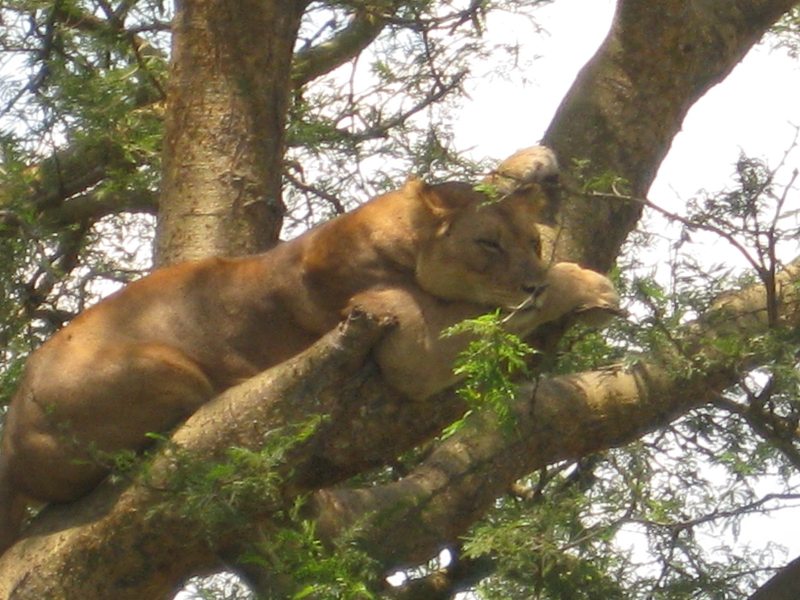
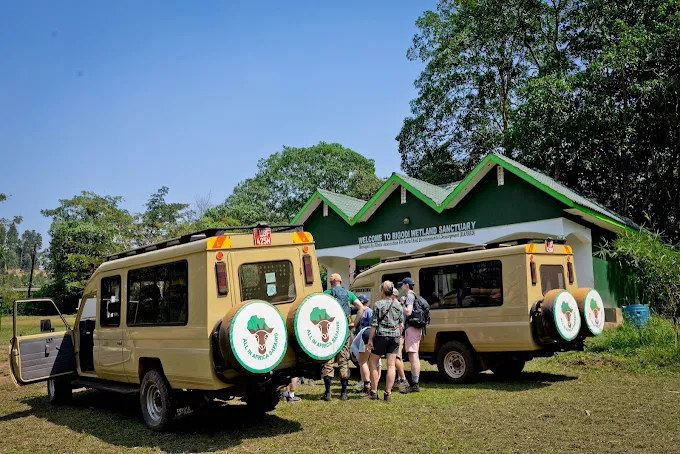

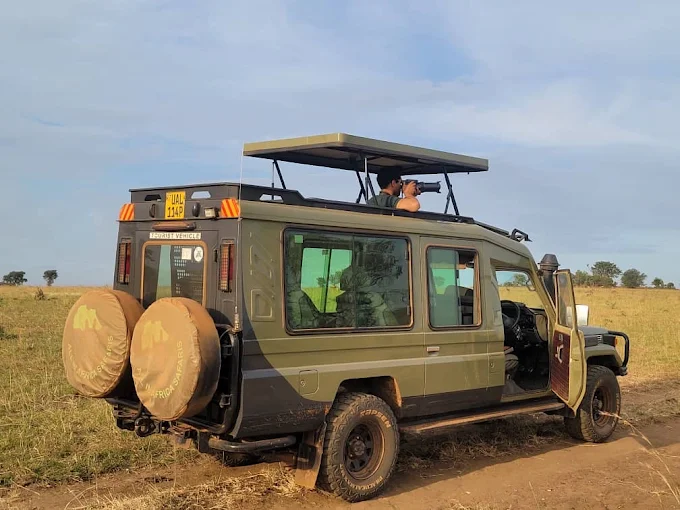

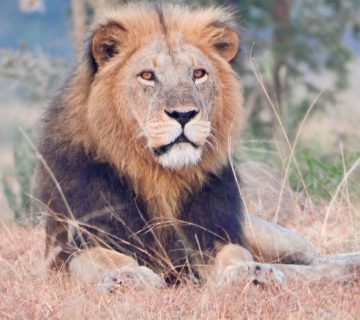
Tree-climbing lions are one of the rarest documented behaviors in the entire species, found reliably in only a handful of populations worldwide, and Uganda’s Ishasha sector of Queen Elizabeth National Park is one of the best places on the planet to see it firsthand. This guide explains why Ugandan lions climb trees when most lion populations elsewhere never do, where exactly to find them, and what to expect from a sighting.
Where in Uganda Lions Climb Trees
The behavior is concentrated almost entirely in the Ishasha sector, in the southern part of Queen Elizabeth National Park, where resident prides regularly climb into the broad, low branches of large fig trees scattered across the open plains. Our guide on lion population in Queen Elizabeth National Park covers where Ishasha’s tree-climbing pride fits within the park’s wider lion numbers, and a smaller, less consistently documented population in Tanzania’s Lake Manyara National Park shows similar behavior, covered in our guide on lions of Lake Manyara National Park.
Why Lions Climb Trees in the First Place
Researchers offer several overlapping explanations rather than one single confirmed cause: escaping biting flies and tsetse flies that concentrate at ground level, avoiding the heat radiating off open ground during the hottest hours, gaining a wider vantage point to scan for both prey and rival lions, and simple learned behavior passed down within specific prides rather than an instinct shared across the whole species.
Why This Behavior Is So Rare Elsewhere
Most lion populations across Africa never climb trees at all, which is part of why Ishasha and Lake Manyara draw so much specific research and visitor interest, since the behavior appears to be a learned, pride-specific habit rather than a universal trait, meaning cubs raised within a climbing pride pick up the behavior from watching adults rather than through any inherited instinct.
Best Time of Day to See Lions in the Trees
Midday, during the hottest hours, is consistently the most reliable window, since this is when the combination of heat and fly activity on the ground is at its worst and the shaded, breezy branches offer the clearest relief. Our guide on lion sightings in dry season versus wet season covers how broader seasonal timing shifts sighting odds across the year.
What a Tree-Climbing Sighting Actually Looks Like
Lions in Ishasha typically drape themselves across wide, low-hanging branches only a few meters off the ground, legs dangling, in a posture that looks almost identical to a leopard’s resting pose in a tree, a comparison our guide on lion versus leopard key differences covers in more depth, since first-time visitors sometimes briefly mistake one species’ resting posture for the other’s from a distance.
How Guides Track Which Trees Are Currently in Use
Experienced Ishasha guides know the specific handful of large fig trees a resident pride returns to repeatedly, since prides tend to favor the same few trees across a territory rather than climbing indiscriminately, letting guides check known trees first rather than searching the entire sector at random. Our guide on how lion prides are structured explains why this kind of fixed territorial pattern is typical of pride behavior generally.
Photographing Lions in Trees
A tree-climbing sighting rewards a slightly longer lens than a typical ground-level lion photo, since the animal is elevated and often partially obscured by branches and leaves, and shooting from a slight distance with a zoom generally produces a cleaner composition than trying to get directly underneath the tree. Our guide on photographing lions on safari covers camera settings and composition tips that apply directly to this specific kind of shot.
Is the Behavior Unique to a Single Pride?
No — multiple prides within the Ishasha sector display the behavior, not just one isolated group, which is part of why the sector as a whole has built its reputation rather than a single famous individual pride, though sighting frequency still varies day to day depending on exactly where a given pride is currently ranging within its territory.
How Ishasha Compares to Other Uganda Lion Destinations
Ishasha trades some of the raw lion density found in the park’s northern Kasenyi plains for this specific, harder-to-find-elsewhere behavior, meaning visitors chasing tree-climbing sightings specifically should prioritize time in Ishasha over other sectors even if overall lion numbers run a little lower there. Our guide on the best national parks to see lions in East Africa covers how Ishasha stacks up against the region’s other major lion destinations.
Combining Ishasha With a Wider Uganda Itinerary
Ishasha sits in the far south of Queen Elizabeth National Park, making it a natural stop on a route connecting the park with Bwindi Impenetrable Forest for gorilla trekking, so a tree-climbing lion sighting and a gorilla trek are often combined into the same overall trip rather than requiring two separate journeys. Our guide on lion safari versus gorilla trekking, which to choose first covers how to sequence a combined itinerary well.
Why This Behavior Draws Dedicated Research Attention
Because tree-climbing remains behaviorally unusual and only partially explained, Ishasha’s lions have drawn sustained academic research interest over the years, with researchers tracking specific individuals and prides to better understand exactly how and why the habit persists and gets passed on within a population. Our guide on GPS collaring and lion research in Uganda covers the wider tracking and research infrastructure supporting this kind of long-term study.
What to Do If You Don’t See a Lion in a Tree
The behavior isn’t guaranteed on any single visit, since it depends on exactly where a pride happens to be ranging and how hot or fly-heavy the day is, so guides generally recommend allowing at least a full day or two in Ishasha specifically, rather than a brief drive-through, to give a real chance for a favorable sighting. Even without a tree-climbing sighting, Ishasha still delivers strong general game viewing, so the time is rarely wasted regardless of how any single day’s search plays out.
How the Trees Themselves Shape the Behavior
The specific fig trees favored by Ishasha’s prides tend to have wide, near-horizontal lower branches positioned just a few meters off the ground, a structure that makes climbing relatively easy and resting comfortable compared to the taller, straighter-trunked trees found elsewhere in the park. This physical suitability is likely part of why the behavior concentrates so specifically around a limited number of trees rather than appearing evenly across Ishasha’s entire landscape, and it’s one reason researchers have been able to map the behavior to such a specific, identifiable set of locations over the years.
What Rangers and Researchers Still Don’t Fully Understand
Despite decades of observation, no single explanation has been definitively confirmed as the sole driver of the behavior, and most researchers now favor a combination of factors working together rather than one dominant cause. This open question is part of what keeps Ishasha on the radar for ongoing behavioral research, and it also means the explanation guides give visitors on the ground may vary slightly depending on which researcher’s findings they’re most familiar with, without any single answer being definitively wrong or considered the final word on the subject.
Seasonal Variation in Sighting Frequency
While the behavior can technically occur at any time of year, dry season months tend to produce more consistent sightings, since heat and fly pressure at ground level are typically more intense than during the cooler, wetter months, giving lions a stronger incentive to seek out elevated, breezy branches. Visitors traveling during the wetter months can still see the behavior, but should generally set expectations around a somewhat lower likelihood compared to a dry-season visit, and a flexible two-day stay rather than a single rushed drive-through meaningfully improves the odds regardless of which season you’re traveling in.
Frequently Asked Questions
A few quick answers to the questions travelers ask most often about Uganda’s tree-climbing lions.
Why do lions climb trees in Uganda but not most other places?
Researchers believe it’s a learned, pride-specific habit passed down within specific populations rather than an instinct shared by the whole species.
What time of day gives the best chance of seeing it?
Midday, during the hottest hours, when relief from heat and biting flies on the ground is at its strongest.
Is this behavior found anywhere else in Africa?
Yes, though rarely — Tanzania’s Lake Manyara National Park has a smaller population also known for the same behavior.
Do all lions in Queen Elizabeth National Park climb trees?
No — the behavior is concentrated specifically in the Ishasha sector’s resident prides, not the park’s lion population as a whole.
How long should I spend in Ishasha to see it?
At least a full day or two is recommended, since the behavior isn’t guaranteed on any single short drive-through.
Ready to Plan Your African Safari?
Whether Ishasha’s tree-climbing lions are the centerpiece of your trip or one stop on a wider Uganda itinerary, our team can build a route matched to your priorities. Get in touch with our team below today and let’s start planning your complete African safari itinerary together.

No comment