
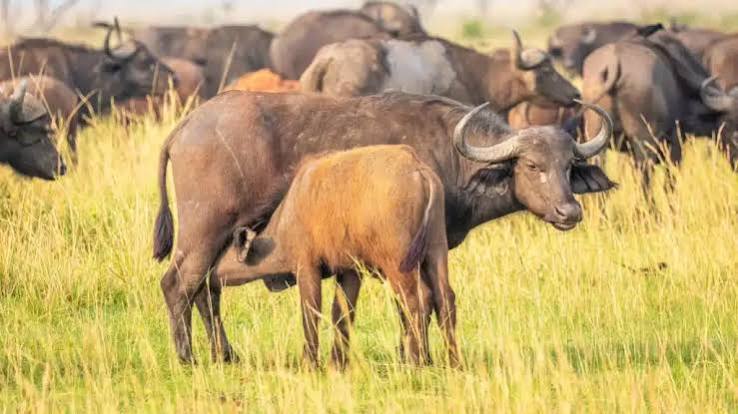
Buffalo herds move through Lake Manyara National Park’s dense groundwater forest and open grassland in genuinely large numbers, their presence within such a compact protected area giving this small park a wildlife density that consistently surprises visitors expecting a quick, minor stopover rather than a genuine game-viewing destination.
Where to Find Buffalo in Lake Manyara
Buffalo range across Lake Manyara’s grassland areas bordering the alkaline lake itself, as well as through the park’s distinctive groundwater forest, where dense vegetation offers shade and cover during the hottest hours of the day. This habitat variety within such a compact park means buffalo sightings here often come with a genuinely different backdrop than the open-plains encounters typical of Tanzania’s larger parks.
Herd Size and Buffalo Density
Despite Lake Manyara’s genuinely modest overall size compared to the Serengeti or Tarangire, the park supports a notably dense buffalo population, a reflection of the rich grazing the groundwater forest and lakeside grassland provide within a remarkably concentrated area. This density is part of why Lake Manyara consistently outperforms visitor expectations for a park often scheduled as a brief Northern Circuit stopover.
Buffalo and Lake Manyara’s Famous Tree-Climbing Lions
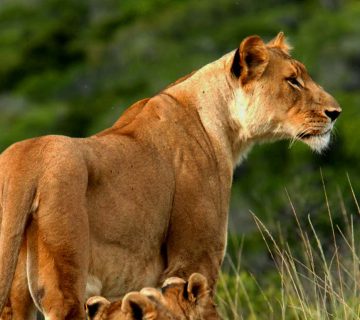
The park’s notably dense elephant and tree-climbing lion populations share the same compact habitat as buffalo, and some researchers point to this combination of large herbivores as a contributing factor behind the park’s unusual lion behaviour, with lions potentially using elevated branches to maintain safer distance from buffalo herds moving through shared territory.
Buffalo Behaviour and Social Structure
Buffalo form large, cohesive herds offering genuine protection through numbers, with a loose but real social hierarchy among dominant bulls and a collective vigilance against predators that benefits the entire group. Older bulls pushed out of the main herd, often called “dagga boys,” are frequently seen resting alone or in small bachelor groups within the park’s forested areas.
Best Time of Year for Buffalo Sightings
Buffalo are visible in Lake Manyara year-round given their resident status and the park’s consistent water availability from both the lake and its groundwater forest springs. The dry season, roughly June to October, still offers somewhat easier visibility as vegetation thins, though seasonal variation matters less here than in Tanzania’s larger, more dispersed parks. See our regional best-time guide for how East Africa’s dry-season patterns generally affect game viewing.
Buffalo as Africa’s Most Dangerous Big Five Species
Cape buffalo are frequently cited by professional guides as among the most dangerous Big Five species to encounter on foot, given their unpredictable temperament and willingness to charge when threatened or cornered, particularly solitary “dagga boy” bulls encountered in the park’s denser forest sections. This reputation applies just as much within Lake Manyara’s compact habitat as to herds found across East Africa’s larger parks.
Self-Drive vs Guided Safaris for Buffalo Viewing
Lake Manyara’s compact size and well-maintained road network make buffalo sightings genuinely reliable on both self-drive and guided visits, though a guided safari still adds real value in coordinating sightings around current herd movement between the groundwater forest and open grassland areas. Most visitors combine Lake Manyara with a wider guided Northern Circuit itinerary.
Photographing Lake Manyara’s Buffalo
Herds grazing against the backdrop of the park’s alkaline lake, or moving through dappled light within the groundwater forest, offer genuinely varied photographic settings distinct from the open-plains buffalo sightings typical elsewhere in Tanzania. A mid-range zoom covers most encounters comfortably, similar to the gear recommended in our camera gear guide.
What to Pack for a Lake Manyara Safari
Standard game drive gear – neutral clothing, sun protection, and binoculars – covers most of what the park requires, and a scarf for the sometimes dusty groundwater forest trails adds real comfort. If your wider itinerary includes gorilla trekking, our gorilla trekking packing list covers that portion separately.
Combining Buffalo Viewing With a Wider Northern Circuit
Lake Manyara is commonly included as a stop between Arusha and the Ngorongoro Crater or Serengeti, giving travelers genuine additional buffalo-viewing opportunities across Tanzania’s other ecosystems within a single well-planned trip alongside Tarangire’s own strong buffalo population.
Getting to Lake Manyara National Park
Lake Manyara sits within roughly two hours of Arusha by road, making it one of the more accessible parks on a standard Northern Circuit itinerary and a natural first or last stop given its proximity to Kilimanjaro International Airport. This convenient positioning is part of why so many Tanzania itineraries include a Lake Manyara stop.
Buffalo’s Role in Lake Manyara’s Ecosystem
As one of the park’s primary large grazing herbivores, buffalo play a significant role in shaping grassland structure through consistent grazing pressure, influencing vegetation patterns that in turn affect where other species choose to feed across the park’s compact but genuinely varied habitat. This ecological role, combined with buffalo’s importance as a prey species for the park’s resident lion prides, makes them a genuinely central part of Lake Manyara’s wider food web.
The Groundwater Forest as Buffalo Habitat
Lake Manyara’s distinctive groundwater forest, fed by underground springs rather than surface rainfall alone, creates unusually lush, dense vegetation that offers buffalo genuine year-round grazing and shelter unavailable in the drier acacia woodland found across most of Tanzania’s other Northern Circuit parks. This habitat type is part of what gives Lake Manyara’s buffalo population its notably consistent, reliable presence regardless of season.
Comparing Lake Manyara’s Buffalo to Ngorongoro’s
Both parks offer genuinely strong buffalo viewing within relatively compact protected areas, though Ngorongoro’s crater floor concentrates herds within an even more dramatic, enclosed setting, while Lake Manyara’s varied forest-and-lakeside habitat gives sightings here a genuinely different visual character worth including on the same broader circuit.
Elephants Alongside Lake Manyara’s Buffalo
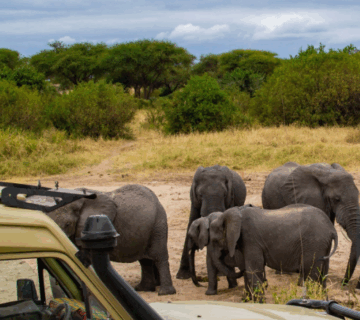
The park’s notably dense elephant population shares much of the same grassland and forest habitat as its buffalo herds, and travelers often encounter both species within a single game drive circuit, adding genuine variety to a park sometimes underestimated given its compact overall size.
Combining Buffalo Viewing With the Serengeti’s Own Herds
Travelers continuing north from Lake Manyara toward the Serengeti often compare its compact forest-and-lakeside buffalo population against the Serengeti’s own considerably larger open-plains herds, and most find the contrast genuinely worthwhile rather than redundant, given how differently the two ecosystems present the same species.
Big Five Context for Lake Manyara’s Buffalo
Buffalo is one of the more reliably seen Big Five species within Lake Manyara itself, complementing the park’s elephant and lion populations, though a full Big Five checklist, including rhino and leopard, generally requires extending the itinerary to the Ngorongoro Crater or Serengeti on the same broader Northern Circuit trip.
Water Buffalo Herds Along the Lakeshore
During drier months, when the lake itself recedes and exposes fresh grazing along its shrinking shoreline, buffalo herds frequently gather in genuinely large numbers to take advantage of the newly accessible grass, offering some of the park’s most reliable and visually striking sightings of the year. This seasonal shoreline grazing pattern is well known to guides who track water level changes closely throughout the dry season.
Guide Knowledge and Locating Forest Herds
Buffalo moving through Lake Manyara’s denser groundwater forest sections can be genuinely harder to spot than herds grazing in open grassland, given the reduced visibility dense vegetation creates, and experienced guides rely on fresh tracks, dung, and recent radio updates from other vehicles to locate herds efficiently within forested sections of the park. This local knowledge genuinely improves sighting odds compared to attempting the same search independently.
Best Lodges for Buffalo-Focused Visits
Properties positioned near the park’s main entrance gate or along the escarpment overlooking the lake genuinely simplify logistics for travelers prioritising buffalo and wider game viewing, cutting down on transfer time before and after game drives. Discussing lodge location directly with your operator, alongside current information on recent herd movement between forest and lakeshore, is genuinely worth doing before finalising your complete Lake Manyara itinerary.
Frequently Asked Questions
Is Lake Manyara a good destination for buffalo viewing?
Yes, genuinely so – the park supports a notably dense buffalo population within a remarkably compact protected area.
Are Lake Manyara’s buffalo dangerous to encounter?
Generally not from within a vehicle, though on foot they’re considered genuinely dangerous, particularly solitary “dagga boy” bulls in denser forest areas.
What’s the best time of year to see buffalo in Lake Manyara?
Year-round given consistent water availability from the lake and groundwater forest, though the dry season offers somewhat easier visibility.
Can I see buffalo alongside Lake Manyara’s tree-climbing lions?
Yes, both species share much of the same compact habitat, making it possible to see both within a single game drive.
Is Lake Manyara or Tarangire better for buffalo viewing?
Both offer genuinely strong sightings, with Tarangire providing larger dry-season herds and Lake Manyara offering a more varied forest-and-lakeside setting.
Ready to Plan Your Lake Manyara Safari?
Whether the park’s strong buffalo population, its famous tree-climbing lions, or a full Northern Circuit itinerary is your priority, our team can build a Tanzania trip matched to your time and interests. Get in touch with our team below today and let’s start planning your complete Tanzania safari itinerary together.

No comment