
Rhinos of Lake Nakuru National Park, Kenya
Lake Nakuru National Park, in Kenya’s Rift Valley, is one of only a handful of places in East Africa where you can see both black and white rhino in the same park – alongside the rest of the Big Five and one of the most photographed wildlife spectacles on the continent, the lake’s flamingo flocks, all within a compact area that’s easy to cover thoroughly in a single, well-planned day.
Why Lake Nakuru Is a Rhino Stronghold
Lake Nakuru was fenced in the 1980s specifically to create a secure sanctuary against poaching, and that decision paid off – the park now holds one of Kenya’s largest concentrations of both black and white rhino, a genuine conservation success story built on sustained, well-funded protection rather than luck. The fencing, combined with intensive ranger patrols, has made Nakuru one of the more reliable rhino-viewing destinations in the country.
Black Rhino vs White Rhino at Nakuru
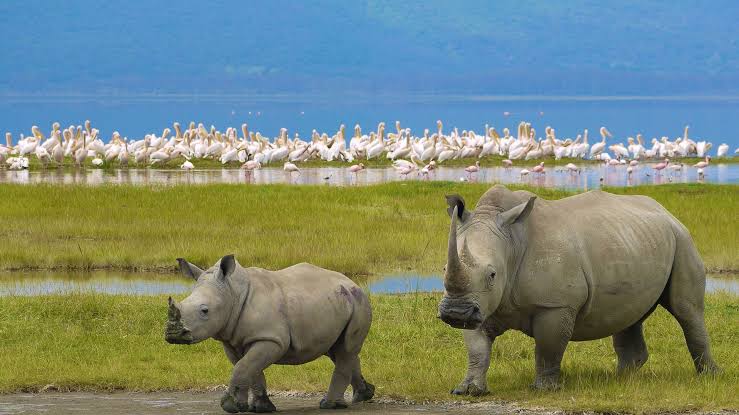
White rhino are the more social and visually distinctive of the two, with a broad, square lip adapted for grazing grass and a tendency to be seen in small groups rather than alone. Black rhino are smaller, more solitary, and considerably more elusive, browsing on shrubs and low branches with a narrower, pointed lip – spotting one is a genuine highlight even for guides who visit Nakuru regularly, given how much more cautious and hard to approach they tend to be.
The Rest of the Big Five at Nakuru
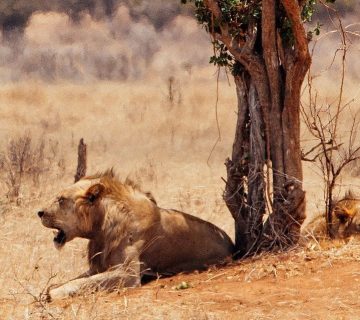
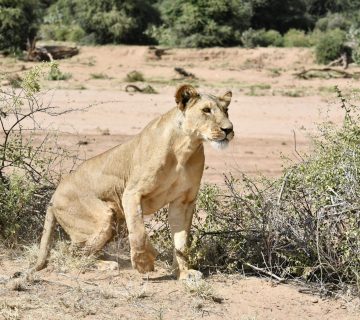
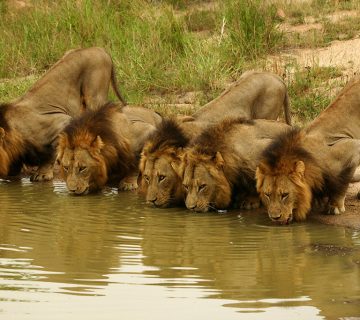
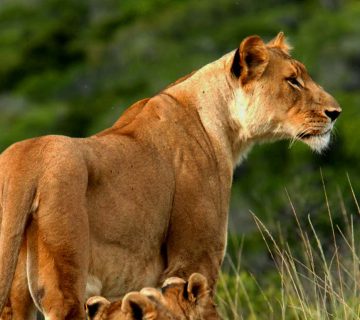
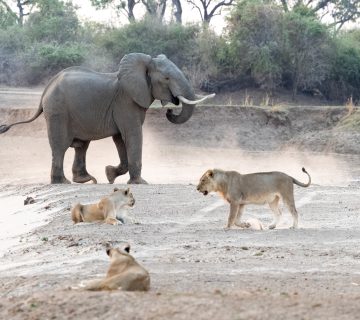
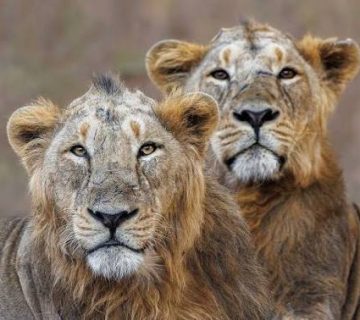
Beyond rhino, Nakuru holds healthy lion and buffalo populations, along with leopard in the wooded areas around the lake’s fringes, making it a genuine single-park Big Five destination for travelers with limited time. Elephant were historically absent from Nakuru but have been introduced in more recent years, adding the final piece to a park that increasingly rivals Kenya’s larger reserves for a complete Big Five circuit in a compact area.
Lake Nakuru’s Famous Flamingos
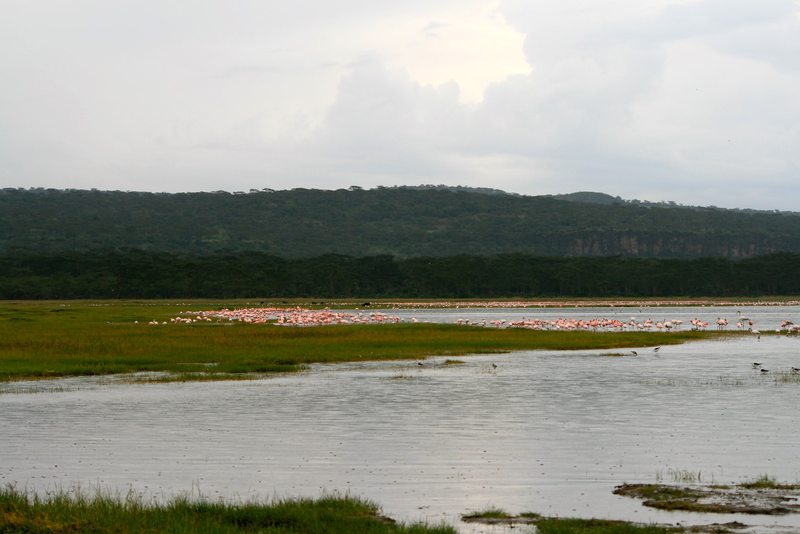
Nakuru built its original tourism reputation on its flamingo flocks, which historically numbered in the hundreds of thousands during peak years, turning the lake’s shoreline a vivid shade of pink visible even from a distance. Flamingo numbers fluctuate considerably with the lake’s water levels and alkalinity, and while some years bring smaller flocks than the park’s most famous historical photographs, a strong flamingo showing remains one of the most visually striking wildlife spectacles anywhere in Kenya.
How Nakuru Compares to the Masai Mara
Nakuru is considerably smaller and more compact than the Masai Mara, which means shorter driving distances between sightings and a more relaxed overall pace, but a lower density of predator sightings than the Mara’s famous prides typically offer. Many Kenya itineraries combine both parks specifically for this contrast – Nakuru for rhino and flamingos in a compact, easy day, and the Mara for the fuller savanna predator experience over a longer stay. See our Masai Mara lion safari guide for how the two parks fit together in a wider Kenya itinerary.
Best Time of Year to Visit Lake Nakuru
Nakuru can be visited year-round, though the dry seasons, roughly June to October and January to February, generally offer easier game viewing as vegetation thins and animals concentrate more predictably around the lake itself. Flamingo numbers are less tied to a specific season than to the lake’s water chemistry in a given year, so there’s no single guaranteed “best month” for flamingos specifically – it varies year to year based on rainfall patterns across the wider Rift Valley.
Rhino Tracking Rules and Safety
Rhino sightings at Nakuru happen from a vehicle during standard game drives rather than the on-foot tracking used at some dedicated sanctuaries, since Nakuru’s rhino population lives within a genuine multi-species park rather than a controlled, single-species reserve. Guides maintain respectful distances regardless, since both rhino species can move surprisingly fast when startled, and calm, quiet vehicle behaviour is standard practice around any sighting.
Combining Nakuru With a Wider Kenya Safari
Nakuru’s position in the Rift Valley makes it a convenient stop between Nairobi and destinations further west or south, and it’s commonly included as either the opening or closing leg of a longer Kenya Big Five itinerary that also covers the Masai Mara or Amboseli. Its relatively short drive from Nairobi – around two and a half to three hours – also makes it one of the more accessible parks for travelers with limited time.
Photographing Nakuru’s Rhinos and Flamingos
A mid-range zoom lens covers most rhino sightings comfortably given how close vehicles can typically approach, while flamingo photography benefits from a longer lens to compress the sheer scale of a large flock along the shoreline. Early morning light produces the richest colour on both the lake’s pink flamingo mass and the warm tones of the surrounding grassland, making dawn game drives the strongest choice for photographers.
What to Pack for a Lake Nakuru Safari
Standard game drive gear – neutral clothing, sun protection, binoculars, and a versatile camera lens – covers most of what a Nakuru visit requires. If your wider Kenya itinerary extends into Uganda or Rwanda for gorilla trekking, our gorilla trekking packing list covers that portion separately, alongside our regional visa requirements guide for planning a multi-country trip.
Rhino Conservation and Anti-Poaching at Nakuru
Nakuru’s perimeter fence, combined with round-the-clock ranger patrols and close population monitoring, has made it one of Kenya’s genuine anti-poaching success stories over the past several decades. Individual rhinos are tracked closely enough that rangers often know specific animals by name, monitoring their movement, health, and breeding status as part of an ongoing conservation effort funded significantly by tourism revenue – a model broadly similar to Uganda’s own approach at Ziwa Rhino Sanctuary. This fencing approach, while sometimes debated among conservationists for restricting natural migration patterns, has proven remarkably effective at Nakuru specifically, largely because the park’s compact size makes comprehensive ranger coverage genuinely achievable in a way it wouldn’t be across a much larger, more sprawling reserve.
Nakuru’s Other Wildlife Beyond the Big Five
Beyond its headline rhino and flamingo attractions, Nakuru holds healthy populations of Rothschild’s giraffe, waterbuck, and one of Kenya’s densest concentrations of baboon troops, along with a strong variety of raptors drawn to the lake’s abundant birdlife. The park’s relatively compact size means these secondary sightings are rarely far from the main game-viewing circuit, adding real variety to what might otherwise be a purely rhino-and-flamingo-focused visit.
How Nakuru Compares to Ol Pejeta for Rhino Viewing
Ol Pejeta Conservancy, also in Kenya’s Rift Valley region, is the country’s other major rhino destination and additionally home to the world’s last two northern white rhinos, kept under permanent guard. Nakuru offers a more traditional national park setting with a broader Big Five mix, while Ol Pejeta leans further into a dedicated conservancy model with additional activities like guided rhino tracking on foot – both are genuinely worthwhile, and some longer Kenya itineraries include both for comparison.
Self-Drive vs Guided Safaris at Nakuru
Nakuru’s well-maintained road network and compact size make it more approachable for self-drive visitors than some of Kenya’s larger, wilder parks, though a guided safari still meaningfully improves rhino and leopard sighting odds through local knowledge and radio communication between vehicles. For travelers combining Nakuru with the Masai Mara or other parks further afield, a guided safari also simplifies the logistics of a longer multi-park itinerary considerably.
Frequently Asked Questions
Can I see both black and white rhino at Lake Nakuru?
Yes – Nakuru is one of the few East African parks where both species are reliably present in the same protected area, making it an efficient stop for travelers wanting to see the difference between the two firsthand.
Are the flamingos always at Lake Nakuru?
Flamingo presence and numbers vary year to year depending on the lake’s water levels and alkalinity, so while birdlife is always present, the truly massive historical flocks aren’t guaranteed on every visit.
Is Lake Nakuru a good first stop on a Kenya safari?
Yes, its short drive from Nairobi and compact size make it a practical, efficient introduction to Kenya wildlife before heading further afield to the Masai Mara or Amboseli.
How does Nakuru’s rhino population compare to Rwanda’s Akagera?
Nakuru’s population is generally larger and longer-established, while Akagera’s rhinos represent a more recent reintroduction success story – both are worth visiting, and the comparison is a genuinely interesting one for travelers curious about different national approaches to rhino conservation.
Can I combine a Nakuru safari with gorilla trekking?
Not directly within Kenya, since gorilla trekking requires travel to Uganda, Rwanda, or Congo – see our gorilla trekking FAQ and Uganda Big Five guide for how to combine a Kenya Big Five trip with a separate primate-focused leg in a neighbouring country.
Ready to Plan Your Kenya Big Five Safari?
Whether Lake Nakuru’s rhinos and flamingos, a wider Masai Mara safari, or a full Kenya circuit is your priority, our team can build an itinerary matched to your time, budget, and interests. Get in touch below and let’s start planning your Kenya safari today.

No comment