
Lion Safaris in the Masai Mara: A Complete Guide
The Masai Mara holds some of the most intensively studied and reliably visible lion prides anywhere in Africa, largely thanks to decades of dedicated research projects that have tracked individual prides across generations. If lions are the priority on your Kenya safari, here’s what to actually expect from the Mara.
Why the Mara Is Kenya’s Best Lion Destination
The Masai Mara forms the northern extension of the Serengeti ecosystem, and its open, short-grass plains make spotting predators considerably easier than in denser bush terrain elsewhere in Kenya. Long-running research projects, including decades of continuous pride monitoring, mean guides in the Mara often know individual lions and prides by name, their territories, and even their family history – a level of familiarity that adds real depth to a sighting beyond simply seeing a lion in the grass.
The Mara’s Famous Prides
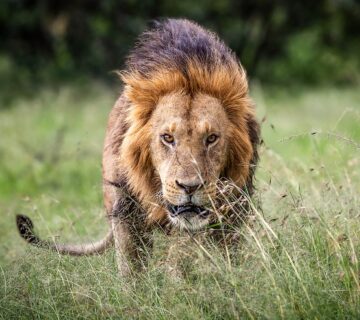
Several Mara prides have become well known through wildlife documentaries, most notably the Marsh Pride, whose multi-generational story has been followed on-screen for years. Pride territories shift over time as younger males challenge for dominance or are pushed out to become nomadic, so the specific prides guides discuss can change between visits, but the overall density of lions in the conservancy areas surrounding the main reserve remains consistently high. Guides often recognize individual lions by scars, mane shape, or whisker-spot patterns unique to each animal, and a good guide can tell you not just that you’re looking at a lion, but which specific pride, and often which specific individual, adding real narrative depth to a sighting that would otherwise just be “a lion in the grass.”
Lion Cubs and Denning Season
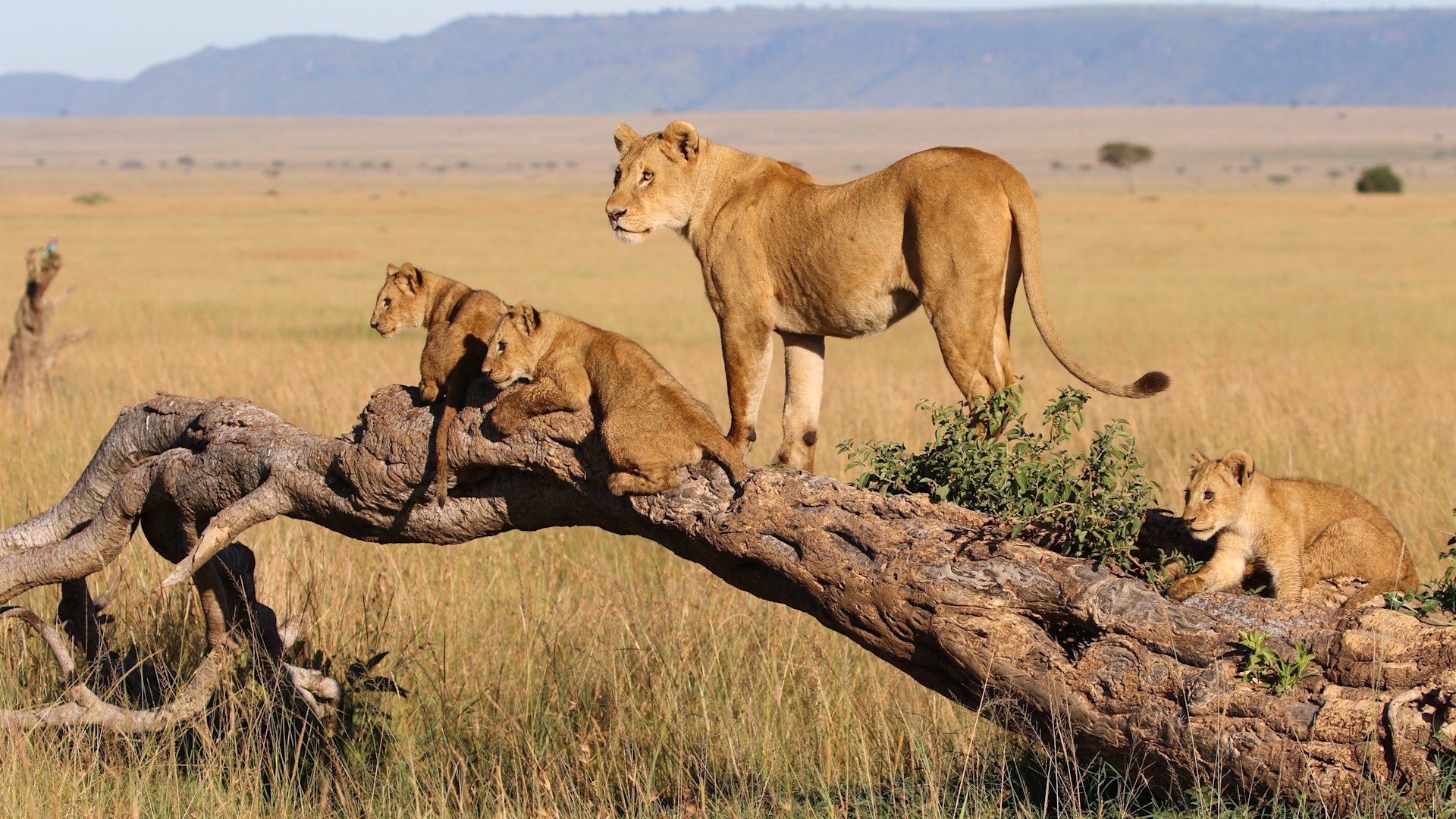
Lionesses typically give birth in secluded thickets away from the rest of the pride, keeping newborn cubs hidden for the first six to eight weeks before introducing them to the group. There’s no strict single “cub season” in the Mara since births happen year-round, but the period following the migration’s arrival, when prey is abundant, tends to see a noticeable uptick in new litters, giving visitors a reasonable chance of spotting very young cubs during and shortly after the migration months.
Best Time to Visit for Lion Sightings
Lions are visible in the Mara year-round, since they’re resident rather than migratory, but the dry season from roughly July to October overlaps with the wildebeest migration’s river crossings, which draws lions into more predictable ambush positions near crossing points – a bonus for visitors whose primary goal is the migration but who also want strong lion sightings on the same trip. The quieter shoulder seasons offer lower prices and fewer vehicles at each sighting, with only a modest trade-off in predictability.
Conservancies vs the Main Reserve
The private conservancies bordering the main Masai Mara National Reserve, such as Mara North and Naboisho, generally offer a quieter, less crowded lion-viewing experience, since vehicle numbers are capped and off-road driving and night game drives are permitted in ways the main reserve doesn’t allow. Many of the itineraries we build split time between the main reserve, for its sheer density of wildlife and dramatic river-crossing terrain, and a conservancy, for a more exclusive, flexible pace of game viewing.
How Lion Sightings Compare to Other Kenya Parks
Amboseli and Tsavo both hold resident lion populations too, but neither matches the sheer density and research-backed predictability of Mara sightings. If lions are your single top priority and you only have time for one Kenya park, the Mara is consistently the strongest choice; if you’re building a longer itinerary, see our Big Five guide for how the other four animals distribute across Kenya’s parks.
Night Game Drives and Walking Safaris
Because night game drives and off-road driving are restricted or banned entirely inside the main reserve, the private conservancies are where most serious lion-focused photographers and repeat visitors choose to stay, since dawn and dusk – when lions are most active – are exactly the hours the main reserve’s gate hours cut off. A handful of conservancy camps also offer guided walking safaris with an armed ranger, giving a genuinely different, ground-level perspective on lion territory that a vehicle simply can’t replicate.
Combining a Mara Lion Safari With Other Destinations
Many travelers pair a Masai Mara lion safari with a short beach extension on the Kenyan coast, or combine it with Tanzania’s Serengeti and Ngorongoro Crater for a longer cross-border itinerary, since the ecosystems are contiguous and border crossing logistics are well established. If gorilla trekking is also on your list, that requires a separate trip to Uganda, Rwanda, or Congo – see our gorilla trekking FAQ for how that fits alongside a Kenya safari on a longer multi-country trip, and our Uganda Big Five guide if you’re weighing up which country to prioritise first.
Choosing a Guide and Vehicle for Lion Sightings
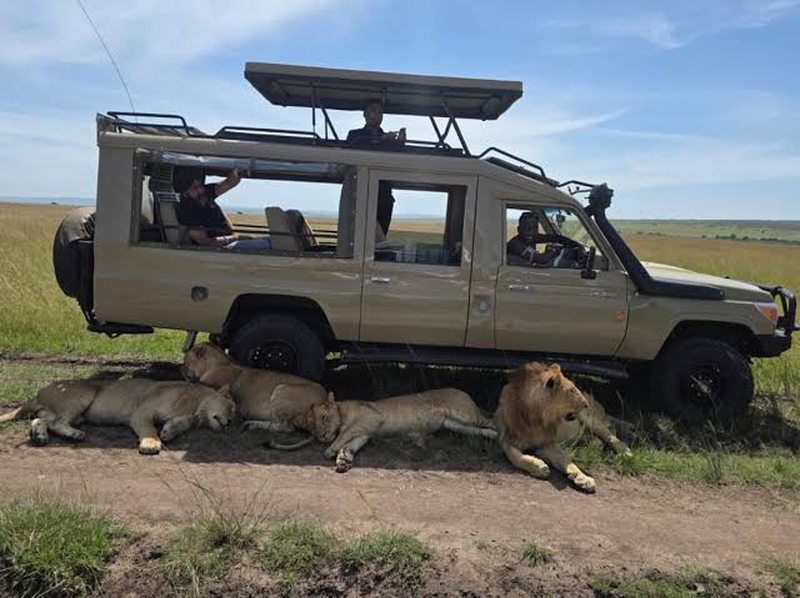
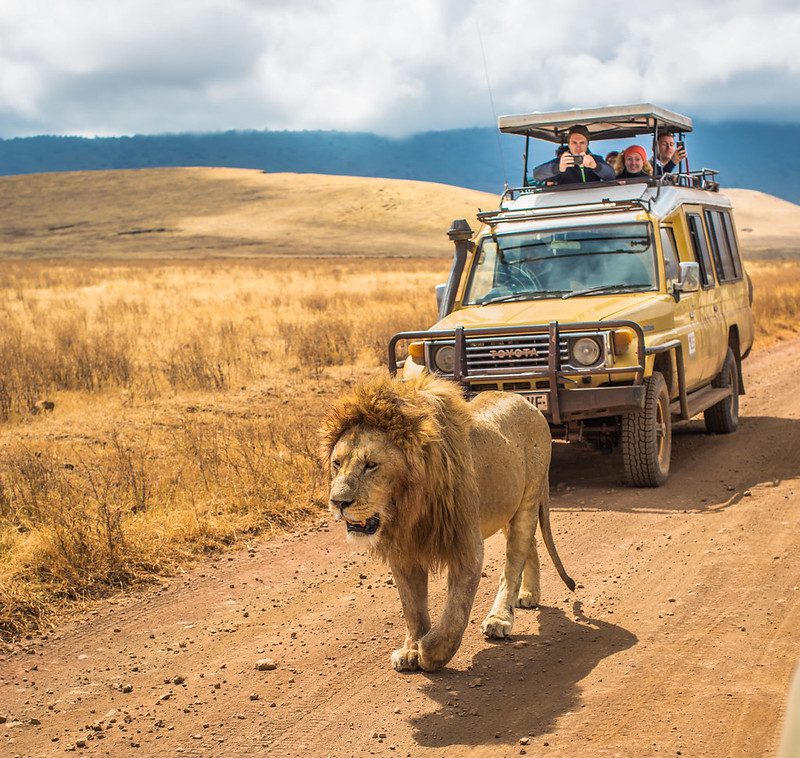
A dedicated, experienced driver-guide makes a measurable difference to lion sightings in the Mara – radio communication between vehicles means a good guide can reach a sighting within minutes of it being reported, while a less networked or less experienced guide may simply miss it entirely. Pop-top vehicles with unobstructed 360-degree visibility are standard across most reputable operators, and it’s worth confirming this detail specifically when booking, since it directly affects photography angles and overall visibility during a sighting.
Extending Your Trip Beyond the Mara
A Masai Mara safari pairs naturally with a wider Kenya itinerary, and many travelers we work with extend into a longer multi-park Kenya safari covering Amboseli or Lake Nakuru alongside the Mara, spreading lion, elephant, and rhino sightings across several distinct landscapes rather than a single park visit.
What to Pack for a Mara Lion Safari
Neutral-coloured clothing, a warm layer for early morning game drives (the Mara gets genuinely cold before sunrise despite the equatorial location), sun protection, binoculars, and a camera with a reasonably long lens for distant sightings all make a real difference. Dust is a constant on Mara roads during the dry season, so a simple cover for camera gear is worth packing too.
How the Mara Compares to Uganda’s Tree-Climbing Lions
If you’ve already seen conventional pride sightings elsewhere, Uganda’s Queen Elizabeth National Park offers something genuinely different – one of only two known tree-climbing lion populations in Africa, where prides rest draped over branches during the heat of the day, a behaviour still not fully explained by researchers. It’s a different kind of lion encounter from the Mara’s open-plains pride dynamics, and travelers building a longer multi-country trip often add it precisely because it doesn’t duplicate what they’ve already experienced in Kenya. Uganda’s parks can also be combined with mountain gorilla trekking, something the Mara can’t offer – see our Big Five overview for how the two countries compare more broadly.
Rhino Sightings Alongside Mara Lions
Unlike Uganda, where rhino requires a dedicated visit to Ziwa Rhino Sanctuary, the Mara conservancies and the broader Mara-Serengeti ecosystem hold genuine wild rhino populations, making it possible to combine strong lion sightings with a full Big Five checklist in a single park visit – one of the clearest practical advantages Kenya holds over Uganda for a first-time Big Five safari.
Photography Tips for Mara Lion Sightings
The Mara’s open, short-grass terrain makes for unusually clean backgrounds in lion photography compared to the denser bush of many other East African parks. Early morning light, before the equatorial sun climbs high and flattens shadows, produces the richest colour on a lion’s mane, and a beanbag or window mount steadies shots far better than handholding a long lens from a moving vehicle.
Frequently Asked Questions
Is the Masai Mara better for lions than Amboseli or Tsavo?
Generally yes – the Mara’s open terrain, high prey density, and decades of pride research make it Kenya’s single strongest lion destination, though Amboseli and Tsavo both hold healthy resident populations worth seeing if your itinerary includes them anyway.
Do I need a visa to visit Kenya for a Mara safari?
Most nationalities need either a Kenya eTA or the East Africa Tourist Visa, which also covers Uganda and Rwanda on the same permit if your trip extends into a multi-country itinerary – worth checking well ahead of travel alongside our Uganda visa guide if you’re combining countries.
What’s the single best month to visit the Mara for lions?
Lions are visible year-round, but August and September combine strong lion activity with peak wildebeest migration river crossings, making it the single most popular – and most heavily booked – window to visit.
How does the Mara compare to Congo for wildlife viewing?
They serve entirely different purposes – the Mara is a classic open-savannah Big Five destination, while Congo’s Virunga National Park is a forest and volcano destination built around gorilla trekking rather than game drives, so the two aren’t really comparable as alternatives to one another.
Ready to Plan Your Masai Mara Lion Safari?
Whether you want the drama of the main reserve or the exclusivity of a private conservancy, our team can build a Masai Mara itinerary around the lion experience you’re after. Get in touch below and let’s start planning.


No comment