
Why Do Elephants Eat Soil and Clay?
Elephants deliberately dig into specific soil deposits and eat the exposed clay, a behaviour called geophagy that genuinely supplies minerals their plant-based diet lacks, and one that’s concentrated enough at certain known sites that entire herds will travel considerable distances specifically to reach a particular clay lick rather than eating soil opportunistically wherever they happen to be.
What Elephants Are Actually After in the Soil
The clay and soil elephants target genuinely contains concentrations of sodium, calcium, and other minerals that their overwhelmingly plant-based diet, mostly grass, bark, and browse, doesn’t reliably supply in sufficient quantity, particularly sodium, which is chronically scarce across much of East Africa’s inland vegetation compared to what a large-bodied herbivore actually requires. Researchers analysing soil samples from known elephant excavation sites have consistently found meaningfully higher mineral content, especially sodium, than in surrounding, untouched ground, genuine chemical evidence that elephants aren’t digging randomly but targeting specific mineral-rich deposits.
How Elephants Actually Locate These Deposits
Matriarchs pass down knowledge of specific mineral-rich sites across generations, with younger elephants learning the location of a family’s regular clay licks by following adults on repeated visits rather than discovering deposits independently, meaning a herd’s geophagy sites are genuinely a form of transmitted, learned knowledge rather than something each individual elephant works out fresh. Some of Africa’s most famous elephant excavation sites, including deep underground caverns some herds have hollowed out over decades of repeated digging, represent this accumulated multi-generational knowledge made physically visible in the landscape itself.
Why Sodium Specifically Matters So Much
Sodium plays a genuinely critical role in maintaining fluid balance, nerve function, and muscle contraction in any large mammal, and elephants, given their sheer body mass and the volume of plant matter they process daily, need considerably more dietary sodium than most other African herbivores, yet East African savannah vegetation typically supplies barely enough to meet baseline requirements. This chronic near-shortfall is the core reason geophagy became such a genuinely important supplementary behaviour specifically for elephants rather than a minor dietary quirk.
Digging Technique: Tusks, Trunk, and Considerable Patience
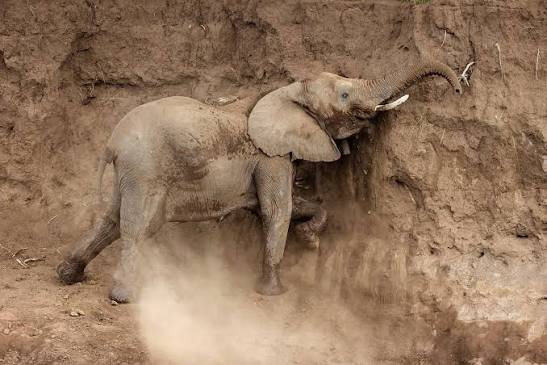
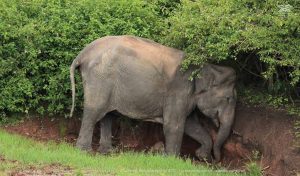
Elephants use their tusks to loosen and break apart compacted soil or exposed rock face, then use the trunk to gather and transfer the loosened material to the mouth, a process that can take genuinely extended periods at a productive site, with an individual elephant sometimes spending an hour or more methodically working a single excavation before moving on. Tusk wear patterns documented at heavily used sites show genuine physical evidence of this repeated digging, with grooves and smoothing consistent with years of the same excavation behaviour at the same specific spot.
Why Some Sites Attract Considerably Larger Gatherings Than Others
The richest known mineral deposits can genuinely draw multiple family groups converging on the same location, sometimes dozens of elephants present simultaneously, a concentration that reflects both the deposit’s mineral quality and its rarity within the wider region, since elephants will travel meaningfully further to reach a genuinely superior site rather than settling for a mediocre, closer alternative.
Do Other Species Practice Geophagy Too?
Elephants aren’t unique in this behaviour, and several other East African herbivores, including buffalo and various antelope species, are documented visiting mineral-rich soil deposits, though generally in smaller, less concentrated gatherings than elephants, whose considerably greater sodium requirement given their body size makes the behaviour genuinely more central to their overall diet than for most other species sharing the same landscape.
Where to Observe Elephant Geophagy in East Africa
While specific excavation sites vary by park and aren’t always accessible to standard game drives, elephant populations at destinations like Amboseli and Murchison Falls are known to practice mineral-seeking behaviour, and guides familiar with a specific herd’s routine can often anticipate when a visit to a known site is likely.
Best Time of Year for Elephant Viewing
Elephants are visible year-round given resident populations across East Africa’s major parks. See our regional best-time guide for how East Africa’s seasonal patterns generally affect wider game viewing.
Photographing Elephant Digging Behaviour
Capturing an elephant using its tusks to work a soil face offers a genuinely different behavioural photograph than a standard grazing or drinking shot. See our camera gear guide for broader equipment recommendations.
What to Pack for Elephant-Focused Game Drives
Standard game drive gear – neutral clothing, sun protection, and binoculars – covers most of what elephant viewing requires. If your wider itinerary includes gorilla trekking, our gorilla trekking packing list covers that portion separately.
Why This Behaviour Matters for Conservation Planning
Understanding which specific deposits a local elephant population depends on has genuine conservation relevance, since protecting access to these sites, and the travel corridors herds use to reach them, is increasingly factored into habitat corridor planning across landscapes where human settlement and agriculture have fragmented traditional elephant movement patterns.
The Famous Underground Caverns Some Herds Have Carved
At a handful of exceptionally long-used sites, decades or even centuries of repeated digging by successive generations of elephants have hollowed out genuine underground caverns extending several metres into a hillside, dark enough that elephants entering them navigate largely by memory, touch, and scent rather than sight. These caverns represent an extraordinary cumulative record of behaviour, since no single elephant’s lifetime of digging could plausibly excavate a chamber that size, meaning the site itself is physical evidence of knowledge and habit passed down and reinforced across many elephant generations using the identical spot.
Why Geophagy Sometimes Genuinely Helps With Digestion Too
Beyond pure mineral supplementation, some researchers propose clay consumption may also help buffer stomach acidity or bind plant toxins and tannins present in certain browse species, a secondary digestive benefit documented in several other mammal species that practice geophagy, though the mineral-supplementation explanation remains the better-supported and more consistently observed driver of the behaviour specifically in elephants.
How Calves Learn the Behaviour From Watching, Not Instinct
Young elephants are genuinely observed watching adult family members dig and eat soil for a considerable period before attempting the behaviour themselves, and calves typically follow the exact excavation spot an adult is currently using rather than digging independently nearby, direct behavioural evidence that geophagy site knowledge, like so much else in elephant society, is learned through observation of the matriarch and other older females rather than being instinctive.
Seasonal Patterns in Site Visitation
Visitation to known mineral sites genuinely increases during and after the dry season, when available grazing becomes more fibrous and less nutrient-dense, meaning herds face a compounded mineral shortfall on top of the year-round sodium scarcity already typical of the region, making a mineral-rich site visit considerably more urgent during these leaner months than during the lush growth of the wet season.
Why This Behaviour Sometimes Brings Elephants Into Contact With People
Because some of the richest known mineral deposits sit close to or within community land bordering protected areas, elephant travel toward a favoured geophagy site occasionally creates genuine friction with farmers whose land lies along the route, adding this specific behaviour to the broader list of factors conservation and community liaison teams consider when mapping elephant corridors near protected park boundaries.
What Guides Look For to Anticipate a Site Visit
Experienced guides tracking a known family group can sometimes anticipate an approaching geophagy visit by reading a herd’s travel direction and timing against its established seasonal pattern, similar to how they’d read other predictable elephant behaviour to position a vehicle ahead of an anticipated sighting rather than simply following the herd reactively.
Why This Detail Enhances a Standard Elephant Sighting
Learning to recognise digging behaviour, rather than assuming an elephant working a soil bank is simply idle or foraging normally, transforms the sighting into a considerably more scientifically engaged encounter, especially alongside other elephant behaviour worth understanding during the same game drive, rather than treating every sighting as visually identical.
A Genuinely Overlooked Behaviour Worth Watching For
Because digging happens relatively slowly and quietly compared to more dramatic wildlife action, it’s easy for a passing vehicle to miss entirely, making it worth specifically asking a guide whether any known geophagy sites lie along that day’s planned route.
Frequently Asked Questions
Why do elephants eat soil?
To supplement sodium, calcium, and other minerals their plant-based diet doesn’t reliably supply in sufficient quantity, particularly sodium.
Do elephants dig at random soil, or specific spots?
Specific, mineral-rich deposits, with matriarchs passing down knowledge of known sites across generations rather than digging opportunistically.
Do other animals eat soil for the same reason?
Yes, buffalo and various antelope species also practice geophagy, though generally in smaller gatherings than elephants.
How do elephants actually dig into these deposits?
Using tusks to loosen compacted soil or rock, then the trunk to gather and transfer material to the mouth.
Is this behaviour important for conservation planning?
Yes, genuinely so – protecting access to known sites and the corridors herds use to reach them is increasingly factored into habitat planning.
Ready to Plan Your East Africa Safari?
Whether observing elephant behaviour firsthand, the Big Five, or a full East Africa itinerary is your priority, our team can build a trip matched to your interests. Get in touch with our team below today and let’s start planning your complete safari itinerary together.




No comment