
Where to See Lions on an African Safari
Lions are the single most requested animal on an East African safari, and unlike leopard or rhino, they’re genuinely findable across most savanna parks in the region – the real question isn’t whether you’ll see a lion, but which park gives you the best odds, and whether you want the ordinary experience or something more unusual, like Uganda’s famous tree-climbing prides.
Uganda: Queen Elizabeth, Murchison Falls, and Kidepo
Queen Elizabeth National Park is Uganda’s best lion destination, and its Ishasha sector holds one of only two known tree-climbing lion populations in Africa, where prides rest draped over the branches of large fig and acacia trees during the heat of the day – a behaviour still not fully explained by researchers, though relief from biting flies and a better vantage point over prey are the leading theories. Murchison Falls National Park holds healthy prides too, spread across its vast northern savannah, while Kidepo Valley, Uganda’s most remote park, offers a wilder, lower-traffic lion encounter for travelers willing to make the long journey northeast.
Kenya: Masai Mara, Amboseli, and Tsavo
Kenya’s Masai Mara holds some of the most-studied lion prides in the world, with individual prides tracked and named by researchers for decades, making sightings both frequent and unusually well-documented by guides who often know individual lions by name. Amboseli and Tsavo both hold resident populations too, with Tsavo carrying the added historical notoriety of the “man-eaters of Tsavo” from the 1890s, a pair of maneless males that killed dozens of railway workers before being hunted down – today’s Tsavo lions are simply normal, healthy prides, but the story still shapes the park’s reputation.
Tanzania: Serengeti and Ngorongoro Crater
The Serengeti holds one of the largest lion populations on the continent, spread across an ecosystem large enough to support multiple large prides without excessive territorial conflict. Ngorongoro Crater, however, is often considered the single best place in Africa to see lions specifically, thanks to an unusually high density packed into a contained, walled caldera – the crater’s isolation has also led to some inbreeding within its lion population over past decades, a genuine conservation concern that researchers continue to monitor. Serengeti prides also follow the wildebeest migration loosely throughout the year, positioning themselves along predictable corridors and river crossing points during the migration season, which makes lion sightings there feel closely tied to the same seasonal rhythm that draws most visitors to the park in the first place.
Congo: A Different Kind of Big Cat Country
The Democratic Republic of Congo’s Virunga National Park is not a classic lion safari destination – its terrain is dominated by dense forest and volcanic landscape rather than open savannah, and lion sightings there are rare and unreliable compared to the grassland parks further east. Travelers visiting Congo are almost always there for gorilla trekking or the Nyiragongo volcano hike rather than a Big Five checklist, and it’s worth setting that expectation clearly rather than assuming Congo offers the same lion-viewing odds as Uganda, Kenya, or Tanzania.
Rwanda: Akagera National Park’s Lion Comeback
Rwanda’s lions were completely wiped out during the genocide and its aftermath in the 1990s, when the collapse of park management allowed cattle herders and poachers into former lion territory. In 2015, seven lions were reintroduced to Akagera National Park from South Africa, and the population has grown steadily since – one of the more remarkable wildlife recovery stories in East Africa, alongside Uganda’s own rhino reintroduction project at Ziwa.
Best Time of Day and Year for Lion Sightings
Lions are most active at dawn, dusk, and after dark, spending much of the hottest part of the day resting in shade – which is exactly why guided night game drives, where permitted, tend to produce the most dramatic lion sightings, including active hunts rarely witnessed during standard daytime hours. Across the region, the dry seasons (roughly December to February and June to September) make spotting easier overall, since thinner vegetation and concentrated water sources bring both predators and prey into more open, visible terrain.
How Guides Find Lions
Experienced driver-guides rely on a combination of radio communication with other vehicles in the park, tracking fresh paw prints and territorial scent-marking, and reading the alarm calls of other animals like impala and baboons, which often signal a predator’s presence long before it’s visually spotted. This is one of the clearest reasons a guided safari consistently outperforms self-driving for predator sightings – see our Big Five guide for how this applies across all five species, not just lion.
Combining Lion Safaris With Gorilla Trekking
Uganda and Rwanda both allow you to pair lion-focused game drives with mountain gorilla trekking on the same trip, something no pure Big Five destination like Kenya or Tanzania can offer. Our gorilla trekking FAQ covers permits and planning for that portion of a combined itinerary in detail, and our Uganda Big Five guide breaks down exactly which parks to combine for the strongest overall itinerary.
Lion Prides vs Nomadic Males
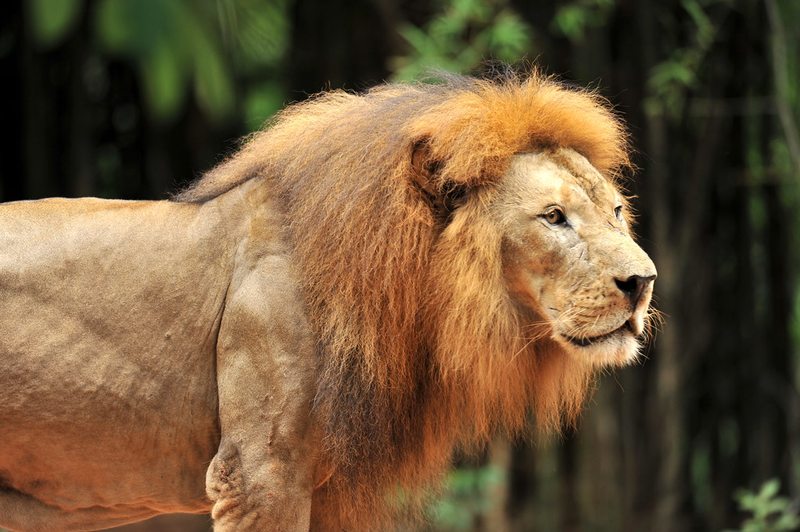
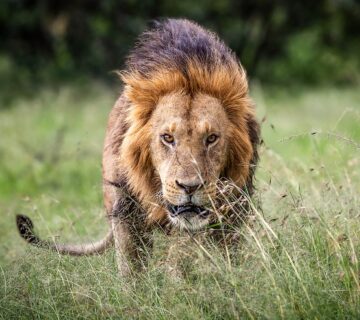
Most sightings you’ll encounter are of an established pride – a dominant male or male coalition, several related females, and cubs of varying ages, all sharing a defined territory. Nomadic males, typically younger lions pushed out of their birth pride to avoid inbreeding, wander alone or in small bachelor groups until they’re strong enough to challenge for territory of their own, and sightings of these wandering males are often more unpredictable but can produce dramatic territorial confrontations if they cross into an established pride’s range.
Lion Safety on Safari
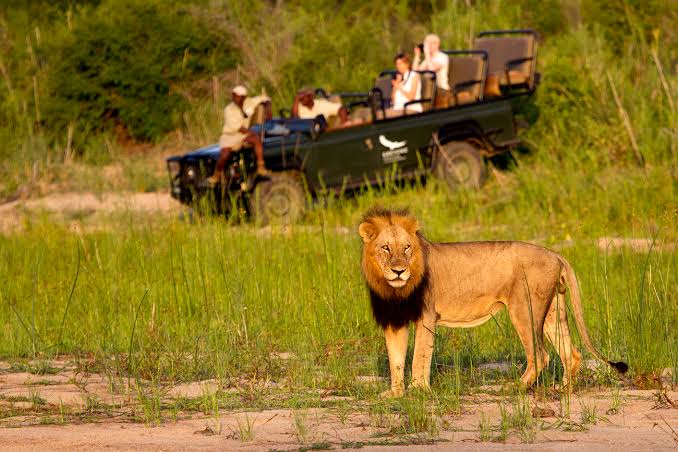
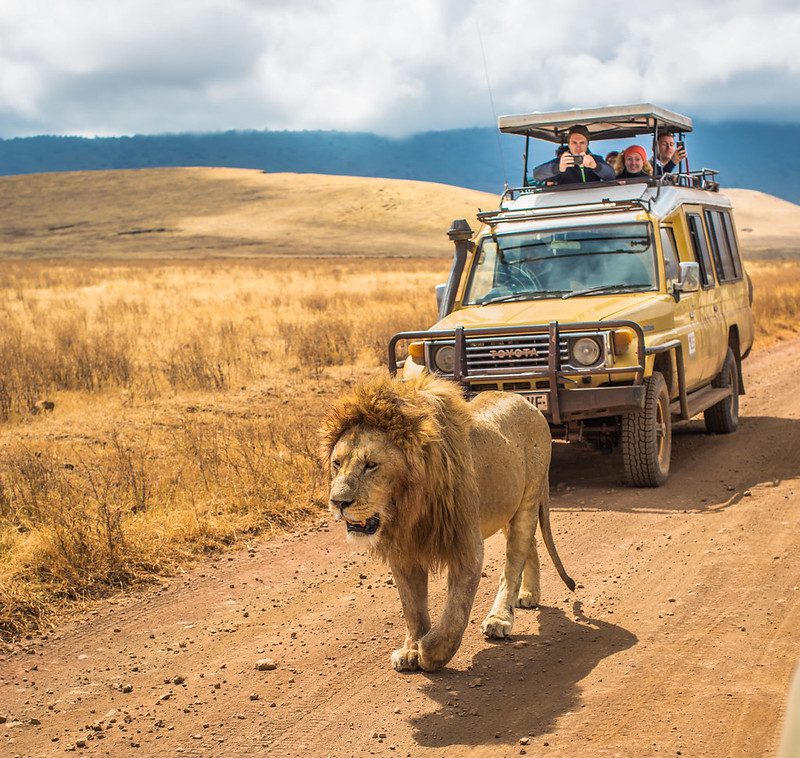
Lions have limited depth perception and, contrary to popular belief, generally don’t recognize a vehicle’s occupants as prey as long as everyone stays seated and doesn’t stand up or extend limbs outside the vehicle silhouette – the shape of the car itself is what keeps you safe, not distance alone. Walking safaris near lion territory are only conducted with armed ranger escorts for exactly this reason, and getting out of a vehicle near a pride, even briefly, is one of the more serious safety violations a guide can allow.
Photographing Lions on Safari
Lions reward patience more than any other Big Five species – the best images typically come from waiting near a resting pride during the cooler, more active hours around dawn and dusk rather than midday, when they’re usually asleep in shade. A telephoto lens in the 200-400mm range covers most sightings well, and shooting from a low angle, level with the pride rather than down from a raised vehicle roof, tends to produce noticeably more striking results. Golden hour light, common on both ends of the East African day, adds warm tones to a lion’s mane that midday light simply can’t match.
How Many Lions Are Left in Africa?
The African lion population has declined by roughly half over the past 25 years, driven by habitat loss, human-wildlife conflict, and a collapse in prey populations outside protected areas, with current estimates putting the continental population at somewhere between 20,000 and 25,000 individuals. East Africa’s major parks – the Serengeti-Mara ecosystem, Uganda’s savanna parks, and Rwanda’s Akagera – represent some of the most secure strongholds left, which is part of why tourism revenue and the conservation funding it generates matters so directly to the species’ survival.
What to Pack for a Lion-Focused Safari
Neutral-coloured clothing, sun protection, a warm layer for early morning game drives, binoculars, and a camera with a reasonable zoom cover most of what a lion safari requires. If your trip also includes gorilla trekking in Uganda or Rwanda, our gorilla trekking packing list covers the additional forest-specific gear for that portion of the itinerary, and it’s worth checking visa requirements well ahead of travel if Uganda is part of your route.
Frequently Asked Questions
Which country has the highest chance of a lion sighting?
Kenya’s Masai Mara and Tanzania’s Ngorongoro Crater generally offer the most reliable single-visit lion sightings, thanks to high resident density and decades of pride monitoring, though Uganda’s Queen Elizabeth National Park offers the added draw of tree-climbing behaviour found almost nowhere else in Africa.
Can you see lions and gorillas on the same trip?
Yes, in Uganda or Rwanda, where savanna parks holding lion populations sit only a few hours’ drive from gorilla trekking parks – a combination not possible in Kenya or Tanzania.
Are night game drives the best way to see lions hunting?
Generally yes, since lions are most active after dark, though night drives are only permitted in specific parks and conservancies and typically require staying at a lodge inside or bordering the park itself.
Do lions ever attack safari vehicles?
Almost never, provided passengers remain seated and don’t extend limbs or stand up through the roof hatch – lions generally treat a vehicle with occupants inside as a single large, unfamiliar shape rather than as prey, which is precisely why guides insist on staying seated even when a pride walks close alongside the car.
Ready to Plan Your Lion Safari?
Whether you want Uganda’s famous tree-climbing lions, the Mara’s storied prides, or Ngorongoro Crater’s dense population, our team can build an itinerary around the lion experience you’re after. Get in touch below and let’s start planning.


No comment