
Virunga National Park: A Complete Guide to Congo’s Oldest Park
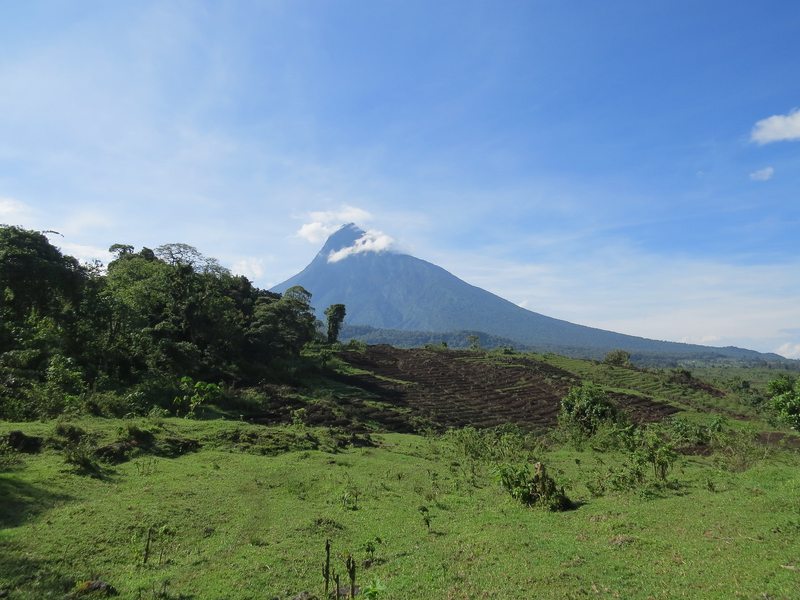
Virunga National Park, in the eastern Democratic Republic of Congo, is Africa’s oldest national park, established in 1925, and one of the most biodiverse protected areas on the continent – home to mountain gorillas, an active volcano you can sleep on the rim of, and a conservation story shaped as much by decades of regional conflict as by its wildlife. It’s also one of the least-visited of the three mountain gorilla trekking destinations, largely due to the additional planning and security awareness a Congo trip requires compared to Uganda or Rwanda, which means travelers who do make the trip are typically rewarded with a genuinely uncrowded, off-the-beaten-path experience. Here’s what actually visiting Virunga involves.
Africa’s Oldest National Park
Virunga was established under Belgian colonial administration in 1925, originally to protect the mountain gorillas of the Virunga Massif, the same volcanic mountain range shared with Rwanda and Uganda. Its boundaries stretch from the Virunga volcanoes in the south to the Rwenzori Mountains in the north, covering an unusually wide range of habitats – active volcanoes, savannah, forest, and glaciated peaks – within a single park, which is part of why it holds more bird, mammal, and reptile species than any other protected area in Africa.
Gorilla Trekking in Virunga
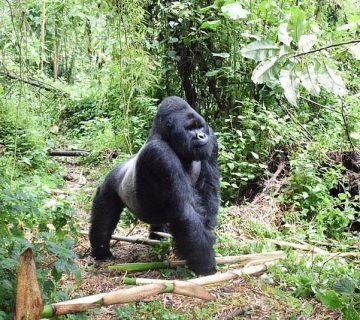
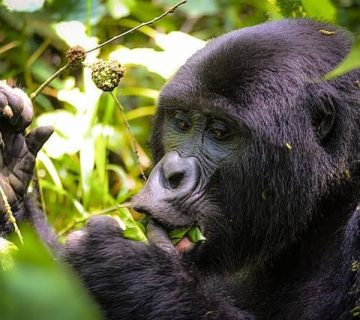
Virunga protects a significant share of the world’s remaining mountain gorillas, tracked across several habituated families in the Congolese sector of the Virunga Massif. Trekking logistics are broadly similar to gorilla trekking in Uganda or Rwanda – a briefing, a guided hike to the family’s location, and a strictly enforced one-hour visit – but Congo’s permits are consistently the least expensive of the three gorilla trekking countries, a meaningful factor for budget-conscious travelers willing to accept the additional logistics of visiting eastern Congo.
Climbing Mount Nyiragongo
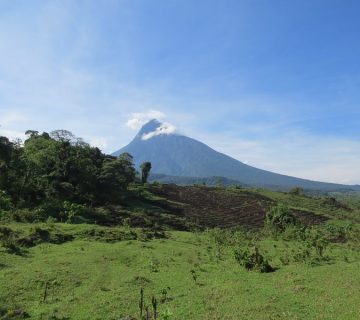
Virunga’s other headline attraction is Mount Nyiragongo, an active volcano holding the largest lava lake on Earth. The standard visit is an overnight trek: hikers climb over four to six hours to summit huts perched on the crater rim, spend the night watching the glowing lava lake below, and descend the following morning. It’s physically demanding – cold, high-altitude camping conditions at the top come as a surprise to many visitors expecting typical equatorial warmth – but the experience of sleeping within metres of an active lava lake is genuinely unique in Africa, and arguably in the world.
Is It Safe to Travel to Eastern Congo?
This is the single most common question we’re asked about Virunga, and it deserves an honest answer rather than a marketing one. Eastern Congo has experienced significant instability over the past three decades, and Virunga’s rangers have paid an extraordinarily high price for protecting the park – more rangers have died defending Virunga than in almost any other protected area in the world. The park periodically closes to tourism when security conditions deteriorate in specific sectors, and any trip should be planned through an operator who monitors current advisories closely and adjusts routes accordingly, rather than a fixed itinerary booked far in advance without flexibility.
Getting to Virunga
Most visitors reach Virunga via Goma, Congo’s main eastern gateway city, itself reachable by road or short flight from Kigali, Rwanda – a considerably easier route than trying to enter Congo from Kinshasa given the country’s size and limited internal transport infrastructure. The Goma-Kigali route is well established for tourism specifically because it allows Virunga to be combined naturally with a wider Rwanda itinerary, including gorilla trekking in Volcanoes National Park or a stop at Akagera National Park for Big Five game viewing.
Virunga’s Wildlife Beyond Gorillas
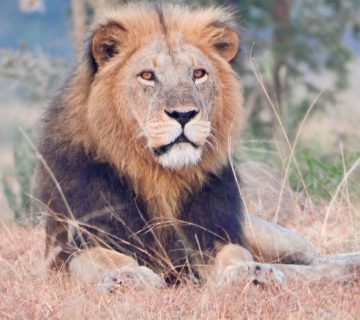
While gorillas and the volcano dominate Virunga’s reputation, the park’s savannah sector historically held elephant, buffalo, hippo, and lion populations too, alongside the Congolese sector of the Rwenzori Mountains further north. Decades of instability have taken a heavy toll on these populations compared to the more strictly protected savannah parks of Uganda, Kenya, and Tanzania, and Virunga today is best understood as a gorilla and volcano-focused destination rather than a conventional Big Five safari – see our Big Five guide for where to go instead if that’s your primary goal.
Virunga’s Rangers: The Human Cost of Conservation
Virunga employs one of the largest ranger forces of any African park, and their work has come at a genuinely severe cost – hundreds of rangers have lost their lives protecting the park from armed groups, poachers, and militia activity over the decades since the country’s political instability began. Tourism revenue, including gorilla permits and lodge fees, funds this ranger force directly, along with community development projects around the park’s boundaries, making a Virunga visit a meaningfully direct contribution to one of the most dangerous conservation efforts anywhere in the world.
The park’s rangers are drawn heavily from local communities around Virunga’s boundaries, and the ranger program has become one of the region’s more significant sources of stable employment, alongside hydroelectric and agricultural projects the park authority has developed specifically to reduce local communities’ economic dependence on the forest’s resources, and by extension reduce the poaching and illegal charcoal production pressures that historically drove conflict with the park.
Lake Kivu: An Easy Add-On From Goma
Lake Kivu, one of Africa’s Great Lakes, sits directly alongside Goma, making it a natural, relaxed add-on either before or after the more physically demanding portions of a Virunga trip. Unlike most of the East African Rift lakes, Kivu is one of only a handful of lakes in the world known to undergo periodic limnic eruptions, where dissolved gas trapped at depth can release suddenly – a fascinating rather than immediately dangerous geological fact for visitors, and one guides are generally happy to explain in more detail on a lakeside stop.
What to Pack for Virunga
Gorilla trekking gear is broadly the same as packing for Uganda or Rwanda – waterproof boots, gloves, neutral clothing, and rain protection. The Nyiragongo climb additionally requires warm layers for the cold summit camp, since temperatures at altitude drop sharply overnight despite Congo’s equatorial location, and a headlamp is essential for the pre-dawn portions of the ascent and descent.
Congo Visa Requirements
A DRC visa is required for all foreign visitors and is typically arranged in advance through a tour operator working directly with Virunga’s own visa office, rather than a conventional embassy application – a process that differs meaningfully from Uganda’s visa system or Rwanda’s visa-on-arrival option, and one more reason to book Congo travel through an operator experienced with the park’s specific procedures rather than attempting it independently.
Best Time to Visit Virunga
Virunga can be visited year-round, though the region’s two dry seasons, roughly June to September and December to February, offer firmer trails for both gorilla trekking and the Nyiragongo climb. The wet season brings lusher scenery and fewer visitors, at the cost of muddier, more physically demanding hikes on both the gorilla trekking trails and the volcano ascent.
Congo vs Uganda and Rwanda for Gorilla Trekking
All three countries protect the same Virunga mountain gorilla population across a shared, contiguous mountain range, so the gorillas themselves don’t differ meaningfully between countries – what differs is cost, infrastructure, and travel logistics. Congo’s permits are the cheapest of the three, Rwanda’s are the most expensive but offer the shortest, most comfortable drive from Kigali, and Uganda sits in between on both price and accessibility while adding Big Five game drives as a realistic add-on that Congo and Rwanda can’t match as easily.
Combining Virunga With Rwanda
Because Goma sits just across the border from Rwanda, most Virunga itineraries we build combine it with a few days in Rwanda – either Volcanoes National Park for a second, separate gorilla trekking experience on the Rwandan side of the same mountain range, or Akagera National Park for Big Five game viewing and Rwanda’s own remarkable lion and rhino reintroduction story, a conservation comeback in some ways comparable to Uganda’s rhino reintroduction at Ziwa.
Frequently Asked Questions
Is Virunga cheaper than gorilla trekking in Uganda or Rwanda?
Yes, Congo consistently offers the least expensive gorilla permits of the three trekking countries, though total trip cost also depends on flights, visa arrangements, and accommodation standards, which can offset some of the permit savings.
Do I need special travel insurance for Congo?
We strongly recommend comprehensive travel insurance that explicitly covers the specific region of DRC you’re visiting, given the security situation in parts of eastern Congo, and this is worth arranging well before booking permits rather than as an afterthought.
Can I climb Nyiragongo without also trekking gorillas?
Yes, the volcano hike and gorilla trekking are booked and priced completely separately, so it’s entirely possible to visit Virunga purely for the Nyiragongo overnight climb if gorilla permits aren’t part of your current budget or itinerary plans.
Ready to Plan a Congo Safari?
Whether you’re drawn to Virunga’s gorillas, the Nyiragongo volcano, or combining Congo with a wider Rwanda itinerary, our team monitors current conditions closely and can build a realistic, safely-routed trip. Get in touch below and let’s start planning.

No comment