

Akagera National Park is Rwanda’s genuine Big Five comeback story, a park that lost its lions to local extinction and its rhinos to poaching within living memory, then rebuilt both from scratch through one of Africa’s most deliberate wildlife reintroduction programs. This guide covers how that recovery actually happened, what it means for a visit today, and the practical details of planning a trip to a park that looked, not so long ago, like it might not survive at all.
Key Highlights
- Rwanda’s only Big Five park, and the only savannah park in the country, covering roughly 1,122 square kilometers
- Lions were locally extinct here until seven were reintroduced from South Africa in 2015; the population has since multiplied more than sevenfold
- Black rhino returned in 2017 and 2019 after a decade-long absence, followed by white rhino in 2021
- Not a single elephant, lion, or rhino has been poached in the park for more than a decade, a genuinely rare conservation record
- Managed by African Parks in partnership with the Rwanda Development Board since 2010
How Close Akagera Came to Losing Everything
A Park Nearly Lost After the Genocide
Following the 1994 Genocide Against the Tutsi, Akagera was reduced to about two-thirds of its original size to accommodate returning Rwandan refugees resettling on former park land, and the disruption that followed devastated the ecosystem. By 2010, illegal poaching and an estimated 30,000 head of cattle grazing illegally inside park boundaries had pushed wildlife populations to a fraction of what they’d once been, and the park’s large predators, lions included, had disappeared entirely.
African Parks Takes Over in 2010
In 2010, African Parks took over management of Akagera in partnership with the Rwanda Development Board, and the recovery that followed became one of the most closely watched conservation turnarounds in East Africa. Fencing, ranger training, and a serious anti-poaching program came first, laying the groundwork for what would become a series of deliberate species reintroductions rather than simply hoping remaining wildlife would recover on its own.
Why Akagera National Park Specifically Mattered
Rwanda’s international reputation rests heavily on gorilla trekking in the misty Virunga volcanoes, but Akagera National Park was always the country’s only real savannah wildlife destination, meaning its collapse threatened to leave Rwanda with essentially no Big Five tourism offering at all. Rebuilding it wasn’t just an ecological project, it restored an entire category of tourism experience Rwanda would otherwise have had to send travelers across the border to find.
The Big Five Comeback, Species by Species
Lions: Zero to a Thriving Pride
Lions had been locally extinct in Akagera for roughly fifteen years before seven individuals were translocated from South Africa in 2015, a genuinely high-stakes reintroduction given how much can go wrong moving apex predators into a landscape that has adapted to their absence. It worked: by 2022, the population had multiplied more than sevenfold from that founding group, and lion sightings are now a realistic part of a standard Akagera game drive rather than a rare bonus.
Black Rhino: Back After a Decade
Black rhino returned to Akagera in two stages, eighteen individuals translocated from South Africa in May 2017, marking the species’ return after a decade-long absence, followed by five more moved from the Czech Republic in June 2019 in what became the longest rhino translocation ever made from Europe to Africa. White rhino followed in 2021, giving Akagera both rhino species and completing the park’s Big Five lineup alongside its existing elephant, buffalo, and leopard populations.
A Record Worth Taking Seriously
For more than a decade now, not a single elephant, lion, or rhino has been poached inside Akagera, a milestone that reflects fifteen years of sustained, well-funded anti-poaching work, consistent ranger patrols, community engagement around the park boundary, and real investment rather than luck. Large mammal numbers overall have more than doubled, from roughly 4,476 counted in 2010 to over 11,338 by 2023, a recovery curve that puts Akagera National Park among the more genuine conservation success stories on the continent rather than a marketing claim built on a single good year.
Elephant, Buffalo, and Leopard Held On Throughout
Unlike lions and rhino, Akagera National Park’s elephant, buffalo, and leopard populations survived the park’s difficult years without needing reintroduction, though all three benefited enormously from the same fencing and anti-poaching investment that made the lion and rhino programs possible. Their steadier presence throughout the recovery is part of why Akagera could credibly aim for full Big Five status once lions and rhino were back, rather than starting the whole ecosystem from zero.
What a Visit to Akagera National Park Actually Looks Like
Game Drives Across Rwanda’s Only Savannah Park
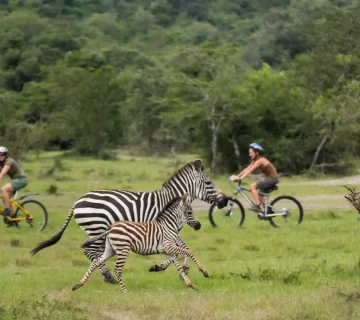
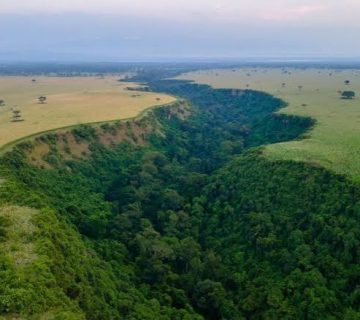
Akagera is Rwanda’s only savannah park and its only Big Five destination, a genuinely different landscape from the misty volcanic forests most visitors associate with Rwandan wildlife tourism, open grassland and acacia woodland rolling along the Tanzanian border. Standard vehicle game drives cover the park’s main circuits, with the best predator activity typically concentrated in the early morning and late afternoon.
Boat Safaris on Lake Ihema
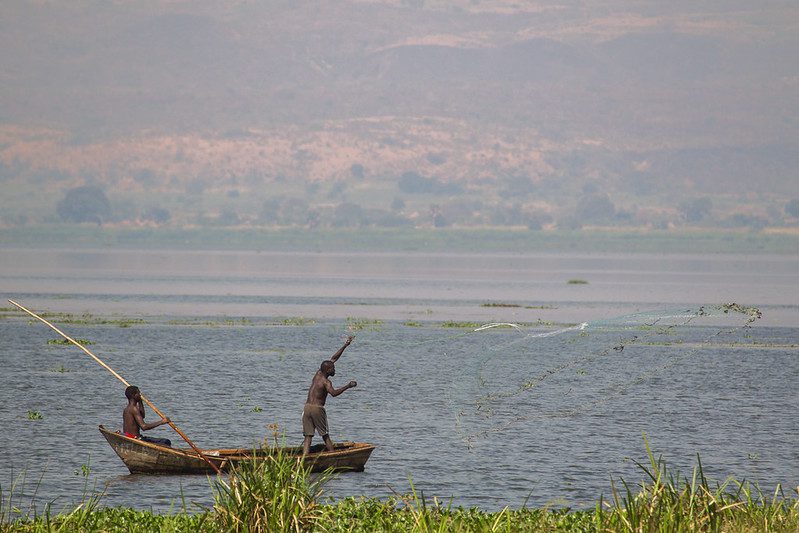
Lake Ihema, one of several lakes scattered through the park alongside Gishanju, Ihago, Mihindi, Rwanyakizinga, and Shakani, offers a genuinely different perspective via boat safari, reliable hippo and crocodile viewing along with strong birdlife that a vehicle-based game drive simply can’t match. It’s worth building at least one boat outing into a multi-day Akagera itinerary specifically for that water-level contrast to the savannah game drives.
Where to Stay
Accommodation inside and around Akagera National Park ranges from a small number of upscale lodges, Magashi Camp in the park’s northern sector among the best known, down to more affordable tented camps and a public campsite for budget travelers. Because the park is compact enough to cross in a day, where you stay matters less for logistics than it might at a larger park, though northern-sector lodges do sit closer to some of the stronger recent lion activity.
Planning Your Visit
Entry Fees
International visitors pay 100 US dollars per adult and 50 US dollars per child, while visitors from African countries outside the East African Community pay 50 US dollars for adults and 25 for children. East African Community residents pay 50 US dollars for adults, and Rwandan and EAC citizens pay a flat 15,000 Rwandan francs, roughly 16 US dollars. Children aged six to twelve receive a 50 percent discount across all categories, and those under six enter free.
Getting There and Best Time to Visit
Akagera sits a few hours’ drive from Kigali, making it a genuinely practical add-on to a gorilla trekking trip in Volcanoes National Park rather than a separate dedicated journey. The dry seasons, roughly June through September and December through February, offer the strongest game viewing as wildlife concentrates around the park’s lakes and remaining water sources.
Frequently Asked Questions
Is Akagera really a Big Five park now?
Yes. With lions and both rhino species successfully reintroduced alongside existing elephant, buffalo, and leopard populations, Akagera genuinely offers all five, a claim very few East African parks outside Kenya and Tanzania’s northern circuit can make.
Can I combine Akagera with gorilla trekking in Rwanda?
Yes, and it’s one of the most common ways to build a Rwanda itinerary, pairing Volcanoes National Park’s gorilla trekking with a few days of Big Five game viewing at Akagera on the same trip.
How reliable are lion sightings at Akagera today?
Reasonably reliable given how far the population has grown since 2015, though as with any wild predator sighting nothing is ever guaranteed on a single game drive.
Is Akagera’s conservation story genuinely trustworthy, or just marketing?
The numbers hold up: a documented decade-plus with zero elephant, lion, or rhino poaching and a large mammal population that has more than doubled since 2010 under transparent African Parks management represent a real, measurable recovery rather than a promotional claim.
Does Akagera charge the same fees as Rwanda’s gorilla permits?
No. Gorilla trekking permits in Rwanda cost far more, around 1,500 US dollars per person. Akagera’s entry fees are a fraction of that, making it a comparatively affordable addition to a Rwanda itinerary already built around gorilla trekking.
Recommended Safaris
Akagera pairs naturally with Rwanda’s gorilla trekking circuit. See our Mgahinga Gorilla National Park guide for how a Big Five stop at Akagera can combine with primate trekking nearby, and our Bwindi Impenetrable National Park guide for Uganda’s equivalent gorilla destination. Travelers planning a longer Rwanda-Uganda trip should also look at the 10-Day Rwanda & Uganda Gorilla Adventure Group Safari and the 13 Days Rwanda In-Depth Safari, both of which include time at Akagera. When you are ready to plan a trip built around Akagera’s Big Five, get in touch with our team and we will help you work out the logistics from Kigali.

No comment