
Leopards in Akagera National Park are the park’s most elusive Big Five member, and unlike lion and rhino, they never disappeared from Rwanda entirely, quietly persisting through the country’s most difficult years even as the park’s other predators vanished around them almost entirely.
Where to Find Leopards in Akagera
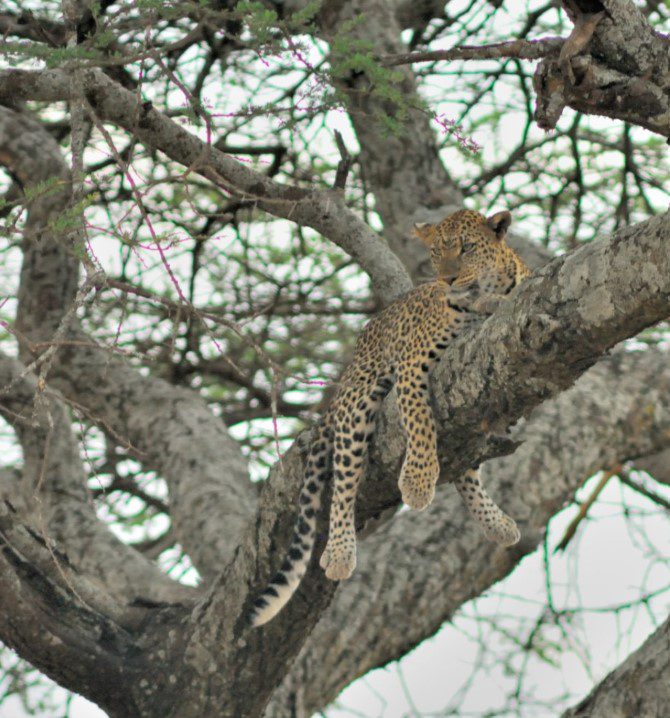
Leopards favour the denser woodland patches scattered across Akagera’s savannah, along with rocky outcrops that offer both cover and elevated vantage points, avoiding the open grassland that lion and buffalo prefer. Experienced guides know specific wooded areas worth checking on any given drive, though sightings remain genuinely rarer here than for the park’s other Big Five species.
Why Leopards Survived Akagera’s Difficult Years
Leopards’ solitary, adaptable nature and lower dietary reliance on the largest prey species likely helped them persist through the habitat pressure and reduced ranger presence that eliminated lion and rhino from Akagera during the years following 1994. Their continuous presence, even through the park’s lowest point, makes them a quieter but genuinely important thread of ecological continuity in Akagera’s broader recovery story.
Best Time of Day for Leopard Sightings
Leopards are most active around dawn, dusk, and after dark, making early morning and late afternoon game drives the strongest windows for a sighting in Akagera, much as in any other leopard destination. Given the park’s genuinely good road network, an early departure to reach known wooded areas at first light meaningfully improves your odds.
Akagera’s Full Big Five Picture
Leopard is one of five species making up Akagera’s now-complete Big Five, alongside reintroduced lion and rhino, plus elephant and buffalo. See our Akagera Big Five overview for the park’s wider conservation comeback story.
Leopard Hunting Behaviour in Akagera
Akagera’s leopards hunt primarily at night, targeting antelope and smaller mammals across the park’s savannah and woodland mosaic, before typically hoisting larger kills into tree branches to protect them from the park’s reintroduced lion prides and hyenas competing for the same prey base. This kill-caching behaviour, when spotted, offers one of the more reliable indirect signs of leopard presence even when the leopard itself isn’t currently visible.
How Akagera Compares to Uganda’s Leopard Parks
Uganda’s Murchison Falls and Queen Elizabeth both offer genuinely elusive leopard populations comparable to Akagera’s, with sighting odds depending more on guide knowledge and patience than any dramatic difference in underlying population density between the parks.
Self-Drive vs Guided Safaris for Leopard Viewing
Given how elusive leopards are anywhere, a guided safari makes a genuine difference here more than for almost any other Akagera species, since local knowledge of current sightings and specific wooded areas worth checking meaningfully improves the odds of a rare encounter. Most visitors combine guided game drives with the park’s separate Lake Ihema boat safari for the most efficient use of a day in the park, and experienced guides also share radio updates on recent sightings across different sectors as they come in.
Photographing Akagera’s Leopards
Leopard sightings tend to be brief and often partially obscured by vegetation, so a fast telephoto lens and quick reflexes make a genuine difference to capturing a usable shot when the opportunity arises. Early morning and late afternoon light, when leopards are most active, also happens to offer the most flattering, softest conditions for photography generally, rewarding photographers willing to prioritise these quieter windows over the busier midday hours.
Leopard Conservation in Akagera
Leopards face less direct poaching pressure than species valued for ivory or horn, and their continuous presence through Akagera’s most difficult years reflects a genuine adaptability that has served the species well across changing conditions. Ongoing ranger patrols and the boundary fence completed in 2013 protect leopard habitat alongside the rest of the park’s recovering wildlife, even without species-specific leopard research comparable to the park’s reintroduced lion and rhino monitoring.
What to Pack for an Akagera Safari
Standard game drive gear – neutral clothing, sun protection, and binoculars – covers most of what Akagera requires, and given the park’s warmer, lower-altitude savannah climate compared to Volcanoes National Park, lighter layers are worth prioritising. Our gorilla trekking packing list covers the cooler high-altitude portion of a combined Rwanda itinerary in more detail.
Combining Leopard Viewing With Gorilla Trekking
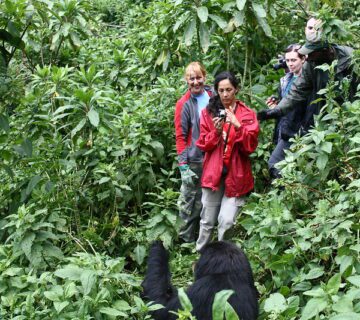
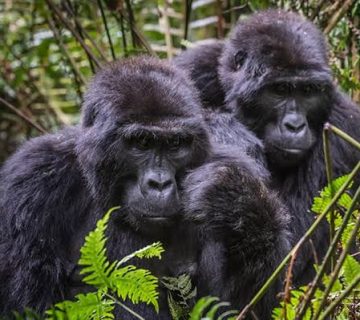
Many Rwanda itineraries now combine Akagera’s Big Five game drives with gorilla trekking in Volcanoes National Park, giving travelers a genuinely complete Rwanda wildlife experience spanning both savannah and mountain forest ecosystems. See our guide to timing a combined Rwanda itinerary for how to sequence both experiences efficiently.
Why Patience Matters More for Leopard Sightings
Unlike lion or buffalo, where a single sighting often means an easy, extended viewing opportunity, leopard encounters in Akagera are frequently brief, sometimes lasting only seconds before the animal melts back into cover. Guides who work the park regularly recommend building in extra time and setting realistic expectations specifically around leopard sightings, treating any encounter as a genuine bonus rather than a guaranteed part of the itinerary.
Getting to Akagera National Park
Akagera sits in eastern Rwanda, roughly two to three hours’ drive from Kigali, making it a genuinely convenient add-on for travelers already spending time in the capital before or after gorilla trekking further west. This relatively short transfer distance is part of why combining Akagera with Volcanoes National Park has become such a popular way to build a complete Rwanda itinerary within a genuinely manageable timeframe.
Leopard Territorial Behaviour in Akagera’s Landscape
Leopards are fiercely territorial, and individual leopards in Akagera likely maintain home ranges shaped by the park’s mix of open savannah and denser woodland patches, marking and defending territory through scent and visible claw marks on trees. This territorial spacing is part of why leopard density, even in good habitat pockets, stays naturally lower than social species like lion or the park’s large buffalo herds.
Leopard Cubs and Breeding in Akagera
Female leopards raise cubs alone, without support from a mate, keeping them hidden in dense cover for the first several weeks of life before gradually introducing them to short hunting excursions. Sightings of a mother with cubs are considerably rarer than adult sightings alone, given how carefully females protect young cubs from the very real threat now posed by the park’s reintroduced lion prides sharing the same territory.
The Boat Safari and Wider Wildlife Beyond Leopard
Beyond leopard tracking, Akagera’s Lake Ihema boat safari offers a genuinely different perspective on the park’s wildlife, with hippo, crocodile, and excellent birdlife along the water’s edge complementing standard land-based game drives. This activity gives travelers a worthwhile alternative during quieter stretches between leopard sighting attempts, rounding out an Akagera visit with real variety.
Akagera’s Wetland Ecosystem and Leopard Habitat
The Kagera River wetland system, which gives Akagera its name, creates a genuinely unusual habitat mix for an East African savannah park, blending open grassland with extensive papyrus swamp and a chain of lakes bordered by exactly the denser woodland leopards favour for cover. This wetland-savannah combination is part of what makes Akagera’s ecosystem feel distinct from more classically dry savannah parks like Kenya’s Amboseli or Tsavo.
Community Benefits From Akagera’s Recovery
Akagera’s transformation has delivered tangible benefits to surrounding communities, with tourism revenue funding schools, healthcare, and other infrastructure projects, while the boundary fence completed in 2013 has significantly reduced human-wildlife conflict incidents involving leopard and the park’s other predators. This community benefit model has been central to sustaining local support for the park’s ongoing conservation work.
Setting Realistic Expectations for Leopard Sightings
Given how rare leopard sightings genuinely are even in well-studied parks, Akagera visitors specifically hoping for a leopard encounter should treat any sighting as a genuine bonus rather than a guaranteed part of the itinerary, while still enjoying the park’s considerably more reliable lion, elephant, buffalo, and rhino viewing. Guides who work the park regularly are usually upfront about this trade-off from the outset.
Frequently Asked Questions
Are leopards common in Akagera?
They’re present but genuinely elusive, given their solitary, largely nocturnal habits, making sightings rarer than lion, elephant, or buffalo.
Did leopards disappear from Rwanda like lion and rhino did?
No, leopards persisted through Akagera’s most difficult years, unlike lion and rhino, which required active reintroduction after local extinction.
What’s the best time of day to see a leopard in Akagera?
Early morning and late afternoon, when leopards are most active, offer the strongest odds for a sighting.
Does Akagera now have the full Big Five?
Yes, with lion and rhino both reintroduced alongside existing elephant, buffalo, and leopard populations, Akagera offers Rwanda’s only genuine Big Five destination.
Can I combine Akagera’s leopards with gorilla trekking?
Yes, this combination has become increasingly popular, giving travelers both savannah Big Five viewing and Rwanda’s signature gorilla trekking on the same trip.
Ready to Plan Your Akagera Safari?
Whether Akagera’s elusive leopards, its remarkable Big Five recovery story, or a combination with gorilla trekking is your priority, our team can build a Rwanda itinerary matched to your interests. Get in touch with our team below today and let’s start planning your complete Rwanda safari itinerary together.



No comment