





How Do Ostriches Defend Themselves?
Ostriches genuinely defend themselves against lion and other predators using a powerful forward kick capable of causing serious injury or death, delivered by a leg strong enough to support running speeds exceeding 70 kilometres per hour, making this flightless bird considerably better equipped to survive a direct predator encounter than its inability to fly might otherwise suggest.
Why an Ostrich Kick Is Genuinely Dangerous Enough to Deter Lion
An ostrich’s powerful leg genuinely ends in a single large, blunt claw capable of delivering a forward kick with enough force to break bone or cause fatal internal injury, and documented cases exist of lions being seriously wounded during failed ostrich predation attempts, meaning experienced predators genuinely treat ostrich as a considerably riskier target than the bird’s lack of any obvious weaponry like horns or tusks might initially suggest to an inexperienced observer.
Why Speed Genuinely Serves as the Ostrich’s First Line of Defence
Before any kick becomes necessary, an ostrich’s genuinely exceptional running speed, the fastest of any bird species and among the fastest of any land animal, typically allows the bird to simply outrun most pursuing predators entirely, meaning physical confrontation and kicking genuinely represent a fallback defence used only when initial flight isn’t a viable option, such as when a nest or chicks must be actively defended rather than abandoned.
How Ostrich Eyesight Genuinely Provides Exceptional Early Predator Detection
Ostriches possess genuinely the largest eyes of any land animal, providing exceptional long-distance vision across open savannah terrain that allows the bird to detect an approaching predator considerably earlier than most other prey species sharing the same habitat, an early-warning advantage that, combined with the bird’s considerable height, means other savannah species have been observed positioning themselves near ostriches specifically to benefit from this superior threat-detection range.
Why Nest and Chick Defence Genuinely Triggers the Most Aggressive Ostrich Behaviour
While an ostrich will typically flee a direct threat when alone, a bird actively guarding a nest or young chicks genuinely becomes considerably more aggressive and willing to stand ground and kick rather than retreat, since abandoning offspring isn’t a viable option the way individual flight normally is, meaning nesting season genuinely represents the period when ostrich defensive behaviour is most visibly dramatic and dangerous to any approaching predator or human.
How the “Playing Dead” Behaviour Genuinely Works as a Last-Resort Strategy
Contrary to the popular myth that ostriches bury their heads in sand, the species genuinely does sometimes flatten its neck and head against the ground when threatened, particularly around a nest, a behaviour that from a distance can create the illusion of the head being buried, but which researchers believe actually functions as a camouflage strategy, making the bird’s silhouette blend into the surrounding low vegetation and reduce visibility to a predator scanning from a distance.
Why Male and Female Ostrich Genuinely Take Different Defensive Roles
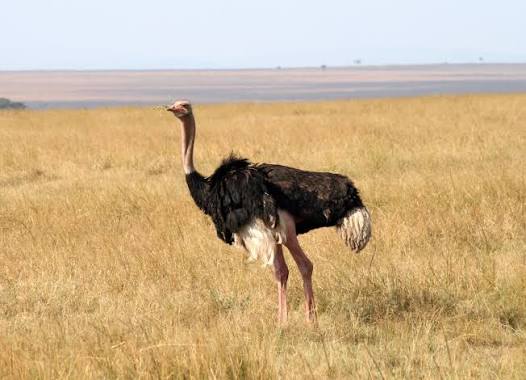
Within a breeding pair, the male ostrich genuinely takes primary responsibility for defending the nest against larger threats given his greater size and strength, while the female’s typically duller, more camouflaged plumage genuinely helps her remain less visible while incubating during daylight hours, a division of defensive labour that combines active physical deterrence from the male with passive concealment from the female to maximise overall nest survival odds.
How Group Living Genuinely Adds a Shared Vigilance Layer
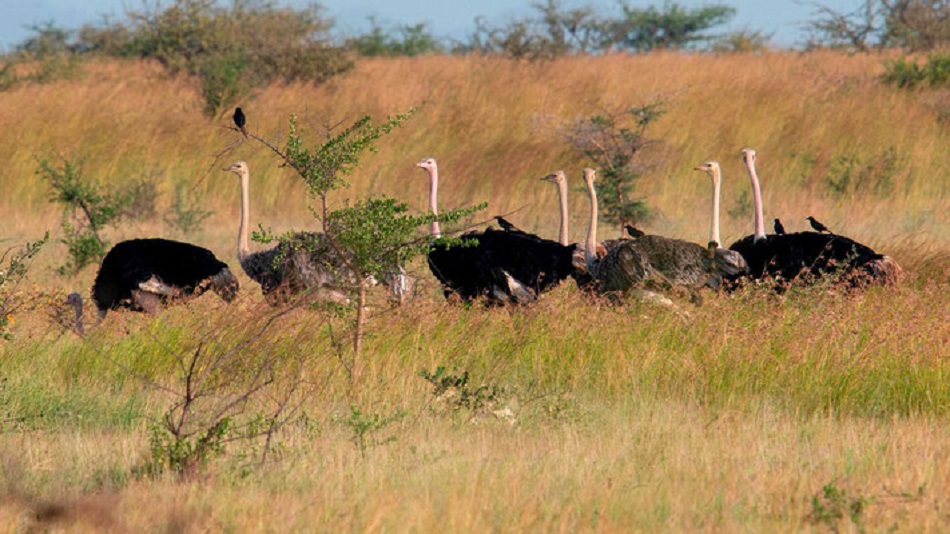
Ostriches frequently gather in loose groups, and much like other savannah herbivores, this grouping genuinely provides shared vigilance benefit, with multiple birds scanning for danger simultaneously across a wider combined field of view than any single individual could manage alone, meaning group-living ostriches genuinely benefit from the same collective detection advantage documented in more obviously herd-forming mammal species.
Where to Observe Ostrich Behaviour in East Africa
Ostriches are genuinely reliable to observe across Amboseli National Park and Kidepo Valley National Park, both offering genuine open-terrain viewing where the species’ running speed and alert posture are easiest to observe.
Best Time of Year for Ostrich Viewing
Ostriches are visible year-round given resident populations across East Africa’s open savannah parks. See our regional best-time guide for how seasonal patterns generally affect wider game viewing.
Photographing Ostrich Behaviour
Capturing an ostrich at full running speed, or the distinctive courtship display during breeding season, offers genuinely dynamic photographic opportunities beyond a standard standing portrait. See our camera gear guide for broader equipment recommendations.
What to Pack for Open-Plains Game Drives
Standard game drive gear – neutral clothing, sun protection, and binoculars – covers most of what ostrich viewing requires. If your wider itinerary includes gorilla trekking, our gorilla trekking packing list covers that portion separately.
Why Ostrich Eggs Face Genuinely Concentrated Predation Pressure Despite Parental Defence
Despite active parental guarding, ostrich eggs genuinely remain vulnerable to opportunistic predators including jackal and vulture during brief moments when the nest is left unattended, and researchers have found that communal nesting, where multiple females lay eggs in one shared nest under a single dominant pair’s care, genuinely improves overall egg survival odds by increasing the total number of eggs any individual predation event can realistically threaten at once.
How Ostrich Defence Compares to Other Flightless Bird Strategies
Where considerably smaller flightless birds typically rely almost entirely on camouflage and concealment given their limited size and strength, the ostrich’s genuinely unusual combination of large body size, exceptional speed, and dangerous kicking capability represents a fundamentally different defensive strategy only available to a bird of the ostrich’s considerable scale, closer in overall defensive philosophy to a large mammal than to most other bird species.
Why Guides Value Explaining Ostrich Defensive Capability to Visitors
Given how often ostriches are viewed as simply a curious, ungainly-looking bird, experienced guides genuinely value explaining the species’ considerable underlying speed and defensive power, adding real appreciation for an animal that, despite its flightlessness, remains genuinely well equipped to survive among East Africa’s most formidable predators.
Combining Ostrich Viewing With a Wider Open-Savannah Circuit
Ostrich viewing pairs naturally with a broader open-plains itinerary covering other savannah species within the same overall trip, giving travelers genuine variety across East Africa’s grassland wildlife.
Why Ostrich Kicks Are Also a Genuine Safety Consideration for Visitors
Given the same defensive kick capable of injuring a lion, experienced guides genuinely maintain strict distance protocols around ostrich, particularly during breeding season when nest-guarding birds become considerably more willing to approach and confront a perceived threat directly, meaning ostrich, despite their non-predatory nature, genuinely require the same respectful viewing distance guides apply to more obviously dangerous wildlife like buffalo.
How Ostrich Vision Genuinely Compares to Other Savannah Species
An ostrich’s exceptional eyesight genuinely rivals or exceeds the vantage advantage giraffe height provides for early predator detection, though through a fundamentally different mechanism, eye size and visual acuity rather than elevated vantage point, meaning the two species achieve broadly similar early-warning outcomes through genuinely distinct physical adaptations shaped by their very different body plans.
Why Ostrich Chick Survival Genuinely Depends on Group Creches
Beyond individual parental defence, ostrich chicks from multiple different broods genuinely merge into larger combined groups called creches under the supervision of just one or two adult pairs, a genuine cooperative childcare strategy that spreads predation risk across a much larger total group of chicks while requiring only a fraction of the adult population to actively supervise at any given time, similar in underlying logic to the cooperative structure documented in hyena clan cub-rearing.
Why an Ostrich’s Wings Still Play a Genuine Defensive Role Despite Flightlessness
Although an ostrich cannot fly, its large wings genuinely retain a functional role during confrontation, spread wide to appear considerably larger and more intimidating to a potential threat, and used for balance during sharp, rapid directional changes while running at speed, meaning flightlessness hasn’t rendered the wings entirely vestigial but rather repurposed them toward defensive display and locomotor stability instead.
Frequently Asked Questions
Can an ostrich kick really kill a predator?
Yes, genuinely so – a powerful forward kick can cause serious injury or death, and documented cases exist of lions being seriously wounded in failed attacks.
Do ostriches really bury their heads in the sand?
No, that’s a myth – they flatten neck and head against the ground as a camouflage strategy that only creates that illusion from a distance.
How fast can an ostrich run?
Exceeding 70 kilometres per hour, making it the fastest of any bird species and among the fastest of any land animal.
Do male and female ostrich share nest defence equally?
Not equally – males typically handle active physical defence while females rely more on camouflaged plumage to remain concealed.
Where can I see ostriches on safari?
Amboseli National Park and Kidepo Valley National Park both offer strong open-terrain viewing opportunities.
Ready to Plan Your East Africa Safari?
Whether observing ostrich behaviour firsthand, wider open-plains wildlife, or a full East Africa itinerary is your priority, our team can build a trip matched to your interests. Get in touch with our team below today and let’s start planning your complete safari itinerary together.




No comment