

White lions aren’t naturally found in East Africa’s wild lion populations, since the extremely rare genetic trait behind their pale colouring has only ever been documented occurring naturally within a specific region of South Africa, meaning East African safari-goers shouldn’t expect to encounter one on a typical Kenyan or Tanzanian game drive.
This guide covers exactly what causes the trait, where it occurs, and what remarkable lion sightings East Africa offers instead for travelers whose curiosity was first sparked by photos of this rare colouring.
What Causes a Lion’s White Colouring
White lions aren’t albino, despite the common assumption. The condition is caused by a rare recessive genetic trait called leucism, which reduces pigmentation in the fur while leaving eye colour and skin pigmentation largely normal, unlike true albinism, which affects pigmentation throughout the entire body including the eyes. Our roundup of essential lion facts for safari-goers covers several more genuine physical traits worth understanding before your trip.
Where White Lions Do Occur Naturally
The only documented wild population of white lions originates from the Timbavati region of South Africa, near Kruger National Park, where the recessive gene has appeared periodically within specific local prides for decades. This remains a geographically very specific, rare phenomenon rather than something distributed evenly across the continent’s wider lion range.
Records of the trait date back to sightings first documented in the 1930s, though the population has fluctuated considerably over the decades since, at times nearly disappearing from the wild entirely before conservation-focused breeding efforts helped reintroduce individuals back into the region’s protected habitat, a genuine conservation success story specific to this one small, geographically isolated population.
Why This Genetic Trait Hasn’t Been Documented in East Africa
Since the leucism trait behind white lions is recessive and requires both parent lions to carry the gene, its documented occurrence has remained confined to the specific South African prides where it first appeared and has since been periodically passed down, rather than spreading naturally to genetically distinct populations across East Africa’s separate lion range. Our guide on how lion prides are structured covers how limited gene flow between geographically separate populations shapes traits like this one over generations.
What East African Visitors Might See Instead
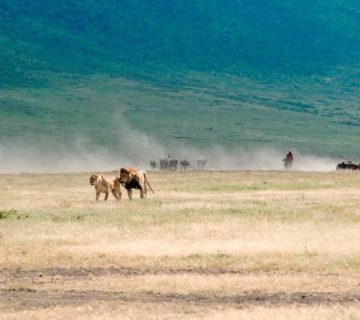
While white lions aren’t part of East Africa’s natural population, the region offers its own remarkable colour and mane variation worth knowing about, including the notably darker manes documented among some Ngorongoro Crater males. Our guide on Ngorongoro’s lions covers this population’s distinctive traits in more depth, including the genetic bottleneck research that makes the crater’s prides scientifically fascinating in their own right.
Captive White Lions vs Wild Populations
Some captive facilities and private reserves across Africa, including a small number outside South Africa, do keep white lions bred specifically for this trait, but these represent managed captive breeding programmes rather than wild, naturally occurring populations, an important distinction for travelers researching where to see this rare colouring in a truly wild setting. Our guide on what lions eat and how they hunt covers the cooperative hunting strategy a captive population never needs to practise the way a wild pride does.
Why Genuine Wild Sightings Remain Extremely Rare Even in South Africa
Even within Timbavati specifically, wild white lion sightings remain uncommon, since the trait’s rarity and the practical challenges facing a pale-coated lion’s camouflage and hunting success mean white cubs face lower survival odds than typically-coloured littermates in the wild, without active human intervention.
This survival disadvantage stems directly from how camouflage affects hunting success: a lighter coat stands out more clearly against typical savanna grass and scrub than the standard tawny colouring, making it considerably harder for white lions to stalk prey undetected, a genuine functional cost to the trait beyond its rarity alone and a large part of why the population has needed active conservation support to persist at all.
How This Trait Compares to Other Documented Lion Colour Variations
Beyond white lions, researchers have documented other, considerably more common colour variations across the species’ range, including the notably darker manes some male lions develop, a trait linked to testosterone levels and regional genetics rather than the same recessive leucism responsible for white colouring. Our guide on male versus female lion differences covers mane variation in considerably more depth, including how it signals health and condition to rivals and potential mates.
Why East Africa’s Genuine Wildlife Diversity Doesn’t Need White Lions to Impress
East Africa’s lion populations offer plenty of their own remarkable sights without needing a white-coated variant, including the tree-climbing behaviour documented in Uganda and Tanzania. Our guide on Serengeti lion safaris covers one of the continent’s largest, best-studied wild lion populations, a world-class wildlife experience in its own right. Our guide on the tree-climbing lions of Lake Manyara covers another rare, camera-worthy East African lion trait entirely unrelated to coat colour.
Setting Accurate Expectations Before Your Trip
Travelers specifically hoping to see a white lion should plan a South Africa-focused trip rather than an East African itinerary, since setting accurate expectations beforehand avoids disappointment during a Kenya or Tanzania safari built around entirely different, though equally remarkable, wildlife highlights. Our guide on how many lions remain in Africa covers the broader continent-wide population picture, useful context for understanding just how geographically specific a trait like this can be.
How Responsible Tourism Approaches White Lion Attractions
Travelers considering a white lion encounter anywhere on the continent should research whether a specific facility operates as a legitimate conservation-focused breeding programme or a less transparent commercial attraction, since captive breeding practices vary considerably in their welfare standards and conservation value across different operators.
Reputable operators prioritise wild, free-roaming wildlife encounters over captive attractions wherever possible, a principle worth applying broadly across any safari itinerary, not just when specifically considering a white lion encounter, since wild sightings consistently offer both stronger conservation value and a more authentic overall experience, a principle equally true whether travelling through East Africa or considering an add-on trip further south.
How White Lion Mythology Shaped Local Cultural Significance
Within South Africa specifically, white lions hold considerable cultural and spiritual significance among some local communities, who have long regarded the animals as sacred, predating the more recent scientific understanding of the underlying genetic cause. This cultural dimension adds another layer of significance beyond the purely biological rarity that draws most international visitors’ initial curiosity, a reminder that wildlife sightings often carry meaning well beyond the purely scientific explanation any guidebook can offer.
How Genetic Research Has Expanded Understanding of This Trait
Researchers studying the white lion population have identified the specific gene responsible for the trait in recent decades, moving well beyond earlier folklore-based explanations toward a clear, evidence-based genetic understanding. This research has also informed responsible captive breeding practices at legitimate conservation facilities, helping ensure genetic diversity is properly managed rather than inadvertently concentrated through poorly planned breeding, a genuine risk any small, isolated founder population faces without careful oversight.
Why This Question Comes Up So Often Among East Africa Travelers
Given how visually striking the trait is in photographs and documentaries, it’s understandable that many first-time East Africa travelers arrive curious about white lion sightings, even when the trait has no natural presence in the specific ecosystems they’re visiting. Addressing this question directly and honestly upfront helps travelers redirect their curiosity toward the remarkable wildlife available within their actual itinerary instead, setting up a far more satisfying trip than one built around a mistaken expectation.
Frequently Asked Questions
A few quick answers to the questions travelers ask most often about white lions and where they occur.
Do white lions naturally exist anywhere in East Africa?
No – the wild trait has only been documented in South Africa’s Timbavati region, not within any East African lion population.
Are white lions albino?
No – they have leucism, a different condition that reduces fur pigmentation while leaving eye colour and skin largely normal.
Can you see white lions in captivity outside South Africa?
Yes, at some managed breeding facilities, though these are captive populations rather than wild, free-roaming ones.
Why are wild white lion sightings so rare even in South Africa?
The recessive gene is uncommon, and pale coloured cubs generally face lower wild survival odds without intervention, given the trait’s genuine camouflage disadvantage when hunting.
What should East African safari-goers expect to see instead?
Typically coloured lions with remarkable behavioural traits, including tree-climbing populations, dense resident prides, and cooperative hunting rarely captured on camera elsewhere.
Ready to Plan Your African Safari?
Whether you’re focused on East Africa’s remarkable lion populations, curious about tree-climbing prides, or planning a wider multi-country trip that includes South Africa, our team can build an itinerary matched to your interests. Get in touch with our team below today and let’s start planning your complete African safari itinerary together.


No comment