
How Many Lions Are Left in Africa?
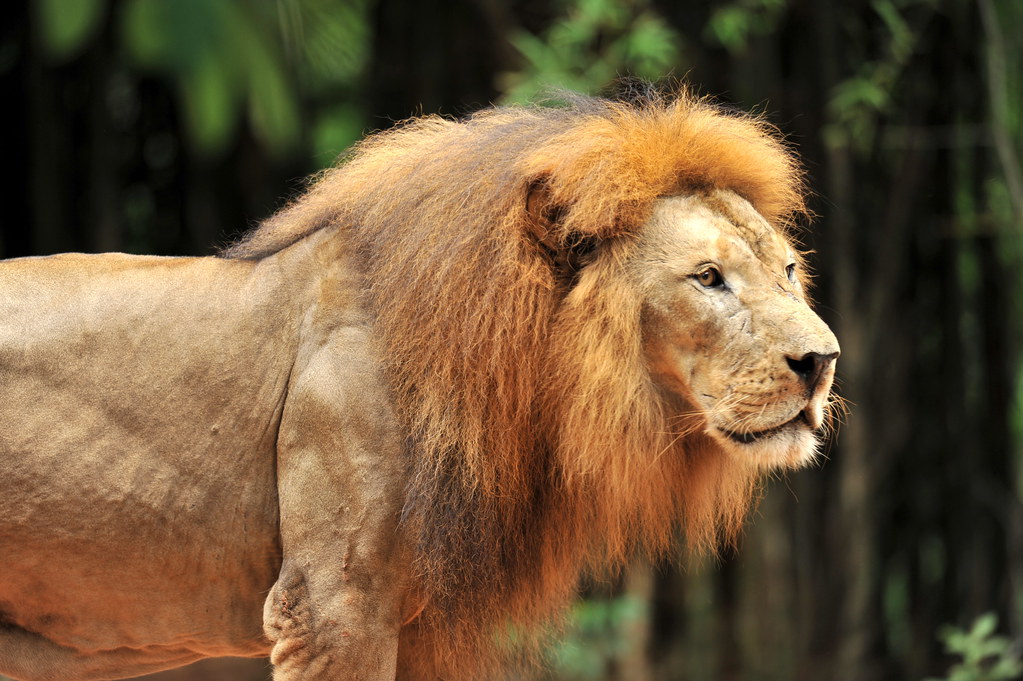
Fewer than 25,000 wild lions remain across the entire African continent today, according to the most widely cited conservation estimates, a figure that represents roughly a 90 percent decline from the population researchers believe existed a century ago, when lions still ranged across most of sub-Saharan Africa.
How Researchers Arrive at Continent-Wide Lion Population Estimates
Counting lions across an entire continent is far harder than it sounds, since the species ranges across dense forest, open savanna, and remote areas with little to no research infrastructure, meaning most published figures are informed estimates built from a patchwork of individual population studies rather than a single continent-wide census.
Organisations including the IUCN’s Cat Specialist Group compile these regional studies into aggregate figures, and researchers acknowledge real uncertainty in the resulting numbers, with published estimates for the total wild population ranging from roughly 20,000 to just over 25,000 individuals depending on methodology and which populations get included. This range narrowed considerably over the past two decades as camera-trap surveys and individual identification techniques replaced older, cruder estimation methods that relied more heavily on extrapolation from limited ground surveys.
Why the Decline Accelerated So Sharply Over the Past Century
Lions occupied over 90 percent of their historical range across Africa a century ago, and researchers now estimate the species occupies roughly 8 percent of that original range today, a contraction driven primarily by habitat conversion to agriculture and settlement, retaliatory killing following livestock predation, and declining prey populations across much of the continent’s unprotected land.
This decline wasn’t gradual or evenly distributed. Some of the sharpest population losses documented occurred within just the past three to four decades, as human population growth and land conversion accelerated considerably faster than conservation protections could expand to match, leaving many smaller, unprotected lion populations isolated and vulnerable to local extinction even where the species technically still persisted on paper.

How Population Numbers Vary Dramatically by Region
East and Southern Africa hold the large majority of the continent’s remaining lions, with countries including Tanzania, Kenya, and South Africa supporting some of the largest and most stable populations, while West and Central African lion populations have declined so severely that researchers now classify the regional subspecies as critically endangered, with some individual countries in these regions supporting only a few dozen confirmed individuals.
The Serengeti-Mara ecosystem our guide on Serengeti lion safaris covers represents one of the single largest contiguous lion populations remaining anywhere on the continent, alongside the smaller but dense population within Ngorongoro Crater itself, both benefiting from decades of sustained conservation investment and strict protected-area status.
Why Protected Areas Hold the Overwhelming Majority of Surviving Lions
Researchers estimate that the large majority of Africa’s remaining wild lions now live within formally protected national parks and reserves, a dramatic shift from a century ago when lions ranged freely across vast unprotected territory. This concentration means the long-term survival of the species now depends heavily on the continued funding, staffing, and anti-poaching enforcement of a comparatively small number of key protected ecosystems.
Smaller, isolated protected areas face a distinct challenge here too: populations confined to a single fenced or effectively isolated reserve can suffer the same kind of genetic bottleneck problems documented in Ngorongoro Crater’s own resident prides, making corridors connecting separate protected areas an increasingly genuine conservation priority across the region.
How Human-Wildlife Conflict Remains the Leading Driver of Ongoing Decline
Retaliatory killing following livestock predation remains one of the most significant ongoing threats to lion populations living near park boundaries, since lions ranging beyond protected areas in search of prey or new territory frequently encounter domestic cattle, and the resulting conflict costs both livestock owners and lions considerably.
Conservation organisations have had measurable success reducing this conflict through predator-proof livestock enclosures called bomas, community compensation schemes for confirmed livestock losses, and early-warning systems alerting herders to nearby lion movement, though implementation varies considerably by region and available funding, meaning this remains an active, unresolved challenge across much of the lion’s remaining range rather than a solved problem.
Why Prey Base Decline Compounds the Threat Beyond Direct Killing
Beyond direct conflict, the decline of wild herbivore populations across much of Africa’s unprotected land removes the natural prey base lions depend on, forcing individuals into greater competition within shrinking protected areas or pushing them toward livestock as an alternative food source, a genuine feedback loop that compounds the conflict problem described above rather than existing as a separate, independent threat.
How Trophy Hunting and Poaching Differ as Distinct Pressures
Legal trophy hunting and illegal poaching represent distinct pressures with different conservation implications. Well-regulated trophy hunting in some countries generates revenue that funds broader anti-poaching and habitat protection efforts, a contested but genuine conservation funding mechanism in certain jurisdictions, while illegal poaching, including for the illegal bone and body-part trade, represents a more clearly negative pressure with no offsetting conservation benefit.
Why the Big Five’s Other Members Face Comparable Pressures
Lions aren’t the only Big Five species facing significant population pressure. Our guide on rhino conservation challenges covers a even more severe poaching crisis facing that species specifically, while elephant populations face their own distinct combination of poaching and habitat loss pressures across much of the continent, a pattern our guide on elephant herd behaviour touches on from a different angle.
Even species not formally part of the Big Five face comparable regional pressures, and the buffalo herds that share much of the same protected habitat as lions across East Africa depend on many of the same conservation investments described throughout this guide, since a single well-funded protected ecosystem benefits an entire community of species rather than any one animal in isolation.
How Rwanda’s Akagera Reintroduction Demonstrates Recovery Is Possible
Rwanda’s Akagera National Park offers one of the continent’s clearest recovery success stories: lions were locally extinct there for roughly two decades following the country’s 1994 genocide and the resulting collapse of park management and widespread cattle grazing within park boundaries, before a carefully managed reintroduction beginning in 2015 rebuilt a stable resident population from just seven founding individuals. Our guide on Akagera’s reintroduced lions covers this recovery story in considerably more depth, including how the same park has since rebuilt its rhino and other Big Five populations through comparable managed reintroduction efforts.
This kind of managed reintroduction remains resource-intensive and isn’t a realistic option for most of the continent’s declining populations, but Akagera’s genuine success demonstrates that well-funded, carefully managed intervention can rebuild a locally extinct population within a single generation when political stability and conservation funding align.
How Conservation Efforts Have Stabilised Some Key Populations
Despite the sobering continent-wide trend, several individual protected ecosystems have shown stable or even slightly increasing lion numbers over the past decade, particularly within well-funded, strictly protected parks benefiting from sustained anti-poaching investment and active human-wildlife conflict mitigation programmes, a genuine indication that targeted conservation investment can meaningfully slow or reverse the broader decline at a local level even where the continent-wide trend remains negative.
Where Travelers Can See Some of Africa’s Most Stable Lion Populations
Travelers wanting to see lions within well-protected, stable populations should prioritise parks with sustained long-term research and conservation investment. Our guide on the region’s best lion-viewing parks covers exactly this kind of comparison across East Africa’s strongest protected ecosystems.
How Responsible Tourism Supports Lion Conservation
Safari tourism revenue funds a meaningful share of the anti-poaching patrols, community conflict-mitigation programmes, and habitat protection efforts keeping these key populations stable, meaning travelers choosing responsible, well-managed safari operators contribute directly to the conservation outcomes described throughout this guide, rather than simply observing them as a passive visitor.
Park entrance fees, accommodation levies, and guided game-drive revenue flow, at least in part, back into the specific protected areas travelers visit, meaning the choice of destination itself carries a genuine conservation dimension beyond simply personal preference. Parks like the well-established reserves covered in our regional lion-viewing guide generally channel a considerably higher share of this revenue into active conservation work than newer or less-visited destinations still building out that same infrastructure.
What the Coming Decades Hold for Africa’s Lion Populations
Conservation researchers remain divided on the continent-wide outlook, with some projecting continued decline in unprotected and poorly-funded areas even as well-managed protected ecosystems hold steady or slowly recover, a uneven future rather than a single continent-wide trajectory in either direction. The overall trend line still points downward at the continental scale, but the growing body of localised success stories, from Akagera’s reintroduction to the sustained stability of ecosystems like the Serengeti-Mara, offers a more nuanced picture than a simple story of inevitable decline.
Frequently Asked Questions
How many wild lions remain in Africa today?
Estimates range from roughly 20,000 to just over 25,000 individuals, depending on methodology and which populations are included.
Why have lion numbers declined so severely?
Habitat loss, human-wildlife conflict, declining prey populations, and poaching have combined to drive a roughly 90 percent decline over the past century.
Which regions hold the most lions today?
East and Southern Africa hold the large majority of remaining lions, while West and Central African populations are critically endangered.
Do most lions live inside protected areas now?
Yes – the overwhelming majority of surviving lions now live within formally protected national parks and reserves.
Can safari tourism help lion conservation?
Yes – tourism revenue funds much of the anti-poaching and conflict-mitigation work sustaining key protected populations.
Ready to Plan Your African Safari?
Whether prioritising strong lion-viewing odds, conservation-focused travel, or a wider Big Five itinerary, our team can build a trip matched to your interests. Get in touch with our team below today and let’s start planning your complete African safari itinerary together.


No comment