



Giraffe Necking Fights Explained
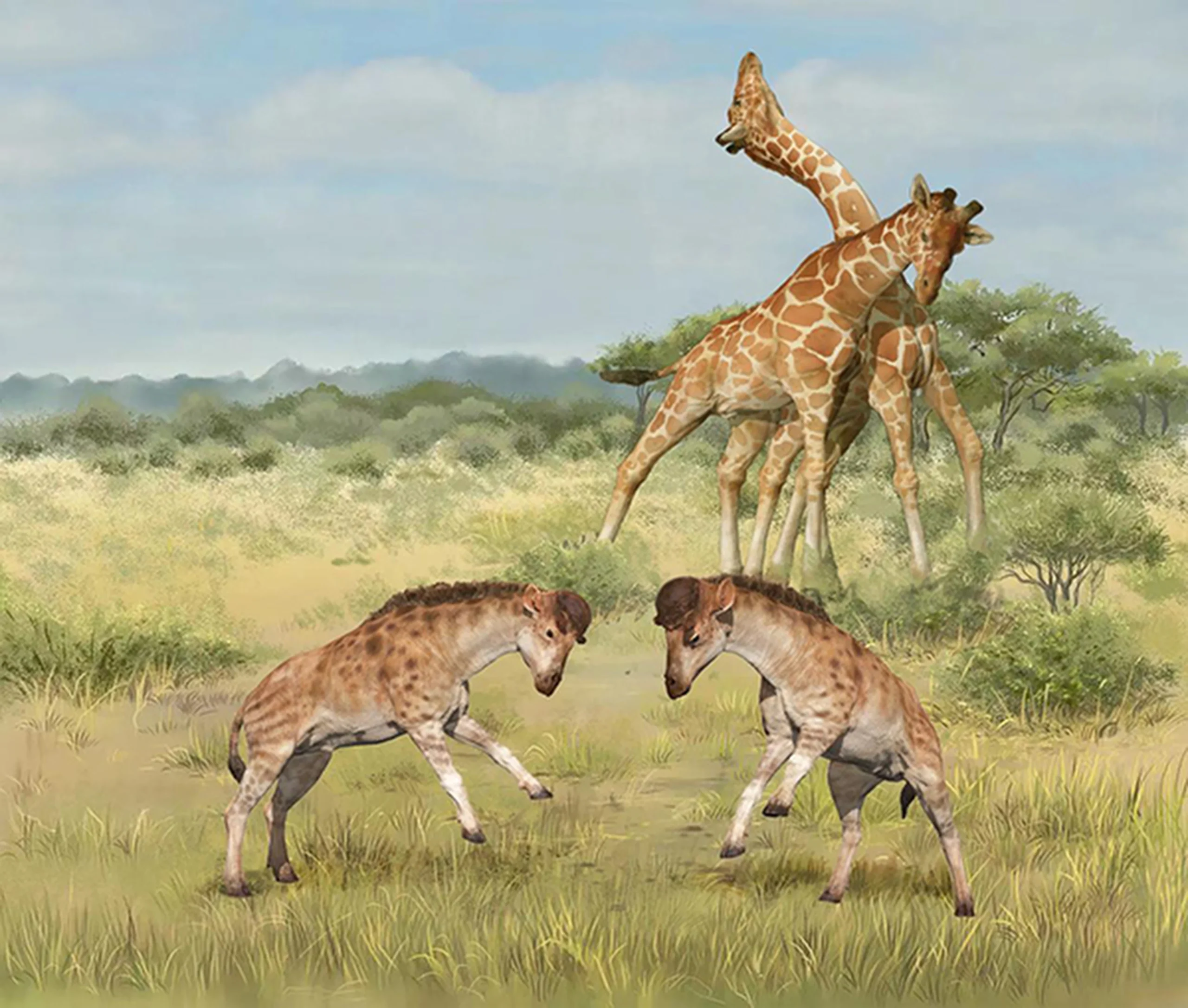
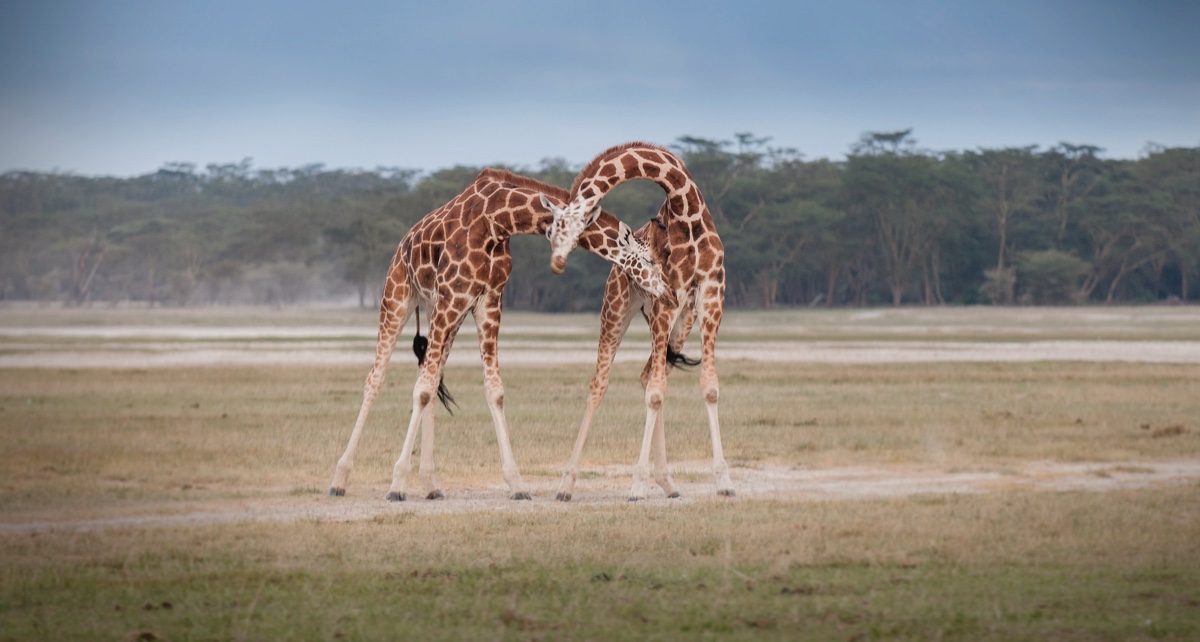
Two male giraffes swinging their necks against each other in a slow, almost choreographed rhythm looks genuinely gentle from a distance, but “necking” is a real dominance contest that occasionally escalates into forceful, calculated blows delivered with the ossicone-tipped skull, capable of knocking a rival to the ground or genuinely breaking bone.
What Necking Actually Looks Like at Each Intensity Level
Necking exists on a genuine spectrum rather than being a single fixed behaviour: low-intensity contests involve two males standing side by side, gently leaning and rubbing necks against each other in what researchers describe as largely ritualised posturing that rarely causes injury, while high-intensity contests involve genuine swinging blows, one male drawing his neck back and driving his skull into the rival’s body, neck, or legs with enough force to stagger or fell the opponent outright.
The Ossicones Are the Genuine Weapon Doing the Damage
A giraffe’s ossicones, the horn-like knobs on top of the skull, are covered in skin during life but sit atop a genuinely dense, reinforced section of skull bone specifically adapted to absorb repeated impact, an anatomical feature unique to giraffe among African mammals and clearly shaped by generations of exactly this contest behaviour. Males develop noticeably thicker, more calcified ossicones and skull bone than females as they mature, direct physical evidence that the skull itself has evolved specifically as a weapon for male-to-male combat rather than simply happening to double as one.
Why Contests Escalate From Gentle to Genuinely Violent
A necking contest typically begins at low intensity, with both males assessing each other’s size and apparent commitment, and only escalates to full swinging blows if neither backs down during this initial posturing phase, meaning most encounters between giraffes of clearly mismatched size never reach the dangerous stage at all, since the smaller male generally disengages once the size difference becomes obvious. Genuinely evenly matched males are considerably more likely to escalate all the way, since neither has an obvious size-based reason to concede early.
What’s Actually at Stake in a Necking Contest
Winning establishes dominance rank within a local male hierarchy, which directly translates into mating access, since female giraffes show measurable preference for higher-ranking males, and dominant males also gain priority access to the best browsing territory within a shared range. This means necking isn’t simply aggressive display but a genuinely consequential contest determining both reproductive success and resource access, explaining why males are willing to risk real injury rather than avoid the behaviour entirely.
Genuine Injuries Documented From High-Intensity Contests
Researchers and guides have documented cases of broken necks, fractured jaws, and even fatalities resulting from high-intensity necking contests, injuries genuinely serious enough that the behaviour is considered one of the more dangerous forms of male-to-male combat among African herbivores despite giraffe’s generally calm public reputation. A blow landing awkwardly on a vulnerable point, rather than the intended target area, is typically what turns a contest from a bruising encounter into a genuinely life-threatening one.
Why Younger Males Practice Necking Long Before It Matters
Young male giraffes genuinely engage in low-intensity necking play with peers well before reaching sexual maturity, behaviour researchers interpret as practice that builds the neck strength, balance, and technique a male will eventually need for real contests, similar in concept to how young mammals of many species rehearse adult combat or hunting behaviour through juvenile play long before the stakes become genuinely serious.
Where to Observe Necking Behaviour in East Africa
Necking can genuinely be observed wherever giraffe populations are healthy and males are present in reasonable numbers, including the Masai Mara, Murchison Falls, and Lake Mburo, though a genuine high-intensity contest remains a matter of chance timing rather than something a single game drive can reliably guarantee.
Best Time of Year to See Necking Behaviour
Necking occurs year-round given giraffe’s non-seasonal breeding pattern, though contests may increase somewhat when multiple males converge around a receptive female or contested territory. See our regional best-time guide for how East Africa’s broader seasonal patterns affect wider game viewing.
Photographing a Necking Contest
Capturing the moment of an actual swinging blow, rather than the more common gentle posturing phase, requires genuine patience and a fast shutter speed given how quickly the action unfolds. See our camera gear guide for broader equipment recommendations.
What to Pack for Giraffe-Focused Game Drives
Standard game drive gear – neutral clothing, sun protection, and binoculars – covers most of what giraffe viewing requires. If your wider itinerary includes gorilla trekking, our gorilla trekking packing list covers that portion separately.
How Males Use Momentum, Not Just Neck Strength
A high-intensity necking blow relies genuinely as much on the momentum built by swinging the entire neck and shoulder mass as on raw neck muscle alone, meaning a taller male with a longer effective swing radius can generate considerably more impact force than his neck strength alone would suggest, one reason height and neck length, not just body bulk, factor into which males consistently win contests against otherwise similarly sized rivals.
Why Contests Rarely Happen in Isolation From the Wider Herd
Necking contests typically unfold with other giraffes, and sometimes other species entirely, present nearby rather than in private, and researchers studying the behaviour note that an audience of females appears to genuinely influence contest intensity, with males observed escalating more readily when receptive females are watching than during contests with no audience present, suggesting the display element of necking is genuinely part of its function rather than purely incidental.
How Long a Real Contest Actually Lasts
Low-intensity posturing can continue for ten to twenty minutes as both males circle and lean against each other, while a genuine high-intensity exchange of swinging blows is typically much shorter, often resolved within a few minutes once one male lands a solid enough hit or the size and stamina gap becomes clear, meaning most of the time spent watching a necking encounter is actually the slower assessment phase rather than the dramatic climax itself.
What Happens After a Contest Ends
The losing male typically disengages by simply walking away or dropping his head to signal submission, and unlike some territorial mammal contests, defeated giraffe generally aren’t pursued or further harassed once they’ve conceded, an outcome that lets a losing male retreat, recover, and potentially challenge again once he’s grown or the specific rival has moved on, rather than being permanently driven from the area.
Comparing Giraffe Necking to Other African Combat Displays
Unlike the head-to-head horn clashes of species like topi or the tusk-based confrontations of Uganda kob, giraffe necking’s swinging, momentum-driven strikes represent a genuinely unique combat style among East African herbivores, a direct consequence of the species’ extreme neck length making an entirely different fighting mechanic both possible and, evolutionarily, worthwhile to develop.
Why Guides Value Explaining the Full Behaviour, Not Just the Blows
Experienced guides who take time to point out the slower assessment phase, the audience effect, and the submission signal ending a contest genuinely help travelers understand necking as a structured, rule-governed behaviour rather than random aggression, turning what might otherwise register as simply two animals bumping heads into a considerably richer piece of social observation.
What Makes a Genuinely Memorable Necking Sighting
Witnessing an encounter escalate from the gentle, almost affectionate-looking leaning phase into genuine swinging blows offers one of the more dramatic behavioural transitions available on a standard game drive, precisely because the shift from apparent calm to real, forceful physical contest happens with so little obvious outward warning to an observer genuinely unfamiliar with the escalation pattern itself.
Getting to East Africa’s Best Giraffe Destinations
Most itineraries reach major giraffe populations via road or scheduled flight from regional hubs, with genuinely healthy male-to-male ratios within a given population improving the odds of witnessing genuine necking behaviour compared to areas where males remain scarce relative to females overall.
Frequently Asked Questions
Is giraffe necking actually dangerous, or just display?
Both – low-intensity necking is largely ritualised posturing, but high-intensity contests involve genuine swinging blows capable of causing serious injury or even death.
What determines whether a contest escalates?
Size mismatch usually ends things early; evenly matched males are considerably more likely to escalate to full swinging blows.
Why do males risk injury over necking?
Winning establishes dominance rank, which directly translates into mating access and priority access to the best browsing territory.
Do young giraffes practice necking before it matters?
Yes, genuinely so – juvenile play-necking is thought to build the strength and technique needed for real adult contests later.
Where can I see this behaviour on safari?
The Masai Mara, Murchison Falls, and Lake Mburo all offer genuine opportunities, though a full high-intensity contest is a matter of timing.
Ready to Plan Your East Africa Safari?
Whether observing giraffe behaviour firsthand, the Big Five, or a complete East Africa itinerary is your priority, our team can build a trip matched to your interests. Get in touch with our team below today and let’s start planning your complete safari itinerary together.




No comment