
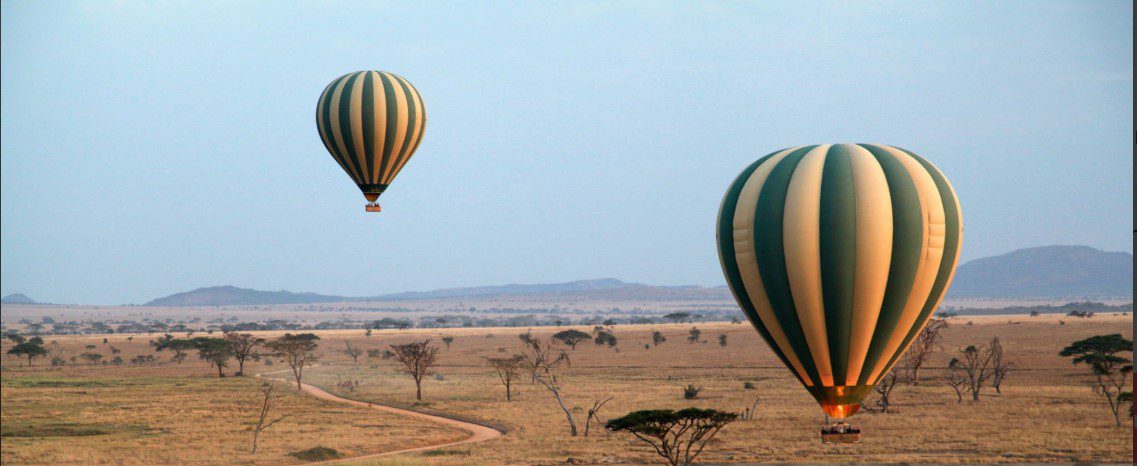
A hot air balloon safari over the Serengeti offers a genuinely different perspective on Africa’s most famous ecosystem, drifting silently above the plains at dawn as the sun rises over herds, rivers, and rocky kopjes stretching to the horizon – an experience widely rated among visitors as one of the single most memorable, genuinely unforgettable moments of an entire Tanzania safari.
What a Serengeti Balloon Safari Involves
Balloon safaris launch before dawn, typically requiring a pickup from your lodge in the very early morning hours, followed by a briefing and inflation process that’s genuinely interesting to watch in its own right. Flights themselves last roughly an hour, drifting with the wind at varying altitudes, sometimes low enough to see individual animals clearly, before landing and transitioning into a traditional champagne breakfast set up on the plains.
Why Dawn Timing Matters
Balloon flights depart at first light specifically because wind conditions are calmest during these early hours, before the day’s heat generates the thermal air currents that would make ballooning unsafe later in the morning. This timing also happens to coincide with some of the most beautiful light of the day, adding a genuine photographic bonus to the practical safety reasoning behind the schedule.
What You Can See From the Air
The aerial perspective reveals the Serengeti’s sheer scale in a way no ground-based game drive can replicate, with wildebeest herds, elephant families, and the ecosystem’s rivers and kopjes all visible in genuine context against the wider landscape. While wildlife sightings from the balloon itself aren’t guaranteed, the view of the ecosystem’s scale alone is what most visitors describe as the experience’s real highlight.
Best Time of Year for a Balloon Safari
Balloon safaris run year-round in the Serengeti, though timing your flight during the wildebeest migration’s peak season, roughly July through October, adds the chance of seeing vast herds moving across the plains from above. See our wildebeest migration guide for more on how migration timing shifts throughout the year.
Cost and Booking Considerations
Balloon safaris represent a genuine premium add-on to a standard Serengeti itinerary, priced considerably higher than a standard game drive given the specialised equipment and logistics involved. Booking well in advance through your operator is essential, since daily capacity is limited and demand, particularly during peak migration season, regularly exceeds available slots well ahead of the actual travel dates.
Is a Balloon Safari Worth the Extra Cost?
For most travelers, yes – the aerial perspective on the ecosystem’s scale is genuinely unique and can’t be replicated by any ground-based activity, even though wildlife sightings from the air aren’t guaranteed. Travelers on a tighter budget sometimes skip the balloon in favour of additional standard game drives, a reasonable trade-off depending on your specific priorities.
The Champagne Breakfast Tradition
Following the flight, balloon operators traditionally serve a full breakfast set up directly on the Serengeti plains, complete with white tablecloths and champagne, a genuinely memorable contrast to the rustic safari setting surrounding the table. This tradition has become such a fixture of the experience that many travelers consider the breakfast itself part of the balloon safari’s core appeal.
Safety Considerations
Reputable balloon operators in the Serengeti maintain strict safety standards, including experienced pilots and careful weather monitoring before each flight, and flights are occasionally cancelled or delayed if conditions aren’t suitable. Choosing an established, well-reviewed operator rather than the cheapest available option is genuinely worthwhile given the real, genuine safety considerations involved in any aviation activity of this specific kind.
Combining a Balloon Safari With Ngorongoro Crater
Most Tanzania itineraries pair Serengeti balloon safaris with a separate visit to Ngorongoro Crater, given the two parks’ proximity and complementary wildlife experiences. This combination gives travelers both the Serengeti’s aerial perspective and the crater’s more concentrated, ground-based Big Five viewing within a single well-planned trip.
What to Wear and Bring
Layers are genuinely essential given how cold pre-dawn temperatures can feel before sunrise warms the air, alongside closed shoes suitable for the sometimes uneven landing site. A camera with a reasonably wide lens captures the aerial landscape views well, though a telephoto option is worth having on hand too for any wildlife spotted from altitude.
Balloon Safaris Elsewhere in East Africa
Beyond the Serengeti, balloon safaris are also available over Kenya’s Masai Mara and, less commonly, Uganda’s Murchison Falls, each offering a genuinely comparable aerial experience tailored to that specific ecosystem’s landscape and wildlife. Travelers building a wider East Africa itinerary sometimes choose based purely on which park’s broader circuit they’re already including.
Getting to the Serengeti for a Balloon Safari
Most visitors reach the Serengeti via a scenic domestic flight from Arusha or Kilimanjaro, and balloon safaris are typically arranged through your lodge or operator as part of a wider itinerary rather than booked as a standalone activity. Confirming balloon availability alongside your accommodation booking, particularly during peak migration season, is genuinely worth doing well in advance.
How Balloon Altitude and Direction Are Controlled
Pilots control a hot air balloon’s altitude by adjusting burner output, rising or descending to catch different wind layers, since balloons have no direct steering mechanism and instead drift with whatever wind exists at a given height. Experienced Serengeti pilots use this technique skilfully to navigate over specific areas of interest, including known wildlife concentrations reported by ground-based guides that morning.
Choosing Between Different Balloon Operators
Several established operators run balloon safaris across the Serengeti, and choosing one with a strong safety record and experienced pilots matters considerably more than choosing based on price alone. Your lodge or safari operator can typically recommend a specific balloon company based on current reputation and safety standards, taking much of the research burden off individual travelers.
What Happens If Weather Cancels Your Flight
Reputable operators will cancel or postpone a flight if wind conditions genuinely aren’t safe, and travelers should build some flexibility into their itinerary around a planned balloon safari in case this happens. Most operators offer a refund or rescheduling option for weather-related cancellations, though policies vary and are worth confirming directly when booking.
The Landing and Ground Crew Experience
Balloon landings can happen almost anywhere across the open Serengeti plains depending on wind conditions that morning, and a dedicated ground crew tracks the balloon’s flight path to meet it wherever it eventually touches down. This coordinated ground support is part of what makes the full balloon safari experience feel genuinely well-organised despite the inherently unpredictable nature of wind-driven flight.
Combining a Balloon Safari With Tarangire or Lake Manyara
Travelers building a longer Northern Circuit itinerary sometimes combine a Serengeti balloon safari with stops at Tarangire National Park, known for its exceptional elephant density, or nearby Lake Manyara, adding genuine variety to a Tanzania trip beyond the Serengeti and Ngorongoro alone.
Photography Tips for the Flight Itself
A wide-angle or standard zoom lens generally works best for capturing the aerial landscape and sunrise light during the flight itself, since the balloon’s gentle drift and occasional gentle rotation make a long telephoto lens genuinely awkward to use effectively from the basket. Securing camera straps properly is worth doing given how easily items can shift during takeoff and landing.
Frequently Asked Questions
How long does a Serengeti balloon safari last?
The flight itself lasts roughly an hour, though the full experience, including pre-dawn pickup, briefing, and the post-flight breakfast, typically takes three to four hours in total – see our Big Five guide for how this fits into a wider daily safari schedule.
Is wildlife viewing guaranteed from the balloon?
No, sightings depend entirely on where the wind carries the balloon that morning, though the aerial view of the ecosystem’s scale remains the experience’s genuine highlight regardless.
Is a balloon safari safe?
Reputable operators maintain strict safety standards and will delay or cancel flights if weather conditions aren’t suitable, making safety a genuine priority over schedule.
When is the best time to book a Serengeti balloon safari?
Well in advance, particularly for July through October, given how limited daily capacity is and how quickly slots fill during peak migration season.
Can I do a balloon safari during the wildebeest migration?
Yes, and many travelers specifically time their Serengeti visit to combine both, given the added chance of seeing vast migration herds from above.
Can I combine a balloon safari with the Masai Mara instead?
Yes, Kenya’s Masai Mara offers a comparable balloon experience over its own open plains – see our Masai Mara wildlife guide for more on that ecosystem’s ground-based highlights.
Does the balloon fly over lion or elephant territory?
Sightings depend on wind direction, though Serengeti lion territory and elephant-favoured areas are both within the ecosystem the balloon typically covers.
Ready to Plan Your Serengeti Balloon Safari?
Whether a dawn balloon flight, the wildebeest migration, or a full Northern Circuit itinerary is your priority, our team can build a Tanzania trip matched to your interests and timing. Get in touch with our team below today and let’s start planning your complete Tanzania safari together.

No comment