
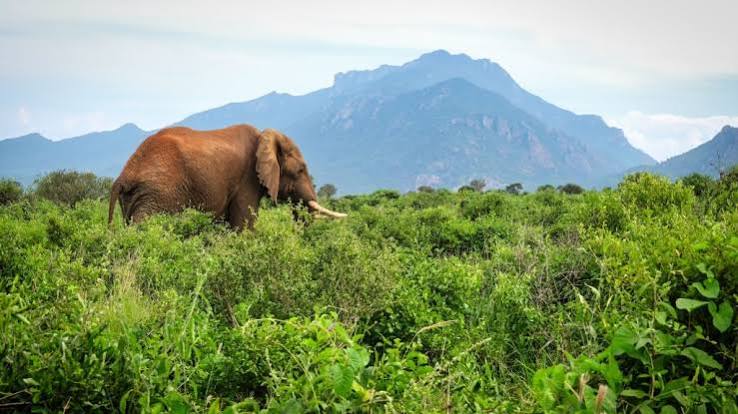
Tsavo National Park is Kenya’s largest protected area, and its elephants are among the most visually distinctive on the continent – not because of any genetic difference, but because they’re famously red, dust-bathed in the park’s iron-rich volcanic soil until their entire hide takes on the same rusty colour as the ground beneath them.
Why Tsavo’s Elephants Look Red
Tsavo’s soil is unusually high in iron oxide, giving the ground itself a distinctive red-orange colour, and elephants here regularly dust-bathe by spraying loose soil over their bodies to protect against sun and biting insects. Over time this habitual dust-bathing coats their skin so thoroughly that Tsavo’s elephants are instantly recognisable, a genuine visual signature found nowhere else in East Africa in quite the same way.
Tsavo East vs Tsavo West
Tsavo is split into two separate parks, Tsavo East and Tsavo West, together forming one of the largest protected areas in the world. Tsavo East holds the more open, classic savannah terrain where the red-dust elephant herds are most visible, while Tsavo West offers more varied volcanic terrain, natural springs, and denser vegetation, with a somewhat different game-viewing character overall.
Tsavo’s Elephant Population and History
Tsavo has historically held one of Kenya’s largest elephant populations, though the park suffered severe poaching losses during the 1970s and 80s before sustained anti-poaching efforts helped numbers recover substantially in subsequent decades. Today it remains one of Kenya’s most important elephant strongholds, with herds regularly numbering in the dozens moving across the park’s open plains and around its permanent water sources.
The Aruba Dam and Other Key Water Sources
Aruba Dam, in Tsavo East, is one of the park’s most reliable elephant-viewing spots, drawing herds down to drink and bathe throughout the day, particularly during the hotter, drier months when surrounding water becomes scarcer. Mzima Springs, in Tsavo West, offers a genuinely different wildlife-viewing experience, with crystal-clear spring water supporting hippo and fish alongside elephant visits, and even an underwater viewing chamber for those wanting a below-the-surface perspective.
Tsavo’s Other Big Five Wildlife
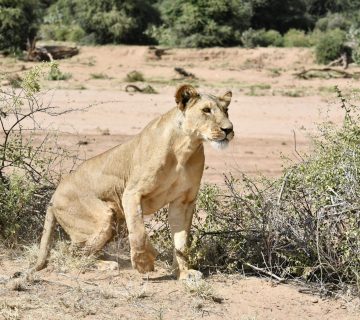
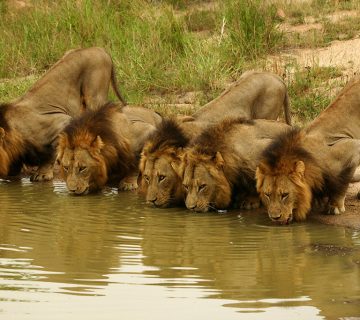
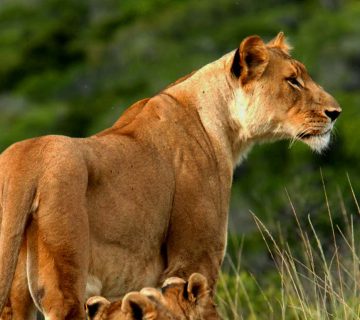
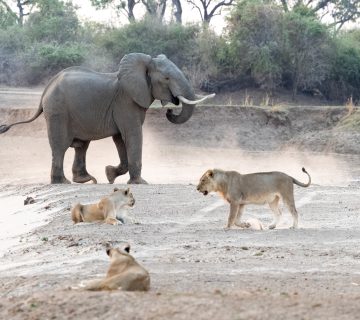
Beyond elephant, Tsavo holds healthy lion, buffalo, and leopard populations, along with a smaller, more elusive black rhino presence in a dedicated, more heavily protected sanctuary area within the park. This makes Tsavo a genuine Big Five destination in its own right, though its sheer size means wildlife density per square kilometre can feel lower than more compact parks like the Masai Mara.
The Man-Eaters of Tsavo
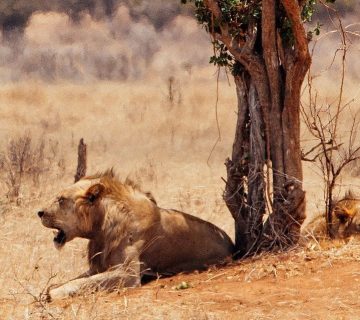
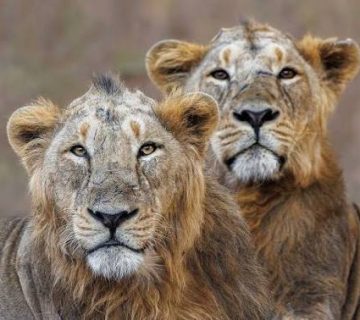
Tsavo carries a famous, if slightly macabre, historical footnote – the “Man-Eaters of Tsavo,” a pair of maneless male lions that killed dozens of railway workers building the Kenya-Uganda railway in the 1890s before finally being hunted down. Today’s Tsavo lions are simply healthy, normal prides, but the story remains a well-known piece of the park’s identity and is often retold by guides during game drives through the same general area where it took place.
Best Time of Year for Elephant Sightings
Tsavo’s elephants are visible year-round, though the dry seasons, roughly June to October and January to February, concentrate herds more predictably around permanent water sources like Aruba Dam and Mzima Springs. The wet season disperses elephants more widely across the park’s vast area, which can mean more searching but rewards visitors with dramatically greener scenery.
How Tsavo Compares to Amboseli for Elephant Viewing
Amboseli offers a more concentrated, easily covered elephant-viewing experience with the added draw of Kilimanjaro as a backdrop, while Tsavo’s much larger size gives a wilder, less crowded feel with the added visual novelty of the red-dust elephants themselves. See our Amboseli elephant guide for how the two parks compare directly.
Getting to Tsavo
Tsavo sits conveniently between Nairobi and the Kenyan coast, making it a natural stopover for travelers combining a safari with a beach extension at Diani or Mombasa. Most visitors reach the park by road, with the drive from Nairobi taking roughly four to five hours depending on which section of the park you’re heading to.
Self-Drive vs Guided Safaris in Tsavo
Given Tsavo’s sheer size, a guided safari makes a genuinely significant difference to how much you see in a limited time, since local knowledge of current elephant and predator movement across such a vast area is difficult for an independent visitor to replicate. Self-driving remains possible on the park’s main routes, but most visitors find a guide’s efficiency well worth the added cost given how much ground Tsavo covers.
Photographing Tsavo’s Red Elephants
The contrast between Tsavo’s red-dust elephants and the park’s often golden, sun-baked grassland makes for genuinely striking photography, particularly in the warm light of early morning or late afternoon. A mid-range zoom covers most sightings well, since elephants at water sources like Aruba Dam often allow vehicles to approach at a comfortable, unhurried distance.
What to Pack for a Tsavo Safari
Standard game drive gear – neutral clothing, sun protection, and binoculars – covers most of what Tsavo requires, and given the park’s dusty conditions, a scarf or buff for covering your nose and mouth on drier drives is a genuinely useful addition. If your wider itinerary includes gorilla trekking, our gorilla trekking packing list covers that portion separately.
Elephant Herd Behaviour at Aruba Dam
Watching multiple family herds converge on Aruba Dam through the course of a day reveals genuine social complexity – matriarchs coordinating group movement, younger animals play-wrestling in the shallows, and older bulls arriving separately to drink before moving off again alone. Patience at a single water source often produces a richer, more varied wildlife experience than constantly driving in search of new sightings, since Tsavo’s elephants reliably cycle through the same handful of dependable water points throughout the day.
Conservation Recovery Since the Poaching Crisis
Tsavo’s elephant population fell dramatically during the poaching crisis of the 1970s and 80s, losing a substantial share of its historic numbers before Kenya’s ivory trade ban and intensified ranger patrols helped populations begin a genuine, sustained recovery. This recovery story is part of why Tsavo holds particular significance for Kenyan conservation more broadly, having gone from a cautionary example of poaching’s impact to one of the country’s clearer conservation success stories.
Tsavo’s Vastness and What It Means for Your Safari
Combined, Tsavo East and Tsavo West cover an area larger than some entire countries, and this sheer scale genuinely shapes what a Tsavo safari feels like compared to more compact parks – longer drives between sightings, a stronger sense of genuine wilderness, and a lower overall vehicle density even during peak season. Travelers who prioritise an uncrowded, expansive safari experience over guaranteed rapid-fire sightings often find Tsavo particularly rewarding for exactly this reason.
Combining Tsavo With a Coastal Beach Extension
Given its position roughly midway between Nairobi and Kenya’s coast, Tsavo works particularly well as the safari leg of a combined safari-and-beach itinerary, with Diani or Mombasa only a few hours’ onward drive from the park’s eastern boundary. This pairing lets travelers experience Kenya’s wildlife and coastline in a single, efficiently routed trip without needing to backtrack through Nairobi between the two.
Frequently Asked Questions
Are Tsavo’s elephants a different species because of their colour?
No – the red colouring comes entirely from dust-bathing in the park’s iron-rich soil, not any genetic or species difference from elephants elsewhere in East Africa.
Is Tsavo good for a first-time Kenya safari?
Yes, particularly for travelers also planning a coastal beach extension, given Tsavo’s convenient position between Nairobi and the Kenyan coast, though first-timers wanting the highest predator density may prefer starting with the Masai Mara.
Can I combine Tsavo with gorilla trekking?
Not directly within Kenya, since gorilla trekking requires travel to Uganda, Rwanda, or Congo – see our gorilla trekking FAQ for how to combine a Kenya safari with a separate primate-focused leg elsewhere in the region.
How does Tsavo compare to Murchison Falls for elephant viewing?
Both hold strong elephant populations, but Murchison Falls pairs its herds with a dramatic waterfall and Nile boat cruise covered in our boat cruise wildlife guide, while Tsavo’s draw is its distinctive red-dust elephants and sheer scale – both are genuinely worthwhile for different reasons.
Is Tsavo worth visiting if I’ve already been to Amboseli?
Yes – the visual novelty of the red-dust elephants alone makes Tsavo a genuinely different experience from Amboseli’s Kilimanjaro-backed herds, and its far larger size offers a wilder, less crowded feel by comparison, particularly appealing to repeat Kenya visitors.
Does Tsavo hold black rhino too?
Yes, in a dedicated, more intensively protected sanctuary zone within the park, though sightings there are less predictable than at dedicated rhino destinations elsewhere in Kenya, and it’s worth checking current visitor access to that specific zone with your operator before your trip.
Ready to Plan Your Tsavo Safari?
Whether Tsavo’s famous red elephants, a wider Kenya Big Five circuit, or a safari-and-beach combination is your priority, our team can build an itinerary matched to your interests and timeframe. Get in touch with our team below and let’s start planning your Kenya safari, including how it might combine with Lake Nakuru’s rhinos for a fuller circuit.

No comment