
Ngorongoro Crater: The Best Place in Africa for a Big Five Day
Ngorongoro Crater is routinely described as the single best place in Africa to see all of the Big Five in one day – and unlike most such claims, this one holds up. The crater’s unique geography packs an unusually dense, contained wildlife population into a single, walled caldera, making it one of Tanzania’s most reliable and efficient wildlife destinations, and one that consistently exceeds first-time visitors’ expectations.
What Makes Ngorongoro’s Geography So Unusual
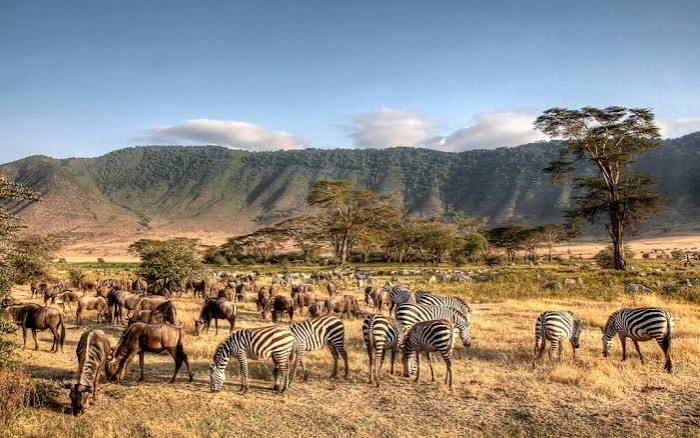
Ngorongoro is a collapsed volcanic caldera, its floor sitting roughly 600 metres below the surrounding crater rim, forming a natural, semi-enclosed ecosystem that traps both resident wildlife and reliable water sources within a compact, roughly 260-square-kilometre area. This containment is exactly why animal density on the crater floor is so much higher than in the vast, open plains of the nearby Serengeti – wildlife here has less need to migrate seasonally in search of water and grazing, since both remain reliably available within the crater itself throughout most of the year.
Seeing the Big Five in a Single Day
Lion, elephant, buffalo, leopard, and both black rhino are all genuinely findable on the crater floor within a single game drive, a claim few other African parks can credibly make given how spread out most Big Five populations typically are. This efficiency is part of why Ngorongoro is such a popular add-on even for travelers with limited time – it’s realistically possible to descend to the crater floor in the morning and complete a full Big Five sighting before ascending again the same afternoon.
Ngorongoro’s Black Rhino Population
The crater holds one of Tanzania’s most significant black rhino populations, closely monitored given the species’ vulnerability to poaching across the continent. Sightings, while not guaranteed on every visit, are meaningfully more likely here than in most other Tanzanian parks, making Ngorongoro one of East Africa’s more reliable black rhino destinations alongside Kenya’s Lake Nakuru and Rwanda’s Akagera National Park.
Ngorongoro’s Lion Density and the Inbreeding Question
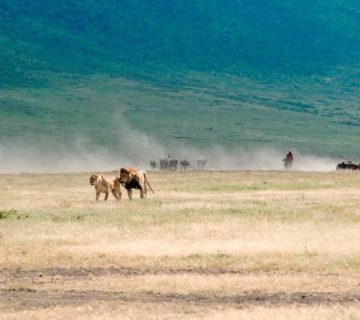
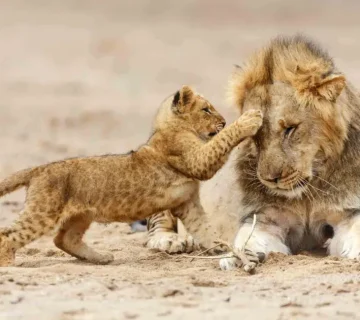
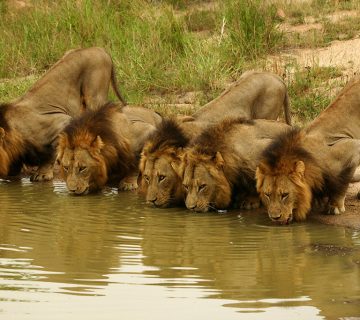
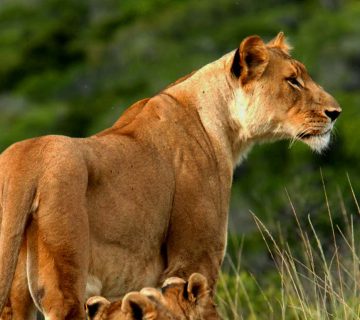
Ngorongoro’s lion population is unusually dense given the crater’s contained size, but that same isolation has led to documented genetic inbreeding within the population over past decades, a genuine conservation concern researchers continue to monitor closely. Occasional efforts to introduce new bloodlines from outside the crater have helped, though the underlying challenge of a geographically isolated predator population remains an active area of study.
Elephant, Buffalo, and Leopard on the Crater Floor
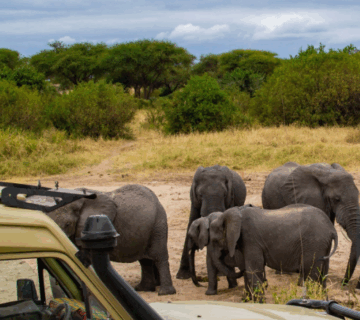
Elephant bulls, some carrying genuinely impressive tusks, are a regular sight on the crater floor, though breeding herds tend to favour the surrounding highland forest more than the open floor itself. Buffalo move in large herds across the grassland, while leopard, as is typical everywhere, remain the most elusive of the group, favouring the wooded Lerai Forest section of the crater floor over the more open plains where the other species are easier to spot.
Beyond the Big Five: Ngorongoro’s Other Wildlife
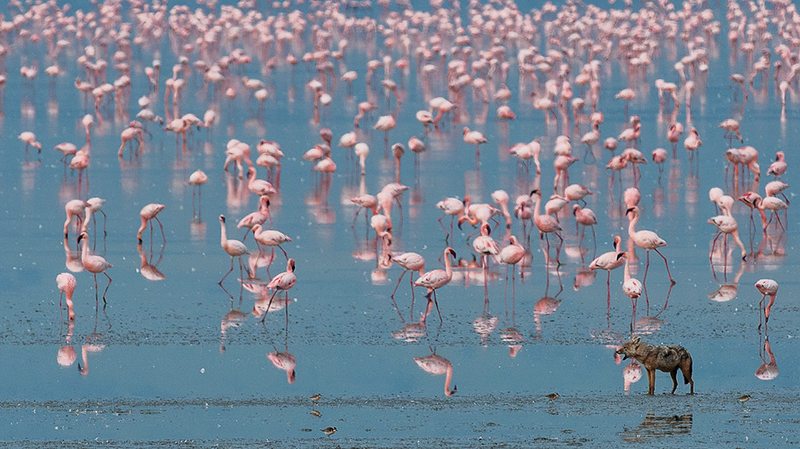
The crater also holds substantial populations of zebra, wildebeest, and flamingo-lined soda lakes, giving even a single day on the crater floor a genuinely varied wildlife experience beyond the Big Five checklist alone. The surrounding highland forest, part of the wider Ngorongoro Conservation Area, adds primates and forest birds rarely seen on the open crater floor itself.
How Ngorongoro Compares to the Serengeti
The Serengeti offers a vastly larger area, the drama of the wildebeest migration, and a genuinely wild, open-plains safari experience, while Ngorongoro trades scale for density and reliability – a smaller area where sightings are more concentrated and predictable. Most Tanzania itineraries combine both, using Ngorongoro as an efficient, near-guaranteed Big Five day alongside a longer, more exploratory Serengeti stay.
Best Time of Year to Visit Ngorongoro
Ngorongoro’s contained ecosystem means wildlife viewing remains strong year-round, unlike migration-dependent parks where timing matters enormously. The dry season, roughly June to October, offers the clearest visibility and easiest road conditions, while the wet season brings lush, dramatic scenery and notably fewer vehicles on the crater floor, at the cost of occasionally muddier tracks.
Where to Stay Near Ngorongoro
Most accommodation sits along the crater rim itself, offering genuinely spectacular views down into the caldera, with a short descent each morning to reach the game-viewing floor below. Rim lodges range from comfortable mid-range properties to some of Tanzania’s most exclusive luxury camps, and given the crater’s enduring popularity with both first-time and repeat visitors, booking well ahead of your travel dates is worth doing regardless of your chosen budget level or season.
Vehicle and Visitor Limits on the Crater Floor
Because Ngorongoro’s floor is a fixed, contained area rather than an open plain, visitor numbers and vehicle access are more tightly managed than in the Serengeti, with a set daily limit on descending vehicles. This management approach helps preserve the crater’s ecosystem under sustained tourism pressure, though it also means booking your visit through an established operator familiar with current access rules matters more here than at more open, less regulated parks.
Combining Ngorongoro With a Wider Tanzania Safari
Most travelers pair Ngorongoro with the Serengeti as part of Tanzania’s Northern Circuit, and many extend further to include Tarangire or a Zanzibar beach finish – see our Big Five guide for how Tanzania’s parks compare to Uganda, Kenya, and Rwanda for a complete regional itinerary. Combining Ngorongoro with gorilla trekking requires travel to a separate country, since Tanzania itself has no gorilla population.
What to Pack for a Ngorongoro Safari
Standard game drive gear applies, though the crater rim sits at considerable altitude and can be genuinely cold in the early morning before the descent, so a warm layer is worth packing alongside standard sun protection and neutral clothing. If your wider East Africa itinerary includes gorilla trekking elsewhere, our gorilla trekking packing list covers that portion separately.
Photographing the Crater Floor
The crater’s contained size means wildlife is often viewed at closer range than in larger, more open parks, which favours a mid-range zoom over an ultra-telephoto for most sightings. Morning light on the crater floor, filtered through the caldera’s rim, has a distinctive quality photographers consistently rate among the best in Tanzania, making an early descent worth the pre-dawn wake-up call most rim lodges require.
The Maasai and Ngorongoro Conservation Area
Unlike a standard national park, Ngorongoro Conservation Area allows Maasai communities to continue grazing livestock within its boundaries, a deliberate policy reflecting the area’s dual status as both a wildlife conservation zone and inhabited pastoral land. This makes Ngorongoro somewhat unique among East Africa’s premier wildlife destinations, and travelers occasionally encounter Maasai herders and their cattle on the crater rim itself, a genuinely different sight from the wildlife-only experience of a conventional national park.
Self-Drive vs Guided Safaris at Ngorongoro
Self-driving is possible but considerably less common at Ngorongoro than at some other Tanzania parks, given the crater’s tightly managed access rules and the practical value of a guide’s knowledge for making the most of a single, time-limited descent. Most visitors book Ngorongoro as part of a guided Northern Circuit itinerary rather than attempting it independently, both for convenience and because permit and access logistics are more easily handled by an established operator.
Combining Ngorongoro With Kenya’s Big Five Parks
Travelers building a longer East Africa itinerary sometimes combine Ngorongoro with a Kenya leg covering the Masai Mara or Lake Nakuru, crossing the shared Serengeti-Mara ecosystem’s border region to experience both countries’ take on the same broader landscape. This cross-border approach requires careful logistics planning but rewards travelers with a genuinely comprehensive East African Big Five picture across two countries in one trip.
Frequently Asked Questions
Can I really see the Big Five in Ngorongoro in one day?
It’s genuinely possible and happens regularly, though as with any wildlife sighting nothing is ever fully guaranteed – the crater’s density simply makes the odds considerably better than almost anywhere else in Africa.
Is Ngorongoro worth visiting if I’m already doing the Serengeti?
Yes – the two offer genuinely different experiences, and most Tanzania itineraries include both specifically because they complement rather than duplicate each other.
How much does it cost to visit Ngorongoro Crater?
Costs include a conservation area entry fee plus a separate crater descent fee per vehicle, on top of standard accommodation and game drive costs – your operator can provide current figures as part of a full itinerary quote.
Can I combine Ngorongoro with a beach holiday afterward?
Yes, Zanzibar is a popular finish to a Tanzania Northern Circuit itinerary, reachable by a short domestic flight from either the Serengeti or Arusha, making it an easy way to end an active safari trip with a few relaxed days on the coast.
Ready to Plan Your Tanzania Big Five Safari?
Whether Ngorongoro’s single-day Big Five efficiency, a wider Serengeti safari, or a full Northern Circuit itinerary combined with the rest of the Big Five is your priority, our team can build a Tanzania trip matched to your time and interests. Get in touch with our team below and let’s start planning your Tanzania safari today.

No comment