
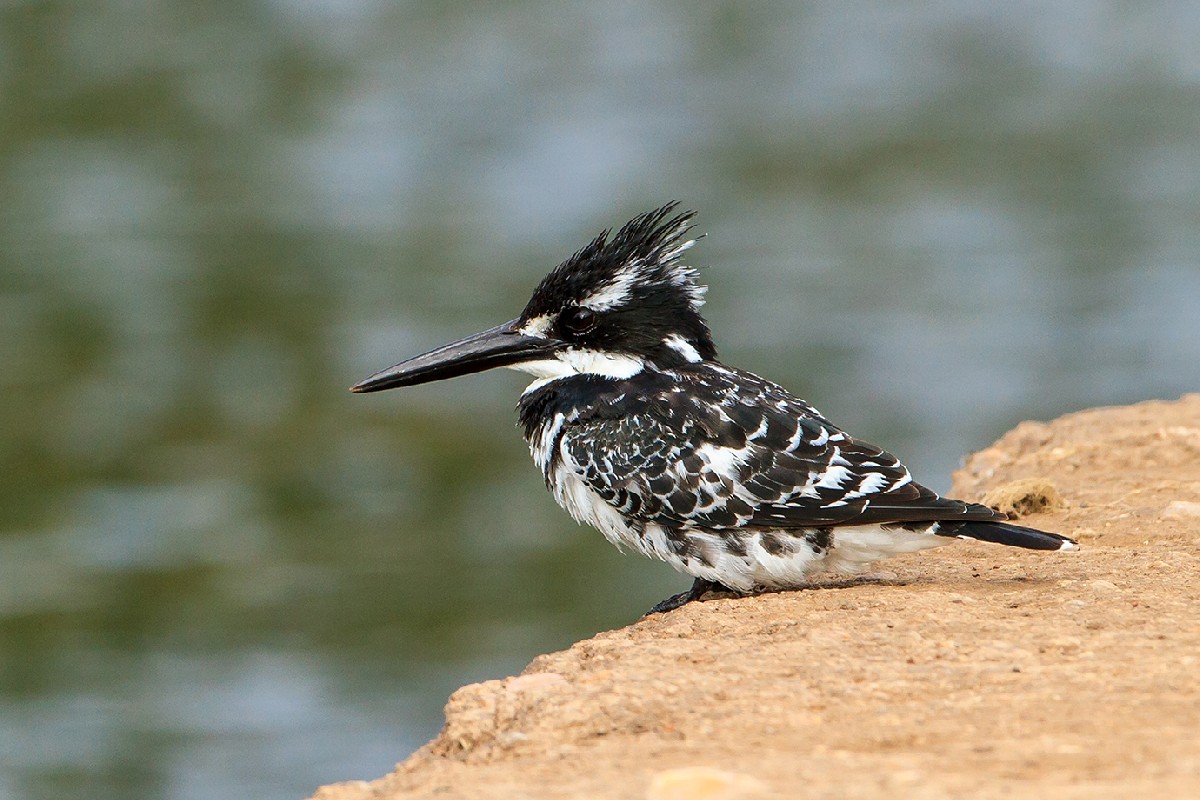






How Do Pied Kingfishers Hover-Hunt?
Pied kingfishers genuinely hunt using a distinctive stationary hover, holding position several metres above open water through rapid, precisely controlled wingbeats before diving directly downward onto fish detected beneath the surface, a hunting technique that lets this common Ugandan waterbird fish successfully even over water lacking any nearby perch to hunt from.
Why Hovering Genuinely Solves a Real Habitat Limitation Other Kingfishers Face
Most kingfisher species genuinely depend on a suitable overhanging perch positioned above productive fishing water, but pied kingfishers genuinely overcome this habitat constraint entirely through their hovering ability, letting the species hunt successfully over open water considerably too far from any shoreline vegetation or branch, a genuine behavioural adaptation that expands the species’ viable hunting habitat considerably beyond what perch-dependent kingfisher species can access.
How the Hovering Technique Genuinely Requires Considerable Energy Expenditure
Sustained hovering genuinely demands considerable energy output compared to perched, stationary waiting, meaning pied kingfishers genuinely accept a real physiological cost in exchange for the habitat flexibility hovering provides, and researchers studying the species’ energy budget have found individuals must achieve a reasonably high hunting success rate to justify this genuinely expensive hunting strategy over the alternative of simply waiting motionless on an available perch.
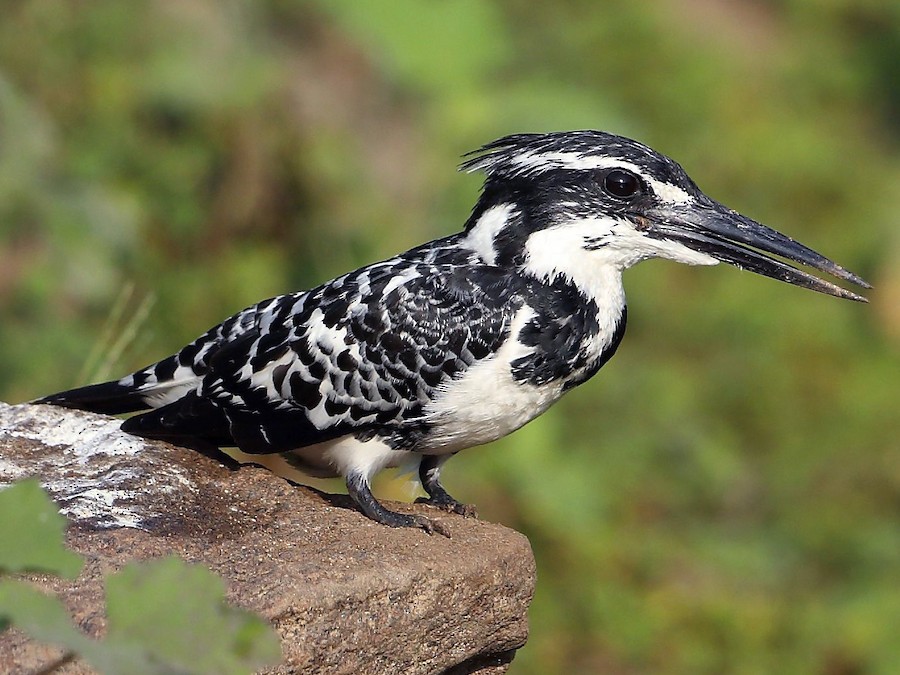
Why Precise Head Stabilisation Genuinely Makes Accurate Underwater Targeting Possible
While hovering, pied kingfishers genuinely maintain remarkably stable head positioning despite the bird’s body constantly adjusting position to counter wind and air current, a neurological and muscular coordination feat that keeps the eyes genuinely fixed on a specific underwater target throughout the hover, meaning the hunting technique depends as much on this stabilisation ability as on the hovering flight itself.
How the Dive Sequence Genuinely Accounts for Light Refraction Through Water
Like other fishing birds, pied kingfishers genuinely must account for light refraction distorting a fish’s apparent position when viewed through the water’s surface, and researchers believe the species has evolved genuine visual processing adaptations that automatically correct for this optical distortion, allowing an accurate dive trajectory toward the fish’s actual position rather than its visually apparent, refraction-shifted location.
Why Pied Kingfishers Genuinely Hunt Cooperatively in Some Circumstances
Beyond solitary hovering, pied kingfishers genuinely sometimes hunt in small cooperative groups, particularly during breeding season when a male may assist a female or when related individuals share a productive fishing territory, a social flexibility that adds a genuine cooperative dimension to a species more typically associated with solitary hunting behaviour.
How Successful Catches Genuinely Get Processed Before Consumption
After a successful dive, pied kingfishers genuinely return to a perch to process the catch, striking the fish repeatedly against a branch to stun or kill it before positioning it head-first for swallowing, a considered handling sequence that reduces the risk of a still-struggling fish causing injury during consumption or an awkward swallow.
Where to Observe Pied Kingfisher Hunting Behaviour in East Africa
Pied kingfishers are genuinely widespread and easily observed across Uganda’s major water bodies, including the Kazinga Channel within Queen Elizabeth National Park and the Nile at Murchison Falls.
Best Time of Year for Pied Kingfisher Viewing
Pied kingfishers are visible year-round given their resident status along East Africa’s permanent water bodies. See our Uganda best-time guide for how the country’s broader seasons shape wider trip planning.
Photographing Pied Kingfisher Hovering and Diving
Capturing the stationary hover, or the moment of the dive itself, offers genuinely dynamic bird photography given how visually distinctive and predictable the hovering behaviour is compared to more fleeting bird sightings. See our camera gear guide for broader equipment recommendations.
What to Pack for Boat Cruise Birding
Standard game drive gear – neutral clothing, sun protection, and binoculars – covers most of what boat-based birding requires. If your wider itinerary includes gorilla trekking, our gorilla trekking packing list covers that portion separately.
Why Pied Kingfisher Success Rate Genuinely Varies With Water Clarity
Given how directly the species’ hunting success depends on visually detecting fish beneath the surface, pied kingfishers genuinely achieve considerably higher success rates over clearer water than in murky, sediment-heavy conditions, meaning water quality and clarity genuinely function as a direct practical constraint on hunting productivity rather than the species succeeding equally across all water conditions.
How Breeding Colonies Genuinely Form Along Suitable Riverbank Terrain
Pied kingfishers genuinely nest in burrows excavated into vertical riverbank or lakeshore soil, and suitable nesting terrain often supports considerable breeding colonies with numerous pairs nesting in close proximity, meaning the species’ distribution genuinely reflects both productive fishing water and suitable soft-soil nesting bank availability occurring together within the same stretch of shoreline.
Why This Hunting Style Genuinely Differs From the Malachite Kingfisher’s Perch-Dependent Approach
Where the considerably smaller malachite kingfisher genuinely relies almost entirely on perched, stationary waiting before a short direct dive, pied kingfishers demonstrate a meaningfully different, energetically costlier but more flexible hunting strategy, illustrating how closely related kingfisher species occupying similar habitat have evolved genuinely distinct approaches to solving the same basic fish-catching challenge.
Comparing Pied Kingfisher Hunting to African Fish Eagle Technique
While both species genuinely target fish near the water’s surface, fish eagles rely on a perched vantage point and considerable size advantage for larger prey, while pied kingfishers’ hovering technique and smaller size suit hunting considerably smaller fish across a wider range of open-water positions, a genuine ecological difference that reduces direct competition between the two species despite sharing similar habitat.
Why Guides Value Explaining Pied Kingfisher Hunting Technique to Visitors
Given how visually distinctive and genuinely reliable the hovering behaviour is to spot during a boat cruise, experienced guides genuinely value pointing out the technique and its underlying habitat-flexibility advantage, adding real appreciation for a common species many visitors might otherwise overlook in favour of larger, more dramatic wildlife.
Combining Pied Kingfisher Viewing With a Wider Boat Cruise Circuit
Pied kingfisher hunting observation pairs naturally with a broader Nile or Kazinga Channel boat cruise covering hippo, crocodile, and fish eagle within the same overall outing.
Why Pied Kingfisher Distribution Genuinely Spans an Unusually Wide Geographic Range
Unlike many specialised African bird species with genuinely restricted ranges, pied kingfishers occur across a considerably broad geographic distribution spanning much of Africa and parts of Asia, a range breadth researchers believe directly reflects the hovering technique’s habitat flexibility, since the species genuinely isn’t limited to specific perch-available terrain the way many other kingfisher species are, letting it colonise considerably more varied water body types across a wider overall geographic area.
How Juvenile Pied Kingfishers Genuinely Take Considerable Practice to Master Hovering
Young pied kingfishers genuinely require an extended practice period to develop the precise hovering stability and dive accuracy adult hunting success depends on, with researchers observing considerably lower catch rates among first-year birds compared to experienced adults, meaning full hunting competence genuinely takes measurable time to develop rather than emerging immediately once a juvenile becomes capable of sustained flight.
Why Considerable Population Density Genuinely Makes Pied Kingfishers a Reliable Sighting
Given how genuinely common and widespread the species is across suitable water bodies, pied kingfishers represent one of the more reliably observed birds during a standard boat cruise, offering visitors genuinely consistent opportunities to witness the hovering-and-diving hunting sequence compared to rarer, more elusive species like crowned cranes that require considerably more specific timing and location knowledge to encounter.
Why Pied Kingfisher Nesting Burrows Genuinely Require Careful Bank Selection
Beyond simply finding vertical soil suitable for excavation, pied kingfisher pairs genuinely assess bank stability and flood risk when selecting a nesting site, since a burrow positioned too low relative to seasonal water level changes risks flooding during the wet season, meaning nest site selection genuinely involves careful environmental assessment beyond simply finding any soft, diggable riverbank surface nearby.
Why This Behaviour Genuinely Rewards Patient, Attentive Boat Cruise Observation
Because a single successful hover-and-dive sequence typically takes only a few seconds from start to finish, visitors genuinely benefit from staying attentive throughout a boat cruise rather than only looking up when a guide points something out, since a pied kingfisher’s characteristic hover often begins and ends considerably faster than a visitor scanning the wider landscape might otherwise notice in time.
Frequently Asked Questions
Why do pied kingfishers hover instead of using a perch?
Hovering lets them hunt successfully over open water too far from any shoreline perch, expanding their viable hunting habitat considerably.
Does hovering require more energy than perch-hunting?
Yes, genuinely so – sustained hovering demands considerably more energy output than waiting motionless on an available perch.
How do pied kingfishers account for water distorting a fish’s position?
Researchers believe they’ve evolved visual processing adaptations that automatically correct for light refraction through the water’s surface.
Do pied kingfishers ever hunt in groups?
Sometimes, particularly during breeding season when a male may assist a female or related individuals share a productive territory.
Where can I see pied kingfishers hunting on safari?
The Kazinga Channel and the Nile at Murchison Falls both offer strong opportunities to observe the species’ distinctive hovering behaviour.
Ready to Plan Your Uganda Safari?
Whether observing pied kingfisher behaviour firsthand, a Nile boat cruise, or a full Uganda itinerary is your priority, our team can build a trip matched to your interests. Get in touch with our team below today and let’s start planning your complete Uganda safari itinerary together.





No comment