



How Lions Communicate With Each Other
Beyond their famous roar, lions rely on a rich combination of scent marking, body language, and physical touch to communicate within the pride and with rival lions, a considerably broader, richer communication system than most visitors realise exists beyond the one famous sound most safari-goers immediately associate with the species.
This guide covers the full range of these signals, from long-lasting scent marks through to the quiet, close-range sounds and gestures that make up most of a pride’s actual day-to-day communication.
Scent Marking: A Persistent Form of Territorial Communication
Resident males mark territory boundaries using urine, and both sexes rub cheek and body scent glands against trees, rocks, and vegetation, leaving a chemical signal that persists considerably longer than any vocal call, allowing lions to communicate territorial claims and individual identity to others who may pass through hours or even days later. This persistence makes scent marking uniquely well suited to territorial communication in a way none of the pride’s other signals can quite replicate.
Why Scent Marking Conveys More Than Just “This Is My Territory”
Beyond simple boundary marking, scent signals carry information about an individual’s identity, reproductive status, and even roughly how recently they passed through a given area, meaning a rival male encountering a fresh scent mark gains considerably more information than a simple territorial warning alone would provide.
Body Language: Reading a Lion’s Posture and Facial Expression
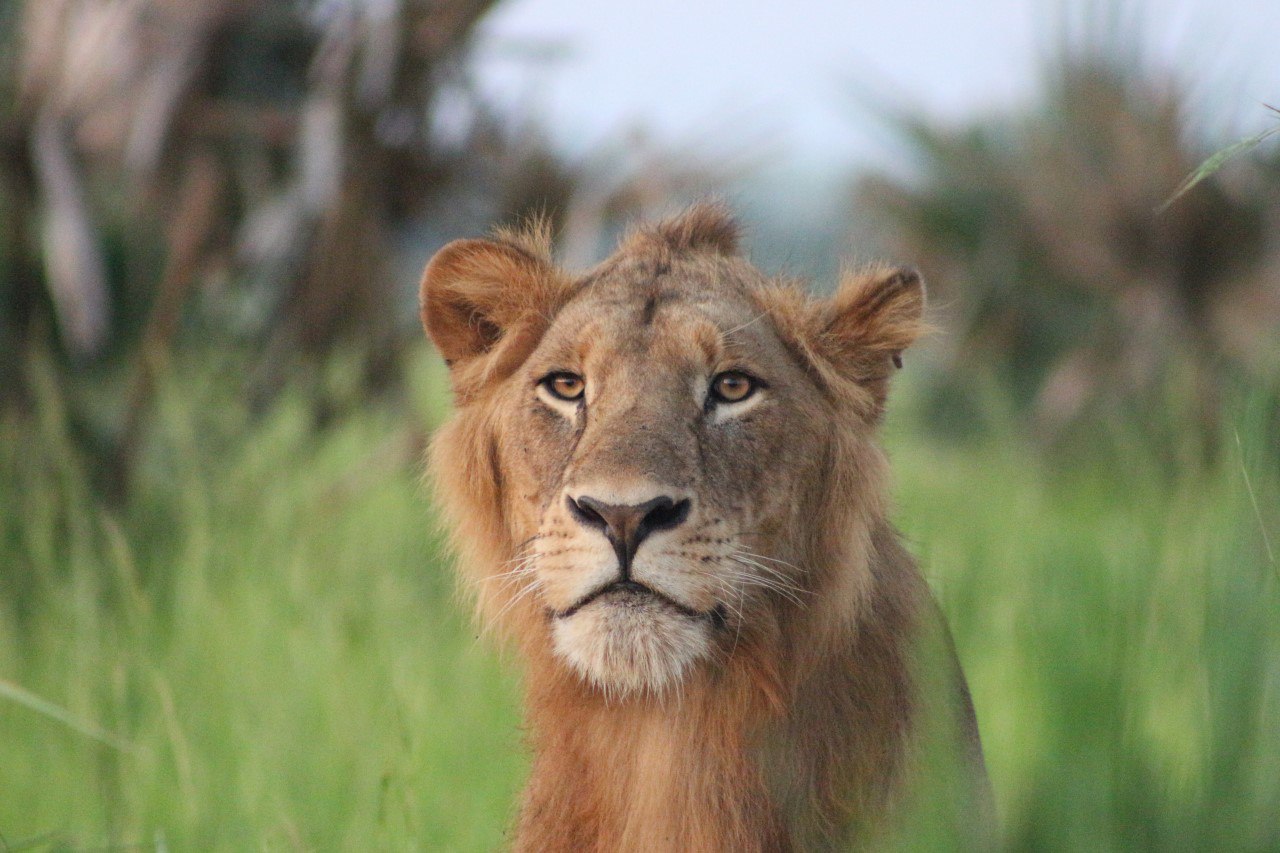
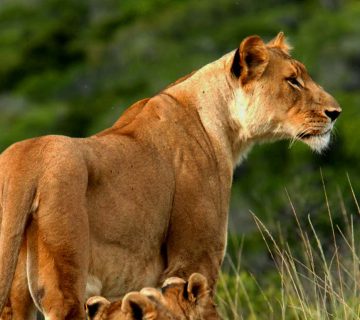
Lions communicate a great deal through posture alone, flattened ears and a lowered head signal aggression or fear, while a relaxed, upright stance with a slowly swishing tail typically indicates calm alertness rather than any immediate threat. Our guide on whether lions are dangerous to safari vehicles covers how guides use these same body language cues to assess safe approach distances during a sighting.
The Head Rub: A Important Bonding Greeting
When pride members reunite after time apart, they greet one another through head rubbing, pressing their faces and bodies together in a ritual that combines scent exchange with physical bonding, reinforcing social ties within the pride each time it occurs. This greeting behaviour happens frequently enough that visitors on an extended sighting often witness it directly.
Purring and Chuffing: Quieter Vocalisations Beyond the Roar
Beyond the famous roar, lions produce a range of quieter sounds, including a low purring rumble during contentment and close bonding moments, and a distinctive “chuffing” or “prusten” sound used as a friendly greeting between familiar pride members at close range, a considerably gentler vocalisation than the roar most visitors expect to hear. These quieter sounds rarely carry beyond a few metres, reinforcing just how situational each layer of a lion’s overall communication toolkit is.
Why the Roar Itself Serves a Distinct Long-Range Function
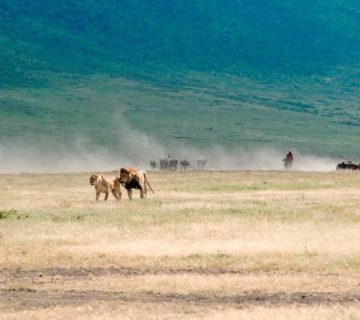
The roar remains the pride’s primary long-distance communication tool, audible up to roughly 8 kilometres under still conditions, used specifically to announce territorial boundaries and locate scattered pride members across distances none of the other communication methods covered here could possibly reach. This unique long-range reach explains why the roar remains, despite all the other signals covered here, the single most recognisable and functionally important lion vocalisation of all.
How Cubs Learn to Interpret These Signals Early
Young cubs begin learning to read and produce these various signals from a very early age, observing adult body language and scent-marking behaviour long before they’re physically capable of the same territorial patrol or full-strength roar, an important part of the social learning that happens within a pride’s communal cub-rearing structure. Our guide on how lion prides are structured covers this communal upbringing in more depth, and our guide on the best time to see lion cubs covers when this early social learning becomes visible to visitors on safari.
Tactile Communication: Why Physical Closeness Matters So Much
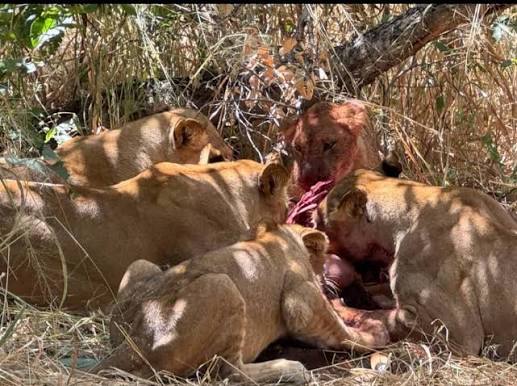
Beyond the head rub greeting, lions spend considerable time in direct physical contact during rest periods, grooming, leaning against one another, and generally maintaining close physical proximity, a form of ongoing tactile communication that reinforces pride cohesion continuously rather than only during specific greeting rituals. This constant low-level physical contact represents one of the more subtle, easy-to-overlook aspects of pride communication, most visible during the pride’s long midday rest periods.
How Guides Read These Signals to Predict Pride Behaviour
Experienced guides watch for these same communication signals, a fresh scent-marking session, a shift in body posture, an exchanged head rub, to anticipate what a pride might do next, information that helps position a vehicle for the best possible view of unfolding behaviour rather than simply reacting after the fact, turning years of accumulated local knowledge into a practical sighting advantage.
Why Understanding This Communication System Enriches a Sighting
Recognising these signals transforms a sighting from simple observation into a considerably richer read of what’s actually happening within the pride at that moment, whether a greeting ritual signals a recent reunion or a particular body posture hints at rising tension between individuals. Our roundup of essential lion facts for safari-goers covers several more behavioural details worth knowing before your first game drive, adding further depth to what a sighting can reveal.
Where to Best Observe This Range of Communication Behaviour
Extended, unhurried time with a single pride offers the best chance to witness this fuller range of communication beyond the roar alone. Our guide on Serengeti lion safaris covers one of the best-studied populations for observing these detailed social behaviours firsthand, a rewarding focus for a longer, more patient stay rather than a single rushed sighting.
Vocalisations During a Hunt: Why Silence Becomes the Priority
During an active stalk, lionesses go almost entirely silent, relying instead on subtle visual cues and positioning to coordinate a cooperative approach, since any vocalisation at this stage would alert prey and ruin the element of surprise the entire strategy depends on. Communication during a hunt shifts almost entirely to quiet visual signals exchanged between hunting partners positioned around the target. Our guide on what lions eat and how they hunt covers this cooperative hunting strategy in considerably more depth.
Why Different Communication Methods Serve Different Distances
Each communication method covered in this guide operates at a different effective range, tactile greetings work only at direct contact distance, body language reads clearly within visual range, scent marks persist and carry information across a territory long after the marking lion has moved on, and the roar alone reaches the several-kilometre distances needed to coordinate a pride spread across its full territory. Our guide on lion migration patterns and territory covers the scale this long-range communication needs to cover.
How Communication Differs Between Males and Females
Males rely more heavily on scent marking and roaring for territorial defence, while females lean more on body language and tactile bonding tied to cooperative hunting and communal cub care, a division that reflects each sex’s distinct role within the pride’s overall social structure. Our guide on male versus female lion differences covers this broader role division in more depth.
How Rival Coalitions Communicate Without Direct Contact
Neighbouring male coalitions communicate extensively without ever making direct contact, relying entirely on scent marks and roaring exchanged across a shared boundary to assess relative strength and avoid unnecessary, costly physical confrontation, a effective long-distance negotiation system that likely prevents considerably more fights than it ever actually triggers, sparing both coalitions the real physical risk direct confrontation would otherwise carry.
Frequently Asked Questions
A few quick, useful answers to the questions travelers ask most often about how lions communicate with one another.
Do lions communicate through scent?
Yes – Scent marking conveys territorial claims, individual identity, and reproductive status, and persists considerably far longer than any vocal call.
What does the head-rub greeting mean?
It’s a genuine bonding ritual combining scent exchange and physical contact, typically used when pride members reunite after time spent apart.
Do lions make sounds other than roaring?
Yes – Including a soft purring rumble and a distinctive “chuffing” greeting sound used at close range between familiar pride members.
Why does the roar remain important despite these other signals?
It’s the only communication method capable of reaching across the considerable, sometimes vast distances a pride’s territory can span.
Do lion cubs learn these communication signals early?
Yes – Cubs begin observing and mimicking adult body language and scent-marking behaviour from a very young age indeed.
Ready to Plan Your African Safari?
Whether you’re hoping to witness a genuine greeting ritual, a territorial scent-marking session, or simply understand the body language behind a resting pride, our team can build a trip matched to your interests. Get in touch with our team below today and let’s start planning your complete African safari itinerary together.

No comment