
Lion Cubs: When Is the Best Time to See Them on Safari?
Unlike species that give birth on a fixed seasonal schedule, lions breed and give birth year-round, meaning there’s no single “cub season” the way there is for some migratory herbivores, though certain months and destinations still offer noticeably better odds of encountering young cubs than others.
Why Lions Don’t Follow a Fixed Breeding Season
Lionesses can come into oestrus at any point across the year, and litters, typically two to four cubs, arrive after a gestation period of roughly 110 days, meaning a pride can produce new cubs during almost any month depending on when mating occurred. This year-round pattern stands in sharp contrast to species like wildebeest, whose calving is tightly synchronised to a specific seasonal window most visitors can plan around with real precision.
How Prey Availability Still Shapes When Most Cubs Are Born
Despite the lack of a strict breeding season, lionesses show some tendency to time births around periods of higher prey availability, since a mother’s own nutritional condition during pregnancy and early nursing affects cub survival odds considerably. In ecosystems tied to the Great Migration, birth timing loosely clusters around periods when migratory herds are present in a pride’s territory, though nowhere near as tightly synchronised as the herbivores’ own calving pattern.
This loose clustering means visitors travelling during peak migration months in a given ecosystem may see a slightly higher concentration of recent litters than during leaner stretches, though the effect remains a statistical tendency rather than a reliable, bookable pattern. Resident, non-migratory populations like the one covered in our Queen Elizabeth lion population guide don’t show this seasonal clustering at all, given the steadier year-round prey base a non-migratory ecosystem typically offers.

The First Six to Eight Weeks: Why Newborn Cubs Are Rarely Seen
Newborn cubs remain hidden in dense cover or rocky dens for their first six to eight weeks, deliberately kept away from the rest of the pride and any potential threats, meaning visitors have almost no realistic chance of seeing cubs this young on a typical game drive. Mothers only reintroduce cubs to the wider pride once they’re strong enough to keep pace with basic pride movement, a threshold most cubs reach somewhere around two months old.
During this hidden period, mothers return to the den periodically to nurse before rejoining the pride’s hunting activity, a pattern that means a lactating female temporarily absent from an otherwise visible pride can be a subtle clue to an experienced guide that new cubs exist somewhere nearby, even before any cub has actually been sighted.
Two to Six Months: the Best Window for Visible, Playful Cubs
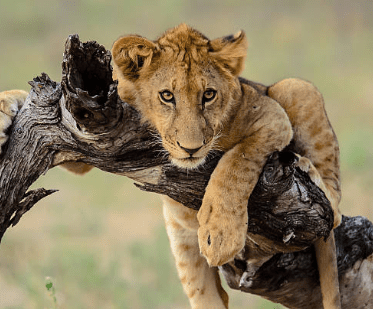
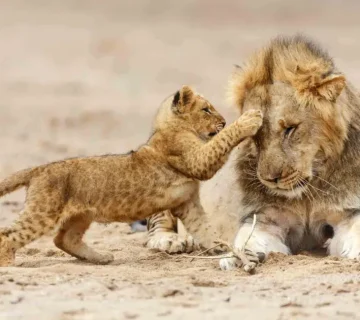
Once cubs rejoin the pride, typically between two and six months old, they become considerably easier to spot, often seen play-fighting with littermates, practising stalking on unsuspecting siblings, or clambering over resting adults, some of the most rewarding lion behaviour a visitor can witness on safari. This age range offers the strongest combination of visibility and charismatic, dynamic behaviour, since cubs this age are curious and active but still small enough to look distinctly juvenile.
Beyond roughly six months, cubs begin looking noticeably more like small adults, losing much of the faint rosette spotting on their coat and gradually taking on adult proportions, meaning the most distinctly “cub-like” visual window narrows to this specific two-to-six-month stretch for visitors specifically hoping to photograph unmistakably young cubs rather than simply juveniles.
Why Ecosystem Choice Matters More Than Calendar Month
Given lions’ year-round breeding pattern, choosing a destination with a dense, well-established resident pride matters more for cub sightings than targeting any specific month. Our guide on the best parks to see lions in East Africa covers exactly which destinations offer the strongest overall pride density, a factor that correlates directly with better odds of encountering cubs at some stage of development during any given visit. Our Serengeti lion safari guide covers one especially strong example, given the ecosystem’s sheer number of resident prides across its considerable total area.
How Ngorongoro’s Contained Ecosystem Offers Reliable Cub Viewing
Ngorongoro Crater’s resident, non-migratory lion population means cub sightings here don’t depend on tracking migratory herd movement the way some other ecosystems’ timing loosely does, giving visitors consistent odds of encountering cubs at various growth stages across virtually any month. Our guide on Ngorongoro’s resident lion prides covers this year-round reliability in more depth.
The Risk Cubs Face During a Pride Takeover
Cub survival isn’t purely about nutrition and predation risk. When a rival male coalition successfully displaces a pride’s resident males, incoming males often kill existing cubs to bring females back into reproductive readiness sooner, a well-documented and brutal pattern that means cub survival odds can shift dramatically depending on a pride’s current coalition stability. Our guide on why male lions leave their pride covers this dynamic from the departing males’ perspective.
How Guides Track Which Prides Currently Have Cubs
Experienced local guides maintain detailed, current knowledge of which resident prides have recently given birth, information that changes constantly given the year-round breeding pattern, making a knowledgeable guide considerably more valuable for cub sightings than simply choosing the “right” month on a general calendar. This kind of real-time local knowledge represents one of the strongest practical arguments for booking with an operator maintaining close relationships with park guides on the ground.
Guides across different lodges and camps within the same ecosystem share sighting information constantly over radio, meaning a cub sighting reported by one vehicle often reaches several others within the same general area shortly afterward, a collaborative information network that considerably improves every visitor’s overall odds regardless of which specific vehicle first spots a given pride’s new cubs.
Photographing Lion Cubs on Safari
Cubs’ constant motion and play demand a faster shutter speed than typical resting adult lion photography requires. See our camera gear guide for equipment recommendations suited to this kind of fast-moving wildlife photography.
Getting a clean shot also rewards patience over persistence, since cubs’ play sessions tend to happen in short, unpredictable bursts rather than sustained activity, meaning photographers who position themselves well and wait quietly near a resting pride with visible cubs improve their odds considerably more than photographers constantly repositioning in search of the perfect angle.
How Litter Size and Sibling Rivalry Shape Cub Behaviour
Typical litters of two to four cubs mean siblings spend considerable time in close physical contact, developing the play-fighting and mock-stalking behaviour that will eventually translate into real hunting and social skills as adults. This sibling dynamic produces some of the most entertaining, camera-friendly behaviour on safari, tumbling wrestling matches, pouncing on a twitching tail, and the occasional indignant swat when play gets too rough for one particular cub’s taste.
How Cub Sightings Fit Into a Broader Big Five Itinerary
Cub sightings pair naturally with a wider Big Five itinerary, since the same dense, well-protected ecosystems supporting strong lion pride numbers typically also sustain healthy elephant, buffalo, rhino, and leopard populations. Our roundup of essential lion facts for safari-goers covers several more behavioural traits worth understanding before your trip, while our guide on how lion prides are structured explains the communal care system that gives cubs their best odds of survival to adulthood.
Why Multi-Day Visits Improve Cub-Sighting Odds
Given cubs’ unpredictable visibility even within a pride known to have them, spending multiple consecutive days in the same ecosystem improves overall odds considerably compared to a single rushed day trip, since guides can revisit a promising pride’s territory repeatedly rather than relying on a single pass to catch cubs at an active, visible moment. This is one of several genuine practical reasons multi-day itineraries consistently outperform single-day visits for wildlife photography and sightings generally, not just for cubs specifically.
Frequently Asked Questions
Is there a specific lion cub season on safari?
No – lions breed and give birth year-round, unlike species with a fixed seasonal breeding pattern.
At what age do lion cubs become easiest to see?
Roughly two to six months old, once cubs rejoin the pride and become visibly active and playful.
Why are newborn cubs so rarely seen?
Mothers keep cubs hidden in dens for their first six to eight weeks, away from the rest of the pride.
Does destination matter more than timing for cub sightings?
Yes – choosing a park with dense resident pride populations matters more than targeting a specific month.
Can a pride takeover put cubs at risk?
Yes – new resident males often kill existing cubs after a successful takeover, a well-documented natural behaviour.
Ready to Plan Your African Safari?
Whether you’re hoping to see playful cubs practising their first stalking moves or a resting pride with its youngest members close by, our team can build a trip matched to your interests. Get in touch with our team below today and let’s start planning your complete African safari itinerary together.


No comment