

Best Time to See Lions in the Masai Mara
The Masai Mara offers strong lion sightings throughout the year given its resident pride density, though the Great Migration season and the region’s dry months both add distinct advantages worth understanding before locking in your specific travel dates and booking your itinerary.
Why the Great Migration Season Adds a Distinct Lion-Viewing Advantage
When the wildebeest migration arrives in the Mara, typically between July and October, resident lion prides shift their hunting focus toward the massive, concentrated prey herds, meaning this window offers some of the most dramatic predator-prey interactions available anywhere in Africa, considerably more dynamic than sightings during quieter months.
Prides gain considerable hunting advantage during this period, since the sheer density of wildebeest and zebra moving through their territory means less energy expended per successful hunt than during leaner months, and researchers note improved body condition and higher cub survival rates coinciding with this seasonal abundance, a pattern documented across multiple migration cycles studied over many years.
How Dry Season Conditions Improve General Visibility Beyond Migration Season
Even outside the specific migration window, the Mara’s broader dry season months offer improved visibility as vegetation thins and resident prey concentrates around permanent water sources, meaning lion sightings remain considerably more predictable during these drier stretches than during the lush, dense growth of the rains.
The Mara experiences two distinct drier periods across the year, one aligning with the migration’s presence and a separate shorter dry spell earlier in the year, meaning travelers with flexible dates have more than one strong window to target beyond the single, most famous migration season alone.

Why Resident Prides Make the Mara Rewarding Even Outside Migration Season
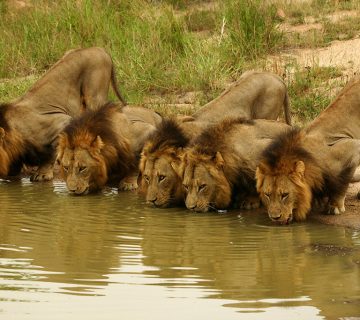
Because the Mara supports one of the highest resident lion densities in Africa independent of the migration, visitors traveling outside the peak migration window still encounter strong, reliable sightings from well-established local prides that remain in the reserve year-round, meaning off-peak travel doesn’t mean sacrificing lion encounters entirely. Our guide on male lion pride dynamics covers how these resident territories are established and defended across generations.
How the Wet Season Offers a Quieter, More Affordable Alternative
Travelers visiting during the wetter months encounter considerably fewer other vehicles at any given sighting, alongside lower accommodation rates than peak migration season commands, a practical trade-off between guaranteed dramatic action and a more relaxed, less crowded overall experience.
The wet season also coincides with calving season for much of the resident wildlife population, meaning predator activity around vulnerable newborns remains considerable even without the migration’s presence, offering a different but still compelling form of predator-prey drama for visitors during these quieter months.
Why Early Morning Game Drives Remain the Best Daily Window Regardless of Season
Lions hunt and move most actively during the cooler hours around dawn, resting through the hottest midday period, meaning early morning game drives offer considerably better odds of catching active, moving lions than a midday drive, a pattern that holds true across every season discussed here.
Guides who work the Mara year-round confirm this pattern holds even during the most intense migration-season activity, meaning travelers shouldn’t assume dramatic river-crossing action makes early departure times less important, since the underlying daily activity rhythm remains constant regardless of the broader seasonal context.
How River Crossings During Migration Season Create Unique Lion Hunting Opportunities
Lions learn to position themselves near known river crossing points during peak migration season, anticipating the chaos and vulnerability of wildebeest attempting the crossing, meaning this specific window offers predator behaviour considerably more dramatic and strategic than typical savannah hunting elsewhere in the reserve.
This learned positioning demonstrates real behavioural adaptation passed down within specific prides year after year, since crossing points remain relatively consistent across migration cycles, meaning experienced prides return to the same productive ambush locations they’ve successfully used in previous seasons.
Why Booking Well in Advance Matters More for Migration Season Specifically
Given how popular the migration season is among travelers worldwide, accommodation and vehicle availability book up considerably further in advance than for any other Mara travel window, meaning securing migration-season dates requires earlier planning than a standard off-peak visit. This same booking pressure affects rhino tracking at Uganda’s Ziwa Rhino Sanctuary, another popular activity that fills up during peak regional travel windows.
How the Mara’s Seasonal Lion Viewing Compares to Other East African Parks
Where Ngorongoro Crater’s contained geography keeps sightings reliable almost regardless of season, the Mara’s open, migration-influenced ecosystem means seasonal timing shifts the specific character of sightings considerably more dramatically here. Travelers comparing the two can also review our guide on Queen Elizabeth’s lion population for how a third distinct ecosystem shapes seasonal viewing patterns in Uganda.
Getting to the Masai Mara
Most visitors reach the Mara via a short domestic flight from Nairobi, though overland transfers remain popular for travelers combining the reserve with a wider Kenya circuit, with road conditions improving considerably during the drier months.
The overland route takes considerably longer during the rains, when unpaved sections can become slow or occasionally impassable, meaning travelers with tighter schedules benefit from the flight option regardless of season, while those with more flexible time budgets enjoy the overland route’s additional scenic value through the Great Rift Valley.
Photographing Lions Across Different Mara Seasons
Migration season’s dramatic river-crossing action rewards photographers differently than the quieter, more intimate pride sightings typical of off-peak months. See our camera gear guide for equipment recommendations suited to both seasonal conditions.
Fast-moving river-crossing sequences demand a considerably faster shutter speed and more responsive autofocus tracking than a resting pride sighting requires, meaning photographers prioritising migration-season action benefit from testing and adjusting camera settings well before their trip rather than learning on the fly during a fast-moving crossing.
What to Pack Depending on When You Visit the Mara
Wet season visits demand considerably more robust rain gear than a dry season or migration-season trip requires. See our gorilla trekking packing list for broader seasonal layering guidance that applies equally well to a Kenya safari.
Dust protection for camera equipment matters more during dry season and migration-season game drives, given how much loose dust vehicles kick up on unpaved tracks during these drier windows, while wet season visitors should prioritise waterproof covers instead for the same equipment.
Layered clothing matters across every season given the Mara’s considerable temperature swing between cold early mornings and warm midday hours, meaning even a dry season visit benefits from packing a warm layer for the pre-dawn departure most lion-focused game drives require.
Combining Mara Lion Viewing With a Wider Kenya Itinerary
Mara lion viewing pairs naturally with a wider Kenya circuit, and the buffalo herds our guide on defensive circle formations covers follow broadly similar seasonal patterns within the same shared migration ecosystem, alongside the elephant herds our guide on long-distance communication describes across the same wider Kenyan savannah.
Why Local Guide Knowledge Matters More Than Season Alone
Given how considerably individual pride behaviour and location can vary even within the same broad season, experienced local guides track specific prides’ recent movement patterns day by day, meaning their real-time, current knowledge matters just as much to a successful sighting as the calendar month alone could ever hope to provide on its own.
Guides who work a specific conservancy or sector of the Mara consistently build up detailed knowledge of individual pride territories, denning sites, and typical daily movement patterns, a level of local expertise difficult for any general seasonal guide, however detailed and well researched it might otherwise be, to ever fully replace on its own.
Frequently Asked Questions
What is the best time to see lions in the Masai Mara?
The Great Migration season, roughly July to October, offers the most dramatic predator-prey action, though resident prides remain year-round.
Can you see lions in the Mara outside migration season?
Yes – the Mara supports one of Africa’s highest resident lion densities independent of the migration.
Is the wet season worth visiting for lion viewing?
Yes – it offers fewer crowds and lower rates, though sightings are somewhat less predictable than dry season.
What time of day is best for lion sightings in the Mara?
Early morning game drives offer the best odds of catching lions active during the cooler hours.
Should I book earlier for migration season specifically?
Yes – migration season popularity means accommodation books up considerably further in advance.
Ready to Plan Your Kenya Safari?
Whether timing your trip for the Great Migration or planning around a quieter off-peak visit, our team can help you choose the right dates. Get in touch with our team below today and let’s start planning your complete Kenya safari together.

No comment