





How Do Genets Hunt at Night?
Genets genuinely hunt using a combination of exceptional night vision, an unusually flexible spine, and near-silent, patient stalking, making this slender, cat-like carnivore one of East Africa’s most effective small nocturnal predators despite weighing barely two kilograms, considerably lighter than most of the region’s better-known predator species.
Why Genet Eyes Are Genuinely Adapted for Near-Total Darkness
Genets possess genuinely large eyes relative to head size, packed with a high concentration of light-sensitive rod cells and a reflective layer called the tapetum lucidum behind the retina, an adaptation that bounces available light back through the eye a second time, giving the species genuinely exceptional night vision capable of detecting prey movement in conditions considerably darker than most other savannah predators could hunt effectively within.
How the Genet’s Remarkably Flexible Spine Genuinely Aids Both Hunting and Escape
A genet’s spine is genuinely more flexible than most other carnivores’, allowing the animal to twist its body through remarkably tight spaces and rotate its head almost completely backward while the body continues moving forward, a physical adaptation that genuinely serves double duty, letting the species squeeze through dense vegetation while stalking prey and execute rapid direction changes when evading a larger predator.
Why Genets Genuinely Rely on Patient, Low-Movement Stalking Rather Than Speed
Unlike cheetah, which rely on explosive speed, genets genuinely hunt through patient, low, slow-motion stalking, freezing motionless for extended periods before a final rapid pounce, a hunting style genuinely suited to their small size and the dense vegetation they typically hunt within, where a fast pursuit would be considerably less effective than a careful, undetected approach followed by a single decisive strike.
How Genets Genuinely Detect Prey Through Combined Sensory Input
Beyond exceptional night vision, genets genuinely rely on acute hearing and a sensitive sense of smell to detect prey moving through dense undergrowth or leaf litter, a combined multi-sensory approach that lets the species locate small rodents, insects, and birds even when direct visual contact isn’t yet possible, meaning genet hunting success genuinely depends on integrating several sensory channels simultaneously rather than any single dominant sense alone.
Why Genets Genuinely Practice Considerable Dietary Flexibility
Genets genuinely maintain a broad, opportunistic diet including rodents, insects, birds, reptiles, and fruit, a dietary flexibility that lets the species persist across considerably varied habitat types and adjust to seasonal changes in prey availability, meaning genets don’t face the same narrow specialisation risk that more dietarily restricted predator species must navigate during lean periods.
How Genet Claws Genuinely Support Both Hunting and Climbing
Genets possess genuinely semi-retractable claws, considerably sharper and better suited to climbing than fully retractable cat claws, an adaptation that lets the species pursue prey into trees and navigate dense forest canopy with genuine confidence, expanding their effective hunting range vertically in a way many purely ground-based small predators sharing the same habitat simply cannot match.
Where to Observe Genets in East Africa
Genets occur across Uganda’s forested and woodland parks, including areas within Kibale Forest, though their nocturnal, secretive habits mean sightings genuinely require a dedicated guided night walk rather than a standard daytime game drive.
Best Time of Year and Time of Day for Genet Viewing
Genets are genuinely most active after dark, making a guided night walk or spotlight drive the most realistic way to observe hunting behaviour. See our Uganda best-time guide for how the country’s broader seasons shape wider trip planning.
Photographing Genets
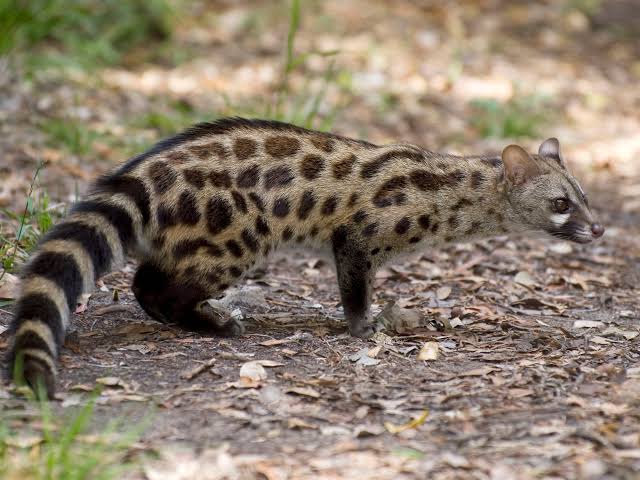
Capturing a genet’s distinctive spotted coat and long, ringed tail during a night walk offers genuinely rewarding photography for visitors prepared with appropriate low-light camera settings. See our camera gear guide for broader equipment recommendations.
What to Pack for Guided Night Walks
Standard forest trekking gear – sturdy shoes, rain protection, and neutral clothing – covers most of what a guided night walk requires, and a good torch is genuinely essential. If your wider itinerary includes gorilla trekking, our gorilla trekking packing list covers similar essentials.
Why Genets Are Genuinely Often Confused With Civets and Mongoose
Given their broadly similar size and nocturnal habits, genets are genuinely frequently confused with civets and mongoose by first-time visitors, though the species’ considerably more slender, cat-like body shape, long ringed tail, and distinctive spotted coat pattern genuinely distinguish it from both, a common identification mix-up experienced guides regularly help clarify during night walks.
How Genet Scent Marking Genuinely Supports Solitary Territorial Living
Unlike more social small carnivores, genets genuinely live largely solitary lives outside of brief mating encounters, relying on scent marking through specialised perineal glands to communicate territorial boundaries and reproductive status to other genets without requiring direct contact, a communication system well suited to a species that genuinely prefers minimal direct social interaction across its home range.
Why Genet Reproduction Genuinely Follows a Fairly Rapid Development Timeline
Genet kits genuinely develop considerably faster than many other small carnivore species, typically becoming independent within several months of birth, a comparatively rapid maturation that reflects the species’ broader ecological strategy favouring faster reproductive turnover and dietary flexibility over the slower, more resource-intensive parental investment strategies some other predator species rely on instead.
Comparing Genet Hunting Style to Serval’s Different Nocturnal Strategy
While both genet and serval hunt small prey in similar East African habitat, servals genuinely rely more heavily on exceptional hearing and a distinctive pouncing leap across open grassland, while genets favour considerably more patient, close-range stalking through dense cover, a meaningful behavioural distinction between two small predators occupying broadly overlapping but genuinely different ecological niches.
Why Guides Value Explaining Genet Behaviour to Visitors
Given how rarely genets are spotted compared to more commonly sighted nocturnal species, experienced guides genuinely value explaining the animal’s unusual flexibility and hunting technique when a sighting does occur, adding real appreciation for a species many visitors have never previously heard of.
Combining Genet Viewing With a Wider Night Walk Circuit
A guided night walk searching for genets often turns up other genuinely interesting nocturnal species too, including pangolin and aardwolf, adding a rewarding secondary activity alongside standard daytime primate trekking within the same overall itinerary.
Why Genet Tail Length Genuinely Serves a Practical Balance Function
A genet’s tail, genuinely often as long as its entire body, serves considerably more than a visual identification feature, providing critical balance during the rapid climbing and jumping movements central to the species’ hunting and escape behaviour, meaning the tail’s considerable length is a genuine functional adaptation rather than simply an aesthetic trait, allowing the animal to navigate branches and tight spaces with a level of precision a shorter-tailed animal genuinely couldn’t match.
How Two Distinct Genet Species Genuinely Occur Across East Africa
East Africa genuinely hosts more than one genet species, including the common genet and the considerably rarer, more forest-adapted species found in denser habitat, meaning the exact spotted pattern and coloration a visitor observes during a night walk can genuinely vary somewhat depending on which specific species and regional population is present in a given park.
Why Genets Genuinely Play a Useful Ecological Role Around Human Settlement
Genets genuinely adapt readily to habitat edges near human settlement, where rodent populations often concentrate around stored food and agricultural activity, meaning the species genuinely provides a real, if often unrecognised, pest-control benefit to nearby communities, a practical ecological contribution similar in principle to how scavenging species provide genuine ecosystem cleanup value beyond their more commonly recognised role.
Why Genet Behaviour Remains Genuinely Understudied Compared to Larger Predators
Given how much research attention larger, more visually dramatic predators like lion and leopard genuinely receive, genet behaviour remains considerably less studied in the wild, meaning much of what’s currently understood about the species’ hunting technique and social structure comes from a smaller body of dedicated research than exists for East Africa’s better-known carnivores, leaving genuine opportunity for future dedicated field research to refine current scientific understanding considerably further over time as tracking technology continues improving.
Frequently Asked Questions
What makes genet night vision so effective?
Large eyes packed with light-sensitive cells and a reflective layer that bounces available light back through the eye a second time.
Why is a genet’s spine so flexible?
It lets the animal twist through tight spaces while stalking prey and execute rapid direction changes when evading larger predators.
How do genets hunt if they’re not particularly fast?
Through patient, low, slow-motion stalking followed by a single rapid pounce, rather than relying on explosive pursuit speed.
Are genets easily confused with other small carnivores?
Yes – frequently mistaken for civets or mongoose, though their slender body, long ringed tail, and spotted coat set them apart.
Where can I see genets on safari?
Uganda’s forested parks including Kibale Forest, though a dedicated guided night walk is genuinely necessary given their nocturnal habits.
Ready to Plan Your Uganda Safari?
Whether a guided night walk, chimpanzee trekking, or a full Uganda itinerary is your priority, our team can build a trip matched to your interests. Get in touch with our team below today and let’s start planning your complete Uganda safari itinerary together.




No comment