





How Do Elephant Herds Choose a Matriarch?
Elephant herds genuinely don’t formally elect a matriarch through any single decisive event, but rather settle on leadership through age, accumulated experience, and the wider family’s genuine collective trust in a specific individual’s decision-making, meaning the role typically falls to the oldest, most experienced female rather than being determined by size, aggression, or direct physical competition the way dominance is decided in many other social mammal species.
Why Age and Accumulated Knowledge Genuinely Matter More Than Physical Dominance
Unlike species where physical strength or aggressive confrontation genuinely determines leadership, elephant matriarch status depends almost entirely on accumulated life experience, specifically detailed knowledge of water sources, safe migration routes, and how to respond to serious threats, meaning the oldest surviving female within a family unit typically becomes matriarch by default, having simply outlived and out-experienced every other candidate within her specific family group.
How the Wider Family Genuinely Signals Trust in a Matriarch’s Decisions
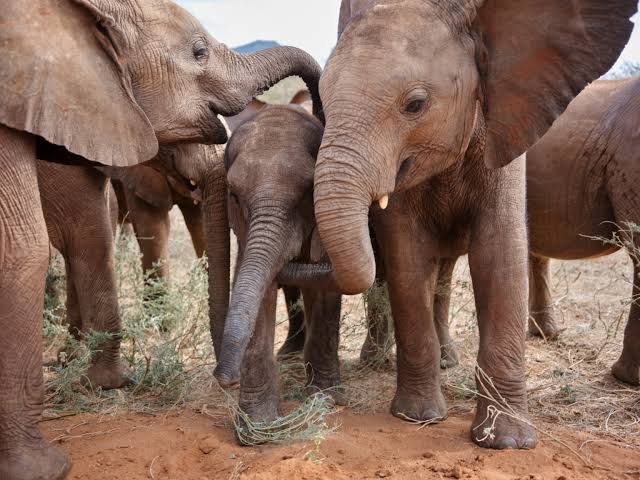
Researchers studying elephant social structure have found that family members genuinely demonstrate trust in a matriarch through consistent behavioural deference, following her lead during travel decisions, positioning themselves protectively around her during perceived threats, and generally prioritising her assessment of danger over their own individual instinct, a pattern of consistent behavioural deference that functions as the clearest observable evidence of genuine leadership recognition within elephant society.
Why Matriarch Decision-Making Genuinely Improves Herd Survival Outcomes
Long-term research comparing elephant families led by older, more experienced matriarchs against those led by younger, less experienced females has found genuinely measurable differences in survival outcomes, particularly during severe drought, with families led by older matriarchs demonstrating considerably better ability to locate distant, less obvious water and food sources based on memory of similar conditions experienced decades earlier, direct evidence that accumulated matriarchal experience carries genuine, measurable survival value rather than functioning as purely symbolic leadership.
How Succession Genuinely Unfolds When a Matriarch Dies
When a matriarch dies, leadership genuinely doesn’t automatically default to her eldest daughter through any fixed rule, but instead the family’s next most experienced adult female, often but not always the matriarch’s eldest surviving daughter, typically assumes the role, and researchers have documented that this transition period can genuinely involve real behavioural instability as the family adjusts, sometimes with temporarily reduced group cohesion until the new leader’s authority becomes established through her own accumulated track record of sound decisions.
Why Matriarchs Genuinely Recognise and Respond to Danger Differently Than Younger Elephants
Experienced matriarchs genuinely demonstrate more measured, appropriate threat responses than younger elephants, including notably calmer reactions to less genuinely dangerous stimuli like the presence of vehicles or non-predatory wildlife, a discernment researchers believe reflects the accumulated experience needed to accurately distinguish real threats from harmless disturbances, meaning younger or less experienced leaders tend to overreact defensively to a considerably wider range of stimuli than a genuinely seasoned matriarch would.
How Matriarchs Genuinely Coordinate Complex Group Decisions Beyond Simple Direction-Setting
Beyond deciding which direction the family travels, a matriarch genuinely makes numerous other collective decisions including when to rest, how to respond to encounters with other elephant families, and how to manage interactions with potentially dangerous wildlife, meaning her role genuinely extends across nearly every aspect of daily family life rather than being limited purely to broad seasonal migration route selection.
Where to Observe Elephant Matriarch Leadership in East Africa
Well-studied elephant families with clearly observable matriarch leadership are genuinely reliable to see across Amboseli National Park, home to one of Africa’s most extensively researched elephant populations, alongside Uganda’s Murchison Falls and Tsavo’s genuinely large resident herds.
Best Time of Year for Elephant Family Viewing
Elephants are visible year-round given resident family territories. See our regional best-time guide for how seasonal patterns generally affect wider game viewing.
Photographing Elephant Family Leadership Behaviour
Capturing a matriarch positioning herself protectively at the front of a moving family group offers genuinely meaningful behavioural photography beyond a standard grazing portrait. See our camera gear guide for broader equipment recommendations.
What to Pack for Elephant-Focused Game Drives
Standard game drive gear – neutral clothing, sun protection, and binoculars – covers most of what elephant family viewing requires. If your wider itinerary includes gorilla trekking, our gorilla trekking packing list covers that portion separately.
Why Poaching Pressure Genuinely Poses a Distinct Threat to Matriarchal Knowledge
Because leadership depends so heavily on accumulated individual experience rather than any transferable formal system, the loss of an experienced matriarch to poaching genuinely removes decades of irreplaceable environmental knowledge from her family instantly, a distinct conservation concern separate from simple population numbers, since a family led by a considerably younger, less experienced replacement genuinely faces measurably reduced survival odds during future severe drought or other significant environmental challenges.
How Matriarchs Genuinely Manage Relationships With Other Elephant Families
Matriarchs genuinely play a central role in managing how their family interacts with other elephant families sharing overlapping territory, and researchers studying long-term elephant communities have found matriarchs can genuinely distinguish between related and unrelated families through vocalisation and scent, adjusting the family’s behaviour, more relaxed and social toward known relatives, more cautious toward unfamiliar groups, based directly on this recognition.
Why Younger Elephants Genuinely Benefit From Extended Observation of Matriarch Decision-Making
Young elephants, both male and female, genuinely spend years observing a matriarch’s decision-making before any individual eventually needs to apply similar judgement themselves, a genuinely extended informal apprenticeship period that researchers believe is critical to how the accumulated environmental knowledge underlying successful matriarchal leadership actually gets transmitted across generations within elephant society.
Comparing Elephant Leadership to Lion Pride Structure
Where lion pride leadership centres more around male territorial dominance established through physical strength and coalition-building, elephant matriarch leadership genuinely rests almost entirely on accumulated knowledge and family trust rather than physical dominance, a meaningfully different leadership model reflecting the two species’ considerably different social priorities and survival challenges.
Why Guides Value Explaining Matriarch Leadership to Visitors
Given how much of a matriarch’s actual leadership role happens through subtle positioning and quiet decision-making rather than obvious dramatic action, experienced guides genuinely value pointing out which individual is leading a family group and why, adding real behavioural depth to what might otherwise register as simply “a herd of elephants.”
Combining Elephant Family Viewing With a Wider Wildlife Circuit
Elephant matriarch leadership viewing pairs naturally with a broader wildlife-focused itinerary, giving travelers genuine insight into one of East Africa’s most socially sophisticated species.
Why Matriarchs Genuinely Play a Direct Role in Drought Survival Beyond Memory Alone
Beyond simply remembering distant water sources, experienced matriarchs genuinely lead active well-digging efforts during severe drought, directing where and how deeply a family group excavates based on subtle soil and vegetation cues built up over decades of prior experience, meaning matriarchal leadership genuinely combines both stored spatial memory and real-time environmental assessment skill rather than relying on memory alone.
How Matriarchs Genuinely Influence a Family’s Overall Reproductive Success
Beyond navigation and safety, researchers have found matriarch presence genuinely correlates with measurably higher calving rates and improved calf survival across the wider family unit, likely because reduced stress and more reliable access to quality grazing under strong leadership genuinely improves the physical condition of breeding females, meaning matriarch quality affects considerably more than day-to-day survival alone.
Why Bull Elephants Follow a Genuinely Different Leadership Model
Unlike females, who remain within their birth family for life under matriarchal leadership, male elephants genuinely leave the family group at maturity and live either solitarily or in loose, shifting bachelor associations with no comparable fixed leadership structure, meaning the matriarchal system genuinely applies specifically to the female-led family unit rather than describing elephant social organisation as a whole across both sexes equally.
Why This Leadership Model Genuinely Informs Broader Elephant Management Decisions
Conservation organisations managing elephant populations increasingly factor matriarchal social structure directly into relocation and management decisions, since genuinely breaking up an established family unit or removing an experienced matriarch during translocation efforts has been shown to cause measurable long-term stress and disrupted social functioning, meaning modern elephant conservation practice increasingly treats family unit integrity as seriously as the raw individual animal count when planning any intervention.
Frequently Asked Questions
How does an elephant become the matriarch of a family?
Through age and accumulated experience rather than physical competition – typically the oldest, most knowledgeable female becomes the default leader.
What happens when a matriarch dies?
The family’s next most experienced adult female, often the eldest surviving daughter, typically assumes the role, sometimes with a period of adjustment.
Does matriarch experience genuinely improve survival outcomes?
Yes, genuinely so – families led by older, more experienced matriarchs show measurably better survival during severe drought conditions.
Why is losing a matriarch to poaching especially damaging?
It removes decades of irreplaceable environmental knowledge instantly, leaving the family with measurably reduced survival odds under a less experienced leader.
Where can I see elephant matriarch leadership on safari?
Amboseli National Park, home to one of Africa’s most studied elephant populations, and Uganda’s Murchison Falls both offer strong opportunities.
Ready to Plan Your East Africa Safari?
Whether observing elephant family behaviour firsthand, wider wildlife viewing, or a full East Africa itinerary is your priority, our team can build a trip matched to your interests. Get in touch with our team below today and let’s start planning your complete safari itinerary together.





No comment