
Why Do Hippos Spend All Day in Water?
Hippos submerge for the vast majority of daylight hours not out of laziness but genuine physiological necessity, since their skin lacks the protective structures most land mammals rely on to survive sun exposure, forcing the species into an almost entirely nocturnal feeding pattern built around staying wet through the day.
Why Hippo Skin Genuinely Can’t Handle Direct Sun
Hippo skin is considerably thinner in its protective outer layer than most large African mammals, and genuinely lacks functional sweat glands and the kind of hair coat that shields species like buffalo or elephant from direct sun exposure, meaning prolonged time out of water risks real sunburn, dehydration, and skin damage. This vulnerability is the core physiological reason hippos structure their entire daily routine around staying submerged during the hottest hours rather than simply preferring water for comfort.
The Genuinely Unusual “Blood Sweat” Adaptation
Hippo skin secretes a natural reddish-orange substance, sometimes called “blood sweat” though it’s neither blood nor true sweat, that functions as both a sunscreen and an antimicrobial barrier, a genuinely unusual physiological adaptation found in essentially no other African mammal. Researchers analysing this secretion have found it contains pigments that absorb ultraviolet light and compounds with genuine antibacterial properties, meaning the substance does real protective work even during the limited time a hippo does spend exposed on land or riverbank.
Why Nighttime Grazing Solves the Sun Exposure Problem
Hippos emerge from water almost entirely after dark to graze on land, sometimes travelling several kilometres from the water’s edge overnight in search of sufficient grass, then returning to submerge again before sunrise, a pattern that lets the species access the grazing it needs while genuinely avoiding daytime sun exposure altogether. This nocturnal foraging routine means the vast majority of a hippo’s actual feeding happens completely unseen by standard daytime game drives.
How Submersion Also Solves a Genuine Weight-Bearing Problem
Beyond sun protection, water genuinely supports much of a hippo’s considerable body weight, reducing the physical strain that simply standing on land for extended periods would otherwise place on the legs and joints of an animal that can weigh well over a tonne. This buoyancy benefit works alongside the sun protection as a second, independent reason submersion suits the species’ physiology so well.
Why Hippos Can Hold Their Breath So Long
Hippos can genuinely remain submerged for several minutes at a time, surfacing briefly to breathe before submerging again, a capability supported by a considerably higher blood oxygen-carrying capacity relative to body size than most land mammals achieve, an adaptation that lets them spend the overwhelming majority of daylight hours essentially fully underwater with only eyes, ears, and nostrils breaking the surface periodically.
Territorial Behaviour Within the Water Itself
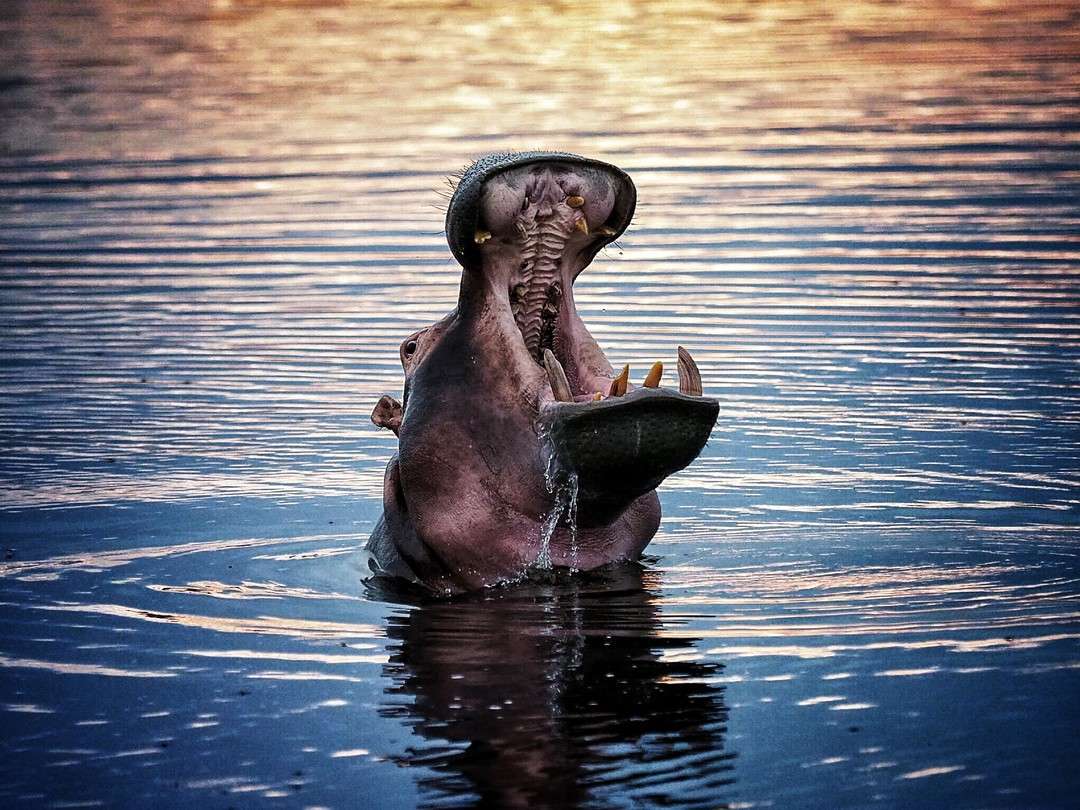
Even while submerged for most of the day, hippos remain genuinely socially and territorially active, with dominant bulls defending specific stretches of water through the well-known open-mouth display and, when disputes escalate, direct physical confrontation, meaning the apparent stillness of a resting hippo pod masks real ongoing social dynamics happening beneath and at the water’s surface.
Where to Observe Hippo Water Behaviour in East Africa
Dense hippo pods are genuinely reliable to observe at Queen Elizabeth National Park’s Kazinga Channel, one of Africa’s densest hippo concentrations, alongside Murchison Falls’ Nile boat cruise route, both offering genuine close-range daytime viewing of submerged pods.
Best Time of Year for Hippo Viewing
Hippos are visible year-round given their resident, water-dependent status. See our Uganda best-time guide for how the country’s broader dry and wet seasons still shape wider trip planning.
Photographing Hippo Behaviour
Capturing hippos with only eyes and ears above the waterline, or the brief moments they fully surface to yawn or vocalise, offers genuinely varied photographic opportunities from a boat cruise vantage point. See our camera gear guide for broader equipment recommendations.
What to Pack for a Hippo-Focused Boat Cruise
Standard game drive gear – neutral clothing, sun protection, and binoculars – covers most of what hippo viewing requires, and a light layer is worth having for boat cruises given the breeze across open water. If your wider itinerary includes gorilla trekking, our gorilla trekking packing list covers that portion separately.
Why Hippos Are Considered Genuinely Dangerous Despite Spending Most of the Day in Water
The nocturnal grazing pattern that keeps hippos safe from sun exposure is also directly responsible for their dangerous reputation, since encounters between hippos moving overnight and people near a waterway account for genuinely more human fatalities in Africa than almost any other large mammal, particularly when a hippo’s path back to water at dawn is unexpectedly blocked.
How Hippo Calves Manage the Same Sun Vulnerability
Newborn hippo calves are genuinely even more vulnerable to sun exposure than adults given their proportionally thinner skin, and mothers keep calves submerged or in shallow, shaded water almost constantly during the first weeks of life, only allowing brief periods on land under close supervision, a level of protective caution that reflects just how quickly sun damage can affect a young hippo’s underdeveloped skin compared to a hardier adult.
Why Hippo Eyes, Ears, and Nostrils Sit Where They Do
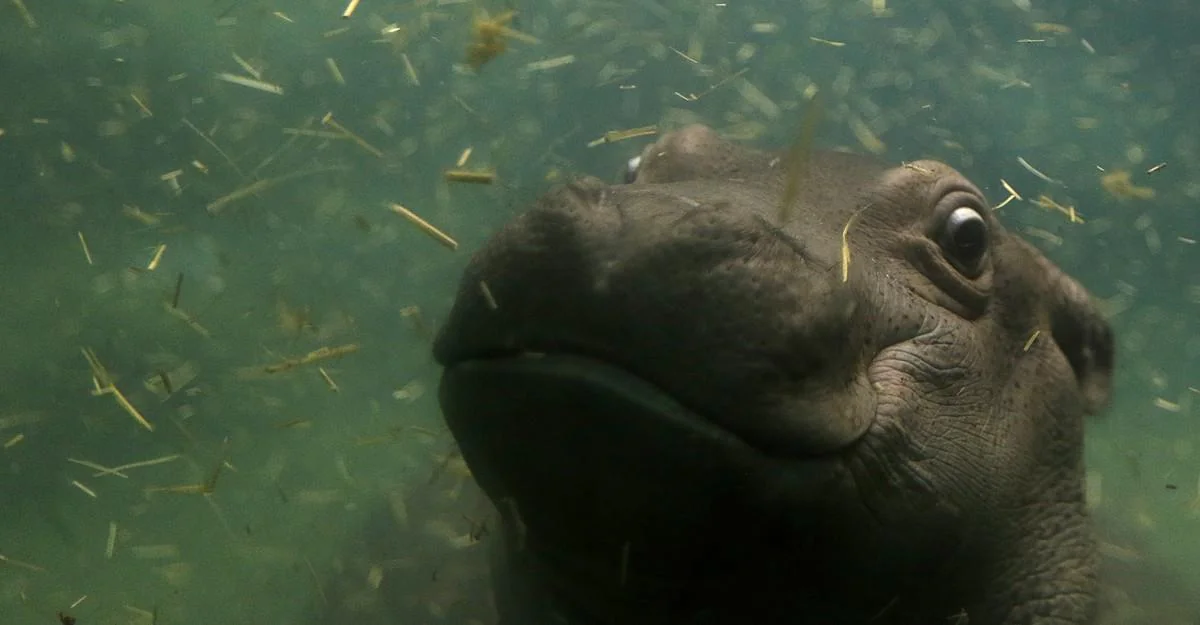
A hippo’s eyes, ears, and nostrils are positioned genuinely high on the skull in near-perfect vertical alignment, allowing the animal to keep almost its entire body submerged while still breathing, hearing, and watching for threats with only a small fraction of the head breaking the surface, an anatomical arrangement that makes the near-total-submersion lifestyle physically practical rather than requiring the animal to expose considerably more of its body just to remain alert.
How Water Temperature Affects Daily Behaviour Patterns
Hippos genuinely shift position within a pool or channel throughout the day as water temperature changes, moving toward deeper, cooler sections during the most intense midday heat and toward shallower, sun-warmed margins during cooler morning and evening hours, meaning the specific spot a pod occupies within a channel like the Kazinga isn’t random but tracks a genuine daily thermal cycle guides can learn to anticipate.
What Happens When Water Sources Shrink During the Dry Season
During periods of low water, hippo pods are forced into genuinely closer proximity within shrinking pools, a concentration that increases territorial tension and confrontation between bulls considerably compared to wet-season conditions when more space is available, making the dry season generally the period when serious hippo fights are most likely to occur, driven directly by the same water-dependency that shapes the species’ entire daily routine.
Comparing Hippo Water Dependency to Other Semi-Aquatic African Mammals
Unlike crocodiles, which can tolerate extended periods away from water given their reptilian metabolism, or buffalo, which use water primarily for wallowing rather than near-constant submersion, hippos represent a genuinely more extreme degree of water dependency among Africa’s large mammals, a distinction rooted specifically in their unusual skin biology rather than diet or general habitat preference.
Why Guides Time Boat Cruises Around This Behaviour
Given how predictable hippo positioning within a channel becomes once you understand the thermal and social patterns driving it, experienced guides running Kazinga Channel boat cruises genuinely time routes to pass the deepest, most consistently occupied pool sections first, maximising the odds of close-range pod viewing before moving on to scan shallower margins.
Why This Detail Reframes a Standard Hippo Sighting
Many first-time visitors initially assume a mostly submerged pod is simply resting or hiding, and understanding that the behaviour is genuine physiological necessity rather than choice adds real depth to what might otherwise be dismissed as one of the less active sightings on a standard Big Five itinerary.
Combining Hippo Viewing With the Kazinga Channel’s Wider Wildlife
The same boat cruise that reveals this water-dependent behaviour also passes the park’s other headline wildlife coming to drink along the banks, making the single activity genuinely worthwhile well beyond hippo viewing alone, given how much additional wildlife the same stretch of channel typically reveals.
Getting to Queen Elizabeth National Park
Queen Elizabeth sits within a comfortable drive of western Uganda’s main tourism circuit, making it a natural inclusion on longer itineraries.
Frequently Asked Questions
Why do hippos spend so much time in water?
Their thin, largely hairless skin lacks protection against sun exposure, and water also supports their considerable body weight, reducing joint strain.
What is hippo “blood sweat” actually for?
A natural secretion functioning as both sunscreen and an antimicrobial barrier, genuinely different from sweat or blood despite the name.
When do hippos actually feed?
Almost entirely at night, travelling considerable distances overland to graze before returning to water before sunrise.
How long can hippos hold their breath underwater?
Several minutes at a time, supported by considerably higher blood oxygen-carrying capacity than most land mammals.
Where can I reliably see hippos during the day?
Queen Elizabeth National Park’s Kazinga Channel and Murchison Falls’ Nile boat cruise both offer genuinely reliable daytime viewing.
Ready to Plan Your Uganda Safari?
Whether observing hippo behaviour firsthand, the Kazinga Channel’s dense population, or a full Uganda itinerary is your priority, our team can build a trip matched to your interests. Get in touch with our team below today and let’s start planning your complete Uganda safari itinerary together.

No comment